Beginner’s guide · Grow & care
Match the damp place,
do not strip the wild.
Begin with legally sourced moss already suited to shade, moisture and substrate. A small tray or existing garden patch teaches care without turning collection into habitat damage.
Quick answer
Establish one small patch of known legal origin
First observe where moss already thrives on land you own or manage with permission: soil, stone, bark and concrete host different communities. For a container, buy nursery-propagated live moss from a traceable supplier rather than taking it from woodland or walls. Press small pieces onto a suitable damp substrate in a shallow tray, provide bright indirect light or outdoor shade and mist only enough to maintain the conditions that species needs. Photograph weekly and change one factor at a time.
- 01
Do not collect from nature reserves, protected sites, public land or property without explicit permission. Never strip a whole patch or remove rare species.
- 02
“Moss” is not one care category. Species from dry walls, wet soil, acidic woodland and tree bark need different moisture and substrate.
- 03
Many mosses tolerate drying and rehydrate; constant saturation and stagnant indoor air can favour algae, mould or decay.
- 04
A blender slurry of moss, yoghurt or buttermilk is not a universal shortcut and can create smell, waste or unsuitable growth conditions.
- 05
The most sustainable first garden may be protecting and observing moss already present rather than buying or moving it.
What to expect
Moss responds slowly to a changed microclimate
Green after misting does not prove establishment. Attachment, new tips and survival through ordinary drying cycles over weeks are more meaningful than the first bright photograph.
Origin
Moss moved from one substrate to another may remain green briefly and then decline because chemistry or moisture differs.
Water
Rainwater or low-mineral water can reduce deposits for some indoor displays, but species and local water still matter.
Light
Shade does not mean darkness. Many mosses need bright diffuse light while direct hot sun desiccates a shallow tray.
Air
Closed humid containers reduce watering but also alter airflow and temperature. Open and closed moss displays are different systems.
Competition
Algae, liverworts and seedlings appear when conditions change. Identify before treating; chemical shortcuts can damage moss.
Time
A patch may take weeks or months to anchor. Frequent lifting to check roots interrupts the very process being observed.
Core method
Copy the original habitat at a small scale
Identify source and substrate
Use moss already growing on your own property, with permission, or purchase nursery-propagated material with a clear name and origin. Photograph the source conditions and note whether it grew on mineral soil, wood or stone, exposed to rain or sheltered. Do not buy dried decorative “moss” expecting it to revive.
Prepare a compatible patch
Choose a shallow tray or garden area with similar substrate and drainage. Remove loose debris by hand without sterilising the whole surface. Shape gentle contact points so the moss lies flat; do not bury the green shoots. Keep different source types separate until their care is understood.
Settle without flooding
Press pieces firmly onto the damp surface and use pins or mesh only if safe and removable. Mist or water gently so contact improves without washing fragments away. Provide bright indirect light, avoid sudden heat and allow airflow appropriate to the species and container.
Observe before intervening
Photograph from the same angle weekly and record moisture, light and visible new growth. Let the surface move through an appropriate wet-to-less-wet cycle. Remove obvious litter with tweezers, quarantine pests and change only one variable after repeated evidence of decline.
Useful products
Products with a clear job in the setup
The Garland no-drainage tray is a practical shallow base only when the grower manages water carefully; it can become a stagnant pool if treated like a pot. Esschert terrarium tools help position small patches without repeated finger disturbance. A traditional watering can is useful for outdoor moss patches, while an indoor tray may need a fine mister instead.
Garland Full-Size Garden Tray without Drainage Holes
The broad shallow format allows separate substrates and easy weekly comparison without committing to a permanent terrarium.
Esschert Design Terrarium Tools, Set of 2
Long tools improve access and reduce disturbance when the display is deep or delicate.
Ward Ward Watering Can
A dedicated can makes water quantity visible and supports wider garden care beyond moss.
First project
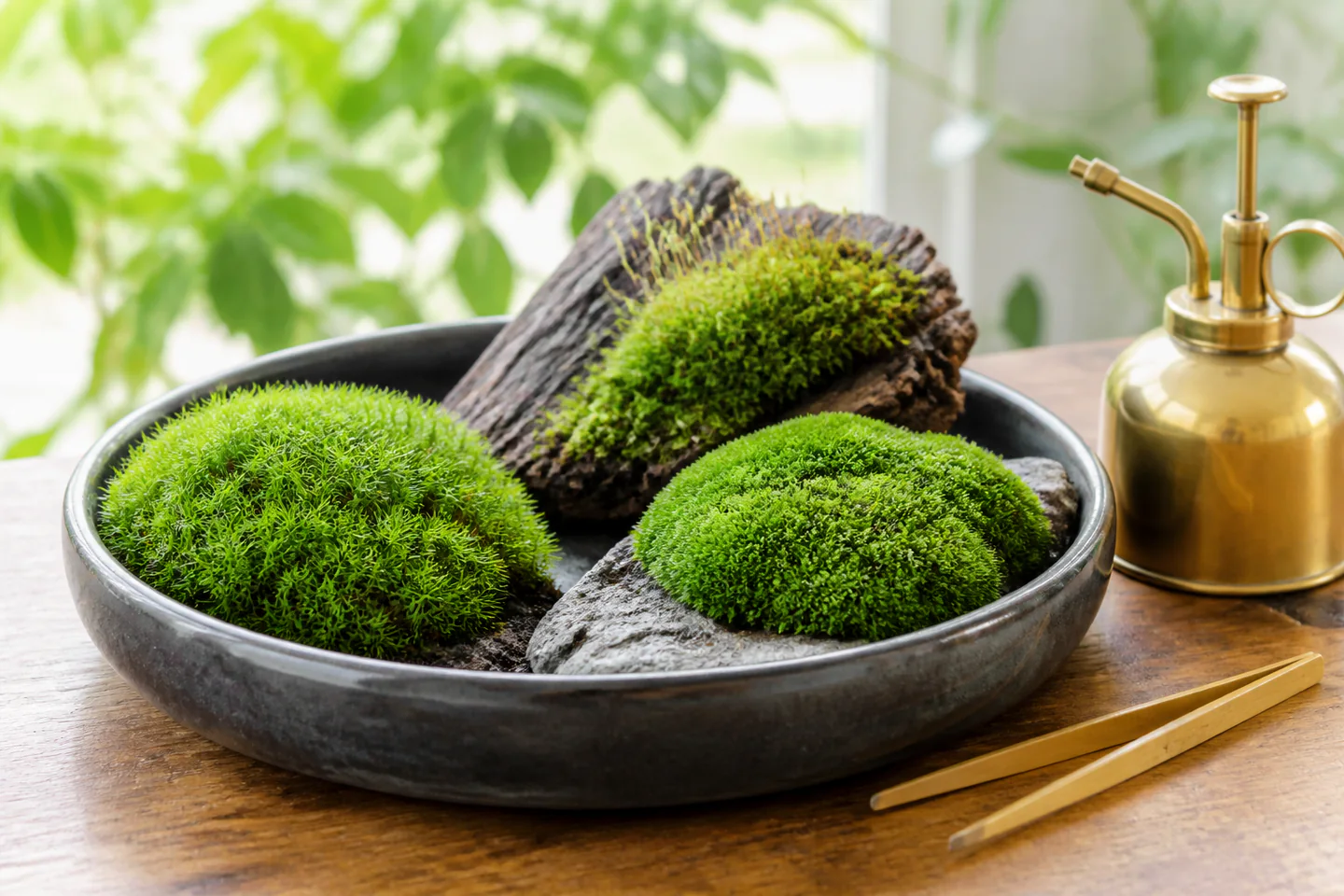
Compare three moss patches in one tray
Small separated samples on compatible substrates reveal which conditions suit them without sacrificing a whole display.
- 01
Document legal origin
Record supplier or permission and photograph the original growing conditions.
- 02
Separate substrate zones
Create small soil, stone or bark areas only where they match the moss source.
- 03
Press, do not bury
Set green shoots above the surface and improve underside contact gently.
- 04
Water lightly
Use a fine application and remove standing water from the no-drainage tray.
- 05
Give bright indirect light
Avoid deep indoor darkness and sudden direct sun.
- 06
Photograph weekly
Look for attachment and new tips before changing one variable.
What can wait
What can wait until the first result
A large carpet or sealed glass showpiece multiplies unknown species and microclimates. One observed tray provides better evidence.
- 01
Wild collection trips
Permission, identification and habitat impact make “free moss” a poor beginner shortcut.
- 02
Moss slurry recipes
They do not guarantee the intended species or surface and can introduce food waste and smell.
- 03
A closed bottle garden
Heat and stagnant humidity create a different system from an open moss tray.
- 04
Fertiliser
Many mosses receive nutrients from dilute environmental sources; ordinary houseplant doses can burn or encourage algae.
- 05
Automatic foggers
They can maintain constant saturation before the actual moisture need is known.
Upgrade path
Upgrade the repeated limitation
Scale only after one patch shows attachment and new growth through several ordinary moisture cycles.
Observation tray
About £15–£55Shallow tray, sourced moss and hand tools
Learn substrate, light and moisture.Outdoor patch
About £25–£90Prepared shaded ground and gentle watering
Establish a larger stable colony.Open terrarium
About £45–£140Glass vessel and matched companion plants
Control a display microclimate.Moss garden design
About £150–£800+Stone, drainage and multiple sourced species
Create durable outdoor composition.Safety & care
Slow growth does not justify taking more from the wild
Bryophyte habitats can be old, specialised and easy to damage. Legal permission is only the minimum; small-scale nursery sourcing and on-site protection are better defaults.
- Follow the British Bryological Society code and all site, landowner and protected-species rules; do not strip living carpets or take from reserves.
- Identify plants, fungi and other organisms before bringing material indoors and quarantine purchased or moved moss from pets and collections.
- Use gloves and hand washing when handling soil, stagnant water or wildlife material and cover cuts before garden work.
- Avoid slippery surfaces, unstable walls and unsafe water edges while observing moss outdoors; never climb for a specimen.
- Control standing water and mould, keep tools away from children and stop any chemical treatment unless its effect on moss and household occupants is understood.
Outside help
When outside help earns its place
A tray and weekly observations are enough to begin. A bryology walk or garden workshop becomes valuable for identifying growth forms and learning which features can be observed without collection.
Begin with code of conduct, field skills and local group information.
Ask whether microscopes, site permissions and non-collecting practice are covered.
Representative UK learning options checked 18 August 2026; local prices, access, materials and tutor support vary.
Sources
Where the guidance came from
The British Bryological Society anchors ethical field practice and moss-garden context. Botanical institutions and experienced growers add habitat, identification and cultivation evidence without treating wild collection as shopping.
-
01
British Bryological Society · Code of conduct
Ethical collecting, permission and habitat-care expectations.
Open source -
02
British Bryological Society · Moss gardening
UK moss-garden context and cultivation ideas.
Open source -
03
Kew · Bryophytes
Botanical context for mosses, liverworts and hornworts.
Open source -
04
Moss and Stone Gardens
Specialist cultivation and design experience.
Open source -
05
Reddit · r/Mosses
Community evidence on identification, moisture, terrariums and failed transfers.
Open source -
06
Amazon UK · Full-Size Garden Tray without Drainage Holes
Exact product catalogue page or ISBN used for the recommendation; current price, seller, specification and availability should be confirmed.
Open source -
07
Amazon UK · Terrarium Tools, Set of 2
Exact product catalogue page or ISBN used for the recommendation; current price, seller, specification and availability should be confirmed.
Open source -
08
Amazon UK · Ward Watering Can
Exact product catalogue page or ISBN used for the recommendation; current price, seller, specification and availability should be confirmed.
Open source
Guide information and links checked 18 August 2026.