Beginner’s guide · Reflect & explore
Whisky tasting
Start with one useful result.
Whisky tasting is close observation, not a drinking challenge. Set out small measures, water and a blank note sheet. Compare aroma, a tiny sip, texture and finish, and stop well before the session becomes about quantity.
Quick answer
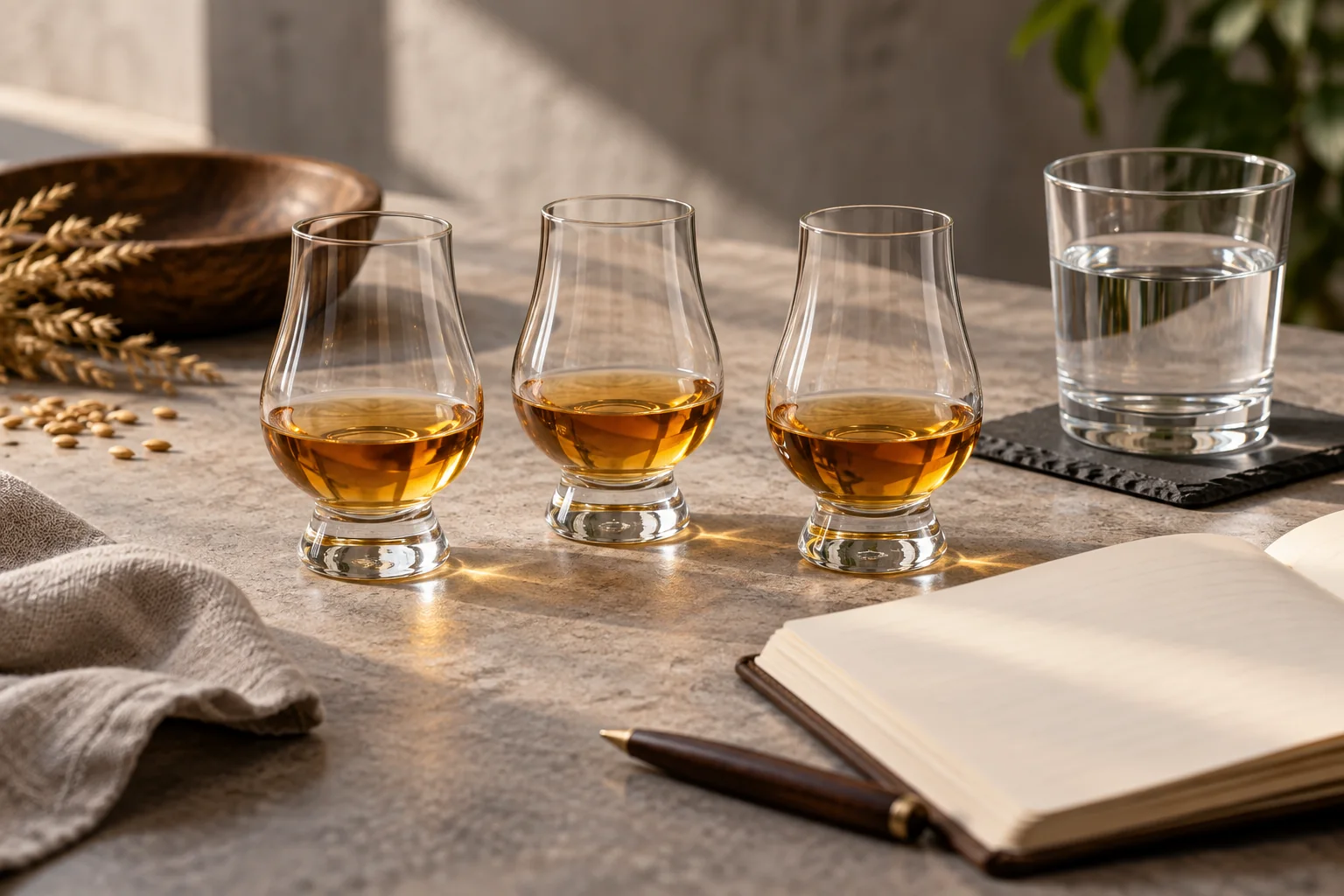
Start with a small comparison of three whiskies already available at home
Whisky tasting is close observation, not a drinking challenge. Set out small measures, water and a blank note sheet. Compare aroma, a tiny sip, texture and finish, and stop well before the session becomes about quantity.
- 01
Two or three whiskies you already own or small legal samples
- 02
Identical clean glasses, water and neutral food
- 03
Notebook or simple tasting grid
What to expect
What the first attempt is really like
The useful skill here is separating aroma, texture and finish without chasing a correct answer. These details matter more than a polished first result.
Aroma
Give each glass time; familiar words are more useful than elaborate flavour-wheel language.
Order
Start with a lighter style before a heavily smoky one so the latter does not dominate.
Quantity
A meaningful comparison uses small pours and can include nosing without drinking every sample.
The method
The method worth learning
Set a small comparison and a limit
Begin with one whisky already owned, or two small samples of known strength from a reliable source. You do not need a collection, an aged single malt or a tasting flight. Plan measured pours and your total before starting, with food and water available. This guide is for adults who choose to drink; nosing and recording impressions can be done without finishing each pour.
Use repeatable conditions
Choose a small clean wine or tasting glass without detergent smells, and avoid strong perfume or cooking aromas nearby. Use the same type of glass for a side-by-side comparison. Label samples A and B and note the alcohol strength. Sample appearance may suggest something to record, but darker colour is not a dependable indicator of age or quality.
Describe what you notice in plain words
Look, nose from a comfortable distance and take a very small sip if you choose. Move the glass rather than burying your nose in it. Start with broad categories such as fruit, cereal, wood, smoke, sweetness or pepper; personal associations are useful even when they differ from the bottle’s description. Record aroma, taste, texture and how long an impression lasts. Read producer notes afterwards so they do not decide your first observation.
Compare water deliberately
Add a few measured drops of ordinary drinking water to a sample and note whether the aroma or alcohol sensation changes. Do not treat dilution as a test with a correct answer; preference is part of the hobby. Avoid increasing the whisky amount to compensate for water. A teaspoon or clean dropper already owned can do this job.
Count alcohol, not glass size
UK units equal millilitres multiplied by ABV percentage, divided by 1,000: 25 ml at 40% is one unit. A tasting glass’s 200 ml capacity is not a serving recommendation. NHS lower-risk advice is no more than 14 units a week on a regular basis, spread across several days, with drink-free days; it is not a target or a guarantee of safety. Do not combine tasting with driving, fire, blades or workshop equipment.
Useful products
Equipment with a clear job
Start with suitable equipment you already own. These exact UK listings are useful examples when a missing tool limits the first project; prices and availability were checked on 2 October 2026 and delivery may add to the cost.
Glencairn Glass in Carton
A plain tulip-shaped glass provides one repeatable vessel for nosing an owned whisky.
What can wait
What can wait
Keep the first project small and learn what the equipment is doing before adding more.
- 01
A tasting bottle collection
One owned bottle can support several controlled comparisons. Buying more does not improve the notes method.
- 02
Crystal decanters and coloured glasses
A plain clean glass is enough to begin. Specialist glassware serves a specific later comparison or gift preference.
- 03
Large flights or stronger pours
More alcohol can impair judgement and sensory attention. Keep a measured plan and stop rather than extending the session.
First project
First project: A small comparison of three whiskies already available at home
Start with a small comparison of three whiskies already available at home. Use the listed equipment, take notes on the result and repeat the small project before expanding it.
- 01
Set a small limit
Decide the number and size of samples in advance and leave driving and machinery out of the plan.
- 02
Nose first
Note two or three aromas for each sample before tasting or reading the label notes.
- 03
Taste slowly
Take a small sip, add a little water if useful, and record texture and finish.
- 04
Compare once
Write one difference between each pair, then put the bottles away rather than extending the flight.
Troubleshooting
When the first attempt goes wrong
You can only smell alcohol
Move the glass farther away, take a break and consider a small water addition. There is no need to increase the pour or force repeated sips to discover a descriptor.
Your notes do not match the producer’s
Write what you actually notice. Tasting descriptions are associations, not an exam. Comparing the same small sample on another occasion may be more revealing than buying another bottle.
A smoky sample overwhelms the next
Try milder samples first, rinse with water and leave time between them. Limit the comparison to two samples so fatigue and alcohol do not dominate the exercise.
The exercise becomes bottle shopping
Return to the owned bottle and one question, such as the effect of water or glass shape. Price, rarity and age are separate interests and do not replace observation.
Upgrade path
Where to go after the first result
Repeat the simple route first, then choose the next step that solves a problem you have actually met.
Observation
No new bottle neededRepeat one sample with and without water
Isolates a single variable and makes your notes easier to compare.Consistency
£9 per plain glass, postage extraMatching tasting glasses
Useful for a controlled two-sample comparison; owned matching wine glasses are still adequate.Learning
Check exact sample contents and priceA small documented sample set
Adds style comparisons without several full bottles. Check strength and keep the tasting amount limited.Safety & care
Safety and practical limits
Use the current instructions for the exact food, material or equipment in front of you.
- For adults of legal drinking age only. Keep measures small and avoid alcohol if pregnant, driving, operating tools or advised to abstain.
- NHS guidance says there is no risk-free level of drinking; do not present tasting as a health activity.
- Provide water and food, set a limit before starting and stop if alcohol affects judgement.
Learning & help
Learning at home and optional help
A class is optional for this first route. Use the free guidance before paying for help.
The Scotch Whisky Association’s free tasting toolkit gives a structured method. Drinkaware explains measured spirit units, and NHS guidance supplies the health limits.
A distillery or tasting host can provide guided comparison if wanted, but home observation needs no event. Check current price, actual sample sizes and transport arrangements before booking. An alcohol-free aroma exercise is another way to practise descriptions.
Learning sources checked 2 October 2026. No unverified class fee or booking availability is quoted.
Sources
Where the guidance came from
Food and wildlife authorities, exact maker instructions, specialist guidance, practitioner observations and UK product listings support the route above. Community accounts inform practical expectations; they do not establish food safety, wildlife rules or current prices.
-
01
Scotch Whisky Association · Tasting toolkit
Structured nosing, tasting and comparison
Open source -
02
Scotch Whisky Association · Tasting toolkit PDF
Step-by-step Scotch tasting framework
Open source -
03
Scotch Whisky Association · Responsible drinking
Responsible consumption and health context
Open source -
04
Drinkaware · Units in spirits
Measuring spirit pours and alcohol units
Open source -
05
NHS · Risks of drinking too much
UK lower-risk advice and alcohol limits
Open source -
06
Glencairn · How to appreciate whisky
Maker demonstrations of nosing, small water additions and comparing impressions; capacity is not a recommended serving.
Open source -
07
r/Scotch · Whisky glasses
Multiple drinkers describe different glass preferences; an owned wine glass remains a practical first route.
Open source -
08
Glencairn · Glass in Carton
Exact selected model, price and availability used for the recommendation; recheck delivery and checkout.
Open source
Guide information and links checked 2 October 2026.