Beginner’s guide · Make & create
Pull one even sheet,
then learn what the pulp remembers.
Recycled office paper, a small mould and deckle and patient pressing can produce a useful first sheet. Fibre length, vat consistency and drying pressure shape the result.
Quick answer
Complete one sheet before expanding the setup
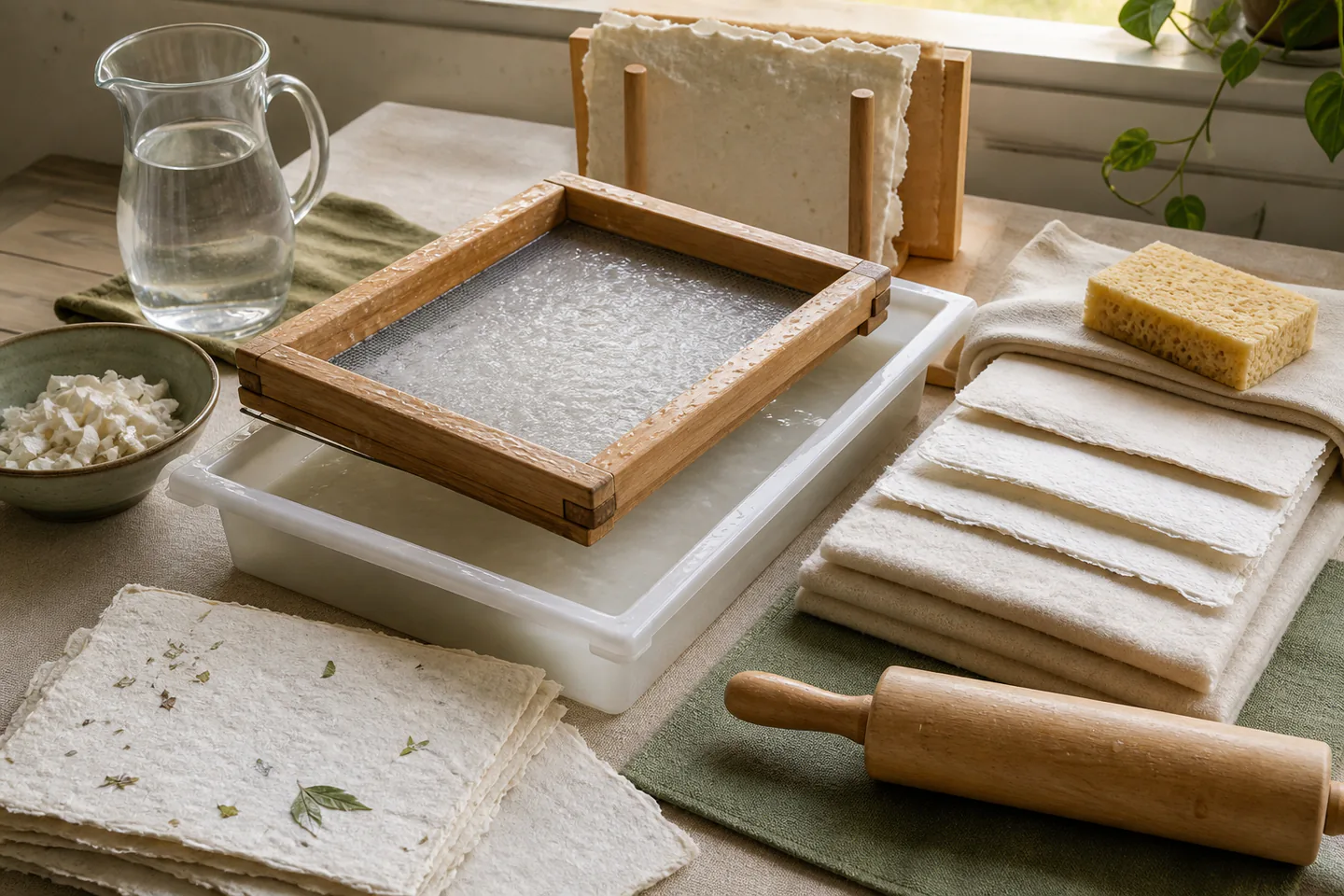
Tear clean uncoated waste paper, soak it, blend a small measured pulp batch with plenty of water and pour it into a shallow vat. Stir before each pull, lift a small mould and deckle level through the suspension, drain, couch onto absorbent cloth, press between boards and dry under restraint.
- 01
Start with plain uncoated office or drawing paper; glossy, thermal and contaminated paper complicate the first batch. Record what happened during handmade paper making so the next attempt changes one known variable instead of several guesses.
- 02
A thin well-dispersed vat is easier to learn from than a thick slurry that forms lumpy card. Record what happened during handmade paper making so the next attempt changes one known variable instead of several guesses.
- 03
The sheet releases because water is removed in stages: draining, couching, pressing and drying. Record what happened during handmade paper making so the next attempt changes one known variable instead of several guesses.
- 04
Pulp and paper fibres must stay out of household drains; strain process water and dispose of solids responsibly. Record what happened during handmade paper making so the next attempt changes one known variable instead of several guesses.
What to expect
What handmade paper making is really like at the start
The useful beginner controls are preparation, one bounded task and a record of the result; specialist equipment matters only when it solves a repeated limitation.
Pulp
Blending cuts fibres and changes strength, so repeated long blending can make brittle sheets. Record what happened during handmade paper making so the next attempt changes one known variable instead of several guesses.
Pull
Tilting or pausing the mould redistributes pulp and leaves thick edges or thin patches. Record what happened during handmade paper making so the next attempt changes one known variable instead of several guesses.
Couch
A clean decisive roll transfers the wet sheet more reliably than lifting and pressing repeatedly. Record what happened during handmade paper making so the next attempt changes one known variable instead of several guesses.
Dry
Uneven airflow and restraint create curl, texture and cockling that may be useful or unwanted. Record what happened during handmade paper making so the next attempt changes one known variable instead of several guesses.
Core method
The core handmade paper making method
Prepare one fibre source
Sort, tear and soak a single paper type so colour, coating and fibre behaviour remain understandable. Record what happened during handmade paper making so the next attempt changes one known variable instead of several guesses.
Make a repeatable vat
Blend measured handfuls with water, add to a marked vat level and stir the suspension before every pull. Record what happened during handmade paper making so the next attempt changes one known variable instead of several guesses.
Drain and couch
Hold the mould level, let the glossy surface turn matt, remove the deckle and roll the sheet onto damp absorbent cloth. Record what happened during handmade paper making so the next attempt changes one known variable instead of several guesses.
Press and dry
Stack between couching layers, press gradually, peel onto a smooth drying surface and keep flat until fully dry. Record what happened during handmade paper making so the next attempt changes one known variable instead of several guesses.
Useful products
Products with a clear job in the route
The scale helps repeat pulp batches, the flower press supplies even adjustable pressure and the magnifier reveals fibre distribution; a simple mould and deckle can be made or bought after measuring the intended sheet.
Salter 1036 Digital Kitchen Scale
It makes a first batch easier to repeat and diagnose.
Rhykoka Large Wooden Flower Press
It holds flat sheets more predictably than a shifting stack of books.
Carson LL-10 10× LumiLoupe Stand Magnifier
A stand leaves delicate paper, specimens or small finds undisturbed.
First project
Make three A5 sheets from one pulp batch
Keep the paper and vat constant, changing only the amount of pulp used for each pull.
- 01
Sort and soak
Use one clean paper type, remove staples and adhesive and soak the torn pieces until uniformly soft. Record what happened during handmade paper making so the next attempt changes one known variable instead of several guesses.
- 02
Blend and mark
Make a small pulp concentrate and record the paper and water amounts. Record what happened during handmade paper making so the next attempt changes one known variable instead of several guesses.
- 03
Pull three sheets
Stir between pulls and vary only the measured pulp addition. Record what happened during handmade paper making so the next attempt changes one known variable instead of several guesses.
- 04
Couch and press
Stack each sheet between absorbent layers and increase pressure evenly. Record what happened during handmade paper making so the next attempt changes one known variable instead of several guesses.
- 05
Compare dry results
Note thickness, pinholes, edge shape, strength and curl before altering fibre or additives. Record what happened during handmade paper making so the next attempt changes one known variable instead of several guesses.
What can wait
What can wait until the first result
Delay anything that adds cost, risk or another variable before the basic workflow has produced something you can review.
- 01
Decorative inclusions
Petals, threads and leaves can interrupt bonding or introduce moisture and mould. Record what happened during handmade paper making so the next attempt changes one known variable instead of several guesses.
- 02
Sizing chemistry
Surface sizing changes absorbency but hides whether the base sheet is sound. Record what happened during handmade paper making so the next attempt changes one known variable instead of several guesses.
- 03
Large moulds
Bigger sheets magnify vat, lifting and pressing problems. Record what happened during handmade paper making so the next attempt changes one known variable instead of several guesses.
- 04
Food blenders kept in service
Paper pulp and additives make equipment unsuitable for later food preparation. Record what happened during handmade paper making so the next attempt changes one known variable instead of several guesses.
Upgrade path
Add the capability you can now name
Each stage should remove a demonstrated constraint rather than make the setup look more advanced.
Use what you own
£0–£20Existing equipment and one written plan
Learn pulp concentration without buying specialist equipment.Repeat the first route
About £15–£55A complete repeatable starter setup
Produce a small stack with consistent weight and drying.Add one capability
Often £50–£250One selected tool, service or learning resource
Add a fitted mould, better couching felts or a stronger press to solve a measured problem.Build specialist depth
Club, course or specialist dependentA documented specialist workflow
Study fibre preparation, archival materials, sizing and edition paper through a paper or book-arts studio.Safety & care
Contain water, fibres and mould risk
Wet floors, electrical appliances, blocked drains and slowly drying organic material are the practical hazards.
- Use a dedicated blender with a sound lid and keep plugs, leads and sockets away from the wet work area.
- Strain pulp from waste water and never pour fibre slurry down a household drain.
- Clean and dry vats, cloths and boards promptly; discard material that smells sour or shows mould.
- Check recycled paper for staples, plastic windows, thermal coatings and confidential information before pulping.
- Use lifting help or a smaller press stack rather than overloading improvised boards and weights.
Outside help
When outside help earns its place
A paper or book-arts workshop is useful when you want to compare fibres, additives and presses without buying large wet-work equipment.
Look for a session that includes pulp preparation, sheet forming, couching, pressing and drying rather than decoration alone.
Use outside help after the first handmade paper making attempt can reveal the exact technique, access or safety problem that needs live correction.
Representative UK learning and access routes checked 1 September 2026; local prices, permissions, equipment and tutor support vary.
Sources
Where the guidance came from
Authoritative and specialist guidance supports the method and safety boundaries; community discussion contributes recurring beginner problems rather than unsupported claims.
-
01
Paperslurry · Handmade paper from recycled paper
Practical recycled-pulp, mould, couching and drying sequence.
Open source -
02
Paperslurry · Make a mould and deckle
Simple mould-and-deckle construction and mesh-tension context.
Open source -
03
Book Arts Web
Specialist paper and book-arts technique references.
Open source -
04
Library of Congress · Care, handling and storage of works on paper
Paper handling, moisture and preservation context.
Open source -
05
Centre for Book Arts · Education
Shared-facility and structured book-arts learning context.
Open source -
06
Reddit · r/papermaking
Community evidence on vat consistency, couching, pressing and drying problems.
Open source -
07
Amazon UK · 1036 Digital Kitchen Scale
Exact Amazon UK product page or ISBN used for this recommendation; current price, seller, specification and availability should be confirmed.
Open source -
08
Amazon UK · Large Wooden Flower Press
Exact Amazon UK product page or ISBN used for this recommendation; current price, seller, specification and availability should be confirmed.
Open source -
09
Amazon UK · LL-10 10× LumiLoupe Stand Magnifier
Exact Amazon UK product page or ISBN used for this recommendation; current price, seller, specification and availability should be confirmed.
Open source
Guide information and links checked 1 September 2026.