Beginner’s guide · Cook & bake
Cast-iron skillet cooking
Start with one useful result.
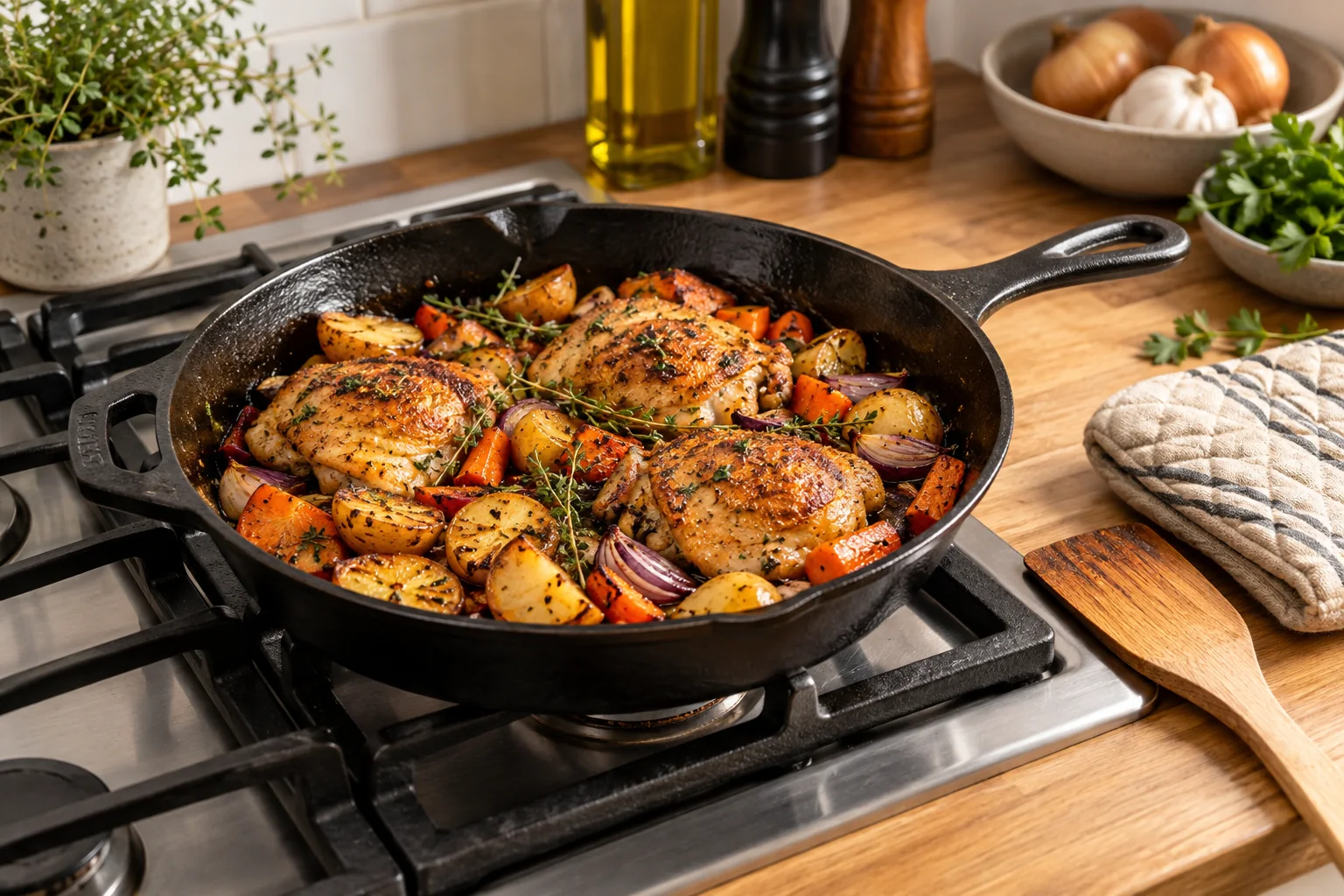
Cast iron rewards steady heat and straightforward care. Start with a vegetable and potato skillet supper on your normal hob, then wash, dry and lightly oil the pan. A new pan is unnecessary if you already have a sound one.
Quick answer
Start with a skillet supper of vegetables and potatoes
Cast iron rewards steady heat and straightforward care. Start with a vegetable and potato skillet supper on your normal hob, then wash, dry and lightly oil the pan. A new pan is unnecessary if you already have a sound one.
- 01
Seasoned cast-iron skillet with a stable flat base
- 02
Vegetables, potatoes, cooking oil and a tested simple recipe
- 03
Heatproof mitt, wooden or suitable silicone utensil and drying cloth
What to expect
What the first attempt is really like
The useful skill here is preheating gradually and managing retained heat. These details matter more than a polished first result.
Heat retention
Cast iron responds slowly but stays hot, so medium heat often does more than expected.
Seasoning
A mottled surface is normal; black peeling flakes or rust need care, not an instant replacement.
Handling
The handle becomes hot and the pan is heavy when full.
The method
The method worth learning
Check what sort of pan you have
This route uses bare seasoned iron. Enamelled cast iron has different instructions; do not strip or season its coating as though it were bare metal. Check the handle, base and cooking surface for damage. A new pre-seasoned pan normally needs washing and drying before its first cook, rather than an elaborate stripping project.
Heat slowly and keep a clear landing place
Use a hob ring reasonably matched to the base, start with moderate heat and allow gradual preheating. High power does not make heavy iron heat evenly instantly, especially on induction. Lift rather than drag it over a glass hob. Both the long handle and helper handle can become very hot; keep dry oven gloves and a heatproof trivet ready before cooking. Use an extractor and avoid heating oil to a cloud of smoke.
Give food room to brown
Begin with evenly cut, already cooked potatoes and a small amount of pepper or courgette. Dry surfaces encourage browning. Add a little suitable cooking oil, put the potatoes in a single layer and let the contact side colour before moving them. Cook in smaller batches if food crowds the surface. Add quicker-cooking vegetables later so they do not turn to mush while the potatoes brown. This teaches heat response and release without relying on raw-meat timing.
Learn ordinary care rather than seasoning rituals
After the pan has cooled enough to handle, wash it with warm water, a brush and a little washing-up liquid if needed. Lodge permits soap; avoid the dishwasher and long soaking. Dry thoroughly, using brief low heat if appropriate, then wipe on a very thin protective oil film. Heavy oil left on the surface can become sticky. Cooking repeatedly and keeping the pan dry are usually more useful than applying many new oven-seasoning coats after every meal. For a damaged seasoning layer, follow the maker’s specific re-seasoning procedure.
Useful products
Equipment with a clear job
Start with suitable equipment you already own. These exact UK listings are useful examples when a missing tool limits the first project; prices and availability were checked on 2 October 2026 and delivery may add to the cost.
Lodge Classic Cast Iron Skillet, approximately 26 cm
A pre-seasoned medium pan for a small potato-and-vegetable supper on a normal hob.
What can wait
What can wait
Keep the first project small and learn what the equipment is doing before adding more.
- 01
Stripping a usable new pan
It creates extra work before you have learned the cooking routine. Wash, dry and cook unless there is a real defect.
- 02
Several special oils
Ordinary suitable cooking oil and a thin protective film are enough. Technique matters more than a premium seasoning brand.
- 03
A very large skillet
It is heavy and may heat unevenly on a small hob. Check your ring and storage space before increasing size.
First project
First project: A skillet supper of vegetables and potatoes
Start with a skillet supper of vegetables and potatoes. Use the listed equipment, take notes on the result and repeat the small project before expanding it.
- 01
Inspect and preheat
Check the pan for damage, set it on a suitable hob ring and warm it gradually.
- 02
Cook in stages
Add oil and the slower-cooking ingredients first. Adjust heat before food scorches; finish with a simple seasoning.
- 03
Rest safely
Move the skillet to a heatproof surface with a dry mitt; keep the hot handle away from passers-by.
- 04
Clean and dry
Wash according to maker guidance, dry fully and wipe with a very thin film of oil if needed.
Troubleshooting
When the first attempt goes wrong
Everything sticks
Check preheat, food moisture, pan crowding and whether you tried to turn too early. A dark surface does not guarantee non-stick behaviour. Change one part of the cooking routine before buying a restoration kit.
Oil becomes smoky very quickly
Reduce power, ventilate and let the pan cool safely. Iron retains heat after the hob is lowered. Keep the next cook on a gentler setting; do not quench a hot pan in cold water.
The surface feels sticky
Too much seasoning oil is a common cause. Wash and dry properly, then follow the maker’s remedy if the residue remains. The protective film should be scarcely visible rather than glossy and wet.
Orange rust appears
Prompt drying matters even on a pre-seasoned pan. Remove light surface rust and re-season by the maker’s procedure. Deep damage, cracks or insecure handles need assessment before use.
Upgrade path
Where to go after the first result
Repeat the simple route first, then choose the next step that solves a problem you have actually met.
Technique
Ingredients onlyRepeat potatoes, then try another meal
Learn preheating and release on the same pan before switching ingredients and temperature together.Versatility
Use owned oven gloves and trivet firstA hob-to-oven recipe
Adds roasting or baking after checking the whole pan is oven-safe. Remember the handle when it comes out.Capacity
Check a current exact pan priceAnother shape or size
Useful when repeated meals require a deeper pot or more browning surface; adds weight and cupboard space.Safety & care
Safety and practical limits
Use the current instructions for the exact food, material or equipment in front of you.
- Never leave the hot handle unmarked or within reach of children.
- Follow the pan maker's cleaning instructions and dry promptly to prevent rust.
- Use a clean probe and current UK guidance whenever cooking meat or fish in the skillet.
Learning & help
Learning at home and optional help
A class is optional for this first route. Use the free guidance before paying for help.
Lodge’s free beginner and care guides explain normal use, soap and thin oil. Follow your exact pan maker if its instructions differ.
A cookery lesson can help with a specific heat-control problem, but a pan-care class is not required. Stop using cracked cookware or a loose handle and ask the maker or a competent repair service whether repair is sensible.
Learning sources checked 2 October 2026. No unverified class fee or booking availability is quoted.
Sources
Where the guidance came from
Food and wildlife authorities, exact maker instructions, specialist guidance, practitioner observations and UK product listings support the route above. Community accounts inform practical expectations; they do not establish food safety, wildlife rules or current prices.
-
01
Lodge Cast Iron · Cleaning and care
Seasoning, washing and drying
Open source -
02
Lodge Cast Iron · How to season
Thin-oil seasoning method
Open source -
03
Lodge Cast Iron · Beginner's guide
Gradual preheating, cooking and daily care
Open source -
04
Food Standards Agency · Cooking your food
UK cooking and thermometer advice
Open source -
05
Food Standards Agency · Chilling
Chilled food and leftover storage
Open source -
06
r/castiron · Seasoning process discussion
Thin oil, drying and seasoning problems discussed by users; maker instructions take priority.
Open source -
07
Cast Iron Collector Forums · Heat before seasoning
Practitioner discussion of warm pans and excess oil during seasoning.
Open source -
08
Lodge · Classic Cast Iron Skillet, approximately 26 cm
Exact selected model, price and availability used for the recommendation; recheck delivery and checkout.
Open source
Guide information and links checked 2 October 2026.