Beginner’s guide · Make & create
Measure the real shape,
then simplify it at scale.
Polymer-clay food looks convincing when scale, colour, translucency and repeated cuts are planned before texture or gloss.
Quick answer
Complete one miniature food study before expanding the setup
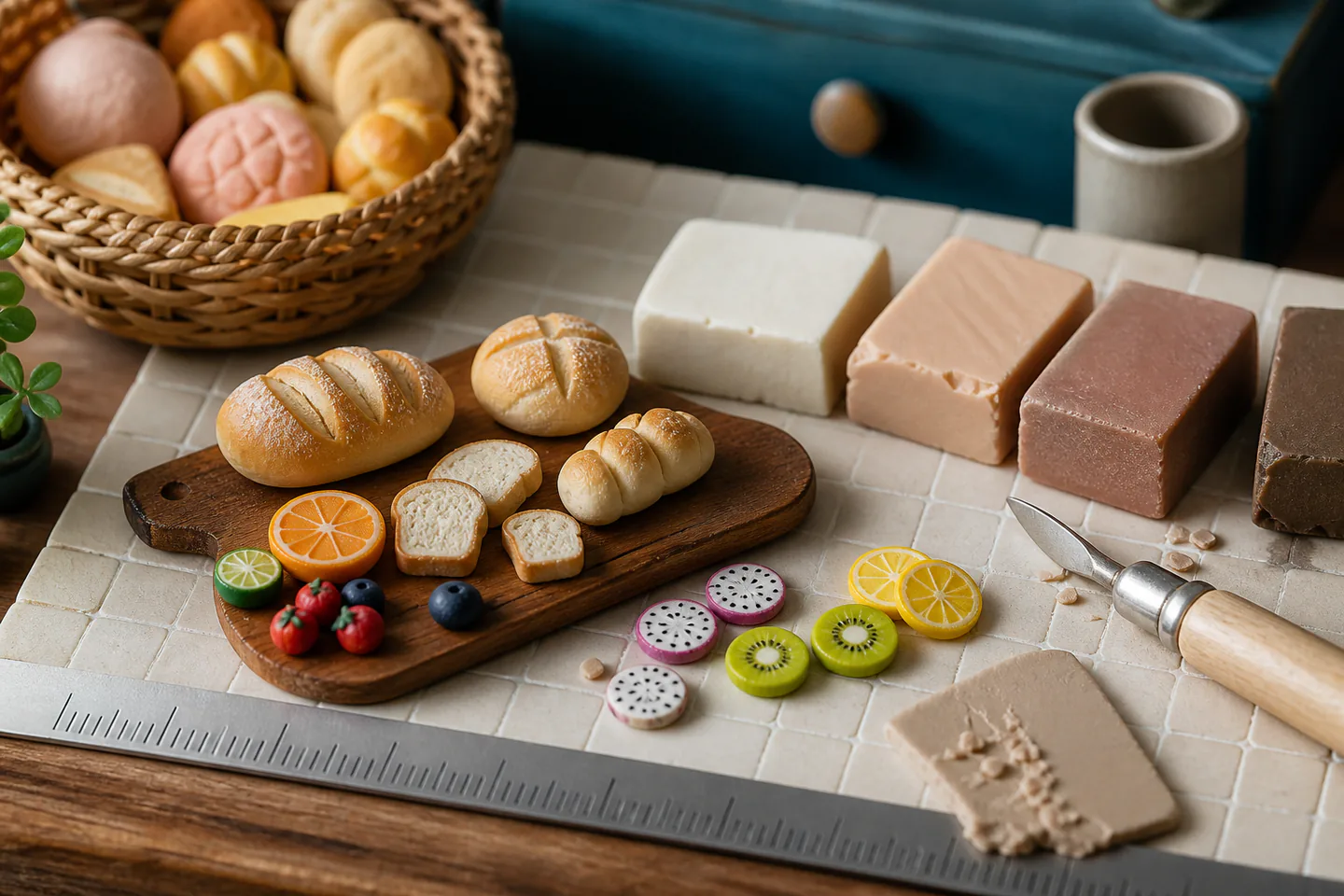
Choose one 1:12 subject such as a bread board, measure the real items and divide each dimension by twelve. Mix small muted clay colours, form three repeated loaves or fruits with a ruler beside the work, add texture with a dedicated tool, cure a test tile and the pieces exactly to the clay maker’s current instructions, then add only the finish that the represented food actually needs.
- 01
Scale applies to thickness, crumb, seeds and shine as well as overall length. Record what happened during miniature food making so the next attempt changes one known variable instead of several guesses.
- 02
Polymer clay colour often changes slightly through curing, so a labelled test tile protects the final batch. Record what happened during miniature food making so the next attempt changes one known variable instead of several guesses.
- 03
Dedicated craft tools and surfaces prevent polymer clay from entering food preparation. Record what happened during miniature food making so the next attempt changes one known variable instead of several guesses.
- 04
Texture is most convincing when it follows how the food was cut, baked or handled rather than covering every surface. Record what happened during miniature food making so the next attempt changes one known variable instead of several guesses.
What to expect
What miniature food making is really like at the start
The useful beginner controls are preparation, one bounded task and a record of the result; specialist equipment matters only when it solves a repeated limitation.
Colour
Pure bright clay can look toy-like; tiny amounts of neutral or translucent clay often make food more believable. Record what happened during miniature food making so the next attempt changes one known variable instead of several guesses.
Scale
A deep knife score or large seed can become several centimetres wide in the imagined full-size object. Record what happened during miniature food making so the next attempt changes one known variable instead of several guesses.
Cure
Too little heat leaves weak pieces, while excessive temperature can discolour material and create fumes. Record what happened during miniature food making so the next attempt changes one known variable instead of several guesses.
Finish
Gloss suits syrup or cut fruit but makes bread crust and pastry look plastic when applied everywhere. Record what happened during miniature food making so the next attempt changes one known variable instead of several guesses.
Core method
The core miniature food making method
Convert the dimensions
Write the real length, width and thickness and divide by the chosen scale before shaping. Record what happened during miniature food making so the next attempt changes one known variable instead of several guesses.
Build colour recipes
Mix tiny labelled swatches for crust, crumb and fruit and keep the recipe approximate but repeatable. Record what happened during miniature food making so the next attempt changes one known variable instead of several guesses.
Shape repeated units
Roll and cut with guides so a set of slices or pastries belongs to one visual scale. Record what happened during miniature food making so the next attempt changes one known variable instead of several guesses.
Cure and finish selectively
Test the oven, follow packet time and temperature and add pastel or varnish only where the real surface warrants it. Record what happened during miniature food making so the next attempt changes one known variable instead of several guesses.
Useful products
Products with a clear job in the route
The small FIMO set provides compatible colours, the dedicated board and blades control repeated layers and the oven thermometer checks the curing environment.
STAEDTLER FIMO Soft Basic Colours, 12 × 25 g
Small blocks encourage mixing measured colours rather than buying a large collection.
Unbranded Four-Piece Polymer Clay Tool Set
A tiny loaf, pastry or sliced fruit needs repeatable thickness more than many decorative cutters.
Salter Analogue Oven Thermometer, 50–300°C
A measured cure reduces brittleness and the risk of overheating polymer clay.
First project
Make a 1:12 bread board with three fruits
Keep every part larger than a seed and use one labelled test tile to compare uncured and cured colour.
- 01
Set the scale
Measure one real loaf, slice and fruit and calculate the miniature dimensions. Record what happened during miniature food making so the next attempt changes one known variable instead of several guesses.
- 02
Mix three colours
Prepare crumb, crust and fruit mixes and press a labelled sample tile. Record what happened during miniature food making so the next attempt changes one known variable instead of several guesses.
- 03
Form the repeated shapes
Use the ruler, roller and blade to keep pieces consistent rather than identical. Record what happened during miniature food making so the next attempt changes one known variable instead of several guesses.
- 04
Texture with restraint
Score bread where it would expand and stipple only the surfaces that need it. Record what happened during miniature food making so the next attempt changes one known variable instead of several guesses.
- 05
Cure and review
Use the packet instructions and thermometer, cool fully and compare against reference at normal viewing distance. Record what happened during miniature food making so the next attempt changes one known variable instead of several guesses.
What can wait
What can wait until the first result
Delay anything that adds cost, risk or another variable before the basic workflow has produced something you can review.
- 01
Ultra-thin translucent slices
They magnify brittleness, dust and blade-control problems. Record what happened during miniature food making so the next attempt changes one known variable instead of several guesses.
- 02
Resin drinks and sauces
Resin chemistry, bubbles and light curing add another safety system. Record what happened during miniature food making so the next attempt changes one known variable instead of several guesses.
- 03
A full miniature kitchen
One coherent plate teaches more than many unrelated objects. Record what happened during miniature food making so the next attempt changes one known variable instead of several guesses.
- 04
Food-shaped jewellery
Wear strength, findings and skin-contact materials require separate testing. Record what happened during miniature food making so the next attempt changes one known variable instead of several guesses.
Upgrade path
Add the capability you can now name
Each stage should remove a demonstrated constraint rather than make the setup look more advanced.
Use what you own
£0–£20Existing equipment and one written plan
Use one scale, basic colours and household reference photos.Repeat the first route
About £15–£35A complete repeatable starter setup
Repeat one subject with more consistent colour and thickness.Add one capability
Often £50–£250One selected tool, service or learning resource
Add liquid clay, pastel or gloss for a specific surface effect.Build specialist depth
Club, course or specialist dependentA documented specialist workflow
Develop moulds, mixed-media scenes or repeatable small-batch designs.Safety & care
Keep craft chemistry out of the kitchen workflow
Polymer clay is an art material even when the subject looks edible.
- Use dedicated boards, blades, rollers and trays and never return them to food use.
- Follow the exact clay packet for curing temperature, time, ventilation and age guidance.
- Use an oven thermometer, avoid direct contact with heating elements and stop if material scorches or creates irritating fumes.
- Handle flexible blades by their safe edge, cut away from fingers and store them covered.
- Keep tiny pieces, raw clay, powders and varnishes away from children, pets and mouths.
Outside help
When outside help earns its place
A miniature-food class is useful for live scale correction, colour recipes and controlled canes after a first simple plate.
Ask which clay brand, curing equipment and dedicated tools are provided.
Use outside help after the first miniature food making attempt can reveal the exact technique, access or safety problem that needs live correction.
Representative UK learning and access routes checked 1 September 2026; local prices, permissions, equipment and tutor support vary.
Sources
Where the guidance came from
Authoritative and specialist guidance supports the method and safety boundaries; community discussion contributes recurring beginner problems rather than unsupported claims.
-
01
STAEDTLER · FIMO product catalogue
Manufacturer clay types, storage and miniature-use context.
Open source -
02
STAEDTLER · FIMO overview
Current material families and accessories.
Open source -
03
Sculpey · Baking polymer clay
Manufacturer curing, support and testing principles.
Open source -
04
Sculpey · Polymer clay safety
Dedicated tools, handling and oven-use guidance.
Open source -
05
HSE · COSHH basics
Material exposure and control principles.
Open source -
06
Reddit · r/miniatures
Community evidence on scale, colour, texture and first miniature-food projects.
Open source -
07
Amazon UK · FIMO Soft Basic Colours, 12 × 25 g
Exact Amazon UK product page or ISBN used for this recommendation; current price, seller, specification and availability should be confirmed.
Open source -
08
Amazon UK · Four-Piece Polymer Clay Tool Set
Exact Amazon UK product page or ISBN used for this recommendation; current price, seller, specification and availability should be confirmed.
Open source -
09
Amazon UK · Analogue Oven Thermometer, 50–300°C
Exact Amazon UK product page or ISBN used for this recommendation; current price, seller, specification and availability should be confirmed.
Open source
Guide information and links checked 1 September 2026.