Beginner’s guide · Make & create
Count every yarn-over,
then block the lace gently enough to reveal it.
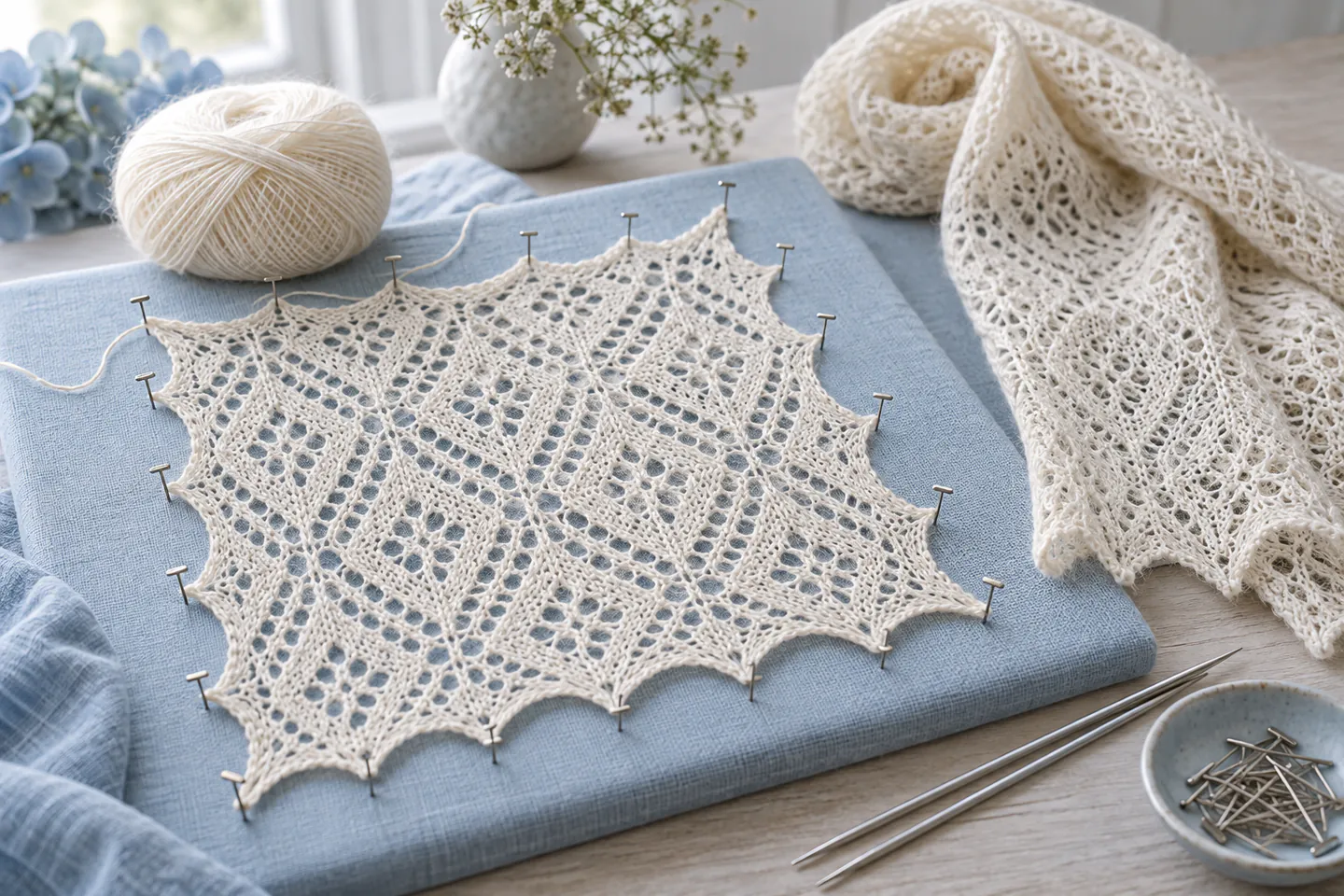
Shetland lace uses fine wool, patterned eyelets and careful blocking. Begin with a heavier-yarn practice swatch before laceweight work.
Quick answer
Complete one a garter-based lace border sampler before expanding the setup
Begin with smooth light fingering or DK yarn rather than the finest laceweight. Knit a charted Shetland-inspired border sample with a garter base, place a lifeline after every correct repeat and count yarn-overs against decreases. Bind off elastically, wash only by the yarn label and pin or wire the sample to measured dimensions on a clean surface.
- 01
Lace holes are deliberate yarn-overs balanced by decreases that control stitch count and direction. For a first shetland lace knitting attempt, keep the materials, measurements and sequence written beside the work. Photograph or measure the result before correcting it, because a visible record separates a technique problem from a material or setup problem.
- 02
Shetland lace is a regional tradition with specific fibres, structures and histories, not a generic label for any open knitting. For a first shetland lace knitting attempt, keep the materials, measurements and sequence written beside the work. Photograph or measure the result before correcting it, because a visible record separates a technique problem from a material or setup problem.
- 03
A lifeline preserves a known correct row and makes repair far less destructive. For a first shetland lace knitting attempt, keep the materials, measurements and sequence written beside the work. Photograph or measure the result before correcting it, because a visible record separates a technique problem from a material or setup problem.
- 04
Blocking reveals the pattern but cannot reliably repair missing stitches or severely uneven structure. For a first shetland lace knitting attempt, keep the materials, measurements and sequence written beside the work. Photograph or measure the result before correcting it, because a visible record separates a technique problem from a material or setup problem.
What to expect
What shetland lace knitting is really like at the start
The useful beginner controls are setup, repeatable movement and a finished sample. Balancing yarn-overs and decreases while tracking every row is the main skill to observe before adding scale or decoration.
Chart
Symbols show the action on a particular row and may omit resting wrong-side rows. For a first shetland lace knitting attempt, keep the materials, measurements and sequence written beside the work. Photograph or measure the result before correcting it, because a visible record separates a technique problem from a material or setup problem.
Count
One missed yarn-over shifts both stitch total and motif alignment. For a first shetland lace knitting attempt, keep the materials, measurements and sequence written beside the work. Photograph or measure the result before correcting it, because a visible record separates a technique problem from a material or setup problem.
Yarn
Fine dark or fuzzy fibre hides the exact loop that needs repair. For a first shetland lace knitting attempt, keep the materials, measurements and sequence written beside the work. Photograph or measure the result before correcting it, because a visible record separates a technique problem from a material or setup problem.
Blocking
Overstretching can weaken fine wool and distort intended proportions. For a first shetland lace knitting attempt, keep the materials, measurements and sequence written beside the work. Photograph or measure the result before correcting it, because a visible record separates a technique problem from a material or setup problem.
Core method
The core shetland lace knitting method
Use visible practice yarn
Choose a small repeat and enough contrast to identify every yarn-over and decrease. For a first shetland lace knitting attempt, keep the materials, measurements and sequence written beside the work. Photograph or measure the result before correcting it, because a visible record separates a technique problem from a material or setup problem.
Read row and repeat separately
Mark the current row, place repeat markers and count after each section. For a first shetland lace knitting attempt, keep the materials, measurements and sequence written beside the work. Photograph or measure the result before correcting it, because a visible record separates a technique problem from a material or setup problem.
Add regular lifelines
Thread waste yarn through a verified row without splitting the working stitches. For a first shetland lace knitting attempt, keep the materials, measurements and sequence written beside the work. Photograph or measure the result before correcting it, because a visible record separates a technique problem from a material or setup problem.
Bind and block to measurement
Use rustproof equipment, even tension and the fibre maker’s water and drying guidance. For a first shetland lace knitting attempt, keep the materials, measurements and sequence written beside the work. Photograph or measure the result before correcting it, because a visible record separates a technique problem from a material or setup problem.
Useful products
Products with a clear job in the route
These two products cover distinct jobs in the beginner route; they are not a requirement to buy a bundle. Use materials already owned when they meet the same specification, and confirm every live listing before ordering.
Search Press How to Start Knitting
It provides a stable foundation before technique-specific pattern sources are added.
Stylecraft Special DK Acrylic Yarn, 100 g
It is easier to undo and inspect than dark, fluffy or highly variable yarn.
First project
Make a garter-based lace border sampler
Keep the project small enough to finish, inspect and repeat. The first result is evidence about material compatibility, sequence and control rather than a performance test.
- 01
Prepare the workspace and materials
Choose a small repeat and enough contrast to identify every yarn-over and decrease. For a first shetland lace knitting attempt, keep the materials, measurements and sequence written beside the work. Photograph or measure the result before correcting it, because a visible record separates a technique problem from a material or setup problem.
- 02
Make the first controlled pass
Mark the current row, place repeat markers and count after each section. For a first shetland lace knitting attempt, keep the materials, measurements and sequence written beside the work. Photograph or measure the result before correcting it, because a visible record separates a technique problem from a material or setup problem.
- 03
Check the central technique
Thread waste yarn through a verified row without splitting the working stitches. For a first shetland lace knitting attempt, keep the materials, measurements and sequence written beside the work. Photograph or measure the result before correcting it, because a visible record separates a technique problem from a material or setup problem.
- 04
Complete the structure
Use rustproof equipment, even tension and the fibre maker’s water and drying guidance. For a first shetland lace knitting attempt, keep the materials, measurements and sequence written beside the work. Photograph or measure the result before correcting it, because a visible record separates a technique problem from a material or setup problem.
- 05
Finish, measure and record
Let the work settle or dry by the relevant material instructions, then measure, photograph and label the result. Record the one change that would make the next shetland lace knitting attempt more controlled. For a first shetland lace knitting attempt, keep the materials, measurements and sequence written beside the work. Photograph or measure the result before correcting it, because a visible record separates a technique problem from a material or setup problem.
What can wait
What can wait until the first result
Delay anything that adds cost, risk or another variable before the basic workflow has produced something you can review.
- 01
Wedding-ring shawl
Extremely fine yarn and scale require established repair skills. For a first shetland lace knitting attempt, keep the materials, measurements and sequence written beside the work. Photograph or measure the result before correcting it, because a visible record separates a technique problem from a material or setup problem.
- 02
Dark mohair
Fuzz and low contrast make unknitting difficult. For a first shetland lace knitting attempt, keep the materials, measurements and sequence written beside the work. Photograph or measure the result before correcting it, because a visible record separates a technique problem from a material or setup problem.
- 03
Complex all-over chart
A narrow border gives clearer row landmarks. For a first shetland lace knitting attempt, keep the materials, measurements and sequence written beside the work. Photograph or measure the result before correcting it, because a visible record separates a technique problem from a material or setup problem.
- 04
Aggressive blocking
Finer is not stronger; use measured gentle tension. For a first shetland lace knitting attempt, keep the materials, measurements and sequence written beside the work. Photograph or measure the result before correcting it, because a visible record separates a technique problem from a material or setup problem.
Upgrade path
Add the capability you can now name
Each stage should remove a demonstrated limitation rather than make the setup look more advanced.
Visible-yarn swatch
Use owned tools where possibleOne small sample and written notes
Learn the central movement and material behaviour.Laceweight scarf
About £20–£80A repeatable complete starter setup
Repeat the result with cleaner finish and fewer corrections.Traditional shawl section
About £50–£180A selected tool or structured class
Add one technique, size or design capability.Complex heirloom shawl
Cost varies widelyA documented specialist workflow
Develop original work with provenance, testing and appropriate safety.Safety & care
Safety, care and respectful practice in shetland lace knitting
The practical risks are manageable when tools, materials and cultural claims remain specific and proportionate.
- Use rustproof pins or wires and keep them accounted for on a firm blocking surface. For a first shetland lace knitting attempt, keep the materials, measurements and sequence written beside the work. Photograph or measure the result before correcting it, because a visible record separates a technique problem from a material or setup problem.
- Support posture and take eye breaks during fine chart reading. For a first shetland lace knitting attempt, keep the materials, measurements and sequence written beside the work. Photograph or measure the result before correcting it, because a visible record separates a technique problem from a material or setup problem.
- Store fine yarn away from pets, moths and damp. For a first shetland lace knitting attempt, keep the materials, measurements and sequence written beside the work. Photograph or measure the result before correcting it, because a visible record separates a technique problem from a material or setup problem.
- Follow fibre care instructions and avoid sudden temperature or agitation changes. For a first shetland lace knitting attempt, keep the materials, measurements and sequence written beside the work. Photograph or measure the result before correcting it, because a visible record separates a technique problem from a material or setup problem.
- Credit Shetland designers, archives and regional terminology accurately. For a first shetland lace knitting attempt, keep the materials, measurements and sequence written beside the work. Photograph or measure the result before correcting it, because a visible record separates a technique problem from a material or setup problem.
Outside help
When outside help earns its place
A guided session is useful when equipment setup, live hand correction, heat, sharp tools or a specialist press blocks safe progress. A clear source is enough for the smallest shetland lace knitting sample.
Choose one coherent lesson that covers preparation, the central shetland lace knitting technique, finishing and common mistakes.
Ask which tools and materials are included, whether the project can be finished in the session and what safety induction is provided.
Representative UK learning and access routes checked 20 September 2026; local prices, equipment and tutor support vary.
Sources
Where the guidance came from
Authoritative and specialist guidance supports the method, terminology and safety boundaries; community discussion contributes recurring beginner problems rather than unsupported claims.
-
01
Craft Yarn Council · Standards
Yarn weights, hooks, needles and pattern terminology.
Open source -
02
UK Hand Knitting · Learning resources
UK beginner technique and fibre-craft guidance.
Open source -
03
The Woolmark Company · Wool care
Wool handling, washing and fibre-care context.
Open source -
04
Ravelry
Pattern, yarn and project experience from a large maker community.
Open source -
05
Wool Warehouse · Tutorials
UK yarn retailer technique and material context.
Open source -
06
Reddit · r/knitting
Recurring practitioner evidence on gauge, tension and repairs.
Open source -
07
Amazon UK · How to Start Knitting
Exact Amazon UK catalogue page or ISBN used for the recommendation; confirm current price, seller, specification and availability.
Open source -
08
Amazon UK · Special DK Acrylic Yarn, 100 g
Exact Amazon UK catalogue page or ISBN used for the recommendation; confirm current price, seller, specification and availability.
Open source
Guide information and links checked 20 September 2026.