Beginner’s guide · Cook & bake
Bake one reliable sponge
before decorating the finish.
Cake baking begins with an accurate recipe, weighed ingredients, a prepared tin, known oven temperature and a cooling plan that separates structure from decoration.
Quick answer
Use weight, temperature and time as the first recipe
Use one reputable sponge recipe written for the exact tin size. Weigh every ingredient, bring ingredients to the stated temperature, prepare the tin before mixing and bake on the recommended shelf without opening the door early.
- 01
Read the whole recipe, check allergens and dates, weigh ingredients and prepare the tin and cooling rack before combining raising agents with liquids. Keep the first attempt narrow enough that preparation, the main action and the result can all be reviewed together.
- 02
Use the stated mixing method and tin dimensions, then control oven temperature and time without compensating through repeated door opening. Keep the first attempt narrow enough that preparation, the main action and the result can all be reviewed together.
- 03
Use colour, spring, edge release and the recipe’s skewer or internal-temperature guidance together, then judge crumb only after full cooling. Keep the first attempt narrow enough that preparation, the main action and the result can all be reviewed together.
- 04
Cool, wrap and label the cake appropriately, wash egg-contact equipment promptly and record tin, oven setting, bake time and crumb result. Keep the first attempt narrow enough that preparation, the main action and the result can all be reviewed together.
What to expect
Consistency begins before the mixture reaches the bowl or bottle
Clean handling, measured ingredients and recorded timings make a result repeatable and safer.
The first attempt
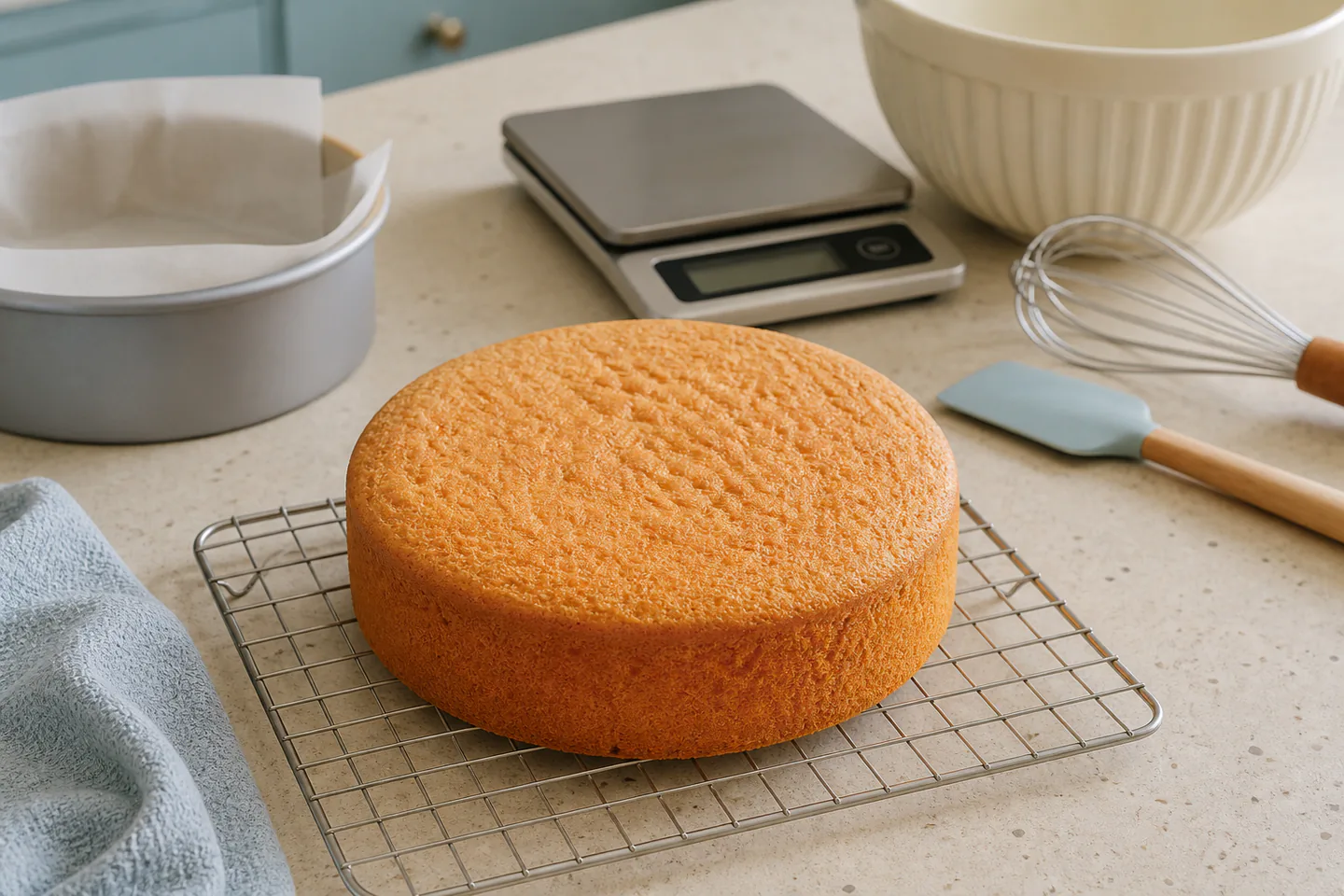
An undecorated sponge reveals mixing and oven behaviour that icing would hide; decorating is the separate next step covered by the existing guide. For cake baking, note what actually happened rather than relying on memory; that turns the next attempt into a controlled change instead of another guess.
The control point
Use the stated mixing method and tin dimensions, then control oven temperature and time without compensating through repeated door opening. For cake baking, note what actually happened rather than relying on memory; that turns the next attempt into a controlled change instead of another guess.
The useful signal
Use colour, spring, edge release and the recipe’s skewer or internal-temperature guidance together, then judge crumb only after full cooling. For cake baking, note what actually happened rather than relying on memory; that turns the next attempt into a controlled change instead of another guess.
The common trap
Changing tin size, sugar, fat, flour and oven setting together turns a recipe into an uncontrolled experiment. For cake baking, note what actually happened rather than relying on memory; that turns the next attempt into a controlled change instead of another guess.
Core method
Prepare cleanly, measure, control and assess
Prepare deliberately
Read the whole recipe, check allergens and dates, weigh ingredients and prepare the tin and cooling rack before combining raising agents with liquids. For cake baking, note what actually happened rather than relying on memory; that turns the next attempt into a controlled change instead of another guess.
Control the central variable
Use the stated mixing method and tin dimensions, then control oven temperature and time without compensating through repeated door opening. For cake baking, note what actually happened rather than relying on memory; that turns the next attempt into a controlled change instead of another guess.
Read the result
Use colour, spring, edge release and the recipe’s skewer or internal-temperature guidance together, then judge crumb only after full cooling. For cake baking, note what actually happened rather than relying on memory; that turns the next attempt into a controlled change instead of another guess.
Reset before repeating
Cool, wrap and label the cake appropriately, wash egg-contact equipment promptly and record tin, oven setting, bake time and crumb result. For cake baking, note what actually happened rather than relying on memory; that turns the next attempt into a controlled change instead of another guess.
Useful products
Products with a clear job in the setup
A digital scale makes ratios repeatable, a simple metal tray demonstrates pan material and the existing decorating turntable belongs only after the cake is structurally sound.
Salter 1036 BKSSDR Digital Kitchen Scale
Tare reduces transfer and makes recipe ratios easier to reproduce.
Prochef Non-Stick Pizza Tray, 32.5 cm
It reinforces that pan shape changes bake depth and time.
PME Baker’s Cake Decorating Turntable 31 cm
It connects cake baking to the existing cake-decorating guide.
First project
Bake and assess one plain sponge
Cool it completely, cut a central slice and record crumb, rise and moisture before deciding what to change.
- 01
Set up
Read the whole recipe, check allergens and dates, weigh ingredients and prepare the tin and cooling rack before combining raising agents with liquids. For cake baking, note what actually happened rather than relying on memory; that turns the next attempt into a controlled change instead of another guess.
- 02
Begin the first attempt
An undecorated sponge reveals mixing and oven behaviour that icing would hide; decorating is the separate next step covered by the existing guide. For cake baking, note what actually happened rather than relying on memory; that turns the next attempt into a controlled change instead of another guess.
- 03
Hold one variable steady
Use the stated mixing method and tin dimensions, then control oven temperature and time without compensating through repeated door opening. For cake baking, note what actually happened rather than relying on memory; that turns the next attempt into a controlled change instead of another guess.
- 04
Inspect the result
Use colour, spring, edge release and the recipe’s skewer or internal-temperature guidance together, then judge crumb only after full cooling. For cake baking, note what actually happened rather than relying on memory; that turns the next attempt into a controlled change instead of another guess.
- 05
Reset and record
Cool, wrap and label the cake appropriately, wash egg-contact equipment promptly and record tin, oven setting, bake time and crumb result. For cake baking, note what actually happened rather than relying on memory; that turns the next attempt into a controlled change instead of another guess.
What can wait
What can wait until the first result
Delay decorative or high-capacity equipment until the base process works.
- 01
A large first setup
Scale multiplies Changing tin size, sugar, fat, flour and oven setting together turns a recipe into an uncontrolled experiment. before the basic routine is known. For cake baking, note what actually happened rather than relying on memory; that turns the next attempt into a controlled change instead of another guess.
- 02
Premium specialist equipment
It should solve a limitation you can describe after several cake baking sessions. For cake baking, note what actually happened rather than relying on memory; that turns the next attempt into a controlled change instead of another guess.
- 03
Several methods at once
Changing materials and technique together makes the cause of a result hard to see. For cake baking, note what actually happened rather than relying on memory; that turns the next attempt into a controlled change instead of another guess.
- 04
Buying for a future version
Finish and review the small route before equipping an imagined advanced practice. For cake baking, note what actually happened rather than relying on memory; that turns the next attempt into a controlled change instead of another guess.
Upgrade path
Upgrade the repeated limitation
Upgrade the repeated production bottleneck.
Try it
About £25–£70 with an existing ovenExact tin, scale and trusted recipe
Complete one meaningful result and learn the whole sequence.Repeat it
About £25–£70 with an existing ovenOven thermometer and cooling storage
Reduce setup friction and compare several attempts.Improve the bottleneck
£100–£400Second matching tin or mixer for a proven workflow
Address Changing tin size, sugar, fat, flour and oven setting together turns a recipe into an uncontrolled experiment. with a targeted change.Go deeper
VariableLayer cakes, varied methods and decorating
Add scale, precision or public participation with evidence from practice.Safety & care
Food hygiene and heat remain part of the recipe
Eggs, allergens, hot tins and storage decisions matter even when the bake looks simple.
- Wash hands and clean surfaces after handling raw egg and flour. Follow current manufacturer, food-safety, access, wildlife or local guidance wherever it applies.
- Declare allergens accurately and prevent cross-contact when serving others. Follow current manufacturer, food-safety, access, wildlife or local guidance wherever it applies.
- Use oven gloves, stable dry surfaces and turn pan handles and racks away from edges. Follow current manufacturer, food-safety, access, wildlife or local guidance wherever it applies.
- Cool and store fillings and finished cakes according to their perishable ingredients. Follow current manufacturer, food-safety, access, wildlife or local guidance wherever it applies.
- Do not taste raw batter containing uncooked flour or egg. Follow current manufacturer, food-safety, access, wildlife or local guidance wherever it applies.
Outside help
When outside help earns its place
A structured recipe and oven log are enough for a first sponge; a baking class becomes useful for troubleshooting several methods side by side.
Use one complete lesson that covers preparation, the central technique, common mistakes and finishing. For a first cake baking attempt, one coherent method is easier to diagnose than fragments collected from several creators.
Outside help earns its place when safe setup, access, identification or live correction removes a real obstacle. Ask what equipment, materials, access and follow-up support are included before booking.
Representative UK learning options checked 31 August 2026; local prices, access, materials and tutor support vary.
Sources
Where the guidance came from
The method is grounded in specialist, manufacturer and public guidance, then checked against recurring beginner problems and the exact products linked here.
-
01
Food Standards Agency · Food hygiene
UK food hygiene, allergens and storage guidance.
Open source -
02
BBC Good Food · Sponge cake
Tested beginner sponge recipe and method.
Open source -
03
King Arthur Baking · Cake guide
Ingredients, mixing and troubleshooting.
Open source -
04
Dr. Oetker · Baking tips
Manufacturer baking preparation and technique.
Open source -
05
Reddit · r/Baking
Community evidence on tins, ovens, crumb and common failures.
Open source -
06
Amazon UK · 1036 BKSSDR Digital Kitchen Scale
Exact Amazon UK product page or ISBN used for the recommendation; current price, seller, specification and availability should be confirmed.
Open source -
07
Amazon UK · Non-Stick Pizza Tray, 32.5 cm
Exact Amazon UK product page or ISBN used for the recommendation; current price, seller, specification and availability should be confirmed.
Open source -
08
Amazon UK · Baker’s Cake Decorating Turntable 31 cm
Exact Amazon UK product page or ISBN used for the recommendation; current price, seller, specification and availability should be confirmed.
Open source
Guide information and links checked 31 August 2026.