Beginner’s guide · Grow & care
Give the roots air
and the leaves time.
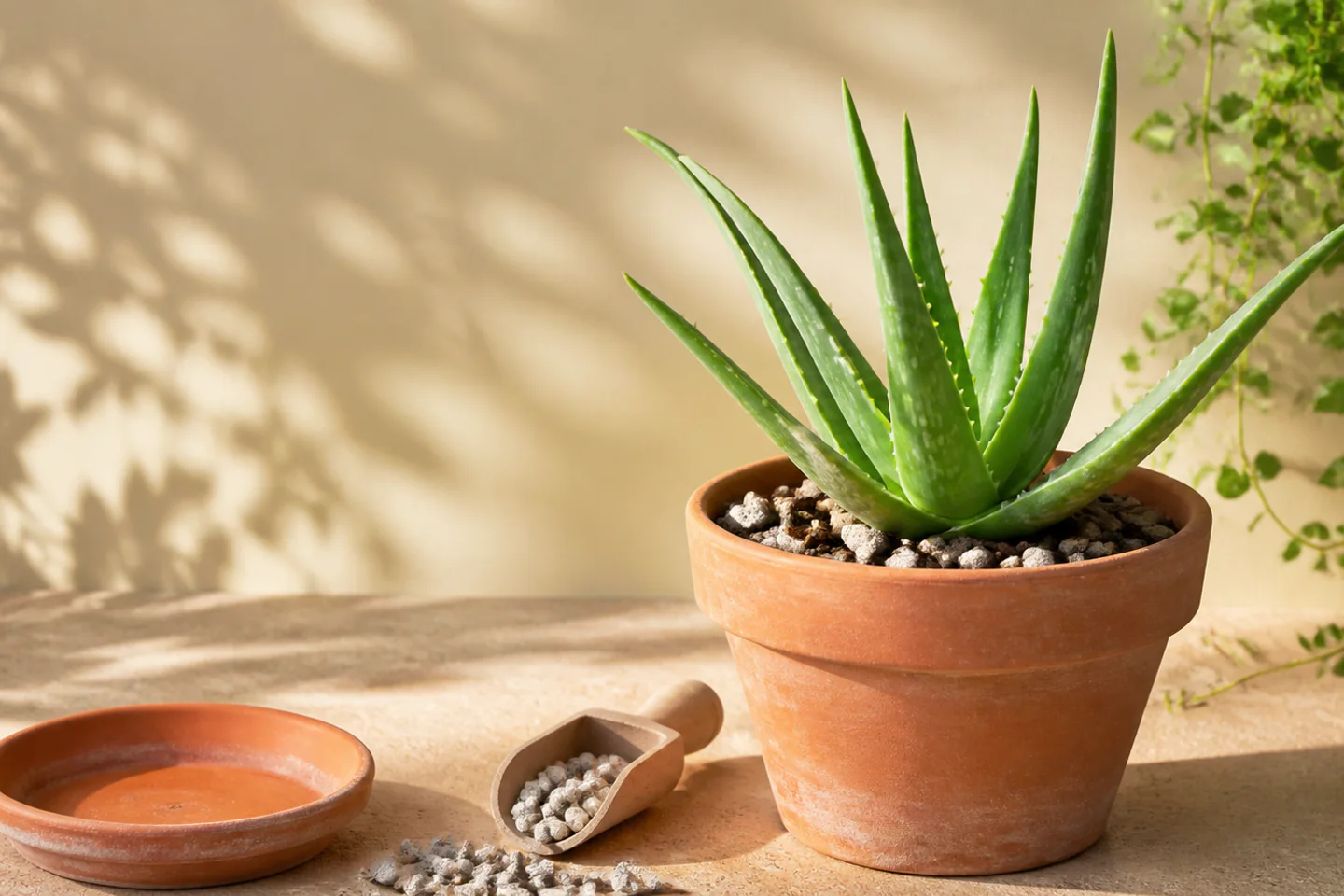
Aloe vera needs strong light, a draining mineral-rich mix and long pauses between waterings. Begin with one established plant rather than seeds and learn how heavy the pot feels when genuinely dry.
Quick answer
Use bright light and a small draining pot
Place an established Aloe vera in the brightest suitable indoor light, acclimating it gradually to direct sun. Let the mix dry deeply, then water the soil thoroughly without leaving the crown or saucer wet.
- 01
Provide several hours of strong light and acclimatise gradually so leaves do not scorch after a dim shop. Record the setting, measurement or observation that mattered so the next attempt can be changed for a reason rather than by guesswork.
- 02
Wait for deep drying and then water fully; do not compensate for poor light with more water. Record the setting, measurement or observation that mattered so the next attempt can be changed for a reason rather than by guesswork.
- 03
Use a modest pot with a drainage hole and an open succulent mix rather than dense garden soil. Record the setting, measurement or observation that mattered so the next attempt can be changed for a reason rather than by guesswork.
- 04
Expect slow indoor growth and separate offsets only when they have useful roots of their own. Record the setting, measurement or observation that mattered so the next attempt can be changed for a reason rather than by guesswork.
- 05
Inspect leaf bases and roots for mealybugs, scale and soft rot. Record the setting, measurement or observation that mattered so the next attempt can be changed for a reason rather than by guesswork.
What to expect
A succulent schedule follows light and temperature
Aloe stores water in its leaves, so indoor watering frequency can change dramatically between bright summer growth and cool winter rest.
Light
Weak light produces stretched, leaning growth and slow drying. Sudden intense sun can cause scorch, so improve exposure in stages. In aloe vera growing, this is worth checking before the next stage because a small adjustment now is easier than undoing a finished result.
Water
Wrinkled leaves can indicate thirst, root loss or long-term stress. Check the roots and mix before assuming more water is safe. In aloe vera growing, this is worth checking before the next stage because a small adjustment now is easier than undoing a finished result.
Roots and pot
A deep volume of wet peat beneath a small root system is a common source of decline. Pot size and medium structure work together. In aloe vera growing, this is worth checking before the next stage because a small adjustment now is easier than undoing a finished result.
Growth and pests
Cottony deposits between leaves may be mealybugs; a translucent soft base suggests rot and requires a different response. In aloe vera growing, this is worth checking before the next stage because a small adjustment now is easier than undoing a finished result.
Core method
Read the plant before changing the routine
Choose the position
Choose a bright warm sill or nearby position with airflow and no prolonged contact with freezing glass. In aloe vera growing, this is worth checking before the next stage because a small adjustment now is easier than undoing a finished result.
Check before watering
Test the centre of the mix and lift the pot. When dry, water the soil completely and keep water from pooling in the rosette. In aloe vera growing, this is worth checking before the next stage because a small adjustment now is easier than undoing a finished result.
Keep drainage real
Use an unobstructed hole and remove saucer water after drainage. Do not build a decorative gravel layer instead of drainage. In aloe vera growing, this is worth checking before the next stage because a small adjustment now is easier than undoing a finished result.
Review new growth
Judge the newest central leaves for firmness and compactness and note seasonal changes in drying time. In aloe vera growing, this is worth checking before the next stage because a small adjustment now is easier than undoing a finished result.
Useful products
Products with a clear job in the setup
An open mix and a correctly sized draining pot solve more than decorative accessories. Supplemental light is a later answer to measured low light.
Growth Technology Cactus Focus Repotting Mix 8 L
An open mix reduces the temptation to improvise with dense garden soil.
Vensovo 12.7 cm Terracotta Pots with Saucers, Six Pack
Separate saucers make it possible to water thoroughly and then remove drainage water.
SANSI 10 W Clip-On LED Grow Light
A timer makes supplemental light consistent without changing the room into a large grow setup.
First project
Complete one safe watering cycle
The first month is an observation project: stabilise the plant, learn how quickly the mix dries and avoid reacting to every old mark.
- 01
Inspect on arrival
Check the central crown, lower leaves and root area for softness or pests before placing the aloe among other plants. In aloe vera growing, this is worth checking before the next stage because a small adjustment now is easier than undoing a finished result.
- 02
Choose one position
Acclimatise it over one to two weeks toward the brightest suitable position instead of moving directly from shade into midday sun. In aloe vera growing, this is worth checking before the next stage because a small adjustment now is easier than undoing a finished result.
- 03
Set a water check
Wait for deep drying, water thoroughly once and record the time until the pot returns to its dry weight. In aloe vera growing, this is worth checking before the next stage because a small adjustment now is easier than undoing a finished result.
- 04
Clean and observe
Keep leaves dry and unobstructed, photograph posture and avoid repeatedly squeezing them to test firmness. In aloe vera growing, this is worth checking before the next stage because a small adjustment now is easier than undoing a finished result.
- 05
Review after four weeks
Adjust only the checking interval or light exposure, leaving feeding and repotting until the plant has shown stable growth. In aloe vera growing, this is worth checking before the next stage because a small adjustment now is easier than undoing a finished result.
What can wait
What can wait until the first result
A healthy first month depends on suitable conditions and calm observation, not constant repotting or a shelf of treatments.
- 01
Immediate repotting
Unless the mix remains wet, the pot is damaged or roots are failing, allow the plant to acclimatise before disturbing it. In aloe vera growing, this is worth checking before the next stage because a small adjustment now is easier than undoing a finished result.
- 02
Routine misting
Aloe does not need routine misting; water between tightly packed leaves can encourage spotting or rot. In aloe vera growing, this is worth checking before the next stage because a small adjustment now is easier than undoing a finished result.
- 03
Unnecessary fertiliser
Feed lightly and infrequently during active growth only. Fertiliser cannot compensate for insufficient light or unhealthy roots. In aloe vera growing, this is worth checking before the next stage because a small adjustment now is easier than undoing a finished result.
Upgrade path
Upgrade the repeated limitation
Change the condition that repeated observations show is limiting growth.
Settle it
£18–£55One healthy plant, draining pot and stable position
You learn its normal drying rhythm and leaf posture.Improve light
£20–£70 extraBrighter position or timed white grow light
New growth can become stronger when daylight was genuinely inadequate.Support growth
£15–£60Separate small draining pots and clean knife for rooted offsets
Mature offsets can be divided without leaving a large wet pot around a tiny new root system.Build a collection
VariableQuarantine space, labels and a written care log
Several plants remain identifiable and problems are contained.Safety & care
Keep water, pets and treatments under control
Aloe latex and whole-leaf preparations are not casual food ingredients, and spined leaf edges can scratch.
- Keep plants and cut leaves away from pets and children who may ingest them. Follow current manufacturer, food-safety, electrical or local guidance wherever it applies.
- Do not use home-grown aloe internally or medically on the basis of a hobby guide; seek qualified advice. Follow current manufacturer, food-safety, electrical or local guidance wherever it applies.
- Wear gloves if sap irritates the skin and use a clean stable blade for divisions. Follow current manufacturer, food-safety, electrical or local guidance wherever it applies.
- Place stiff pointed leaves away from eye level and busy walkways. Follow current manufacturer, food-safety, electrical or local guidance wherever it applies.
Outside help
When outside help earns its place
A specialist nursery demonstration or complete care video is most useful when plant identity, pests or repotting remain uncertain. Routine weekly classes are not required.
Use one complete lesson that covers preparation, the main technique, troubleshooting and finishing. For a first aloe vera growing project, following one coherent method is more useful than combining partial instructions from several creators.
Outside help earns its place when safe setup, equipment access or live correction would remove a real obstacle. Ask what materials, supervision and take-home result are included before booking.
Representative UK learning options checked 30 August 2026; local prices, access, materials and tutor support vary.
Sources
Where the guidance came from
The method is grounded in specialist, manufacturer and public guidance, then checked against recurring beginner problems and the exact products linked here.
-
01
Royal Horticultural Society · Houseplants
RHS guidance for indoor plant conditions and care.
Open source -
02
Kew · Plants of the World Online
Botanical identity and native-habitat reference.
Open source -
03
Houseplant Expert · Plant care
Specialist indoor-plant care and troubleshooting context.
Open source -
04
University of Minnesota Extension · Houseplants
Evidence-led guidance on indoor light, water and pests.
Open source -
05
British Cactus and Succulent Society
Specialist reference for succulent plants where applicable.
Open source -
06
Amazon UK · Cactus Focus Repotting Mix 8 L
Exact Amazon UK product page or ISBN used for the recommendation; current price, seller, specification and availability should be confirmed.
Open source -
07
Amazon UK · 12.7 cm Terracotta Pots with Saucers, Six Pack
Exact Amazon UK product page or ISBN used for the recommendation; current price, seller, specification and availability should be confirmed.
Open source -
08
Amazon UK · 10 W Clip-On LED Grow Light
Exact Amazon UK product page or ISBN used for the recommendation; current price, seller, specification and availability should be confirmed.
Open source
Guide information and links checked 30 August 2026.