Beginner’s guide · Photograph & film
Learn the animal’s distance,
then choose the lens.
Begin with local common wildlife and the longest suitable lens you already own. Use shutter speed, autofocus and fieldcraft to make a small honest sequence without changing behaviour.
Quick answer
Photograph common wildlife without changing its behaviour
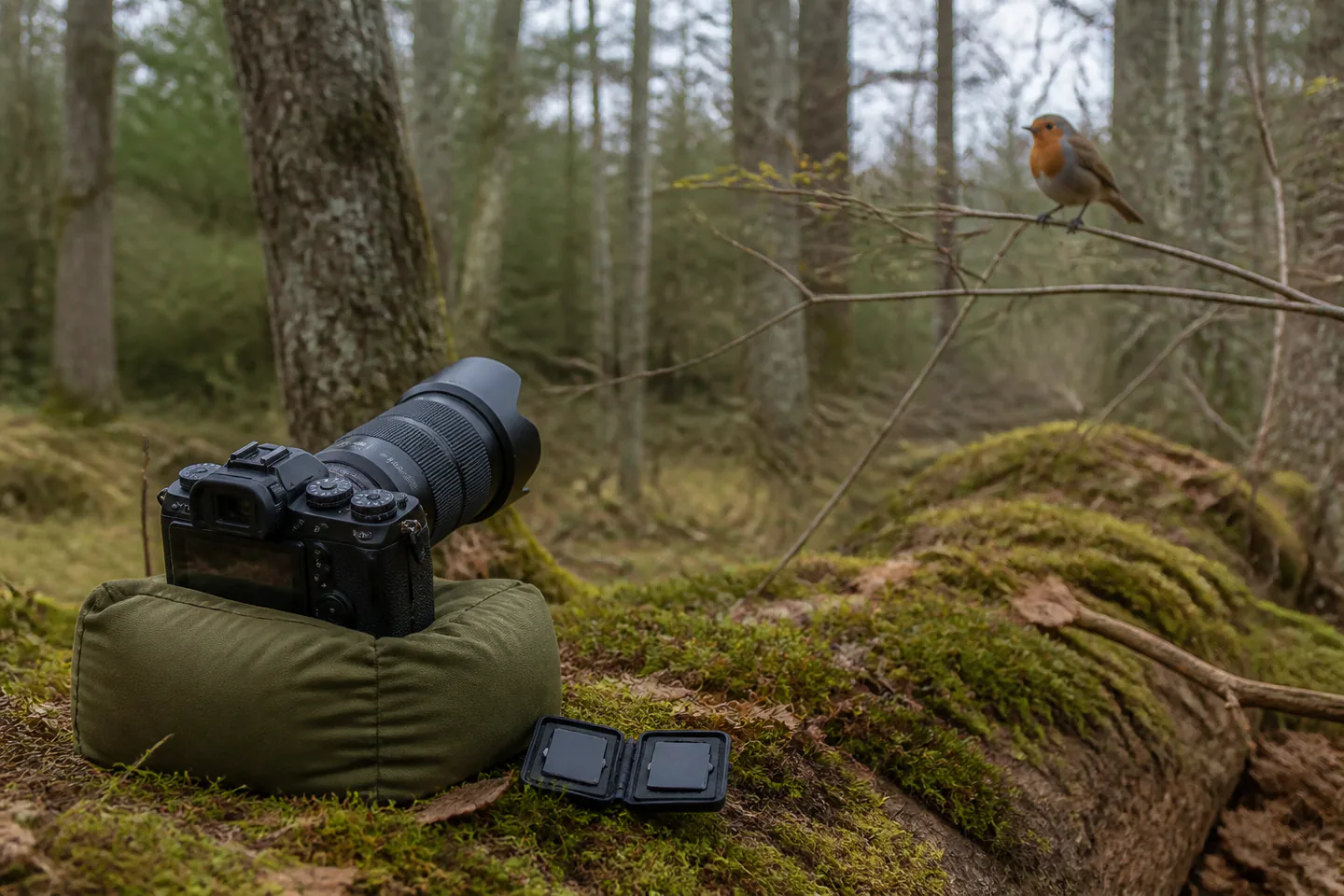
Choose a familiar species at a legal repeatable site, keep enough distance that feeding, resting or escape behaviour does not change, use continuous autofocus and a shutter speed suited to motion, then select five frames that show habitat and behaviour rather than only closeness.
- 01
The welfare of the subject is more important than the photograph. Keep the first attempt narrow enough that preparation, the main action and the result can all be reviewed together.
- 02
Faster shutter speed usually requires wider aperture, higher ISO or more light. Keep the first attempt narrow enough that preparation, the main action and the result can all be reviewed together.
- 03
A longer lens adds reach but also weight, narrow field of view and support demands. Keep the first attempt narrow enough that preparation, the main action and the result can all be reviewed together.
- 04
Knowing where an animal will pause often matters more than chasing it after movement begins. Keep the first attempt narrow enough that preparation, the main action and the result can all be reviewed together.
What to expect
Fieldcraft creates more opportunities than cropping
Distant wildlife, poor light and unpredictable movement make every exposure setting a trade-off.
Shutter speed
Perched subjects may allow modest speeds; wingbeats and running animals need much faster exposure. For wildlife photography, note what actually happened rather than relying on memory; that turns the next attempt into a controlled change instead of another guess.
Autofocus
Subject detection helps but still needs the correct area mode and a visible target. For wildlife photography, note what actually happened rather than relying on memory; that turns the next attempt into a controlled change instead of another guess.
Lens
A dark consumer telephoto may require higher ISO near dawn and dusk. For wildlife photography, note what actually happened rather than relying on memory; that turns the next attempt into a controlled change instead of another guess.
Ethics
Calls, bait, nest approach and crowding can create a picture by harming the subject. For wildlife photography, note what actually happened rather than relying on memory; that turns the next attempt into a controlled change instead of another guess.
Core method
Predict, pre-set and wait at a respectful distance
Learn one subject
Check seasonal behaviour, protection and warning signs before visiting. For wildlife photography, note what actually happened rather than relying on memory; that turns the next attempt into a controlled change instead of another guess.
Pre-set for likely motion
Choose autofocus, drive mode, shutter speed and a sensible auto-ISO ceiling before action. For wildlife photography, note what actually happened rather than relying on memory; that turns the next attempt into a controlled change instead of another guess.
Work the habitat
Use cover and background while keeping routes, nests and feeding areas unobstructed. For wildlife photography, note what actually happened rather than relying on memory; that turns the next attempt into a controlled change instead of another guess.
Edit as natural history
Keep behaviour truthful, disclose captive or controlled conditions and avoid excessive manipulation. For wildlife photography, note what actually happened rather than relying on memory; that turns the next attempt into a controlled change instead of another guess.
Useful products
Products with a clear job in the setup
The EOS R50 is a beginner camera body-and-kit-lens route, the RF 100–400 mm is a compatible later wildlife lens and the SanDisk card provides known storage. Existing compatible equipment comes first.
Canon EOS R50 with RF-S 18–45 mm Lens
It teaches controls and can accept a suitable RF telephoto later.
Canon RF 100–400 mm F5.6–8 IS USM Lens
The range suits larger birds and mammals without the mass of pro super-telephotos.
SanDisk 128 GB Extreme PRO SDXC UHS-I Card
A known card reduces buffer and capacity friction.
First project
Photograph one common bird for thirty minutes
A garden or park species makes repeated behaviour available without rare-species pressure.
- 01
Watch before shooting
Identify perches, feeding route and signs of disturbance. For wildlife photography, note what actually happened rather than relying on memory; that turns the next attempt into a controlled change instead of another guess.
- 02
Choose the background
Move only where access and welfare allow. For wildlife photography, note what actually happened rather than relying on memory; that turns the next attempt into a controlled change instead of another guess.
- 03
Set a motion baseline
Use continuous focus, burst mode and a shutter speed suitable for the behaviour. For wildlife photography, note what actually happened rather than relying on memory; that turns the next attempt into a controlled change instead of another guess.
- 04
Make short bursts
Release the shutter when behaviour changes rather than continuously filling the card. For wildlife photography, note what actually happened rather than relying on memory; that turns the next attempt into a controlled change instead of another guess.
- 05
Edit to five
Keep habitat, portrait and behaviour frames with truthful captions. For wildlife photography, note what actually happened rather than relying on memory; that turns the next attempt into a controlled change instead of another guess.
What can wait
What can wait until the first result
Extra equipment becomes useful only when the basic method has exposed a specific, repeated limitation.
- 01
A hide at a nest
Protected and breeding subjects require specialist knowledge and legal care. For wildlife photography, note what actually happened rather than relying on memory; that turns the next attempt into a controlled change instead of another guess.
- 02
Playback calls
They can divert or stress animals and are not a beginner shortcut. For wildlife photography, note what actually happened rather than relying on memory; that turns the next attempt into a controlled change instead of another guess.
- 03
The longest possible lens
Weight, minimum focus and support may make it less usable. For wildlife photography, note what actually happened rather than relying on memory; that turns the next attempt into a controlled change instead of another guess.
- 04
Aggressive noise reduction
It can erase feathers and invent texture while hiding an exposure lesson. For wildlife photography, note what actually happened rather than relying on memory; that turns the next attempt into a controlled change instead of another guess.
Upgrade path
Upgrade the repeated limitation
Improve access knowledge and stable technique before maximum reach.
Existing camera
FreeLocal subject and honest distance
Learn behaviour and exposure.Entry telephoto
£250–£700Compatible 200–400 mm class lens
Gain optical reach.Support and weather protection
£50–£250Beanbag, monopod or tripod chosen for use
Reduce fatigue and shake.Specialist system
£1,500–£8,000+Fast autofocus body and long lens
Handle low light and fast action more reliably.Safety & care
Put subject welfare before every frame
Protected species, breeding sites, private land and difficult terrain can turn an ordinary photograph into disturbance or danger.
- Follow the RPS Nature Photographers’ Code and current wildlife law. Follow current manufacturer, food-safety, access, wildlife or local guidance wherever it applies.
- Do not bait, call, flush, crowd or block a subject to manufacture behaviour. Follow current manufacturer, food-safety, access, wildlife or local guidance wherever it applies.
- Keep away from nests, dens and dependent young unless competent lawful practice explicitly allows the work. Follow current manufacturer, food-safety, access, wildlife or local guidance wherever it applies.
- Check access, weather, tides and personal safety before carrying long equipment. Follow current manufacturer, food-safety, access, wildlife or local guidance wherever it applies.
- Disclose captive, baited or controlled conditions and keep editing truthful. Follow current manufacturer, food-safety, access, wildlife or local guidance wherever it applies.
Outside help
When outside help earns its place
A responsible local guide can teach behaviour and safe distance; avoid workshops whose result depends on disturbance or undisclosed controlled animals.
Ask about group size, access permission and welfare rules.
Look for subject knowledge, ethical distance and practical exposure feedback.
Representative UK learning options checked 31 August 2026; local prices, access, materials and tutor support vary.
Sources
Where the guidance came from
Wildlife-welfare codes lead the method; museum, conservation and manufacturer sources support fieldcraft, settings and compatible equipment.
-
01
RPS · Nature Photographer’s Code of Practice
Subject welfare, law and honest representation.
Open source -
02
RPS · Natural history genre definition
Fieldcraft and truth requirements.
Open source -
03
Natural History Museum · Wildlife photography tips
Beginner composition and subject approach.
Open source -
04
RSPB · Wildlife watching code
Responsible birdwatching and field behaviour.
Open source -
05
Canon · RF 100–400 mm lens
Manufacturer compatibility and lens specification.
Open source -
06
Amazon UK · EOS R50 with RF-S 18–45 mm Lens
Exact Amazon UK product page or ISBN used for the recommendation; current price, seller, specification and availability should be confirmed.
Open source -
07
Amazon UK · RF 100–400 mm F5.6–8 IS USM Lens
Exact Amazon UK product page or ISBN used for the recommendation; current price, seller, specification and availability should be confirmed.
Open source -
08
Amazon UK · Extreme PRO 128 GB SDXC UHS-I Card
Exact Amazon UK product page or ISBN used for the recommendation; current price, seller, specification and availability should be confirmed.
Open source
Guide information and links checked 31 August 2026.