Beginner’s guide · Cook & bake
Make the cake level first.
Then practise three clean finishes.
Start with a cooled, sturdy layer cake and dependable buttercream. Learn a crumb coat, a simple smooth finish and one piped border before buying colour sets, modelling tools or a cupboard of nozzles.
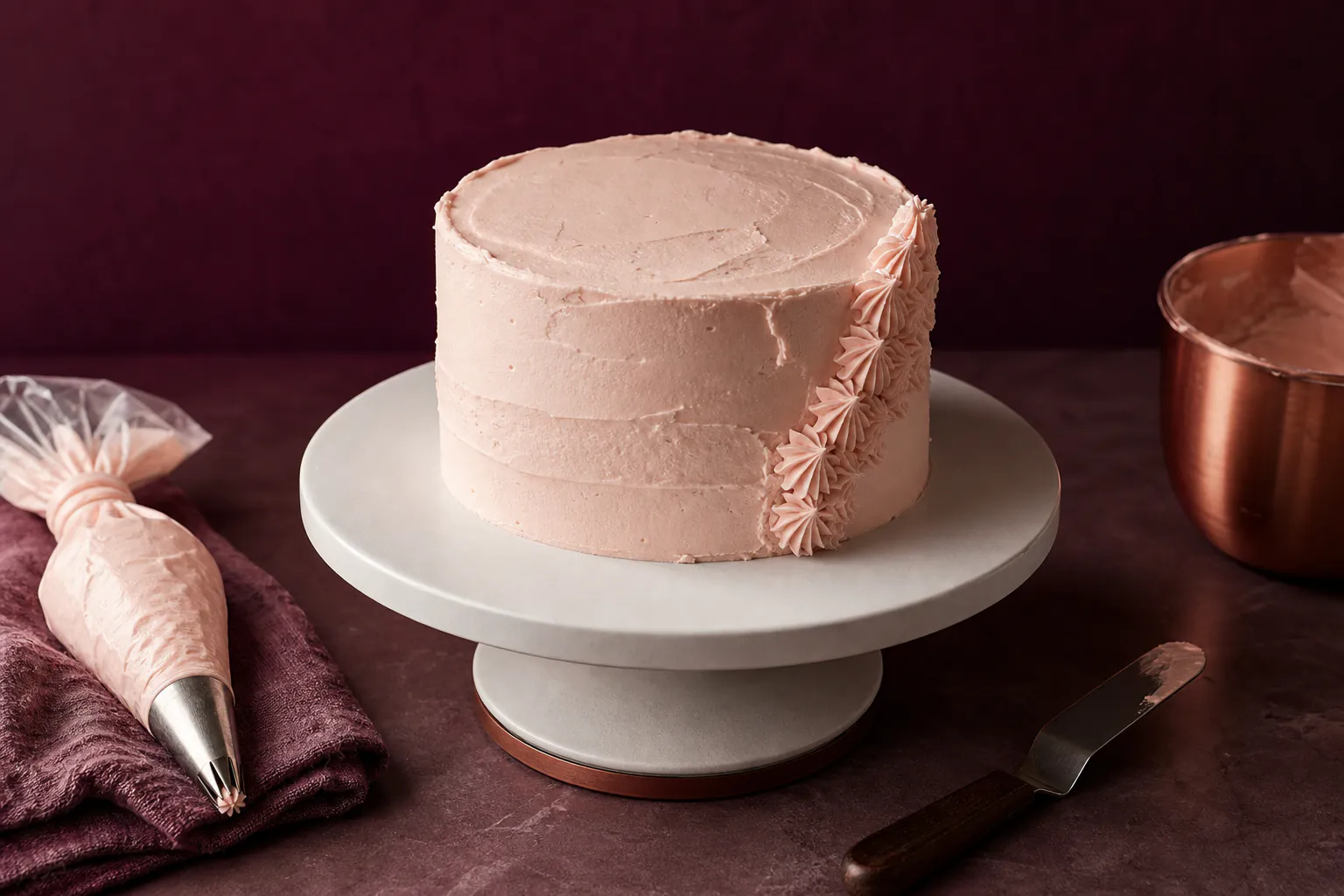
Quick answer
Practise structure before decoration
Bake a sturdy cake, cool it completely and trim obvious domes. Fill and stack two even layers on a board, apply a thin crumb coat and chill until firm. Add a modest final coat, smooth it while turning the cake and finish with one star-nozzle border. Use the same buttercream consistency for a whole practice before adding colours or delicate decorations.
- 01
Warm cake melts buttercream and sheds crumbs. Cooling completely is a technique, not just waiting.
- 02
A crumb coat traps loose crumbs under a thin layer so the final coat can stay clean.
- 03
A turntable moves the cake past a stationary scraper; the free hand should guide gently rather than squeeze the cake.
- 04
Piping improves through repeated pressure, height and stop points. Practise ten shapes on baking paper before approaching the cake.
What to expect
A clean finish depends on cake and icing condition
Decoration starts before the piping bag. Layer height, crumb, temperature and buttercream consistency determine what the tools can do.
Level
A large dome makes layers slide and forces icing to hide structure. Trim sparingly with a long serrated knife once cold.
Crumb
Very tender sponge is harder to coat than a sturdy cake. Chill layers briefly and use a light first pass.
Consistency
Stiff icing tears the cake or leaves rough ridges; very soft icing slumps. Temperature and small liquid adjustments matter.
Smoothing
Perfectly sharp edges are a specialist style. A calm even surface with deliberate texture is a valid first finish.
Piping
Shape comes from nozzle, pressure, movement and the moment pressure stops. Speed alone does not create neat repetition.
Weather
Warm rooms soften buttercream and transport magnifies every weakness. Chill strategically and plan the finished cake’s storage.
Buttercream basics
Treat the cake as a small structure
Build on a cold, stable base
Use a cake recipe intended for layering, bake evenly and cool fully on a rack. Wrap and chill the layers if the crumb is fragile. Place the first layer on a cake board with a small dab of buttercream beneath it. Trim only enough to make the layers sit level and brush away loose crumbs without drying the cake.
Fill within a controlled boundary
Pipe or spread an even buttercream layer and leave a margin near the edge. Soft fillings may need a firmer buttercream dam. Place the next layer cut-side down, check from eye level and press only enough to settle it. A leaning cake should be corrected now, not concealed with a thicker coat.
Trap crumbs before the visible coat
Spread a thin coat across the top and sides, filling gaps while accepting that crumbs will show. Use a separate bowl for clean final buttercream so crumb-contaminated icing is not returned to it. Chill until the coating feels firm, then apply the outer layer with enough material for the scraper to remove excess rather than exposing cake.
Pipe by controlling pressure and release
Fit the nozzle securely, fill the bag no more than halfway and twist the open end. Hold the bag consistently, squeeze from the top and stop pressure before lifting away. Practise dots, shells and rosettes on baking paper; scrape them back into the bowl if food-safety conditions allow.
Useful products
A reusable bag, three useful nozzles and a stable turntable
The checked PME bag and three-nozzle set create a restrained beginner piping kit. The 31 cm PME turntable provides enough platform for a typical home layer cake and lets the scraper stay relatively still. These are separate, recognisable tools rather than a large anonymous bundle with many duplicate pieces.
PME Premium Icing Bag 30 cm
The 30 cm size holds enough buttercream for practice borders while remaining easier to control than an overfilled large bag.
PME Jem Large Cupcakes Nozzles, Pack of 3
Round and star-style outlets cover the first dots, shells, rosettes and borders without dozens of duplicates.
PME Baker’s Cake Decorating Turntable 31 cm
The broad platform supports common home cake boards and makes a continuous side pass easier.
First cake
Finish one small buttercream layer cake
Keep the design limited to a smooth or intentionally textured coat, one border and perhaps a few repeated rosettes.
- 01
Bake and cool
Use a sturdy two-layer recipe and cool every layer fully before trimming or filling.
- 02
Prepare the buttercream
Beat until even and adjust with tiny amounts of liquid or icing sugar for spreadable structure.
- 03
Level the layers
Trim obvious domes on a stable board and keep the finished layers even in thickness.
- 04
Fill and align
Spread a controlled filling, stack the second layer and check the cake from several directions.
- 05
Crumb coat
Apply a thin sealing coat with a separate working portion of buttercream, then chill until firm.
- 06
Add the final coat
Apply enough icing to top and sides, rotate the turntable and remove excess in patient passes.
- 07
Practise the border
Pipe ten stars or shells on paper, focusing on equal pressure and a clean stop.
- 08
Finish and store safely
Pipe the simple border, clean the board and store according to the cake and filling ingredients.
What can wait
What can wait until buttercream feels predictable
Most decorative kits are attractive because they imply range. A small tool set produces better learning and less clutter.
- 01
Large no-name tool bundles
Many contain near-duplicate tips and flimsy tools. Add a named nozzle only when a planned design requires its shape.
- 02
Fondant covering
Fondant adds kneading, rolling, draping and humidity problems. Establish level layers and a stable coating first.
- 03
Airbrushing
It introduces colour dilution, overspray, masks and cleaning. A palette knife and restrained gel colour cover early designs.
- 04
Tall stacked cakes
Multiple tiers need boards, supports, transport and food-safe structural planning. Practise one tier before carrying load.
- 05
Perishable fillings
Fresh cream, curd and some cheeses change refrigeration and display limits. Use them only with a clear storage and serving plan.
Upgrade path
Add techniques in structural order
A new finish is easier when the cake underneath is already level, cold and stable.
Simple buttercream cake
About £20–£35 including ingredientsBag, three nozzles and basic turntable
Learn stacking, crumb coating, smoothing and repeat piping.Colour and texture
About £10–£30 extraConcentrated gels and offset palette knife
Add controlled palettes, combs and deliberate textured finishes.Fondant and modelling
About £20–£80 extraMat, rolling pin, smoothers and modelling tools
Create covered cakes and simple decorative forms.Tiered celebration cake
£80–£300+ materialsBoards, supports, boxes and cool transport
Manage structure, scale, timing and delivery risk.Food safety
Decoration never overrides food safety
The finished cake must remain safe for its ingredients, audience, storage time and physical decorations.
- List allergens accurately and prevent cross-contact; decoration ingredients can contain egg, milk, nuts, gluten, soya or unexpected allergens.
- Use pasteurised or safely prepared egg products for uncooked icings where required, especially for vulnerable people.
- Refrigerate fillings that require it and minimise time at room temperature according to current food-safety guidance.
- Use only food-safe colours, glitters, wires, flowers and supports; non-edible items must not contact or be mistaken for food.
- Transport the cake level in a fitted box, disclose hidden boards or dowels and remove non-edible pieces before serving.
Outside help
When in-person correction helps
A class is optional. It is most useful for scraper angle, buttercream consistency, fondant draping or tier construction that is difficult to diagnose from a finished photo.
Use short technique demonstrations for crumb coats, icing consistency and piping practice.
Check whether cake, tools, take-home work and individual correction are included.
Free technique resources and representative UK workshop pricing checked 2 August 2026; ingredients, group size and take-home cake vary.
Sources
Where the guidance came from
Established baking sources support icing and technique; UK food-safety guidance sets allergen, chilling and ingredient boundaries.
-
01
PME Cake · Decorating tutorials
Manufacturer technique demonstrations and use of specialist decorating tools.
Open source -
02
BBC Good Food · Cake decorating
Accessible guidance on preparation, buttercream, crumb coating and common finishes.
Open source -
03
Food Standards Agency · Food allergies and intolerances
UK allergen information and responsibilities around safe food preparation.
Open source -
04
Food Standards Agency · Chilling
Safe refrigeration, cool storage and time guidance for perishable food.
Open source -
05
Amazon UK · PME Premium Icing Bag 30 cm
Exact product page, model or ISBN, observed price and availability checked for this guide.
Open source -
06
Amazon UK · PME Jem large cupcakes nozzle collection
Exact product page, model or ISBN, observed price and availability checked for this guide.
Open source -
07
Amazon UK · PME Baker’s cake decorating turntable
Exact product page, model or ISBN, observed price and availability checked for this guide.
Open source
Guide information and links checked 2 August 2026.