Beginner’s guide · Observe nature
Press the specimen flat,
then preserve its context.
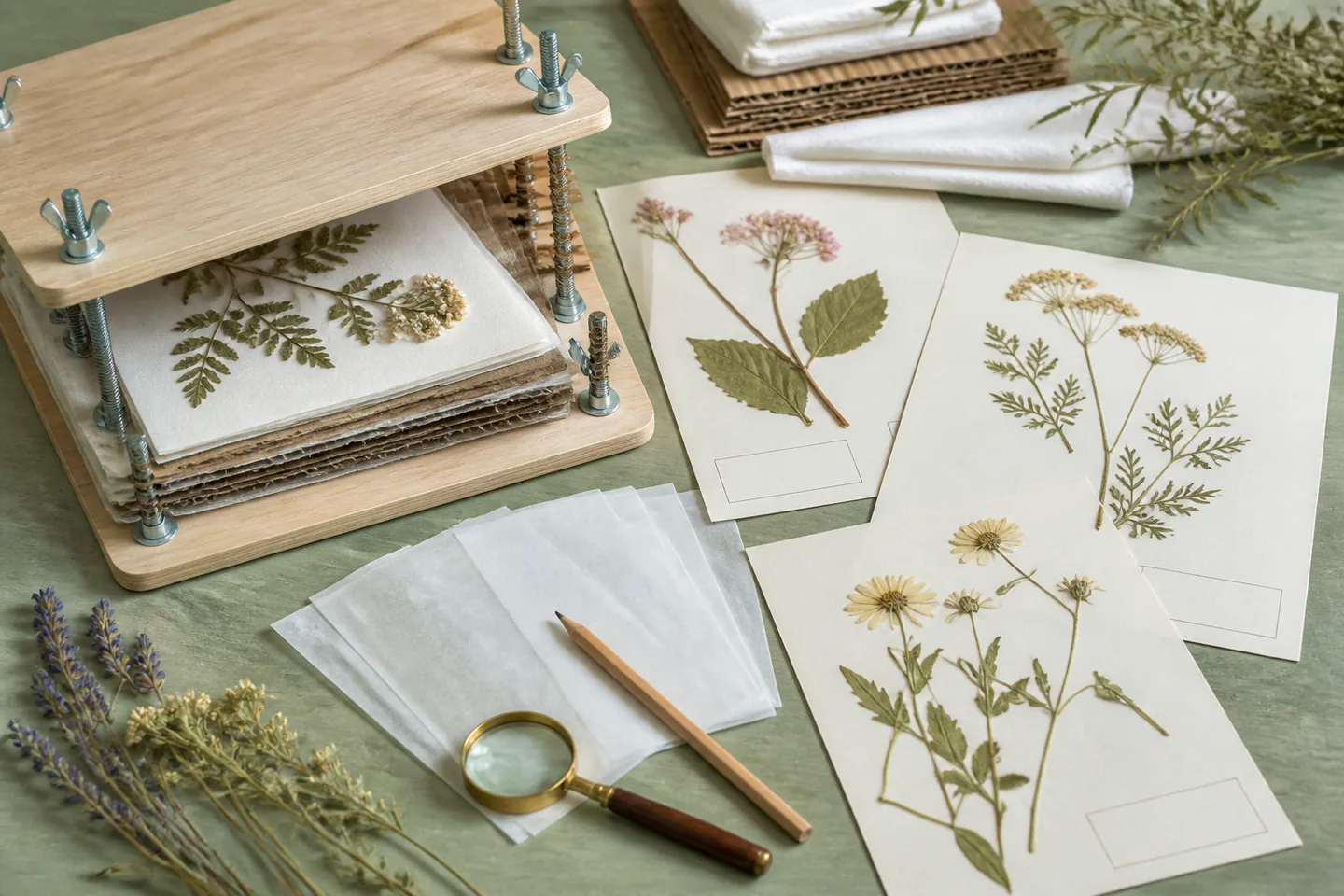
A useful herbarium sheet combines a fully dried plant, visible identifying features and a label recording when, where and by whom it was collected lawfully.
Quick answer
Complete one herbarium sheet before expanding the setup
Start with a common plant from your own garden or explicit landowner permission. Photograph it in place, record date, location, habitat and collector, take only the amount needed, arrange leaves to show both surfaces and any flower or fruit, press between absorbent papers with even airflow, change damp sheets until fully dry, then mount reversibly and add a complete label.
- 01
A specimen without collection data loses much of its scientific and historical value. Record what happened during herbarium making so the next attempt changes one known variable instead of several guesses.
- 02
Commonness must be confirmed; protected, scarce or sensitive plants should be photographed rather than collected. Record what happened during herbarium making so the next attempt changes one known variable instead of several guesses.
- 03
Fast even drying reduces mould, colour loss and shrivelling. Record what happened during herbarium making so the next attempt changes one known variable instead of several guesses.
- 04
Both leaf surfaces, stems, roots where lawful and reproductive structures can contain identification features. Record what happened during herbarium making so the next attempt changes one known variable instead of several guesses.
What to expect
What herbarium making is really like at the start
The useful beginner controls are preparation, one bounded task and a record of the result; specialist equipment matters only when it solves a repeated limitation.
Collect
Permission and conservation status must be checked before removing material. Record what happened during herbarium making so the next attempt changes one known variable instead of several guesses.
Arrange
A plant keeps the shape fixed in the press, so overlap and hidden leaf surfaces remain hidden. Record what happened during herbarium making so the next attempt changes one known variable instead of several guesses.
Dry
Thick stems and damp papers can support mould long after flat leaves seem dry. Record what happened during herbarium making so the next attempt changes one known variable instead of several guesses.
Mount
Adhesive and tape choices affect future removal, ageing and identification. Record what happened during herbarium making so the next attempt changes one known variable instead of several guesses.
Core method
The core herbarium making method
Document in place
Photograph habit and habitat and record date, grid reference, substrate and associated plants. Record what happened during herbarium making so the next attempt changes one known variable instead of several guesses.
Collect minimally
Choose one representative lawful specimen and keep enough of the population untouched. Record what happened during herbarium making so the next attempt changes one known variable instead of several guesses.
Arrange and ventilate
Flatten without crushing key features, use absorbent sheets and ventilating card and change wet paper. Record what happened during herbarium making so the next attempt changes one known variable instead of several guesses.
Mount and label
Confirm complete dryness, use conservation-suitable attachment and keep the full data on the sheet. Record what happened during herbarium making so the next attempt changes one known variable instead of several guesses.
Useful products
Products with a clear job in the route
The flower press supplies even adjustable pressure, the magnifier helps inspect features and fineliners create durable labels only after ink and paper suitability are tested.
Rhykoka Large Wooden Flower Press
It holds flat sheets more predictably than a shifting stack of books.
Carson LL-10 10× LumiLoupe Stand Magnifier
A stand leaves delicate paper, specimens or small finds undisturbed.
Sakura Pigma Micron Fineliner Pen Set
Several nib sizes support diagrams, observation records and restrained model effects.
First project
Prepare one garden herbarium sheet
Use a common plant you are authorised to remove and record the collection data before cutting it.
- 01
Photograph and record
Capture the living form and write place, date, habitat and collector. Record what happened during herbarium making so the next attempt changes one known variable instead of several guesses.
- 02
Select one specimen
Include representative leaves and reproductive parts without stripping the plant. Record what happened during herbarium making so the next attempt changes one known variable instead of several guesses.
- 03
Arrange in the press
Show both leaf surfaces and prevent important structures overlapping. Record what happened during herbarium making so the next attempt changes one known variable instead of several guesses.
- 04
Change papers
Inspect frequently, replace damp layers and continue until no moisture remains. Record what happened during herbarium making so the next attempt changes one known variable instead of several guesses.
- 05
Mount and label
Attach minimally and include identification with an uncertainty marker if needed. Record what happened during herbarium making so the next attempt changes one known variable instead of several guesses.
What can wait
What can wait until the first result
Delay anything that adds cost, risk or another variable before the basic workflow has produced something you can review.
- 01
Collecting rare wild plants
Photography and records protect populations and avoid legal harm. Record what happened during herbarium making so the next attempt changes one known variable instead of several guesses.
- 02
A large collection
One complete sheet reveals drying time and storage needs. Record what happened during herbarium making so the next attempt changes one known variable instead of several guesses.
- 03
Sealing in plastic early
Residual moisture can produce mould and irreversible damage. Record what happened during herbarium making so the next attempt changes one known variable instead of several guesses.
- 04
Decorative resin coating
It obscures features and prevents future examination. Record what happened during herbarium making so the next attempt changes one known variable instead of several guesses.
Upgrade path
Add the capability you can now name
Each stage should remove a demonstrated constraint rather than make the setup look more advanced.
Use what you own
£0–£20Existing equipment and one written plan
Use a common authorised plant and books as a press.Repeat the first route
About £10–£45A complete repeatable starter setup
Build a small local series with consistent labels.Add one capability
Often £50–£250One selected tool, service or learning resource
Add a purpose-made press, archival storage and identification support.Build specialist depth
Club, course or specialist dependentA documented specialist workflow
Contribute vouchers only through a recognised herbarium or recording project that requests them.Safety & care
The plant and its place come before the collection
Protected species, land access, biosecurity and specimen mould require conservative decisions.
- Obtain landowner permission and follow current law and the BSBI code before collecting any wild plant.
- Do not collect rare, protected, poisonous or uncertain plants; photograph and seek expert identification instead.
- Wear suitable gloves for known irritant or thorny garden plants and wash hands after handling.
- Dry specimens completely, isolate mouldy material and keep food preparation separate from plant work.
- Do not publish precise locations for vulnerable species without recorder guidance.
Outside help
When outside help earns its place
A botanical society or museum workshop helps with lawful collection, identification, label standards and archival mounting.
Ask whether participants collect, use supplied garden material or work only from photographs, and how records are handled.
Use outside help after the first herbarium making attempt can reveal the exact technique, access or safety problem that needs live correction.
Representative UK learning and access routes checked 1 September 2026; local prices, permissions, equipment and tutor support vary.
Sources
Where the guidance came from
Authoritative and specialist guidance supports the method and safety boundaries; community discussion contributes recurring beginner problems rather than unsupported claims.
-
01
Natural History Museum · How to press flowers
Pressing, arranging, drying, mounting and herbarium-label guidance.
Open source -
02
BSBI · Code of Conduct
Responsible picking, collecting, photography and enjoyment of wild plants.
Open source -
03
BSBI · Plant recording
UK plant records, vice-county systems and verification.
Open source -
04
Kew · Herbarium collections
Professional herbarium purpose, scale and specimen context.
Open source -
05
iNaturalist UK
Observation recording, photographs and community identification support.
Open source -
06
Reddit · r/botany
Community evidence on identification, pressing, mould and ethical collecting.
Open source -
07
Amazon UK · Large Wooden Flower Press
Exact Amazon UK product page or ISBN used for this recommendation; current price, seller, specification and availability should be confirmed.
Open source -
08
Amazon UK · LL-10 10× LumiLoupe Stand Magnifier
Exact Amazon UK product page or ISBN used for this recommendation; current price, seller, specification and availability should be confirmed.
Open source -
09
Amazon UK · Pigma Micron Fineliner Pen Set
Exact Amazon UK product page or ISBN used for this recommendation; current price, seller, specification and availability should be confirmed.
Open source
Guide information and links checked 1 September 2026.