Beginner’s guide · Cook & bake
Start with a fresh curd.
Not a perfect mozzarella pull.
Heat pasteurised milk, acidify it and drain a small fresh cheese before taking on cultures, rennet, pH and ageing. A kit can open several later routes, but the first success should teach curd formation rather than test five variables at once.
Quick answer
Learn heat, acid and drainage first
Use a reputable recipe for a fresh acid-set cheese made from pasteurised supermarket milk. Work cleanly, measure temperature, add the stated acid gradually, watch curds separate from whey, then drain and chill the cheese promptly.
- 01
Choose pasteurised milk unless the recipe specifically explains another safe route. Avoid raw milk for a first home cheese.
- 02
Milk labelled UHT or ultra-pasteurised often performs poorly in rennet cheeses because the heat treatment changes how proteins form a curd.
- 03
Use a thermometer and the exact recipe temperatures. “Warm” and “nearly boiling” are not repeatable measurements.
- 04
Begin with a milk ricotta-style curd or paneer. Quick mozzarella is widely marketed to beginners but has a recurring high failure rate.
What to expect
The milk decides more than the kit box suggests
Cheese making is controlled spoilage only in the loosest everyday sense. Safe, repeatable results depend on clean equipment, known cultures or acids, temperature and time.
Yield
A large volume of milk makes a much smaller quantity of cheese. Whey is most of the original volume, not proof that the batch failed.
Curd
Acid-set curds are often soft or grainy. They are not supposed to stretch like mozzarella.
Milk
Brand, heat treatment, fat, protein and homogenisation can change the curd even when the carton volume is identical.
Temperature
A few degrees can affect coagulation, moisture and texture. Measure the liquid, not the side of the pan.
Sanitation
Clean removes residue; sanitising reduces microbes on already clean equipment. Both matter once warm milk sits for time.
Storage
Fresh cheese contains substantial moisture. It needs prompt refrigeration and a short recipe-specific life, not a decorative shelf.
Choose a cheese
Choose a cheese that matches the first lesson
Paneer and milk ricotta-style cheese are dependable starts
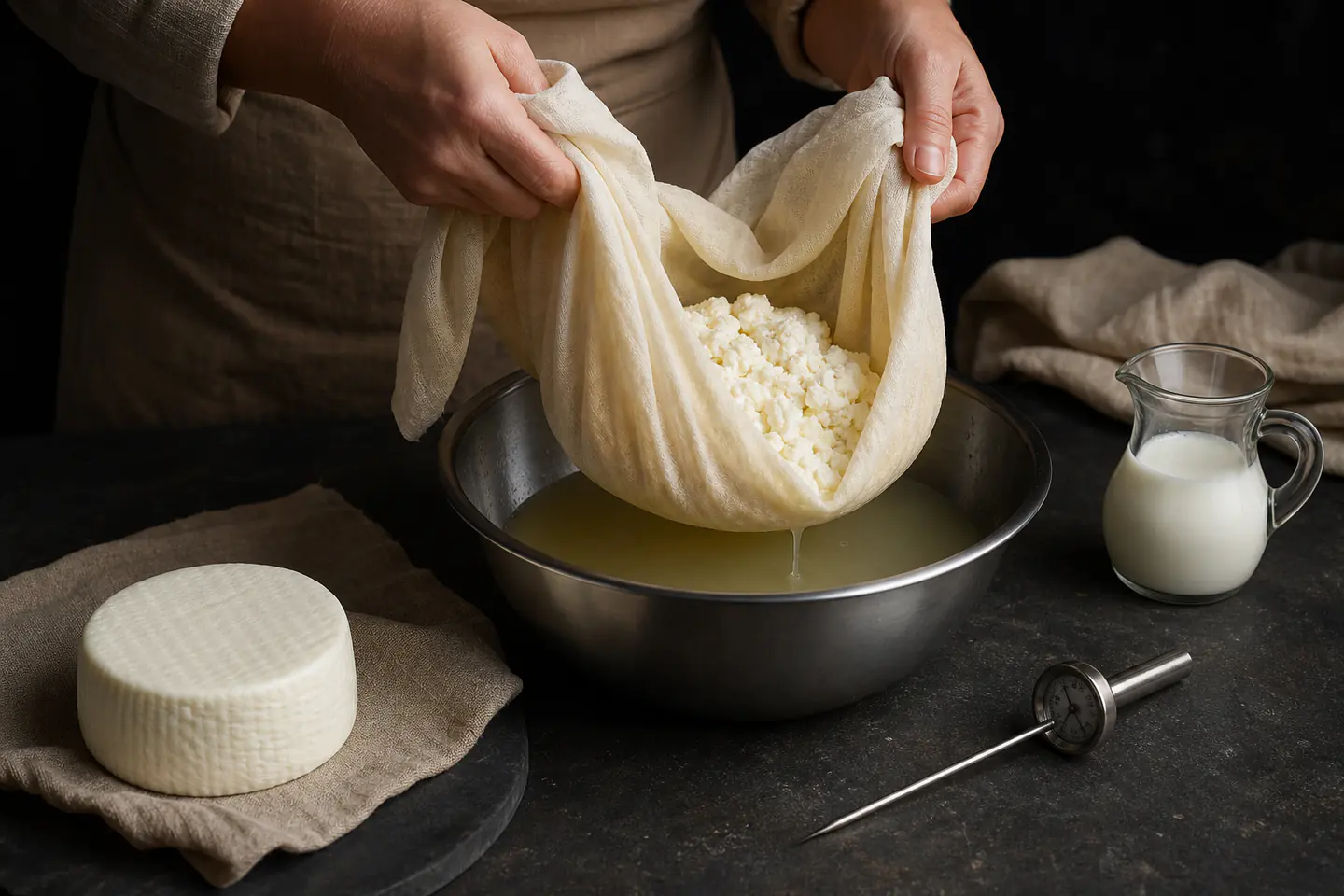
Both use heat and acid to separate curds from whey, then draining changes the final texture. A lightly drained curd stays spoonable; a wrapped and weighted curd becomes a sliceable paneer-style block. They teach clean handling, measured heat, visible coagulation and moisture control using ordinary kitchen equipment.
Strictly, traditional ricotta is made by recooking whey. Many home recipes called “whole-milk ricotta” or “ricotta-style” use fresh milk and acid. Naming the method accurately prevents a beginner expecting the tiny yield and chemistry of true whey ricotta.
Rennet opens another family
Rennet coagulates milk differently and is used with cultures, calcium chloride, carefully controlled acidity or combinations of these depending on the cheese. A kit can make small quantities of several fresh cheeses easier because the ingredients and recipe arrive together. The selected Sandy Leaf Farm kit includes fine cheese salt, citric acid, cheesecloth and vegetarian rennet for ricotta, mozzarella, burrata, mascarpone and goat cheese.
Mozzarella is not the benchmark for talent
Stretching depends on the curd reaching a suitable acidity as well as milk, rennet, temperature and handling. Quick acidified recipes can work, but experienced communities report frequent failures even when the written timing is followed. Make an easy curd first; return to mozzarella when you are willing to measure, troubleshoot and sometimes produce a tasty non-stretching cheese.
Starter options
A thermometer first; a kit for the next routes
A clean pan, spoon, colander and tightly woven clean cloth may already cover the first acid-set cheese. The thermometer is the useful specialist purchase. The Sandy Leaf Farm kit is an optional next basket for its supplied ingredients and recipes, not a requirement for paneer.
ThermoPro TP02S Digital Food Thermometer
It makes the heating stage measurable and remains useful for cooking beyond cheese.
Sandy Leaf Farm Five-Cheese Making Kit
The small-format acid, rennet, salt, cloth and recipes reduce sourcing friction after the first acid-set curd.
First cheese
Make a small fresh acid-set cheese
Choose and follow one tested recipe for whole-milk ricotta-style cheese or paneer. The recipe supplies the exact milk volume, acid amount, temperatures and storage life.
- 01
Clean and prepare
Wash hands, worktop, pan, spoon, thermometer, colander and cloth. Rinse away detergent residue and sanitise as the recipe or food-safety guidance requires.
- 02
Check the milk label
Use the pasteurised milk type specified by the recipe. Record brand, fat level and whether it is UHT so the result can be explained later.
- 03
Heat with measurement
Warm the milk slowly, stirring to prevent scorching. Keep the thermometer probe in the liquid without resting its tip on the pan base.
- 04
Add the stated acid
At the recipe temperature, add the measured vinegar, lemon juice or citric-acid solution as directed. Stir only as much as the recipe asks, then allow curds and whey to separate.
- 05
Drain to the intended texture
Transfer curds into the prepared cloth or fine strainer. Stop early for a spoonable curd, or wrap and use a modest food-safe weight for the recipe’s paneer texture.
- 06
Cool, label and taste
Refrigerate promptly in a clean covered container. Label the batch and use-by guidance, then record yield, texture and whether the next batch needs more or less draining.
Milk & failures
Diagnose the curd before blaming the recipe
No curd or a weak curd
Check the milk treatment, ingredient freshness, exact temperature and whether the acid or rennet was measured and stored correctly. UHT milk can still work for some acid-set cheeses, including paneer, but often will not form the firm rennet curd expected by another recipe. Never add an arbitrary extra dose and continue as though the food-safety timeline has reset.
Dry or rubbery cheese
The curd may have been heated too hard, stirred too much, cut too small or drained and pressed too long. Change one cause in the next small batch. More expensive milk cannot undo rough handling.
Mozzarella that will not stretch
A non-stretching curd may be too acidic, not acidic enough or affected by milk treatment and temperature. Do not repeatedly plunge bare hands into dangerously hot water trying to force it. Follow a reputable troubleshooting route and treat the edible curd as another fresh cheese only when its handling and storage remain safe.
Whey is not universal stock
Sweet whey from rennet cheese and acid whey from paneer or yoghurt behave differently. Reuse only when a trustworthy recipe fits that whey and it has been handled safely; otherwise cool and dispose of it without pouring a large hot volume where it can cause damage.
Skip for now
What can wait
Every later tool should correspond to a named cheese and a control the ordinary kitchen cannot provide.
- 01
A cheese mould set
The checked Sandy Leaf mould-and-cloth kit can give repeatable drainage and shape for cream cheese, feta, ricotta or paneer. A colander and cloth are enough for the first loose curd.
- 02
A cheese press
Hard cheeses need controlled pressing, recipes and cultures. A pile of improvised weights can tilt, leak and apply unknown pressure.
- 03
A pH meter
It becomes useful for stretched-curd and aged-cheese consistency only if you are prepared to calibrate, clean and interpret it correctly.
- 04
An ageing fridge or cave
Ripened cheese needs controlled temperature, humidity, airflow, sanitation and regular care. A domestic fridge is not automatically equivalent.
- 05
Raw milk
It is not a beginner upgrade. Pasteurised milk is easier to source and avoids an additional pathogen risk while technique is still developing.
Upgrade path
Add control one cheese family at a time
The interesting upgrade is not always harder cheese; it is greater control over coagulation, moisture, acidity or ripening.
Acid-set fresh cheese
£0–£8 plus milkPan + thermometer + cloth or fine strainer
Learn heat, visible coagulation, draining, seasoning and refrigeration.Kit fresh cheeses
About £10–£30 plus milkMeasured citric acid + rennet + salt + recipes
Compare acid and rennet methods without buying full-size specialist ingredients.Cultured soft cheese
About £25–£80Culture + mould + sanitation routine + time
Control acidity and drainage over longer periods, with stricter handling and storage.Pressed or aged cheese
£100–£500+Press + accurate cultures + ripening environment + records
Control rind, moisture and maturation while accepting weeks or months of care and food-safety responsibility.Food safety
Warm milk is an excellent place for the wrong microbes too
Clean practice and cold storage matter as much as whether the curd looks successful.
- Start with pasteurised milk and a reputable recipe; do not treat raw milk as a quality shortcut.
- Clean and sanitise equipment, hands and work surfaces before milk is heated or held warm.
- Use food-safe utensils and cloth; discard cracked, rusty or hard-to-clean equipment.
- Keep the thermometer probe clean before and after it touches milk or curd.
- Cool and refrigerate fresh cheese promptly, following the recipe’s storage time rather than guessing from smell.
- Discard a batch with unexplained slime, strong off-odour, coloured growth or an unsafe time-and-temperature history.
Classes
When supervised cheese making is worthwhile
A course becomes valuable when it covers cultures, curd cutting, pressing or maturation that cannot be understood from a one-hour gift kit alone.
Current UK examples cover a morning with a professional maker and can provide controlled milk, sanitation and curd handling.
Look for hands-on milk-to-curd work, temperature and culture decisions, food safety and take-home notes.
Representative UK cheese-course listings checked 27 July 2026; recipes, meals and take-home cheese vary.
Sources
Where the guidance came from
Food-safety and milk guidance comes from extension and regulator sources. Community evidence was used to challenge the common claim that quick mozzarella is the easiest first cheese.
-
01
Penn State Extension · Home cheesemaking
Pasteurised milk, UHT limitations for coagulation, sanitation and the recommendation to begin with simple cheeses.
Open source -
02
Food Standards Agency · Raw milk cheese research
Evidence that pathogens can remain a concern in raw-milk cheeses.
Open source -
03
r/cheesemaking · Best cheese for a first-time maker
Experienced makers repeatedly recommend ricotta or feta-style cheese and warn that quick mozzarella is failure-prone.
Open source -
04
r/cheesemaking · Beginner equipment
Recurring advice that a normal kitchen covers most first equipment and a thermometer is the key specialist tool.
Open source -
05
r/cheesemaking · Mozzarella troubleshooting
Detailed explanation of acidity and milk variability behind quick-mozzarella failures, with paneer or milk ricotta suggested first.
Open source -
06
Burts Cheese · Workshops
Current £75 short cheesemaking and mozzarella workshop examples.
Open source -
07
Sacrewell · Learn how to make cheese
Current £90 small-group morning workshop example.
Open source -
08
Caws Teifi · Cheese and yoghurt making course
Current £120 full-day paneer and yoghurt course example.
Open source -
09
Hen Corner · Introduction to making cheese
Current £130 full-day multi-cheese course example.
Open source -
10
Amazon UK · Sandy Leaf Farm five-cheese kit
Exact ingredient kit, £9.99 observed price, documented contents and in-stock status.
Open source -
11
Amazon UK · ThermoPro TP02S thermometer
Exact 13.5 cm probe thermometer, £7.99 observed price and in-stock status.
Open source -
12
Amazon UK · Sandy Leaf Farm cheese mould kit
Exact mould and cloth set, £12.99 observed price and in-stock status.
Open source
Guide information and links checked 27 July 2026.