Beginner's guide · Reflect & explore
Learn the writing system.
Then choose how to reflect.
Runes were letters used in several related historical writing systems, not one timeless code. Begin with one row—such as the 24-character Elder Futhark—learn sound values and evidence, then keep modern reflective use clearly separate from claims about the past or a fixed future.
Quick answer
Learn the writing system.
Choose one clearly named rune row and use a scholarly chart to copy its characters, transliterations and approximate sound values. Learn six at a time and practise reading or writing short historically plausible letter sequences. If using physical runes for modern reflection, state that the meanings and draw method are contemporary interpretive practice, not evidence of a predetermined future.
- 01
Elder Futhark, Younger Futhark and Anglo-Saxon Futhorc belong to different periods, places and language contexts. Mixing them without explanation produces a decorative alphabet, not a historical lesson.
- 02
A rune's name, sound value and later modern keyword are different kinds of information. Keep them in separate columns.
- 03
Historical inscriptions are primary evidence, but they require context and expert interpretation. A symbol on an object does not support every modern meaning attached to it.
- 04
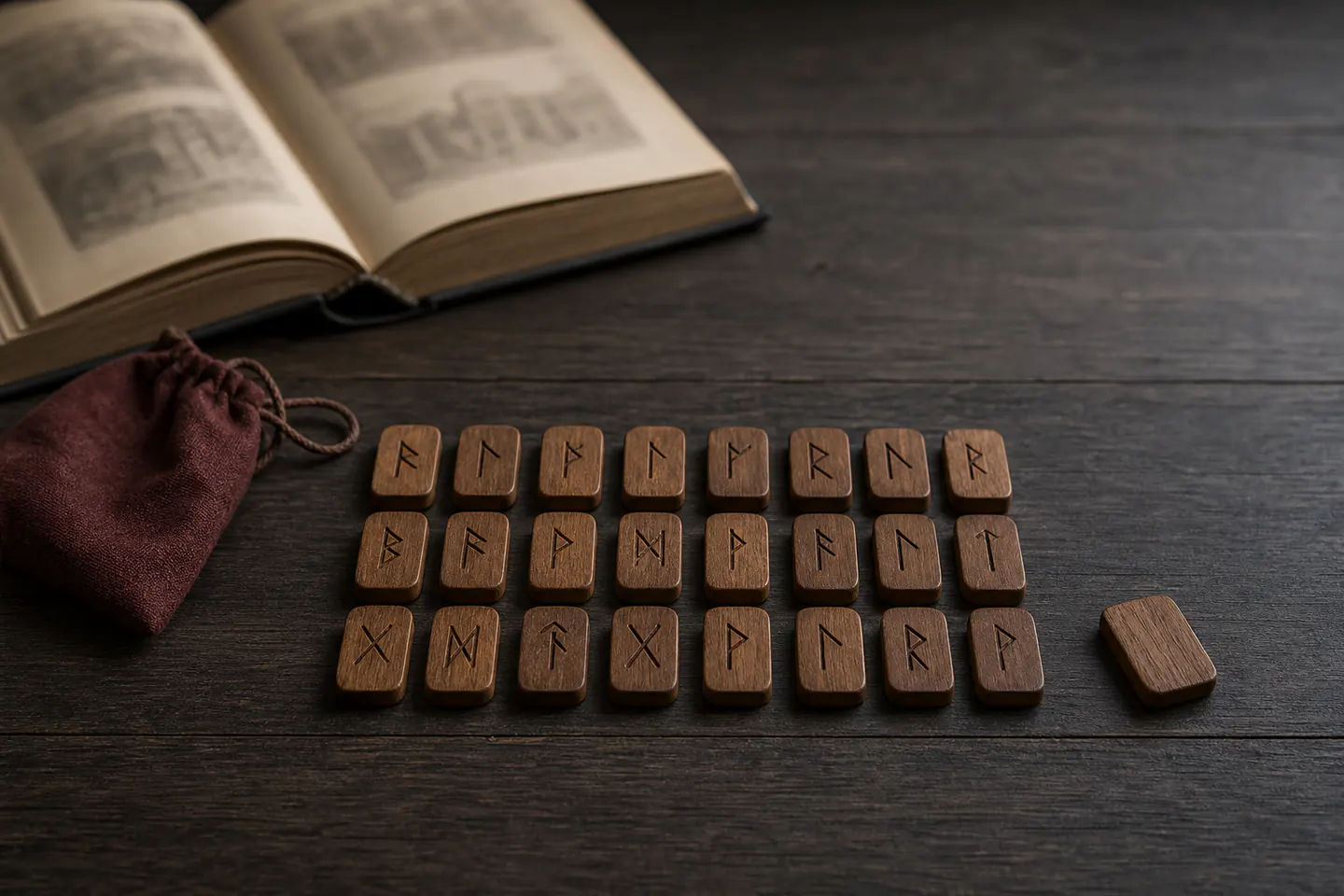
Many commercial sets contain twenty-five pieces, with a blank tile added. Historical Elder Futhark has twenty-four; set the blank aside when learning that row.
What to expect
What the first attempts really involve
Runes sit at the intersection of language history, archaeology, modern spirituality and popular culture. A clear beginner practice labels which claim belongs to which context.
Rune rows
The inventory changes across systems. A character may disappear, split or take a different sound value as languages change.
Evidence
Museum objects and inscriptions show actual use, but short damaged texts can have disputed readings. Certainty should match the source.
Names
Reconstructed names rely on linguistic evidence and are not all preserved identically in one contemporary handbook.
Modern meanings
Keyword lists and divination spreads often develop in recent esoteric traditions. They can support reflection when labelled honestly.
Popular imagery
Television, games and online graphics may combine unrelated symbols or invented “bind runes”. Visual familiarity is not historical authentication.
Fundamentals
Build the first attempt on reliable fundamentals
Choose one row and period
Elder Futhark is a manageable 24-character starting point associated with early Germanic inscriptions. Write its date range and context at the top of the notes. If interest centres on Viking Age Old Norse, Younger Futhark is historically more relevant; if it centres on early England, Anglo-Saxon Futhorc may be the better next study.
Build a three-column chart
For each rune, record the character, scholarly transliteration and approximate sound value. Add the conventional reconstructed name only with a source. Keep a fourth optional column for modern reflective associations, clearly marked “modern”, so a poetic keyword is never mistaken for an inscription's translation.
Read objects before symbols alone
Use a museum record that gives object, date, material, find context and transcription. Notice whether the runes name a person, label an object, memorialise someone or form an uncertain sequence. Context shows that runic writing served ordinary language as well as ritual or commemorative uses.
Frame a reflective draw carefully
For a modern one-rune practice, ask an open question such as “What aspect of this decision needs more attention?” Draw one tile, read its documented modern associations from a named source and write several possible connections. Do not treat the result as factual advice about health, money, law, safety or another person's mind.
Useful products
A scholarly foundation, one modern perspective and a physical set
Michael Barnes supplies the historical handbook, Paul Rhys Mountfort represents a clearly modern divinatory approach and the wooden set makes handling practice tangible. They are different paths, not three authorities saying the same thing; a learner can begin with the book and paper chart alone.
Michael P. Barnes Runes: A Handbook
It directly addresses the difference between writing systems and unsupported symbolic claims.
Paul Rhys Mountfort Nordic Runes
It lets the guide show how a contemporary reading method differs from academic runology.
Generic Wooden Rune Set, 25 pieces
Physical shuffling and recognition can support learning after the chart is sourced.
First practice
Learn six runes and make one reflective entry
Use the first six characters of a documented Elder Futhark chart. The exercise deliberately separates language study from optional modern interpretation.
- 01
Name the system
Write Elder Futhark, its 24-character total and broad historical context before copying a symbol.
- 02
Choose a scholarly chart
Use one source that supplies transliteration and sound value, and record its title or URL.
- 03
Copy six carefully
Draw each character several times while saying its transliteration and approximate sound aloud.
- 04
Make two columns
Keep historical language information separate from any modern keywords or personal associations.
- 05
Inspect one object
Open a museum record, identify material, date and object use and note what the inscription is thought to do.
- 06
Test recognition
Cover the chart, identify the six characters in shuffled order and write their transliterations.
- 07
Try one optional draw
Ask an open reflective question, draw one of the six and generate several interpretations rather than a prediction.
- 08
Write the boundary
End the page with what the source supports, what is modern practice and what remains uncertain.
Troubleshooting
Read the result before changing the setup
Conflicting charts may use different rune rows
Check the heading, character count, date and language. Do not merge a Futhorc character into Elder Futhark merely because both are called runes.
A keyword list with no sources needs relabelling
Treat it as one modern author's system, compare it with a scholarly handbook and avoid presenting the meanings as ancient universal definitions.
A 25-piece set contains an extra modern blank
Count the marked pieces and set the blank aside while studying the 24-character Elder Futhark. Its presence is not evidence for a historical rune.
A reading that feels commanding needs distance
Rewrite the result as questions and possibilities, then make important decisions from evidence, values and qualified advice. A random draw does not determine an outcome.
Skip for now
What can wait
One well-sourced row contains enough history and practice for months. Decorative certainty is the part to avoid.
- 01
Mixing every rune row
It hides language and period. Add another row only when its context and differences can be named.
- 02
A blank rune
Commercial sets may include it, but it is not part of the 24-character historical Elder Futhark. Leave it unused in the first study.
- 03
Tattoo or permanent mark
Verify character, orientation, system, transliteration and cultural implications with expert sources before making anything irreversible.
- 04
Predictive certainty
Use modern readings for reflection or storytelling, not guaranteed claims about future events, medical outcomes or other people.
Upgrade path
What a better setup changes
A better setup adds language context, inscriptions and transparent modern methods rather than a more ornate bag of stones.
Six-rune study
FreeScholarly chart + paper + museum record
Separates character, sound and historical use before interpretation.Full Elder Futhark
About £10–£35Handbook + 24 marked cards or tiles
Adds recognition, transliteration and a complete consistent row.Comparative rune rows
Mostly books and timeElder + Younger or Futhorc charts with dates and language notes
Shows how writing systems changed rather than treating runes as static symbols.Modern reflective practice
OptionalNamed modern source + journal + explicit boundaries
Builds a personal interpretive method without rewriting historical evidence.Before upgrading
A useful check before spending more
Label every claim
Mark notes as inscription evidence, linguistic reconstruction, later rune poem, modern author's association or personal reflection. The labels make apparently conflicting sources easier to understand.
Prefer museums and scholarship for history
An attractive product card or unsourced social post can inspire a question but should not settle dates, translations or authenticity. Follow the claim back to a catalogue, course or specialist handbook.
Safety
Keep reflection separate from high-stakes advice
Physical rune study is low risk, but misleading certainty and permanent use of misunderstood symbols can cause real harm.
- Do not use a rune draw as medical, legal, financial or safety advice or as proof of another person's intentions.
- Avoid fear-based claims, guaranteed predictions and services that pressure repeated paid readings.
- Check historical and contemporary associations before displaying or permanently marking a symbol.
- Keep small tiles away from children and pets and inspect wooden pieces for splinters.
- Respect museum and publication image rights when reproducing inscriptions.
- If a reflective practice increases anxiety or compulsive checking, pause it and seek appropriate support.
Classes
When outside help is useful
A university public course, museum talk or language group is useful for inscriptions and linguistic context. Modern reading circles should state their tradition and limits clearly.
Best for archaeology, language change, inscription context and reliable source trails.
Look for transparent contemporary framing, consent and no guaranteed predictive claims.
Representative UK public-learning and reflective-practice formats checked 30 July 2026; scholarly depth and tradition vary.
Sources
Sources and checking notes
Museum objects and university teaching anchor the history, a museum learning resource supports character practice and community discussions reveal recurring confusion about rows, blanks and modern meanings.
-
01
British Museum · Franks Casket
Primary museum record for an inscribed Anglo-Saxon object with context and scholarship.
Open source -
02
University of Nottingham · Runology course
Academic course description establishing linguistic, historical and inscription-based study.
Open source -
03
Ely Museum · Runes learning resource
Museum educational introduction to Anglo-Saxon runes and writing practice.
Open source -
04
r/runes · Beginner resources
Long-running community resource discussion distinguishing academic runology from divination.
Open source -
05
r/Norse · Rune history discussion
Community moderation and source-checking around historical rune claims.
Open source -
06
Amazon UK · Runes: A Handbook
Exact Michael P. Barnes product and direct Amazon UK listing checked for current availability, price context and model identity.
Open source -
07
Amazon UK · Nordic Runes
Exact Paul Rhys Mountfort product and direct Amazon UK listing checked for current availability, price context and model identity.
Open source -
08
Amazon UK · Wooden Rune Set, 25 pieces
Exact Generic product and direct Amazon UK listing checked for current availability, price context and model identity.
Open source
Guide information and links checked 30 July 2026.