Beginner’s guide · Cook & bake
Mustard making
Start with one useful result.
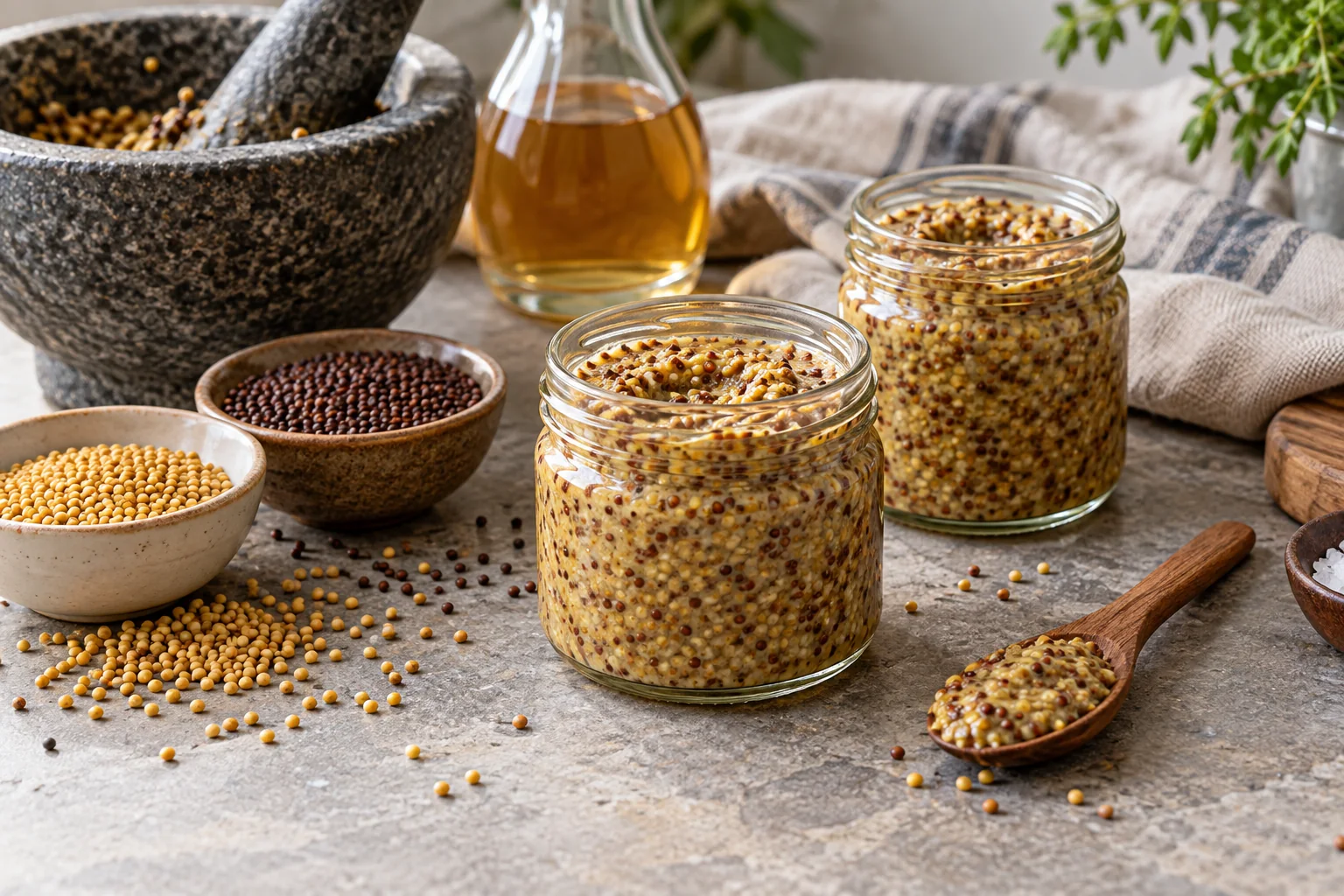
Wholegrain mustard is a compact kitchen project: soak seeds as the chosen recipe directs, crush only part of them, then taste after chilling. Keep this first jar refrigerated rather than assuming vinegar makes a home recipe shelf-stable.
Quick answer
Start with a small jar of refrigerated wholegrain mustard
Wholegrain mustard is a compact kitchen project: soak seeds as the chosen recipe directs, crush only part of them, then taste after chilling. Keep this first jar refrigerated rather than assuming vinegar makes a home recipe shelf-stable.
- 01
Mustard seeds, vinegar and other ingredients from one tested refrigerated recipe
- 02
Clean jar, spoon and mortar or small blender
- 03
Fridge space and date label
What to expect
What the first attempt is really like
The useful skill here is choosing seed texture and allowing sharpness to settle. These details matter more than a polished first result.
Texture
Leaving some seeds intact gives bite; a fully blended batch is a different style.
Sharpness
Mustard can taste harsh immediately and change after resting.
Storage
Acidity and processing—not the word 'mustard'—determine whether a product is shelf-stable.
The method
The method worth learning
Choose one mustard style first
Ground powder mixed for immediate use and soaked seeds ground into a grainy condiment behave differently. Start with a small seed-based recipe from a named recipe author, using its exact liquid, seed types and quantities. Yellow seeds are generally milder than brown; a 100 per cent brown-seed substitution changes the result. Buying several unusual seeds does not help you understand the first batch.
Keep ingredients and tools ordinary
Use a clean glass or food-safe non-reactive container, a spoon and an owned small processor or mortar suitable for the batch. Stainless steel is suitable for mixing; avoid a reactive bare-iron pan for acidic soaking. Check the vinegar strength specified by the recipe. Weigh seeds for repeatability when the formula uses weights, but keep teaspoon measurements as teaspoons if they are too small for a 1 g kitchen scale.
Follow a complete formula rather than a guessed ratio
The linked Serious Eats recipe is one clear grainy starting point: its author uses both yellow and brown seed with wine and vinegar, then a refrigerator rest after grinding. Consult the full recipe for exact measurements and its soaking procedure. Do not replace wine, remove acid or add fresh garlic and assume the same handling applies. The choice of liquid, how seeds are broken and when acidity is introduced affect flavour as well as texture.
Taste over time within a fridge-only plan
Newly ground mustard may taste harsh, bitter or surprisingly mild. Keep the completed condiment refrigerated and compare a cooled small sample after its prescribed rest. That flavour change does not demonstrate preservation. Make only what you can use within the recipe’s explicit refrigerated instructions; where no reliable duration is given, use conservative short-term leftover handling rather than inventing months of shelf life. For this first batch, make only enough to eat promptly after the prescribed fridge rest; keep any remainder chilled and use within a further 48 hours. This is a conservative home-use plan, not a validated long shelf life. Label ingredients, date and any substitutions.
Useful products
Equipment with a clear job
Start with suitable equipment you already own. These exact UK listings are useful examples when a missing tool limits the first project; prices and availability were checked on 2 October 2026 and delivery may add to the cost.
Salter Disc Digital Kitchen Scales, White
Record seed weights and ingredient changes so the next small batch can be compared fairly.
Kilner Round Clip Top Jar, 125 ml
Store a small labelled fridge portion of the finished condiment.
What can wait
What can wait
Keep the first project small and learn what the equipment is doing before adding more.
- 01
Cupboard storage
Homemade acidity and a sealing lid do not establish shelf stability. Keep the first batch refrigerated with a defined use plan.
- 02
Fermentation
It adds a separate process and measurement problem. Learn a measured non-fermented mustard first.
- 03
Several jars of variations
A single small baseline makes heat and texture easier to understand. Mustard seeds and liquids are enough for the first experiment.
First project
First project: A small jar of refrigerated wholegrain mustard
Start with a small jar of refrigerated wholegrain mustard. Use the listed equipment, take notes on the result and repeat the small project before expanding it.
- 01
Select the recipe
Choose a small refrigerated wholegrain formula and keep its seed-to-liquid amounts intact.
- 02
Soak safely
Use clean equipment and follow the recipe's time and temperature instructions.
- 03
Crush and mix
Process the complete soaked mixture as directed, stopping while some whole seeds remain. Follow the chosen recipe’s seasonings rather than adding unmeasured fresh ingredients.
- 04
Chill and compare
Jar cleanly, refrigerate and taste later; record what you would alter in the next batch.
Troubleshooting
When the first attempt goes wrong
It is fiercely hot or bitter
Confirm seed types and recipe quantities before trying to rescue it. Community reports show both seed variation and premature tasting can confuse the result. Compare after refrigerated rest within the storage plan; resting is not permission for extended warm holding.
The grains stay hard
Check the specified soaking time and whether the full measured liquid was used. A mortar requires more work than a processor, and a tiny quantity may not reach a large blender’s blades.
The texture is too smooth or watery
Use short pulses and inspect rather than blending continuously. Next time use a processor sized to the small batch. Do not reduce acidity just to thicken a formula intended for preservation.
Flavour varies between batches
Write down seed age, seed mix, liquid type and grinding time. Change one factor on the next batch, rather than adding several spices and a new vinegar together.
Upgrade path
Where to go after the first result
Repeat the simple route first, then choose the next step that solves a problem you have actually met.
Comparison
Seeds and recipe liquidsChange one seed proportion
Lets you compare heat while keeping the rest of the formula and handling unchanged.Texture
Use an owned small processor firstControl the grind
Short pulses or more mortar work adjust the grain size without requiring a specialist mustard appliance.Preservation
Seek an exact professional quoteA validated storage process
Needed for room-temperature storage or sale. It is distinct from refrigerated flavour resting.Safety & care
Safety and practical limits
Use the current instructions for the exact food, material or equipment in front of you.
- A homemade refrigerated mustard is not automatically safe for shelf storage.
- Follow the recipe's storage limit and discard any jar of uncertain age or handling.
- Keep allergens and added ingredients visible to anyone you share the mustard with.
Learning & help
Learning at home and optional help
A class is optional for this first route. Use the free guidance before paying for help.
Read the full named recipe before starting, plus Penn State’s refrigerated-condiment guidance. Manufacturer jar instructions concern the container, not a homemade mustard’s shelf life.
A class is optional for sensory comparison. Obtain competent formulation and process advice before attempting shelf-stable storage or selling; Minnesota’s commercial guidance illustrates the controls involved rather than supplying a universal home formula.
Learning sources checked 2 October 2026. No unverified class fee or booking availability is quoted.
Sources
Where the guidance came from
Food and wildlife authorities, exact maker instructions, specialist guidance, practitioner observations and UK product listings support the route above. Community accounts inform practical expectations; they do not establish food safety, wildlife rules or current prices.
-
01
Penn State Extension · Gifts from the kitchen garden
Example of homemade mustard kept refrigerated
Open source -
02
University of Minnesota Extension · Cold-fill hold
Why shelf-stable mustard needs measured acidity and process
Open source -
03
Food Standards Agency · Chilling
Chilled food and leftover storage
Open source -
04
Serious Eats · Whole grain Dijon mustard
Joshua Bousel’s measured recipe and refrigerated flavour-resting step; no room-temperature shelf-life claim.
Open source -
05
ChefSteps Community · Homemade mustard problems
Multiple makers report bitterness and seed variability. Informal recipe changes are not preservation evidence.
Open source -
06
Seasoned Advice · Homemade mustard flavour
Reports of flavour changing after grinding; room-temperature storage suggestions are not followed.
Open source -
07
Kilner · Jar hygiene and heat handling
Maker guidance on glass heat shock and handling; cleaning a jar does not validate a condiment recipe.
Open source -
08
Salter · Disc Digital Kitchen Scales, White
Exact selected model, price and availability used for the recommendation; recheck delivery and checkout.
Open source -
09
Kilner · Round Clip Top Jar, 125 ml
Exact selected model, price and availability used for the recommendation; recheck delivery and checkout.
Open source
Guide information and links checked 2 October 2026.