Beginner’s guide · Grow & care
Plant the tank you already understand.
Leave CO₂ for later.
Add a few robust low-tech plants to an established freshwater aquarium, match each plant to water-column or root feeding and keep rhizomes above the substrate. Start with moderate light and change one variable at a time.
Quick answer
Choose three plants for three real positions
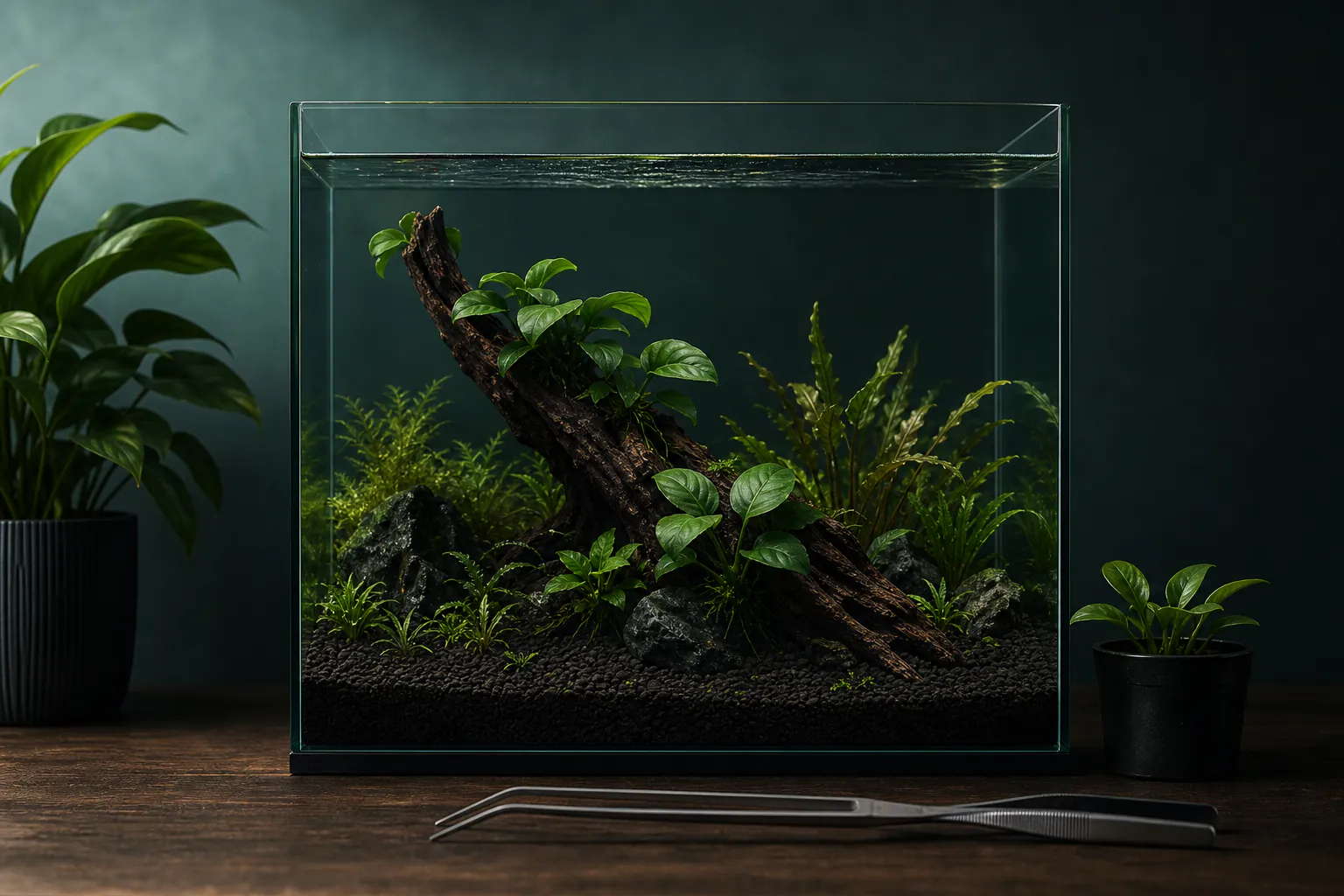
Buy healthy correctly labelled plants from a reputable aquatic specialist: one Anubias for wood or rock, one Java fern for another hardscape position and one compatible Cryptocoryne for the substrate. Keep Anubias and Java fern rhizomes exposed, plant only their roots, and use the existing light on a modest timer before adding fertiliser.
- 01
This guide assumes the aquarium is already cycled, filtered, stocked appropriately and maintained with safe water changes.
- 02
Anubias and Java fern feed largely from the water column and their horizontal rhizomes can rot if buried.
- 03
Cryptocoryne is rooted and may benefit from substrate nutrients, but it can lose old leaves while adapting to a new tank.
- 04
More light accelerates both plant growth and algae. Begin modestly and change duration or intensity slowly.
What to expect
A planted aquarium is a balance, not a fixed decoration
Plants arrive from different growing conditions and may replace old leaves while adapting underwater. The tank’s animals, water chemistry, substrate, light and maintenance all affect the result.
Transition
Many nursery plants were grown with leaves above water. Those leaves may melt while new submerged growth develops.
Placement
A rhizome plant tied to hardscape and a heavy root feeder in sand do not use nutrients the same way.
Light
Slow low-tech plants need less light than a carpet. Excess duration often benefits algae before the plant can use it.
Nutrients
Fish waste supplies some nutrients, not a guaranteed complete dose. Root tabs and liquid feed solve different pathways.
Algae
Algae is information about imbalance, age and maintenance. A bottle cannot replace light control and manual removal.
Livestock
Fish may uproot, eat or shade plants. Every fertiliser and treatment must be compatible with the actual animals.
Planting basics
Match each plant to its anchor and nutrient route
Start in an established tank
Record tank size, temperature, water parameters, livestock, substrate, filter and existing light schedule. Correct any animal-welfare or water-quality problem before treating plants as the solution. Buy true aquatic plants from a specialist and check current UK restrictions rather than choosing an unidentified bundle.
Keep rhizomes in the water
Anubias and Java fern have a thicker horizontal rhizome from which leaves and roots emerge. Attach that rhizome to wood or rock with suitable thread or a tiny amount of aquarium-safe adhesive, or wedge it gently. Roots may enter the substrate; the rhizome must remain exposed.
Plant root feeders carefully
Use long tweezers to place Cryptocoryne roots into the substrate while keeping the crown above it. Do not crush the roots or repeatedly uproot a settling plant. If the substrate is inert and the plant later shows a genuine nutrient need, place a root tab nearby according to its directions.
Control light before dosing
Begin around six hours of consistent light and observe new growth and algae over weeks. Use fertiliser only when the plant list, livestock and nutrient route justify it. Dose the actual water volume, start cautiously and never combine several corrections at once.
Useful products
Tools for planting and two different nutrient routes
The JBL straight tweezers help position rooted plants without soaking an arm or crushing crowns. Seachem Flourish Tabs are for rooted plants in inert substrate. Tropica Premium Nutrition is a water-column micronutrient feed intended for tanks with relatively few fish or a demonstrated need; neither fertiliser is an automatic first-day dose.
JBL ProScape Tool P 30 Straight Tweezers
The long straight tips make controlled substrate placement easier in an already filled aquarium.
Seachem Flourish Gravel Bed Tablets, 10 Count
A tablet beside a genuine root feeder targets the substrate route instead of dosing every plant through the water.
Tropica Plant Growth Premium Fertiliser 300 ml
The nitrogen- and phosphorus-free formula can suit a stocked low-tech tank where trace elements are the identified gap.
First planting
Add three low-tech plants to an established tank
Keep the new plants in a separate container for inspection and follow the supplier’s pest, pesticide and quarantine guidance before introducing them to livestock.
- 01
Write down the tank conditions
Record water, temperature, livestock, substrate and current daily light before buying plants.
- 02
Choose compatible specimens
Select healthy labelled Anubias, Java fern and Cryptocoryne species suited to the tank size and temperature.
- 03
Inspect and prepare
Remove damaged leaves, rock wool and hitchhikers using the aquatic supplier’s safe method.
- 04
Place the rhizome plants
Attach Anubias and Java fern to separate hardscape with every rhizome above the substrate.
- 05
Plant the Cryptocoryne
Insert roots with tweezers and leave the crown visible without repeatedly adjusting it.
- 06
Set modest light
Run a consistent approximately six-hour starting photoperiod and avoid a sudden intensity increase.
- 07
Wait for new growth
Remove decaying leaves and observe several weeks before diagnosing nutrient deficiency from one old leaf.
- 08
Change one variable
If a repeat problem remains, adjust placement, light or the correct nutrient route—not all three together.
What can wait
What can wait until the tank shows a specific need
Low-tech plants are chosen partly because they can teach placement and balance without a pressurised plant system.
- 01
Root tabs on day one
The Seachem tablets support rooted plants in depleted or inert substrate. They are unnecessary beside a rhizome plant attached to wood.
- 02
Liquid fertiliser by default
Tropica Premium supplies water-column trace nutrients. Dose only for the actual tank, plant mass and livestock.
- 03
Pressurised CO₂
It can support faster, demanding plants but adds gas regulation, diffusion, circulation and animal-safety failure modes.
- 04
A bright carpet
Carpeting plants often require stronger light, enriched substrate and CO₂. Start with visible robust plants at reachable positions.
- 05
Amazon live-plant bundles
Plant health, identity, temperature and dispatch conditions matter. Use a reputable aquatic specialist with current stock information.
Upgrade path
Upgrade one limiting resource at a time
The plant response should justify the next change, and animal welfare remains the fixed boundary.
Three low-tech plants
About £20–£50Existing established tank + specialist plants
Learn rhizome placement, root planting and transition growth.Matched nutrition
About £10–£30Root tabs or cautious liquid feed, not automatically both
Support the pathway used by the plants when a real deficiency appears.Purpose plant light
About £70–£250Dimmable aquarium light and reliable timer
Control spectrum, intensity and photoperiod more repeatably.High-tech planted tank
£300–£1,200+Pressurised CO₂, strong light, fertilisation and monitoring
Grow demanding plants faster while making balance and failure consequences more complex.Safety & biosecurity
Protect livestock and natural waterways
Aquarium plants can carry pests, treatments and invasive species; fertiliser and CO₂ affect living animals.
- Check current UK invasive-species rules and never buy, keep, swap or dispose of a prohibited plant unlawfully.
- Never release aquarium plants, animals, water or substrate into a pond, drain or natural water body.
- Quarantine or inspect new plants using methods compatible with the tank’s fish, shrimp and snails; seller pesticides can persist.
- Dose fertilisers for actual water volume and livestock sensitivity; store them away from children and pets.
- Keep mains plugs, light controls and cables dry with safe drip loops, and disconnect equipment before working in the tank.
Outside help
When a specialist shop helps
A class is unnecessary. A reputable aquatic shop is useful for seeing plant size, confirming whether growth is submerged or emersed and checking compatibility with livestock.
Compare light, growth rate, height and placement before visiting a retailer.
Choose one that shows planting and maintenance in a stocked low-tech tank, not only a competition build.
Free specialist references and representative UK demonstration pricing checked 31 July 2026; shop events and livestock policies vary.
Sources
Where the guidance came from
Aquatic-plant specialists establish planting and light principles; UK rules set the disposal boundary and community experience highlights rhizome and low-tech errors.
-
01
Tropica · Get the right start
Early lighting, water changes, plant mass and algae-control guidance for planted aquariums.
Open source -
02
Aquarium Co-Op · Beginner planted aquarium
Low-tech plant selection, planting routes and beginner maintenance.
Open source -
03
GOV.UK · Invasive non-native plant species rules
Current legal restrictions and duties for listed invasive plants in England and Wales.
Open source -
04
r/PlantedTank · Beginner planted tank advice
Recurring practitioner advice on exposed rhizomes, modest light, root tabs and low-tech species.
Open source -
05
Amazon UK · JBL ProScape Tool P 30 straight tweezers
Exact product page, model or ISBN, observed price and availability checked for this guide.
Open source -
06
Amazon UK · Seachem Flourish gravel-bed tablets
Exact product page, model or ISBN, observed price and availability checked for this guide.
Open source -
07
Amazon UK · Tropica Premium Nutrition 300 ml
Exact product page, model or ISBN, observed price and availability checked for this guide.
Open source
Guide information and links checked 31 July 2026.