Beginner’s guide · Make & create
Let water make one clear wash.
Keep the paper doing part of the work.
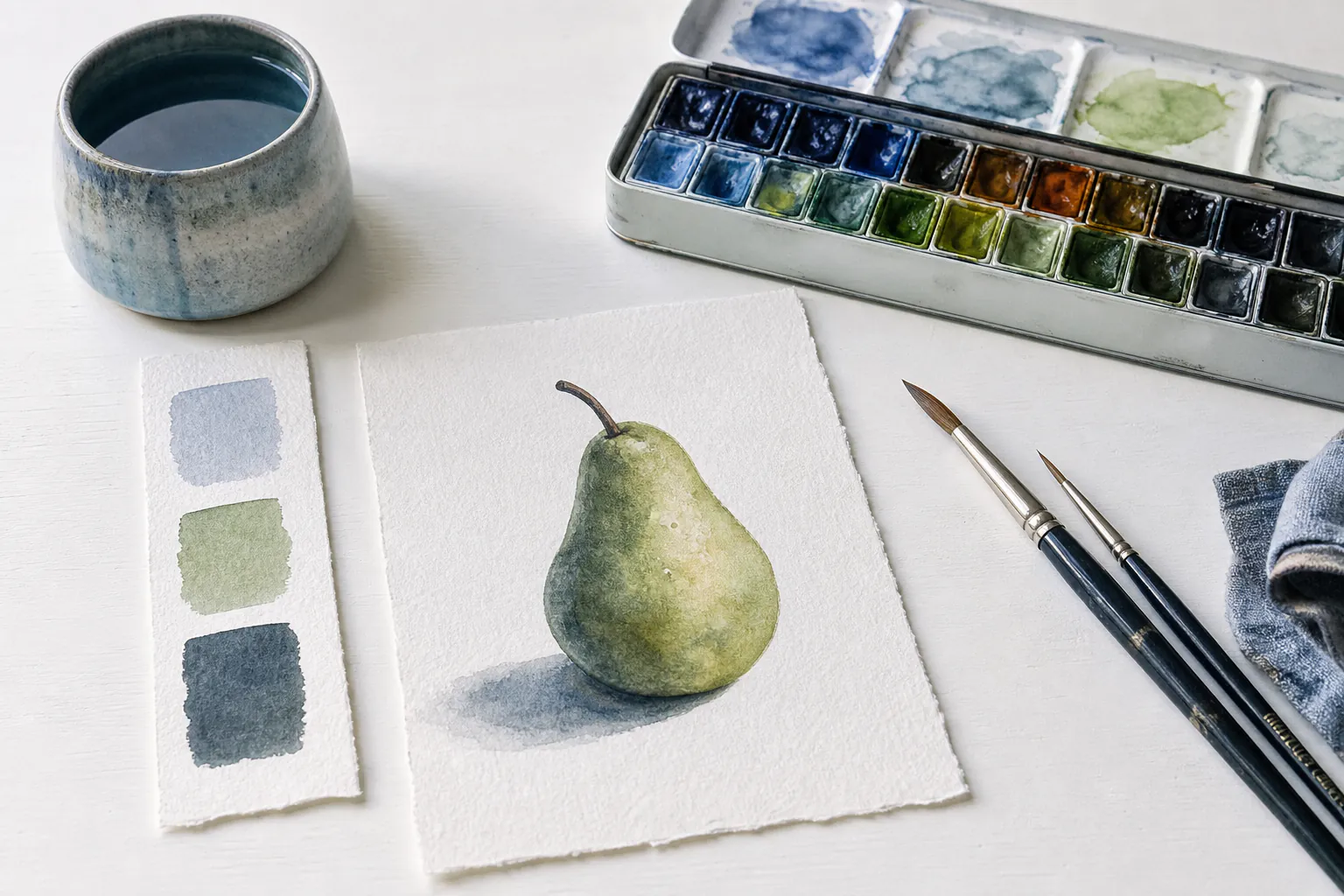
Start with a small artist-quality pan set, two brushes and 300 gsm cold-pressed paper. Paint one simple object through flat wash, graded wash and a few deliberate darks.
Quick answer
Spend on paper before a large paint collection
Use 300 gsm cold-pressed watercolour paper, a compact set of transparent pans and one medium round brush. Tape or clip a small sheet to a board, make a value strip from pale to dark, then paint a pear, mug or leaf with one light wash. Let it dry fully, add a smaller mid-value shape and finish with the darkest accent rather than repeatedly scrubbing the surface.
- 01
Ordinary thin paper buckles, pills and prevents techniques from behaving as expected.
- 02
Watercolour dries lighter and an edge changes as the shine leaves the paper. Timing is part of the mark.
- 03
Transparent layers can darken cleanly when the previous wash is dry; overworking wet paint produces mud and damaged paper.
- 04
White usually comes from reserved paper. Opaque white paint is a valid later choice, not a repair for every lost light.
What to expect
Water moves after the brush leaves
The medium rewards planning and accepts some variation. Control means predicting water and responding, not freezing every edge.
Paper
Sizing and weight control absorption. Even 300 gsm paper may cockle under very wet washes but remains workable.
Brush load
A dry brush cannot carry a wash; an overloaded brush makes blooms and puddles. Practise touching excess to a cloth.
Mixing
Mix enough colour before a large wash and test it on the same paper when dry.
Edges
Wet paint on wet paper spreads softly; wet paint on dry paper makes a hard edge.
Layering
Glaze only after complete drying unless a soft blend is intended. Hairdryers can move pools and alter drying patterns.
Correction
Some pigments lift and others stain. Paper damage is often more visible than a small colour variation.
Core method
Practise water states before painting detail
Prepare a limited working palette
Use a warm and cool red, yellow and blue where available, or begin with the compact set as supplied. Wet the pans briefly, prepare two water containers if space allows and keep a white cloth for controlling brush load. Work on a small piece of the same 300 gsm paper used for the final study.
Make a water-control strip
Paint one flat rectangle with an even bead, one graded rectangle by adding clean water and one wet-on-wet shape on evenly damp paper. Tilt the board slightly and watch the sheen. Note when a wash is glossy, satin and dry; adding paint at each stage creates different edges.
Build the subject from light to dark
Draw only the essential outer shape and shadow placement with a light pencil. Mix enough pale colour and paint the largest connected wash, leaving paper for highlights. Allow full drying. Add a smaller mid-value glaze, soften only the chosen edge and reserve the darkest paint for contact shadow and one focal accent.
Stop, dry and evaluate at viewing distance
Step back before adding texture. Look for the largest light shape, shadow family and edge variety. Lift a mistake only with clean damp brush and minimal rubbing. Let the study dry flat, remove tape carefully and write the colours and paper on the reverse for the next attempt.
Useful products
A compact reliable palette, proper paper and an optional brush set
The Cotman pocket set provides a known student-grade palette and a travel brush. The Daler-Rowney 300 gsm cold-pressed pad is the critical surface. The Foundation brush pack offers additional shapes, but one responsive round can complete the first study.
Winsor & Newton Cotman Sketchers Pocket Set, 12 Half Pans
It is sufficient for value, mixing and small studies and remains useful for travel later.
Daler-Rowney Aquafine Cold-Pressed Watercolour Pad A4, 300 gsm
It lets watercolour behave like watercolour and supplies enough sheets for repetition rather than one precious attempt.
Winsor & Newton Foundation Water Colour Short Handle Brushes, Six Pack
It offers inexpensive dedicated brushes from the same established brand without claiming natural hair is necessary.
First project
Paint one pear in three value layers
Use a real pear under side light. Its simple volume makes water control more visible than complex detail.
- 01
Make a value strip
Mix one colour into five strengths and let the samples dry.
- 02
Draw the large shape
Mark pear, cast shadow and highlight with minimal pressure.
- 03
Lay the light wash
Use enough mixed paint, preserve the highlight and carry a controlled bead.
- 04
Add the mid-value
Wait for complete drying and glaze the shadow side with one softened edge.
- 05
Place the dark accent
Add stem, contact shadow and one small focal dark without outlining everything.
- 06
Dry and review
Compare the finished values to the strip and note where water or timing changed an edge.
What can wait
What can wait until the first result
Better paper and ten finished studies matter more than a huge palette.
- 01
Forty-eight colours
A limited set teaches mixing, value and pigment behaviour without choice paralysis.
- 02
Sable brushes
Good synthetic student brushes can hold enough water for a small study.
- 03
Masking fluid
It can damage paper and brushes and is unnecessary for one reserved highlight.
- 04
A stretched full sheet
Small taped studies keep cost and drying manageable.
- 05
Framing the first exercise
Date and store it as evidence; make another before deciding what deserves display.
Upgrade path
Upgrade the repeated limitation
Upgrade the surface size, pigment behaviour or brush only after a repeated need appears.
Pocket study
About £27+12 pans + 300 gsm paper + one brush
Learn wash, value and layering.Selected tubes
About £20–£60Replace frequently used colours
Mix larger strong washes efficiently.Larger paper and brush
About £20–£70Quarter sheets + larger mop or round
Maintain beads across wider areas.Artist pigments
About £50+Chosen lightfast single pigments
Gain specific granulation, staining and mixing behaviour.Safety & care
Keep pigments, water and posture under control
Artist materials are not food or cosmetics, and even water can damage floors, devices and finished work.
- Do not point brushes with the mouth or eat and drink from painting containers; wash hands after use.
- Read pigment and medium labels and take extra care with products containing heavy metals or sensitising preservatives.
- Keep water jars stable and separate from drinks, protect electrical equipment and wipe spills promptly.
- Use good lighting, support the forearm and take visual and movement breaks during detailed work.
- Dispose of paint water and contaminated materials according to local guidance rather than pouring concentrated pigment outdoors.
Outside help
When outside help earns its place
A class becomes useful for live demonstrations of brush load and timing, but a value strip and pear can be repeated independently.
Use manufacturer technique guidance for washes, colour and brush handling.
Check paper and paint quality, group size, accessibility and whether individual feedback is included.
Representative UK prices and free learning routes checked 3 August 2026; local availability, materials and tutor support vary.
Sources
Where the guidance came from
Established paint and paper makers provide material and technique guidance; conservation sources support careful handling and lightfast display decisions.
-
01
Winsor & Newton · Watercolour techniques
Manufacturer teaching on washes, layering, colour and brush handling.
Open source -
02
Daler-Rowney · Aquafine watercolour
Student watercolour and paper material context.
Open source -
03
Tate · Watercolour
Museum definition and historical context for the medium.
Open source -
04
Jackson’s Art · Watercolour guide
Specialist practical articles on paper, paint, brushes and technique.
Open source -
05
Amazon UK · Winsor & Newton Cotman Sketchers Pocket Set
Exact product page, model or ISBN, observed price and availability checked for this guide.
Open source -
06
Amazon UK · Daler-Rowney Aquafine 300 gsm cold-pressed pad
Exact product page, model or ISBN, observed price and availability checked for this guide.
Open source -
07
Amazon UK · Winsor & Newton Foundation watercolour brush set
Exact product page, model or ISBN, observed price and availability checked for this guide.
Open source
Guide information and links checked 3 August 2026.