Beginner’s guide · Cook & bake
Measure the drink,
then control the dilution.
Begin with one shaken sour and one alcohol-free variation. A jigger, cold ice and a balanced recipe teach more than a crowded spirits shelf.
Quick answer
Learn one three-part sour with a jigger
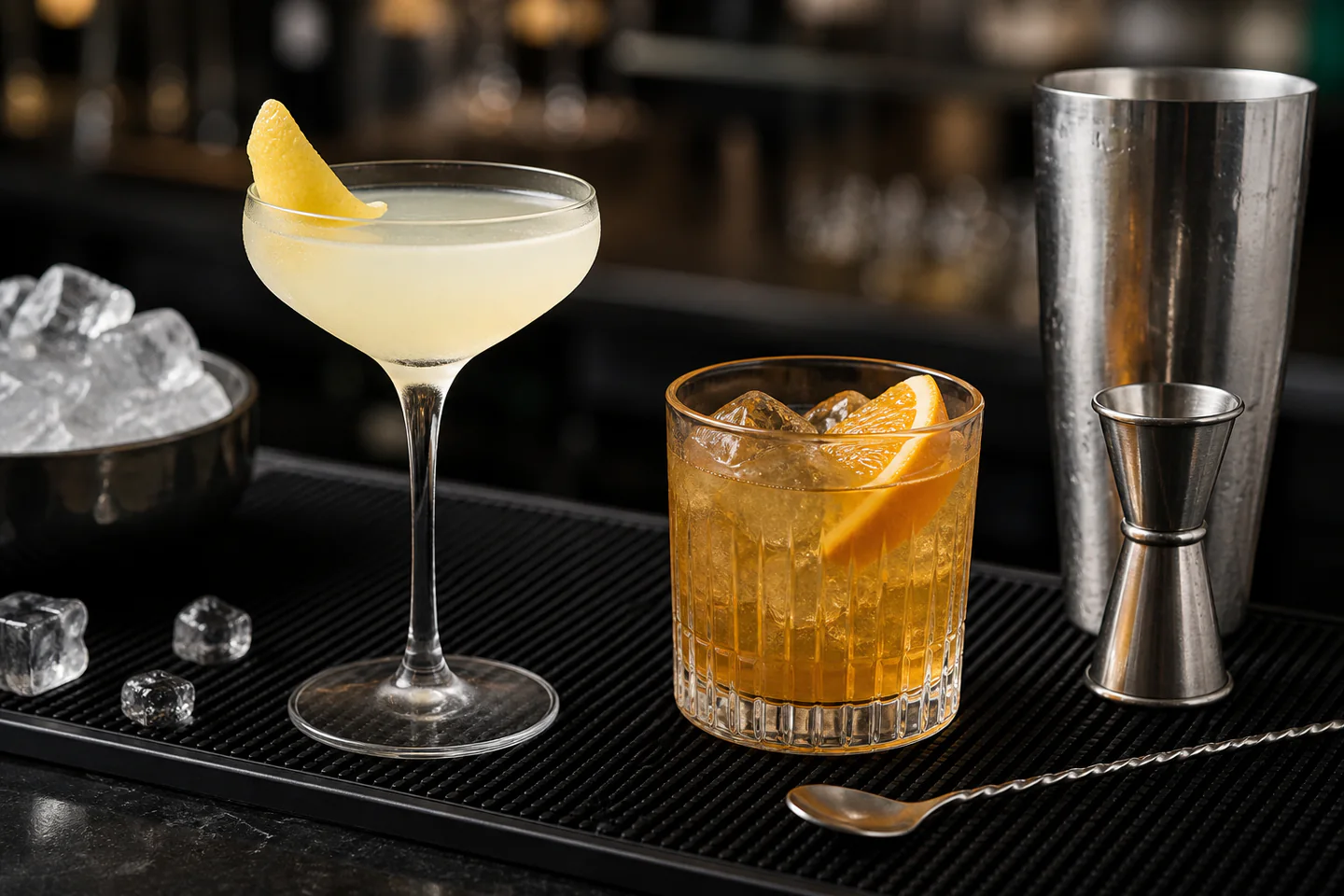
Choose an International Bartenders Association recipe or another tested sour, make one full-size measured version and write down every quantity. Chill the glass, fill a shaker with sound cold ice, add ingredients using a jigger and shake firmly for the stated time before straining. Taste only after dilution and adjust the next drink rather than pouring unmeasured syrup into the glass. Make an alcohol-free version with the same care for acidity, sweetness, aroma and presentation so the method is not dependent on intoxication.
- 01
Measure every ingredient. Free-pouring hides changes in alcohol units, balance and cost.
- 02
Ice is an ingredient: its temperature, size, amount and contact time control chilling and dilution.
- 03
Shaken drinks combine citrus, juice, dairy or egg; stirred drinks are normally clear spirit-led recipes. Follow a tested method before improvising.
- 04
Alcohol-free drinks deserve structure and measurement rather than a glass of mixed sweet liquids. Check that bitters, extracts and “0.0” products match the intended definition.
- 05
Know the units served, offer food and water and never pressure anyone to drink. No drink is compatible with driving.
What to expect
A cold balanced drink is a timed mixture
A recipe can be correct on paper and arrive warm, harsh or watery because the ice, glass and shaking time changed. Repetition with one drink exposes the real variables.
Measure
A 25 ml and 50 ml jigger makes ratios visible. Check which line is which before the shaker is full.
Ice
Small wet ice melts quickly; large hard cubes chill with more control. Fill the shaker rather than adding three tired cubes.
Citrus
Freshness and fruit variation change acidity. Taste ingredients and use the same juice batch when comparing technique.
Shake
A secure two-piece seal, confident motion and prompt straining matter more than theatrical style.
Taste
Temperature suppresses sweetness and aroma. Judge the finished chilled drink, then record the adjustment for next time.
Service
Glass size controls portion perception. A smaller correct serve is safer and better balanced than topping up an oversized glass.
Core method
Build the bar around two repeatable recipes
Choose the drinks first
Select one published shaken sour and one alcohol-free recipe sharing citrus, syrup and garnish where possible. Calculate servings and alcohol units before shopping. Buy small quantities, check allergen and storage information and avoid collecting bottles without a defined recipe.
Prepare cold and clean
Wash tools and glassware, make enough fresh ice and chill serving glasses. Squeeze and strain citrus, prepare a measured simple syrup safely and label anything stored. Keep raw egg, dairy and allergen-containing ingredients under appropriate food-hygiene control.
Measure and shake
Add ingredients to the shaker with a jigger so mistakes can be corrected before ice is added. Fill with ice, seal fully and shake with both hands while pointing the tins away from people. Open carefully, strain promptly and never use glassware not intended for shaking.
Taste, record and pace
Taste a small finished serve, noting sweetness, acidity, dilution and temperature. Change only one ratio next time. Serve alcohol-free options visibly and without fuss, provide water and stop alcohol service well before judgement or coordination declines.
Useful products
Products with a clear job in the setup
The BarCraft Boston shaker is a simple durable mixing tool, while the larger Bare Barrel set adds a jigger, strainer and bar spoon for someone starting without any equipment. Buying both duplicates tools, so choose one route. The smaller kit can be paired with a measured household tool, whereas the full set is convenient when several classic methods are planned.
BarCraft Stainless-Steel Boston Cocktail Shaker
A simple metal shaker chills quickly, is easy to clean and avoids unnecessary decorative accessories.
Bare Barrel 14-Piece Cocktail Shaker Set with Stand
It covers the distinct jobs needed for several classic recipes and gives each tool a storage place.
BarCraft Mojito Cocktail Making Set
A proper muddler is safer and more controllable than using a knife handle or improvised kitchen object.
First project
Make a measured sour two ways
A matched alcoholic and alcohol-free pair reveals balance, temperature and dilution without making the hobby depend on a bottle collection.
- 01
Select tested recipes
Write quantities, serving size, allergens and alcohol units before chilling anything.
- 02
Prepare one citrus batch
Strain it and use the same juice for both drinks so technique is comparable.
- 03
Chill the glasses
Make enough clean hard ice and keep tools dry and ready.
- 04
Measure into the shaker
Use the jigger, check each ingredient and add ice last.
- 05
Shake and strain
Hold both parts securely, point away from people and serve promptly.
- 06
Taste and record
Compare acidity, sweetness, aroma and dilution and change one variable next time.
What can wait
What can wait until the first result
A broad bottle collection creates cost and waste without teaching balance. Let repeated recipes justify each new ingredient.
- 01
Premium spirits
Technique and fresh ingredients are easier to diagnose with a sound mid-range bottle.
- 02
A display trolley
Storage should protect bottles and glass, not turn unused products into décor.
- 03
Flaming garnishes
Fire, hot oils and alcohol vapour add risk without improving basic balance.
- 04
Raw egg drinks
They require allergen communication and food-safety controls; use a tested alternative route first.
- 05
Free-pouring
It makes alcohol units and recipe adjustments invisible.
Upgrade path
Upgrade the repeated limitation
Buy the next bottle or tool when at least two planned recipes use it and the present method has a clear limitation.
One sour pair
About £25–£75Shaker, jigger and chosen ingredients
Learn ratio, ice and dilution.Six-drink menu
About £60–£160Strainer, spoon and limited bottles
Practise shaken, stirred and built drinks.Better ice
About £100–£300Freezer space and large-cube system
Improve repeatability and presentation.Serious home bar
About £250–£1,000+Storage, glassware and documented menu
Host varied preferences responsibly.Safety & care
Good hospitality includes a clear way not to drink
Cocktail skill is measurement and care, not maximum strength. Alcohol-free choices, honest units and a firm plan around transport belong in the recipe.
- Follow UK low-risk drinking guidance, calculate units and never drive, cycle or operate equipment after drinking.
- Do not serve alcohol to anyone under 18 or anyone who cannot consent, and never disguise alcohol in a drink.
- Communicate allergens including egg, dairy, nuts, sulphites and unusual garnishes; use current food-hygiene practice for fresh ingredients.
- Use only sound drinkware and purpose-made shakers, point them away from faces and clean broken glass or spills immediately.
- Keep alcohol, tools and glass away from children and pets, provide water and food and stop serving before impairment becomes a safety issue.
Outside help
When outside help earns its place
IBA recipes and one measured sour are enough to begin. A responsible cocktail workshop is useful for efficient shaking, tasting dilution and learning several families without buying every bottle first.
Use exact measures and current ingredient definitions.
Ask about alcohol-free participation, units, allergens and included drinks.
Representative UK learning options checked 18 August 2026; local prices, access, materials and tutor support vary.
Sources
Where the guidance came from
The IBA anchors standard recipes, while UK alcohol and food-safety sources define responsible service. Working bartenders and communities add practical evidence about ice, dilution, tools and substitutions.
-
01
International Bartenders Association · Cocktails
Standardised recipes, measures and preparation methods.
Open source -
02
Drinkaware · Alcohol units
UK unit calculation and drinking context.
Open source -
03
NHS · Alcohol advice
UK health guidance and support context.
Open source -
04
Difford’s Guide
Large specialist recipe and technique reference.
Open source -
05
Reddit · r/cocktails
Community evidence on recipes, ice, tools and troubleshooting.
Open source -
06
Amazon UK · Stainless-Steel Boston Cocktail Shaker
Exact product catalogue page or ISBN used for the recommendation; current price, seller, specification and availability should be confirmed.
Open source -
07
Amazon UK · 14-Piece Cocktail Shaker Set with Stand
Exact product catalogue page or ISBN used for the recommendation; current price, seller, specification and availability should be confirmed.
Open source -
08
Amazon UK · Mojito Cocktail Making Set
Exact product catalogue page or ISBN used for the recommendation; current price, seller, specification and availability should be confirmed.
Open source
Guide information and links checked 18 August 2026.