Beginner’s guide · Make & create
Place the wax before the colour,
and treat heat as part of the craft.
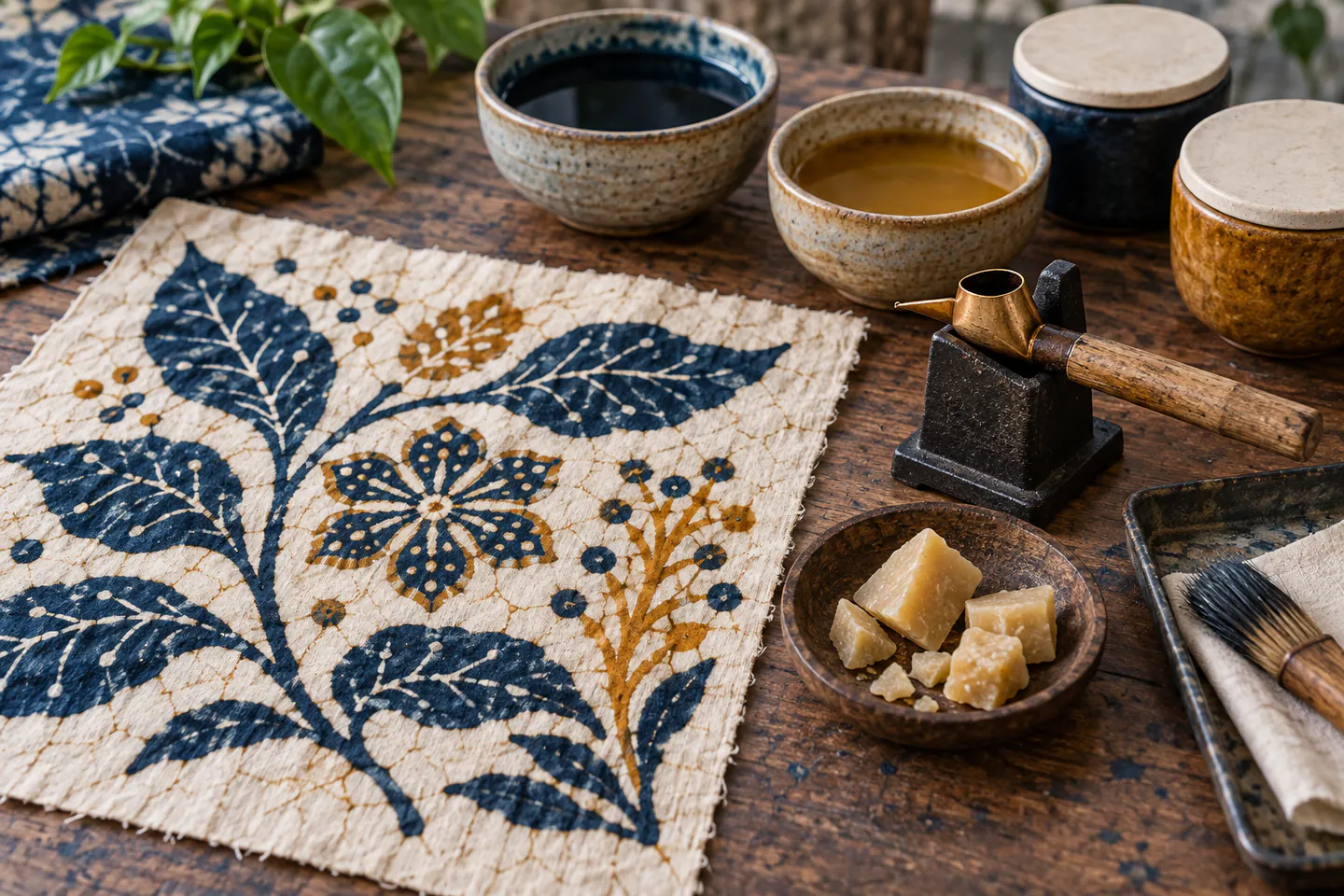
Batik creates patterns by applying wax resist to cloth before dyeing. Begin with one cotton square and a simple line-and-dot design.
Quick answer
Complete one a one-dye botanical batik square before expanding the setup
Use a specialist batik kit or class route that identifies its wax, heater, dye and removal method. Wash and dry plain cotton as directed, stretch a small square, draw a bold simple motif and test the tjanting flow on scrap. Apply wax fully through the cloth, use one compatible dye bath, dry and add a second resist only if the first stage succeeds.
- 01
Batik wax must penetrate the cloth enough to block dye, not merely sit as a brittle surface line. For a first batik attempt, keep the materials, measurements and sequence written beside the work. Photograph or measure the result before correcting it, because a visible record separates a technique problem from a material or setup problem.
- 02
Wax temperature controls flow: too cool blocks the tool, while excessive heat spreads and raises fire risk. For a first batik attempt, keep the materials, measurements and sequence written beside the work. Photograph or measure the result before correcting it, because a visible record separates a technique problem from a material or setup problem.
- 03
Dye choice, fibre and wax-removal method must be planned as one system. For a first batik attempt, keep the materials, measurements and sequence written beside the work. Photograph or measure the result before correcting it, because a visible record separates a technique problem from a material or setup problem.
- 04
Crackle is a deliberate effect only when controlled; random breaks can destroy intended white areas. For a first batik attempt, keep the materials, measurements and sequence written beside the work. Photograph or measure the result before correcting it, because a visible record separates a technique problem from a material or setup problem.
What to expect
What batik is really like at the start
The useful beginner controls are setup, repeatable movement and a finished sample. Maintaining wax temperature so it penetrates cloth without spreading is the main skill to observe before adding scale or decoration.
Cloth
Finishes and synthetic blends can resist wax or take dye unevenly. For a first batik attempt, keep the materials, measurements and sequence written beside the work. Photograph or measure the result before correcting it, because a visible record separates a technique problem from a material or setup problem.
Heat
Open flame and improvised wax pans create avoidable burn and fire risk. For a first batik attempt, keep the materials, measurements and sequence written beside the work. Photograph or measure the result before correcting it, because a visible record separates a technique problem from a material or setup problem.
Wax
A tjanting that is overfilled or tilted drips beyond the intended line. For a first batik attempt, keep the materials, measurements and sequence written beside the work. Photograph or measure the result before correcting it, because a visible record separates a technique problem from a material or setup problem.
Dye
Different systems require specific protective equipment, fixation and disposal. For a first batik attempt, keep the materials, measurements and sequence written beside the work. Photograph or measure the result before correcting it, because a visible record separates a technique problem from a material or setup problem.
Core method
The core batik method
Choose one compatible system
Read wax, heater, dye and fibre instructions together before buying separate components. For a first batik attempt, keep the materials, measurements and sequence written beside the work. Photograph or measure the result before correcting it, because a visible record separates a technique problem from a material or setup problem.
Prepare and stretch cotton
Remove finishes as directed, dry fully and keep the cloth stable above a protected tray. For a first batik attempt, keep the materials, measurements and sequence written beside the work. Photograph or measure the result before correcting it, because a visible record separates a technique problem from a material or setup problem.
Test wax flow
Work on scrap until a line penetrates without flooding, then complete the simplest resist. For a first batik attempt, keep the materials, measurements and sequence written beside the work. Photograph or measure the result before correcting it, because a visible record separates a technique problem from a material or setup problem.
Dye and remove wax safely
Follow the exact colour, fixation, rinse and wax-removal instructions without using food equipment. For a first batik attempt, keep the materials, measurements and sequence written beside the work. Photograph or measure the result before correcting it, because a visible record separates a technique problem from a material or setup problem.
Useful products
Products with a clear job in the route
These two products cover distinct jobs in the beginner route; they are not a requirement to buy a bundle. Use materials already owned when they meet the same specification, and confirm every live listing before ordering.
Tulip One-Step Tie-Dye Kit, 18 Colours
A named system is safer to evaluate than anonymous powders.
Unigloves Pearl Nitrile Examination Gloves
Correctly fitted nitrile allows more control than oversized kit gloves.
First project
Make a one-dye botanical batik square
Keep the project small enough to finish, inspect and repeat. The first result is evidence about material compatibility, sequence and control rather than a performance test.
- 01
Prepare the workspace and materials
Read wax, heater, dye and fibre instructions together before buying separate components. For a first batik attempt, keep the materials, measurements and sequence written beside the work. Photograph or measure the result before correcting it, because a visible record separates a technique problem from a material or setup problem.
- 02
Make the first controlled pass
Remove finishes as directed, dry fully and keep the cloth stable above a protected tray. For a first batik attempt, keep the materials, measurements and sequence written beside the work. Photograph or measure the result before correcting it, because a visible record separates a technique problem from a material or setup problem.
- 03
Check the central technique
Work on scrap until a line penetrates without flooding, then complete the simplest resist. For a first batik attempt, keep the materials, measurements and sequence written beside the work. Photograph or measure the result before correcting it, because a visible record separates a technique problem from a material or setup problem.
- 04
Complete the structure
Follow the exact colour, fixation, rinse and wax-removal instructions without using food equipment. For a first batik attempt, keep the materials, measurements and sequence written beside the work. Photograph or measure the result before correcting it, because a visible record separates a technique problem from a material or setup problem.
- 05
Finish, measure and record
Let the work settle or dry by the relevant material instructions, then measure, photograph and label the result. Record the one change that would make the next batik attempt more controlled. For a first batik attempt, keep the materials, measurements and sequence written beside the work. Photograph or measure the result before correcting it, because a visible record separates a technique problem from a material or setup problem.
What can wait
What can wait until the first result
Delay anything that adds cost, risk or another variable before the basic workflow has produced something you can review.
- 01
Several dye baths
Colour order and repeated waxing multiply compatibility demands. For a first batik attempt, keep the materials, measurements and sequence written beside the work. Photograph or measure the result before correcting it, because a visible record separates a technique problem from a material or setup problem.
- 02
Large wall hanging
More hot wax and wet cloth increase handling risk. For a first batik attempt, keep the materials, measurements and sequence written beside the work. Photograph or measure the result before correcting it, because a visible record separates a technique problem from a material or setup problem.
- 03
Open-pan wax heating
Use purpose-made controlled equipment or a supervised workshop. For a first batik attempt, keep the materials, measurements and sequence written beside the work. Photograph or measure the result before correcting it, because a visible record separates a technique problem from a material or setup problem.
- 04
Wearable sale
Fibre, colourfastness and residual wax need testing. For a first batik attempt, keep the materials, measurements and sequence written beside the work. Photograph or measure the result before correcting it, because a visible record separates a technique problem from a material or setup problem.
Upgrade path
Add the capability you can now name
Each stage should remove a demonstrated limitation rather than make the setup look more advanced.
Single resist sample
Use owned tools where possibleOne small sample and written notes
Learn the central movement and material behaviour.Two-colour cloth
About £20–£80A repeatable complete starter setup
Repeat the result with cleaner finish and fewer corrections.Layered pattern
About £50–£180A selected tool or structured class
Add one technique, size or design capability.Large original textile
Cost varies widelyA documented specialist workflow
Develop original work with provenance, testing and appropriate safety.Safety & care
Safety, care and respectful practice in batik
The practical risks are manageable when tools, materials and cultural claims remain specific and proportionate.
- Use a thermostatically controlled batik wax pot or supervised studio route, never an unattended open pan. For a first batik attempt, keep the materials, measurements and sequence written beside the work. Photograph or measure the result before correcting it, because a visible record separates a technique problem from a material or setup problem.
- Keep a suitable fire blanket and clear work area, and understand that water must not be thrown on burning wax. For a first batik attempt, keep the materials, measurements and sequence written beside the work. Photograph or measure the result before correcting it, because a visible record separates a technique problem from a material or setup problem.
- Ventilate and follow dye, wax and heater instructions, including skin and eye protection. For a first batik attempt, keep the materials, measurements and sequence written beside the work. Photograph or measure the result before correcting it, because a visible record separates a technique problem from a material or setup problem.
- Keep every craft vessel and tool permanently separate from food preparation. For a first batik attempt, keep the materials, measurements and sequence written beside the work. Photograph or measure the result before correcting it, because a visible record separates a technique problem from a material or setup problem.
- Dispose of dye and wax residues according to product and local guidance rather than pouring solids into drains. For a first batik attempt, keep the materials, measurements and sequence written beside the work. Photograph or measure the result before correcting it, because a visible record separates a technique problem from a material or setup problem.
Outside help
When outside help earns its place
A guided session is useful when equipment setup, live hand correction, heat, sharp tools or a specialist press blocks safe progress. A clear source is enough for the smallest batik sample.
Choose one coherent lesson that covers preparation, the central batik technique, finishing and common mistakes.
Ask which tools and materials are included, whether the project can be finished in the session and what safety induction is provided.
Representative UK learning and access routes checked 20 September 2026; local prices, equipment and tutor support vary.
Sources
Where the guidance came from
Authoritative and specialist guidance supports the method, terminology and safety boundaries; community discussion contributes recurring beginner problems rather than unsupported claims.
-
01
Heritage Crafts · Batik
UK craft-status and practitioner context.
Open source -
02
Victoria and Albert Museum · Batik
Historical and material context for batik textiles.
Open source -
03
Handprinted · Batik resources
UK specialist equipment and matched-system context.
Open source -
04
Jacquard · Batik wax
Manufacturer wax use and material guidance.
Open source -
05
HSE · Fire and explosion
UK hot-process and fire-risk context.
Open source -
06
Reddit · r/batik
Recurring practitioner evidence on wax flow, dyes and crackle.
Open source -
07
Amazon UK · One-Step Tie-Dye Kit, 18 Colours
Exact Amazon UK catalogue page or ISBN used for the recommendation; confirm current price, seller, specification and availability.
Open source -
08
Amazon UK · Pearl Nitrile Examination Gloves
Exact Amazon UK catalogue page or ISBN used for the recommendation; confirm current price, seller, specification and availability.
Open source
Guide information and links checked 20 September 2026.