Beginner’s guide · Cook & bake
A repeatable balanced 300 ml pour-over
Control the recipe before chasing tasting notes.
Start with fresh beans, a plastic V60, paper filters, scales and a burr grinder. Weigh coffee and water, change one variable at a time and learn what extraction tastes like.
Quick answer
Make the same simple V60 three times before adjusting it
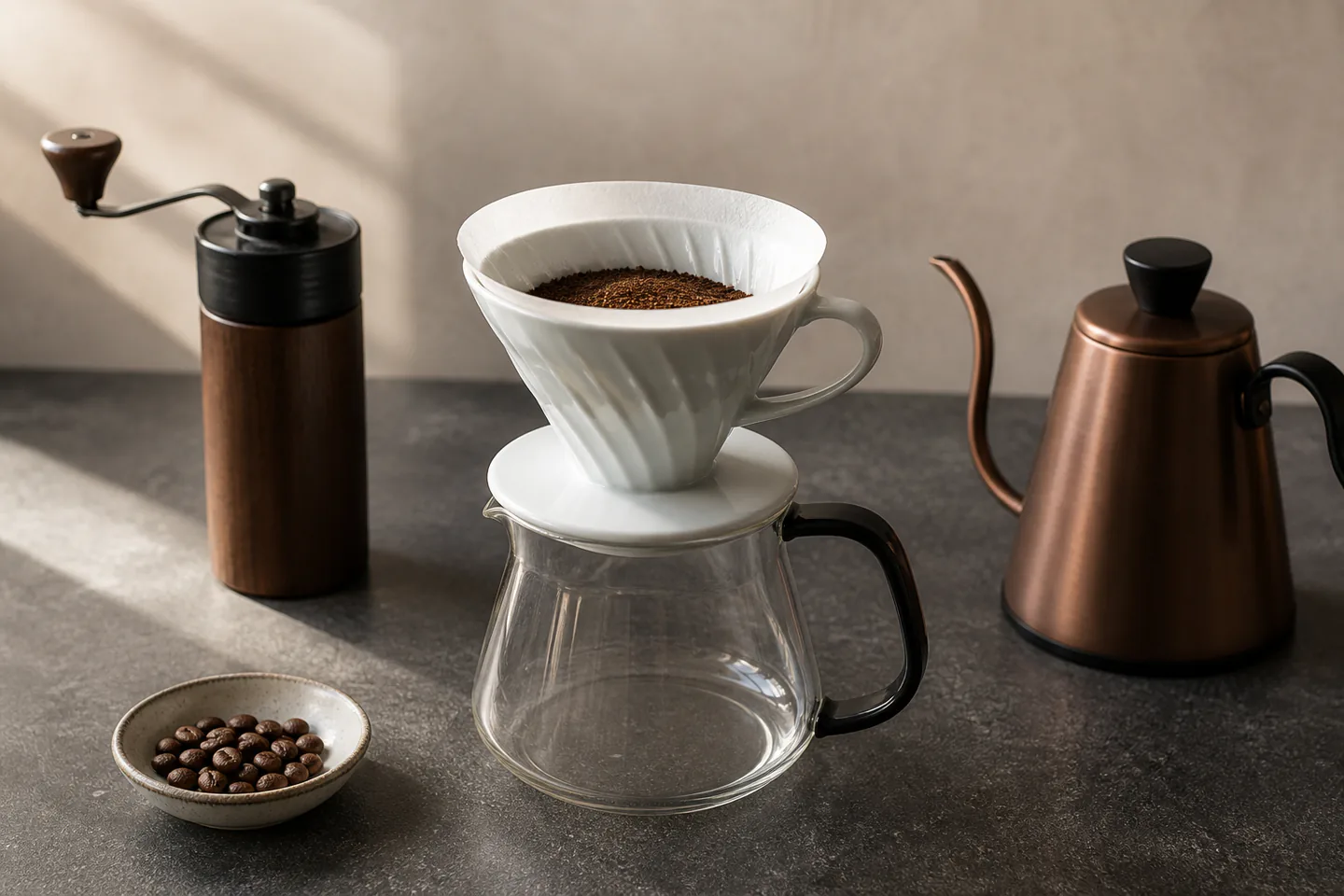
Rinse a size 02 paper filter in a plastic V60, add 18 g of medium-ground fresh coffee and place the brewer and mug on scales. Start a timer, wet all grounds with about 50 g of hot water, wait 30–45 seconds, then pour gently in stages to 300 g. Aim for an even bed and roughly three minutes, but use taste—not a single stopwatch target—to decide the next change.
- 01
Use a burr grinder because a repeatable particle size is the most useful control after weighing.
- 02
A plastic V60 is inexpensive, durable and loses less heat than ceramic; expensive material does not make the recipe easier.
- 03
Water matters. If tap water tastes strongly chlorinated or leaves heavy scale, try a normal drinking-water filter before buying specialist minerals.
- 04
Sour, thin coffee can indicate under-extraction; dry bitterness can indicate over-extraction, but roast, temperature and uneven pouring also affect taste.
What to expect
Consistency reveals what the variables are doing
Speciality coffee is not about copying one magic recipe. The useful skill is reproducing a brew, tasting it and making one deliberate adjustment.
Beans
Use a recently roasted coffee whose flavour description interests you; freshness and roast style affect the result more than decorative equipment.
Ratio
Coffee-to-water ratio controls strength. A 1:16–1:17 starting range is easier to compare than scoops and mug marks.
Grind
Finer grinding usually slows flow and extracts more; coarser grinding usually speeds it, but poor distribution can still create uneven channels.
Water
Use clean drinkable water below a rolling boil for most light-to-medium roasts; let taste guide temperature changes.
Pour
Keep the kettle low, wet the bed evenly and avoid repeatedly blasting the paper wall. A standard kettle works before a gooseneck is necessary.
Taste
Write down dose, water, grind setting, time and one sentence about the cup. Change only one of them next time.
Core method
Build a recipe you can diagnose
Prepare and preheat
Boil fresh water, rinse the paper thoroughly and warm the brewer and cup. Weigh 18 g of beans, grind medium and level the bed without compacting it. Tare the scales and have the timer visible before pouring.
Bloom completely
Pour about 50 g of water across all dry coffee, gently swirl once and wait 30–45 seconds. Fresh coffee releases gas; the goal is simply to leave no stubborn dry pockets before the main pour.
Add water steadily
Pour in two or three controlled stages to 300 g. Keep the slurry comfortably below the rim and use a small final swirl to flatten the bed. Record total drawdown time as evidence, not as a pass-or-fail score.
Taste, then change one thing
Let the drink cool enough to taste safely. If it is weak but pleasant, use slightly more coffee; if sour and fast, grind a little finer; if harsh and slow, grind coarser. Repeat the same beans and water before judging the change.
Useful products
Three tools that make the recipe measurable
The V60 holds the filter, the Timemore grinder controls particle size and the Hario scale measures dose, water and time. They work together; none requires a subscription or proprietary coffee.
Hario V60 Plastic Coffee Dripper, Size 02, Clear
It is the reference V60 shape without the price or heat loss of decorative materials.
Timemore Chestnut C3 ESP Pro Manual Coffee Grinder
The burr set and stepped adjustment are a material improvement over blades and very cheap ceramic grinders.
Hario V60 Drip Scale and Timer
The wide platform and combined timer are designed around pour-over workflow and make records easy to compare.
First project
Brew and compare three cups from one bag
Repeating the same recipe turns a vague preference into a useful adjustment.
- 01
Record the coffee
Note roaster, coffee, roast date and the grinder setting.
- 02
Rinse and tare
Rinse the filter, discard rinse water and tare brewer, cup and coffee.
- 03
Bloom evenly
Wet all grounds with about 50 g and wait 30–45 seconds.
- 04
Pour to 300 g
Use two or three gentle pours and keep the bed evenly wet.
- 05
Taste as it cools
Note sweetness, acidity, bitterness, body and any dry finish.
- 06
Change one variable
Move the grinder by a small step and repeat before changing ratio or temperature.
What can wait
What can wait until the first result
A measured plastic-brewer setup can make excellent coffee while preferences are still forming.
- 01
An espresso machine
Espresso needs a different grinder, maintenance routine and budget.
- 02
A premium gooseneck kettle
A careful standard kettle or simple pouring jug proves whether flow control is the actual limit.
- 03
Several brewers
One familiar brewer teaches more than switching recipes and filter shapes every day.
- 04
Rare competition beans
Develop repeatability with an affordable fresh bag before paying for tiny lots.
- 05
Water chemistry kits
Filtered drinking water is a sensible first comparison; minerals are a later controlled experiment.
Upgrade path
Upgrade the repeated limitation
Spend where repeated notes show a limitation, usually grinder consistency, pouring control or water.
Measured start
About £25–£45Plastic V60 + papers + ordinary scales
Learn ratio and pouring with pre-ground coffee.Useful grinder route
About £75–£140 totalV60 + burr grinder + coffee scale
Control grind and repeat recipes.Pour control
About £50–£150 extraTemperature-controlled gooseneck kettle
Improve flow and heat repeatability.Enthusiast setup
About £250–£700+Premium grinder + water treatment
Improve uniformity after tasting skill exists.Safety & care
Treat boiling water and grinders as real kitchen equipment
Most risk is ordinary heat, steam, glass breakage, grinder misuse and neglected cleaning.
- Use a stable heat-resistant surface and keep the kettle cable, hot brewer and serving vessel away from edges.
- Do not put fingers or tools into a grinder; unplug it before clearing a jam or cleaning burrs as the maker directs.
- Inspect glass servers for chips and thermal damage and discard cracked equipment.
- Clean oils from grinder and brewer, empty wet grounds promptly and dry reusable parts fully.
- Caffeine affects people differently; adjust dose and timing if it disrupts sleep or causes unpleasant symptoms.
Outside help
When outside help earns its place
You can learn pour-over at home. A roaster tasting or brewing workshop becomes useful when you want guided sensory comparisons rather than another recipe.
Use brewing and sensory references to understand ratios, extraction and terminology.
Check whether beans, equipment and a side-by-side tasting are included.
Representative UK product, club, lesson and venue costs checked 9 August 2026; local prices, access, weather, materials and tutor support vary.
Sources
Where the guidance came from
Manufacturer instructions establish equipment use; coffee organisations, roasters and brewer communities provide the extraction and tasting context.
-
01
Specialty Coffee Association · Brewing resources
Coffee standards and measurement context.
Open source -
02
Hario · V60 brewing guide
Manufacturer brewer design and technique guidance.
Open source -
03
Baratza · Grind adjustment
Manufacturer explanation of grind and brewing adjustment.
Open source -
04
James Hoffmann · V60 technique
Accessible repeatable pour-over method and variables.
Open source -
05
Reddit · r/pourover
Community troubleshooting of grinders, drawdown and recipes.
Open source -
06
Amazon UK · Hario V60 plastic dripper 02
Exact product page, model or ISBN, observed price and availability checked for this guide.
Open source -
07
Amazon UK · Timemore C3 ESP Pro grinder
Exact product page, model or ISBN, observed price and availability checked for this guide.
Open source -
08
Amazon UK · Hario V60 Drip Scale
Exact product page, model or ISBN, observed price and availability checked for this guide.
Open source
Guide information and links checked 9 August 2026.