Beginner's guide · Grow & care
Keep one tree healthy.
Design comes afterwards.
Choose a living tree whose species suits the place it will actually grow, then spend the first month learning its light, watering and seasonal response. A seed kit is not a quick route to bonsai, and a new tree rarely needs pruning, wiring and repotting at once.
Quick answer
Keep one tree healthy.
Buy a healthy, clearly named living tree from a bonsai specialist or reputable nursery after matching the species to an indoor or outdoor growing place. Check soil moisture daily, water thoroughly when that tree and substrate require it, let excess drain and record response. Do not immediately repot, hard-prune and wire a newly arrived tree.
- 01
Most traditional temperate bonsai are outdoor trees and need seasonal change. Being sold beside houseplants does not convert a juniper, maple or elm into an indoor species.
- 02
Tropical or subtropical species such as many ficus can be grown indoors with strong light and appropriate warmth, but “indoors” is not the same as a dark shelf.
- 03
Watering by a fixed weekly schedule ignores weather, pot depth, root condition and substrate. Observe moisture and water the whole root mass when needed.
- 04
A seed labelled bonsai is ordinary tree seed. Growing from seed can be rewarding, but training takes years and identification or viability may be uncertain.
What to expect
What the first attempts really involve
Bonsai is long-term horticulture shaped by design. The tree's species, health and season set the timetable, so patience is an active skill rather than a delay before the hobby begins.
Species
Light, winter dormancy, frost tolerance, feeding and pruning response differ. Advice for a ficus cannot be copied safely onto a juniper.
Small pot
Limited substrate dries quickly and leaves less margin for neglect or waterlogging. Daily checking does not mean daily watering.
Season
Repotting, pruning and wiring have safer windows linked to growth stage. Indoor convenience is not the calendar.
Recovery
Transport, a new light level and changed watering are already stresses. Stacking major work can weaken a tree before its normal behaviour is known.
Design
A young tree develops over repeated cycles. Removing too much for an instant silhouette may sacrifice the branches and energy needed for future structure.
Fundamentals
Build the first attempt on reliable fundamentals
Choose the growing place before the tree
Measure useful daylight, decide whether year-round outdoor space is available and consider summer heat, winter wind and watering access. Take those conditions to a specialist and ask for a named species that fits. Inspect foliage, pests, trunk damage, drainage and whether the root ball is stable in the pot.
Build a moisture-check routine
Check the substrate with a finger, wooden chopstick or visual cues appropriate to the mix, then lift the pot to learn its changing weight. When watering is needed, apply water gently across the surface until it drains freely, wait briefly and repeat if the root mass was very dry. Never leave the pot permanently standing in water unless species-specific expert guidance requires it.
Stabilise before styling
Photograph all sides, record arrival date, placement, weather and watering. Remove only dead loose material and obvious hazards during the settling period. Watch new growth, leaf angle and drying speed. If the tree declines, investigate light, water, roots, pests and temperature before reaching for fertiliser or scissors.
Plan work by health and season
Repotting replaces or rearranges roots and substrate; pruning removes energy-producing growth; wiring can damage swelling branches. Learn the species timetable and perform one major intervention with appropriate aftercare rather than combining all three for a dramatic before-and-after image.
Useful products
Care tools after a living tree has been chosen properly
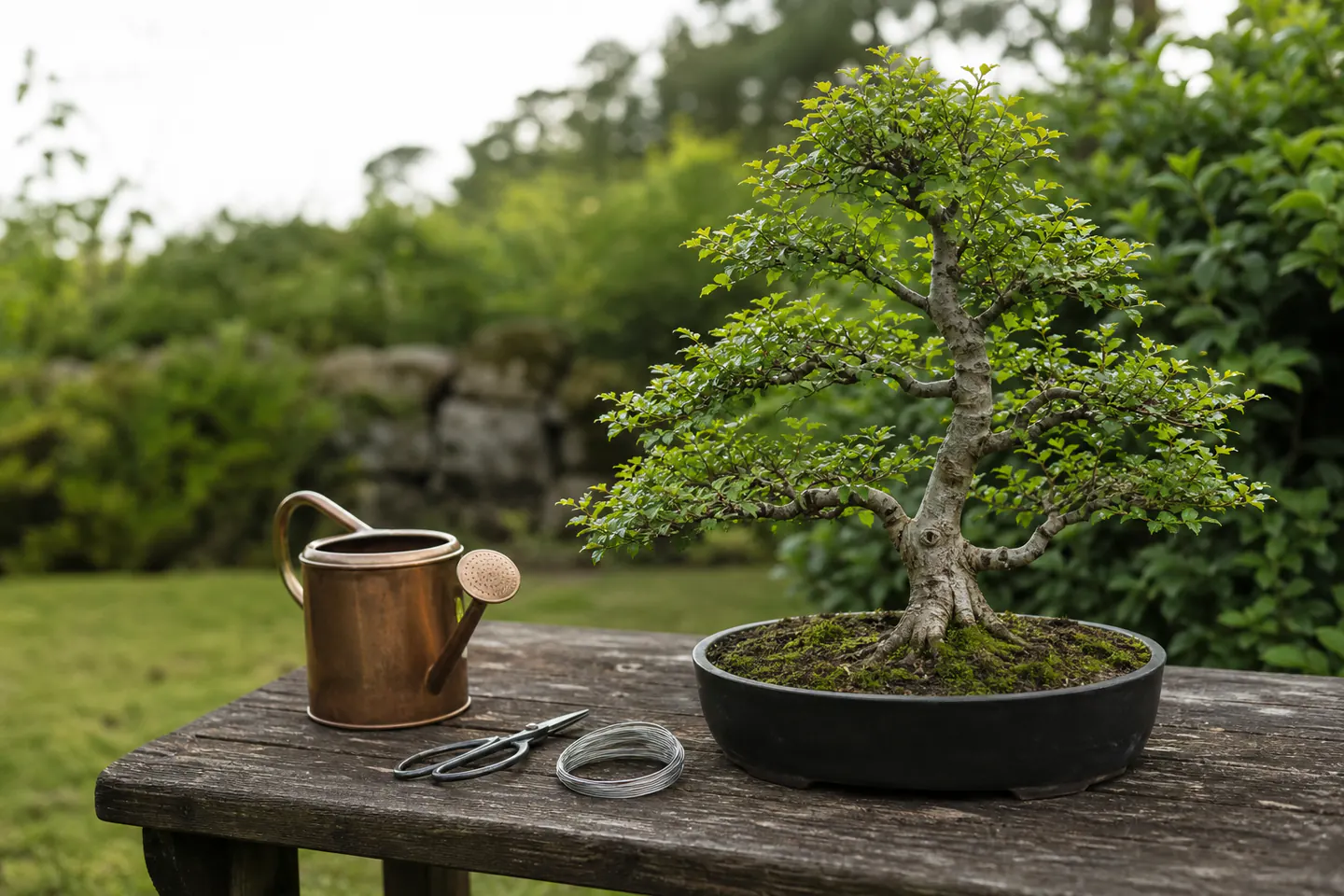
No Amazon tree is selected here: health, identification and suitability are better assessed through a specialist or local nursery. The Wazakura scissors, Bonsai Focus mix and Haws fine-rose can support an established tree; wire is a later shaping material tied to species, season and monitoring.
Wazakura Traditional Bonsai Scissors, 180 mm
It supports repeated clean pruning without recommending an entire specialist tool chest.
Growth Technology Bonsai Focus Repotting Mix, 3 litres
A prepared small bag is practical for one beginner tree when specialist advice confirms timing and suitability.
Haws Bartley Burbler 2-pint Watering Can with Fine Rose
Gentle even watering matters from day one and is more valuable than premature styling equipment.
First month
Complete a thirty-day tree health record
Choose the tree first with species and placement confirmed. The project is to understand its normal behaviour well enough that future work is timed from evidence.
- 01
Record the identity
Keep the full species name, seller, care information, purchase date and clear photographs of foliage, trunk, soil and pot.
- 02
Place for the species
Use the agreed outdoor or bright indoor position and avoid moving it around daily in search of a decorative view.
- 03
Check moisture daily
Observe surface, pot weight and deeper moisture at a consistent time without automatically adding water.
- 04
Water completely when needed
Use a gentle rose, wet the root zone evenly and confirm that drainage holes flow freely.
- 05
Inspect for change
Look beneath leaves and along branches for pests, dieback, swelling buds, extension growth and wire scars from any previous training.
- 06
Record weather and response
Note hot, windy, wet or cold periods alongside changes in drying speed so the routine adapts.
- 07
Avoid major work
Do not repot, hard-prune or wire simply because the tree is new; seek species-specific timing for the next intervention.
- 08
Review after thirty days
Compare photographs, identify the tree's watering pattern and choose one justified next task or another month of growth.
Troubleshooting
Read the result before changing the setup
Yellow leaves need context before treatment
Check species, season, old versus new leaves, substrate moisture, recent movement and pests. Adding fertiliser or more water without diagnosis can compound root or light problems.
Water running around dry soil needs slow rewetting
Apply water in several gentle passes and confirm the root ball accepts it. Do not leave a struggling tree submerged indefinitely or repot out of season solely because one watering ran fast.
A tree drying daily may be normal or root-bound
Hot weather, wind, fine roots and a shallow pot can require frequent watering. Record the pattern and obtain species-specific repotting advice for the correct season rather than using a larger decorative cachepot.
Wire marks require immediate assessment
Remove cutting wire carefully in short sections rather than unwinding it around a branch. Deep damage, cracks or important branches need experienced advice.
Skip for now
What can wait
The first month is not empty time. It creates the health and seasonal knowledge needed to make every later design decision safer.
- 01
Bonsai seed kits
They add germination, uncertain identity and years of early growth before elementary styling. Begin with a living named tree if the aim is to practise bonsai now.
- 02
Immediate repotting
A tree may need repotting, but timing depends on species, root condition and season. Arrival alone is not sufficient evidence.
- 03
Hard pruning and wiring together
Multiple stresses obscure the cause of decline and can remove the growth needed for recovery. Sequence work deliberately.
- 04
A complete specialist tool roll
Scissors and a watering method cover early care. Concave cutters, knob cutters and root tools belong to defined operations later.
Upgrade path
What a better setup changes
A better setup improves daily horticulture first, then precision and design as the tree develops.
Healthy living tree
Often £25–£80+Named suitable species + correct placement + ordinary care record
Starts with material that can respond to real bonsai practice now.Reliable watering and substrate
About £15–£35Fine-rose can + species-appropriate free-draining mix at repot time
Improves root-zone control when the correct seasonal task arrives.Selective pruning
Add about £35–£45Quality scissors + species calendar + wound and hygiene practice
Makes repeated clean cuts after growth goals are understood.Monitored wiring
Add about £8–£25Several aluminium gauges + cutters + regular inspection
Changes branch position gradually while adding bark and swelling risk.Before upgrading
A useful check before spending more
Ask what the tree needs this season
Health, development goal and timing should all agree before work. “It looks untidy” is not enough reason to repot in midsummer or hard-prune a weak tree.
Use local advice with full context
Photograph the whole tree and problem, name the species, location, indoor or outdoor placement, recent weather, soil and care history. Bonsai advice without those details is guesswork.
Safety
Protect the tree, hands and local environment
Bonsai tools are sharp and plant products can irritate. Species identification also matters around children, pets and invasive pests.
- Use sharp tools away from supporting hands, disinfect as appropriate and store blades closed or sheathed.
- Wear eye protection when cutting springy wire and remove wire in short sections rather than unwinding it.
- Read pesticide and fertiliser labels, use only on listed plants and keep products away from children, pets and water.
- Check whether the chosen tree is toxic or irritating before placing it where children or animals can reach it.
- Do not release pests, diseased material or invasive species into the environment; follow local disposal guidance.
- Lift heavy trees and benches safely and secure outdoor pots against wind without blocking drainage.
Classes
When outside help is useful
A club or workshop is valuable before first repotting, major pruning and wiring because timing and hand pressure are species-specific. Daily care should already be happening at home.
Best for showing a real tree with full care history and seeing seasonal work on local species.
Look for hands-on work, species timing, root care and aftercare rather than a one-day makeover.
Representative UK bonsai club and workshop formats checked 30 July 2026; tree material and membership vary.
Sources
Sources and checking notes
RHS horticultural guidance anchors species, placement and care; long-running bonsai learning resources and current community threads reinforce watering, timing and context.
-
01
RHS · Bonsai
UK horticultural overview of bonsai species, placement, watering, feeding, pruning and repotting.
Open source -
02
Bonsai Empire · Bonsai tree care
Structured specialist care guidance across watering, location, fertilising and repotting.
Open source -
03
Bonsai Empire · Indoor bonsai
Species and environment distinctions for genuine indoor cultivation.
Open source -
04
r/Bonsai · Beginner weekly thread
Current community triage stressing species, location, photographs and seasonal context.
Open source -
05
Virginia Cooperative Extension · The art of bonsai
Extension overview of plant material, containers, training and long-term care.
Open source -
06
Amazon UK · Traditional Bonsai Scissors, 180 mm
Exact Wazakura product and direct Amazon UK listing checked for current availability, price context and model identity.
Open source -
07
Amazon UK · Bonsai Focus Repotting Mix, 3 litres
Exact Growth Technology product and direct Amazon UK listing checked for current availability, price context and model identity.
Open source -
08
Amazon UK · Bartley Burbler 2-pint Watering Can with Fine Rose
Exact Haws product and direct Amazon UK listing checked for current availability, price context and model identity.
Open source -
09
Amazon UK · Aluminium Bonsai Training Wire, 1, 1.5 and 2 mm
Exact QWORK product and direct Amazon UK listing checked for current availability, price context and model identity.
Open source
Guide information and links checked 30 July 2026.