Beginner’s guide · Play & perform
Sing inside the easy range,
then use the recording as evidence, not a verdict.
Gentle warm-up, comfortable pitch, clear rhythm and short recordings build coordination while vocal health sets the limits.
Quick answer
Complete one comfortable song recording before expanding the setup
Choose a familiar song whose verse and chorus sit inside a comfortable speaking-adjacent range, release neck and shoulder tension, breathe without raising the shoulders, hum and slide gently through easy notes, speak the lyric in rhythm, sing the melody quietly with a reference pitch and record three short takes. Review pitch entries, rhythm, words and signs of effort separately and stop immediately at pain, persistent hoarseness or loss of voice.
- 01
Breathing for singing should remain free and coordinated rather than forced into a rigid body shape. Record what happened during singing so the next attempt changes one known variable instead of several guesses.
- 02
Pitch improves when the target note is heard before phonation and the singer uses a comfortable vowel and volume. Record what happened during singing so the next attempt changes one known variable instead of several guesses.
- 03
A recording changes the feedback path and is useful evidence, not an objective judgement of identity or worth. Record what happened during singing so the next attempt changes one known variable instead of several guesses.
- 04
Pain, burning, repeated voice loss and persistent hoarseness are not normal training sensations. Record what happened during singing so the next attempt changes one known variable instead of several guesses.
What to expect
What singing is really like at the start
The useful beginner controls are preparation, one bounded task and a record of the result; specialist equipment matters only when it solves a repeated limitation.
Sound
The voice heard through bone and tissue differs from the recorded external sound. Record what happened during singing so the next attempt changes one known variable instead of several guesses.
Pitch
Starting notes and leaps are often harder than sustained notes and should be practised separately. Record what happened during singing so the next attempt changes one known variable instead of several guesses.
Breath
Taking too much air can increase tension and make a phrase harder to control. Record what happened during singing so the next attempt changes one known variable instead of several guesses.
Range
Daily comfort changes with fatigue, illness, hydration, environment and technique. Record what happened during singing so the next attempt changes one known variable instead of several guesses.
Core method
The core singing method
Choose the comfortable key
Test the lowest and highest phrase quietly and transpose rather than stretching for the original recording. Record what happened during singing so the next attempt changes one known variable instead of several guesses.
Coordinate speech and rhythm
Speak the lyric on pulse, mark breaths and preserve consonants without jaw or tongue force. Record what happened during singing so the next attempt changes one known variable instead of several guesses.
Warm up toward the song
Use gentle hums, lip trills or slides only in an easy range and move to the actual phrase quickly. Record what happened during singing so the next attempt changes one known variable instead of several guesses.
Record and diagnose one variable
Make short takes and review pitch entry, rhythm, diction and effort one at a time. Record what happened during singing so the next attempt changes one known variable instead of several guesses.
Useful products
Products with a clear job in the route
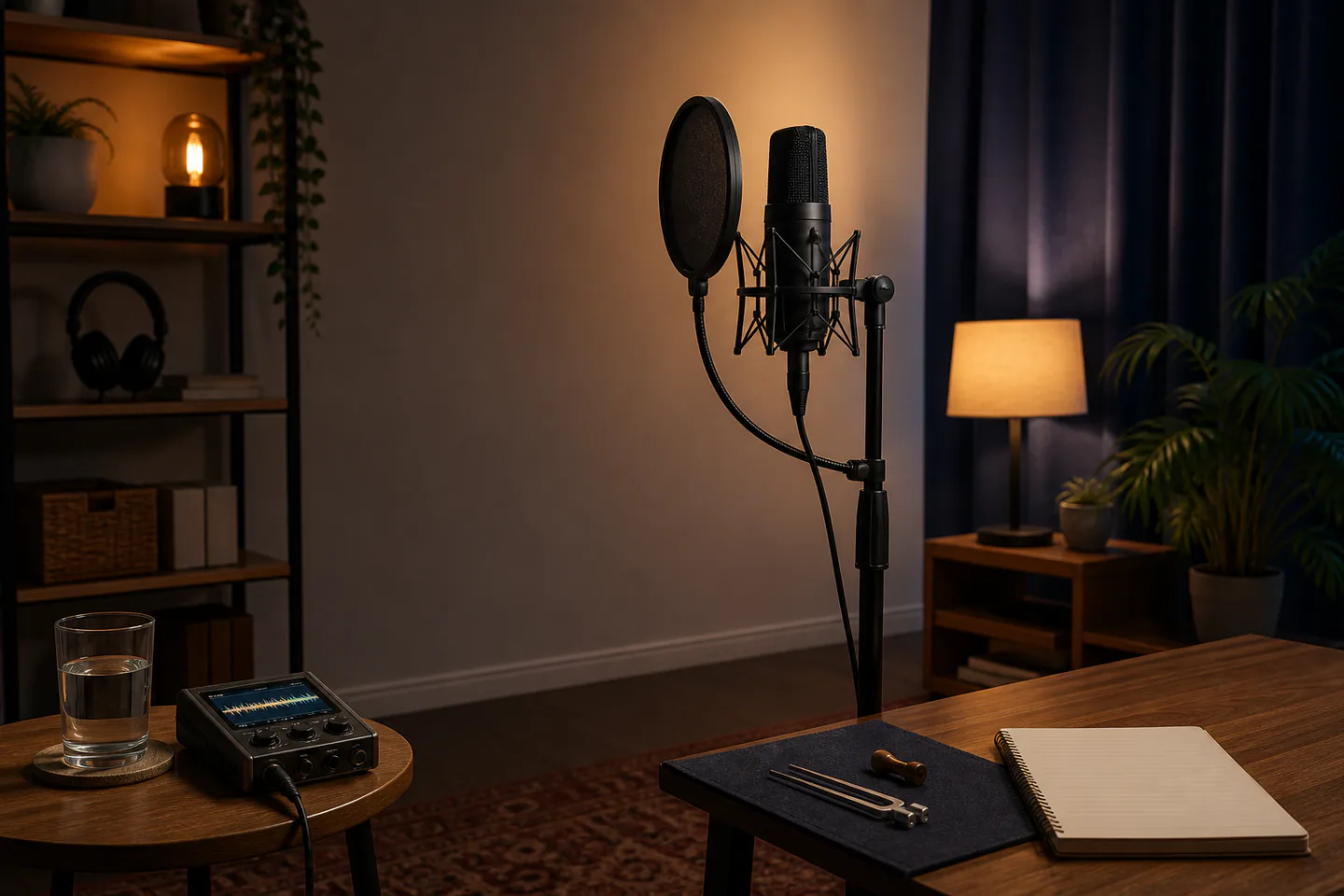
The microphone, interface and closed headphones form a conventional recording path for later detailed review; a phone recording is fully sufficient for the first sessions.
Audio-Technica AT2020 Cardioid Condenser Microphone
Its conventional connection supports learning distance, room sound, gain and monitoring.
Focusrite Scarlett Solo 4th Gen USB Audio Interface
The simple input layout makes signal flow visible without a larger mixer.
Audio-Technica ATH-M40x Professional Monitor Headphones
Closed backs suit tracking and the first editing passes in a shared home.
First project
Record one verse and chorus in a comfortable key
Keep the volume conversational to moderate and stop before fatigue changes the sound.
- 01
Select and transpose the song
Choose a familiar section and move the key until every note feels comfortably available. Record what happened during singing so the next attempt changes one known variable instead of several guesses.
- 02
Speak the rhythm
Mark breaths, clap pulse and speak the lyric without rushing consonants. Record what happened during singing so the next attempt changes one known variable instead of several guesses.
- 03
Warm up gently
Use a few easy hums or slides and avoid testing the extremes of range. Record what happened during singing so the next attempt changes one known variable instead of several guesses.
- 04
Record three short takes
Keep microphone distance and key constant and rest briefly between attempts. Record what happened during singing so the next attempt changes one known variable instead of several guesses.
- 05
Review and choose one focus
Compare starting pitch, pulse, words and effort and change only one item next time. Record what happened during singing so the next attempt changes one known variable instead of several guesses.
What can wait
What can wait until the first result
Delay anything that adds cost, risk or another variable before the basic workflow has produced something you can review.
- 01
Extreme high or low notes
Range expansion without feedback can recruit strain and obscure basic coordination. Record what happened during singing so the next attempt changes one known variable instead of several guesses.
- 02
Belting at home volume
High intensity needs style-specific teaching and hearing-aware monitoring. Record what happened during singing so the next attempt changes one known variable instead of several guesses.
- 03
Daily long warm-ups
Exercises should solve a named coordination problem rather than tire the voice before music. Record what happened during singing so the next attempt changes one known variable instead of several guesses.
- 04
Corrective audio processing
Pitch correction can hide the exact listening and coordination issue a beginner needs to hear. Record what happened during singing so the next attempt changes one known variable instead of several guesses.
Upgrade path
Add the capability you can now name
Each stage should remove a demonstrated constraint rather than make the setup look more advanced.
Use what you own
£0–£20Existing equipment and one written plan
Use a phone and comfortable familiar song.Repeat the first route
Free to about £200 with lessons and recording kitA complete repeatable starter setup
Repeat short recordings with one technical focus.Add one capability
Often £50–£250One selected tool, service or learning resource
Work with a qualified singing teacher on style, range and performance.Build specialist depth
Club, course or specialist dependentA documented specialist workflow
Seek voice-specialist clinical assessment for persistent symptoms or professional vocal demands.Safety & care
Vocal health outranks completing the practice plan
A healthy session should not leave pain, burning, marked hoarseness or loss of voice.
- Stop singing at pain, burning, sudden voice change, persistent hoarseness or repeated loss of voice and seek appropriate medical advice.
- Do not force through respiratory illness, significant reflux symptoms or vocal fatigue.
- Keep amplification and headphone levels conservative and never sing against excessive backing volume.
- Use a stable microphone stand, clean shared microphones appropriately and avoid trip hazards from cables.
- Choose a qualified teacher for high-intensity styles, range extension or a voice with previous injury.
Outside help
When outside help earns its place
A qualified singing teacher can hear effort, vowel, onset and breath coordination that self-recording cannot explain safely.
Choose a teacher who welcomes comfortable transposition and has a clear referral route for voice-health symptoms.
Use outside help after the first singing attempt can reveal the exact technique, access or safety problem that needs live correction.
Representative UK learning and access routes checked 1 September 2026; local prices, permissions, equipment and tutor support vary.
Sources
Where the guidance came from
Authoritative and specialist guidance supports the method and safety boundaries; community discussion contributes recurring beginner problems rather than unsupported claims.
-
01
British Voice Association · Home
Multidisciplinary voice health, performance and rehabilitation context.
Open source -
02
British Voice Association · Lift your voice without hurting it
Voice-use and strain-prevention guidance.
Open source -
03
Music Mark · A Common Approach: Voice
Breathing, comfortable song choice and progressive voice curriculum.
Open source -
04
NIDCD · Taking care of your voice
Government voice-health, symptoms and care guidance.
Open source -
05
WHO · Safe listening
Hearing risk and safe level principles.
Open source -
06
Reddit · r/singing
Community evidence on recordings, range, breath confusion, fatigue and teacher choice.
Open source -
07
Amazon UK · AT2020 Cardioid Condenser Microphone
Exact Amazon UK product page or ISBN used for this recommendation; current price, seller, specification and availability should be confirmed.
Open source -
08
Amazon UK · Scarlett Solo 4th Gen USB Audio Interface
Exact Amazon UK product page or ISBN used for this recommendation; current price, seller, specification and availability should be confirmed.
Open source -
09
Amazon UK · ATH-M40x Professional Monitor Headphones
Exact Amazon UK product page or ISBN used for this recommendation; current price, seller, specification and availability should be confirmed.
Open source
Guide information and links checked 1 September 2026.