Beginner’s guide · Cook & bake
Let the dough stay wet,
then give fermentation time.
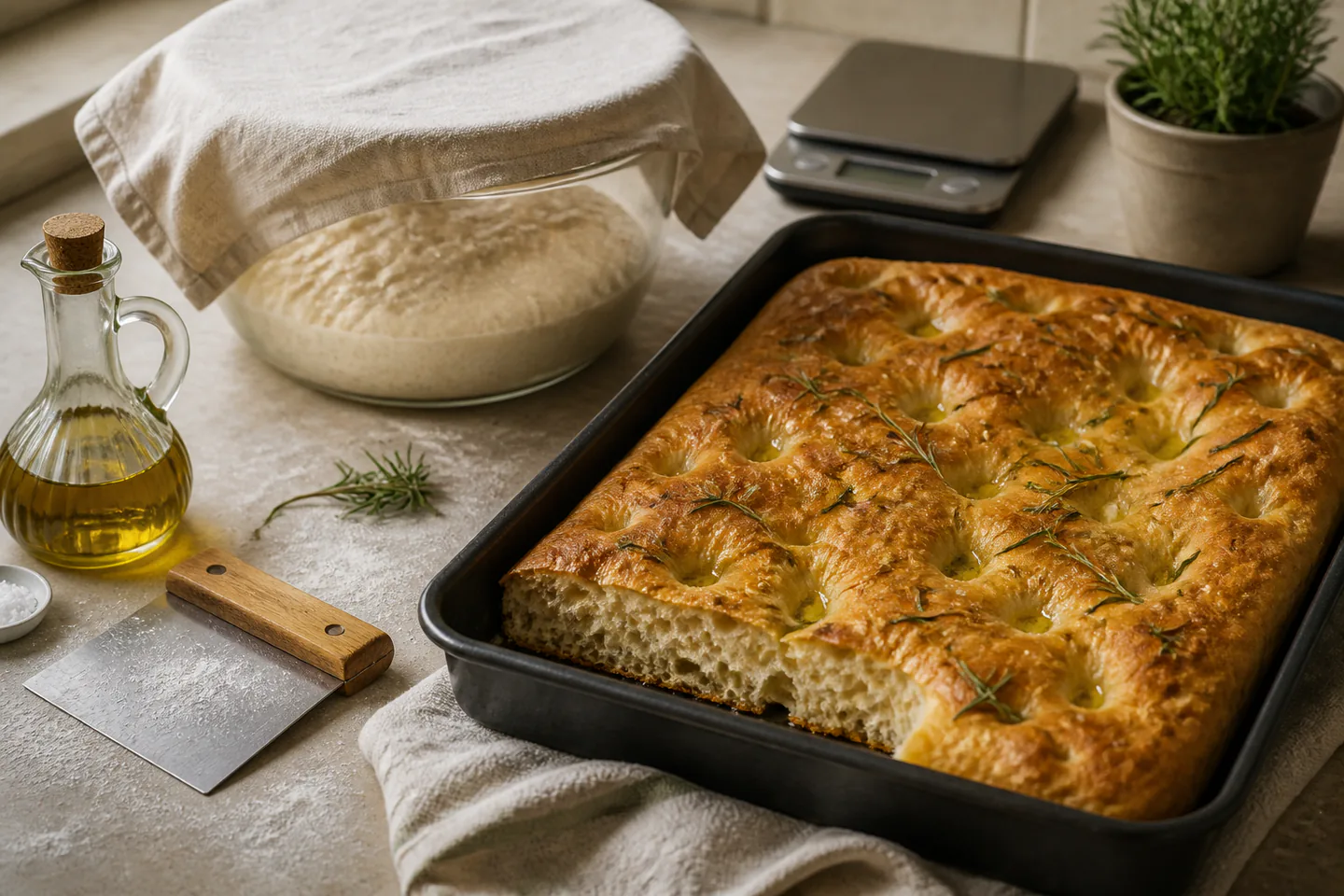
A tray of focaccia makes hydration, folds, fermentation and gentle dimpling visible. The goal is a light crumb and crisp oily base, not a floury dough that is easy to handle.
Quick answer
Complete one tray before expanding the setup
Use a tested same-day focaccia formula and weigh flour, water, salt and yeast. Mix to a shaggy wet dough, rest, perform a few gentle folds, let it rise by visible expansion, transfer to a well-oiled tray, proof again, dimple with oiled fingertips, add measured oil and bake until the top and base are deeply golden.
- 01
Hydration is a ratio to preserve, not a cue to add flour until the dough feels tidy. Record what happened during focaccia baking so the next attempt changes one known variable instead of several guesses.
- 02
Folds develop strength while keeping gas and moisture in the dough. Record what happened during focaccia baking so the next attempt changes one known variable instead of several guesses.
- 03
Fermentation follows dough temperature and expansion rather than the clock alone. Record what happened during focaccia baking so the next attempt changes one known variable instead of several guesses.
- 04
Dimpling redistributes gas and oil; aggressive pressing can collapse an under-proofed dough. Record what happened during focaccia baking so the next attempt changes one known variable instead of several guesses.
What to expect
What focaccia baking is really like at the start
The useful beginner controls are preparation, one bounded task and a record of the result; specialist equipment matters only when it solves a repeated limitation.
Mix
The dough initially looks rough and slack before time and folds organise it. Record what happened during focaccia baking so the next attempt changes one known variable instead of several guesses.
Bulk rise
A cool kitchen may take much longer than a warm one for the same expansion. Record what happened during focaccia baking so the next attempt changes one known variable instead of several guesses.
Tray proof
The dough should relax towards the corners rather than being stretched until it tears. Record what happened during focaccia baking so the next attempt changes one known variable instead of several guesses.
Bake
A pale base often indicates insufficient heat, oil or time rather than low hydration. Record what happened during focaccia baking so the next attempt changes one known variable instead of several guesses.
Core method
The core focaccia baking method
Calculate hydration
Divide water by flour weight and keep that ratio unchanged while learning the recipe. Record what happened during focaccia baking so the next attempt changes one known variable instead of several guesses.
Build strength gently
Use damp or oiled hands and spaced folds instead of kneading in extra flour. Record what happened during focaccia baking so the next attempt changes one known variable instead of several guesses.
Proof by evidence
Mark the bowl, watch expansion and bubbles and allow the tray dough to become airy and relaxed. Record what happened during focaccia baking so the next attempt changes one known variable instead of several guesses.
Dimple and bake
Oil the surface, press straight down without tearing, add toppings sparingly and bake to a well-coloured base. Record what happened during focaccia baking so the next attempt changes one known variable instead of several guesses.
Useful products
Products with a clear job in the route
The scale protects hydration, scrapers move sticky dough cleanly and the shallow tray exposes the base and edge bake.
Etekcity Digital Kitchen Scale, 0.1 g to 5 kg
The 0.1 g display helps with yeast, salt and small test batches.
Zulay Kitchen Three-Piece Stainless Dough Scraper Set
A scraper keeps high-hydration dough manageable and the bench easier to clean.
Prochef Non-Stick Pizza Tray, 32.5 cm
A broad shallow tray makes spreading, browning and release easy to inspect.
First project
Bake a plain rosemary focaccia
Keep toppings light so dough development, proofing and oil distribution remain visible.
- 01
Weigh the formula
Record flour, water, salt, yeast, oil and room temperature. Record what happened during focaccia baking so the next attempt changes one known variable instead of several guesses.
- 02
Mix and rest
Combine to an even shaggy dough and allow the flour to hydrate before judging strength. Record what happened during focaccia baking so the next attempt changes one known variable instead of several guesses.
- 03
Fold and bulk ferment
Make the recipe’s folds, then wait for the specified visible expansion. Record what happened during focaccia baking so the next attempt changes one known variable instead of several guesses.
- 04
Oil, proof and dimple
Transfer gently, let the dough relax and dimple only when it holds visible gas. Record what happened during focaccia baking so the next attempt changes one known variable instead of several guesses.
- 05
Bake and cut cool
Colour the top and base, rest briefly and inspect the crumb without crushing it hot. Record what happened during focaccia baking so the next attempt changes one known variable instead of several guesses.
What can wait
What can wait until the first result
Delay anything that adds cost, risk or another variable before the basic workflow has produced something you can review.
- 01
Extra flour during handling
It lowers the intended hydration and can create dense seams. Record what happened during focaccia baking so the next attempt changes one known variable instead of several guesses.
- 02
Heavy wet toppings
They suppress rise and make the centre difficult to bake. Record what happened during focaccia baking so the next attempt changes one known variable instead of several guesses.
- 03
Cold overnight fermentation
It is valuable later but adds temperature and timing variables. Record what happened during focaccia baking so the next attempt changes one known variable instead of several guesses.
- 04
A baking stone
A well-preheated oven and suitable tray can prove the method first. Record what happened during focaccia baking so the next attempt changes one known variable instead of several guesses.
Upgrade path
Add the capability you can now name
Each stage should remove a demonstrated constraint rather than make the setup look more advanced.
Use what you own
£0–£20Existing equipment and one written plan
Use a bowl, tray and one same-day formula.Repeat the first route
About £10–£40 plus ingredientsA complete repeatable starter setup
Repeat hydration and proof cues across different room temperatures.Add one capability
Often £50–£250One selected tool, service or learning resource
Add cold fermentation, a heavier tray or dough tub to improve flavour and handling.Build specialist depth
Club, course or specialist dependentA documented specialist workflow
Develop flour blends, sourdough or large-format baking with controlled dough temperature.Safety & care
Keep the wet workflow clean and the hot oil controlled
Raw dough, slippery oil and a heavy hot tray are the practical risks.
- Wash hands and clean surfaces before and after handling raw flour and dough.
- Keep oil off the oven floor and wipe spills promptly to reduce smoke and slips.
- Use a tray with sound sides and leave a clear heatproof landing space.
- Declare gluten and any toppings when sharing the bake.
- Cool before slicing so steam, oil and the soft crumb are easier to handle safely.
Outside help
When outside help earns its place
A bread class can demonstrate fermentation readiness and wet-dough folds in a way a fixed timetable cannot.
Look for measured formulas, dough-temperature discussion and side-by-side proofing examples.
Use outside help after the first focaccia baking attempt can reveal the exact technique, access or safety problem that needs live correction.
Representative UK learning and access routes checked 1 September 2026; local prices, permissions, equipment and tutor support vary.
Sources
Where the guidance came from
Authoritative and specialist guidance supports the method and safety boundaries; community discussion contributes recurring beginner problems rather than unsupported claims.
-
01
Food Standards Agency · Food hygiene at home
Clean handling, cooking, chilling and cross-contamination guidance for domestic kitchens.
Open source -
02
King Arthur Baking · Focaccia
Tested formula and focaccia mixing, proofing, dimpling and baking sequence.
Open source -
03
King Arthur Baking · Bread baking guide
Fermentation, dough development and baking fundamentals.
Open source -
04
BBC Good Food · Focaccia
UK ingredient and oven context for a first focaccia.
Open source -
05
The Perfect Loaf · Focaccia
Specialist high-hydration handling and fermentation cues.
Open source -
06
Reddit · r/AskBaking
Recurring beginner problems involving weighing, chilling, spreading, hydration and pastry temperature.
Open source -
07
Amazon UK · Digital Kitchen Scale, 0.1 g to 5 kg
Exact Amazon UK product page or ISBN used for this recommendation; current price, seller, specification and availability should be confirmed.
Open source -
08
Amazon UK · Three-Piece Stainless Dough Scraper Set
Exact Amazon UK product page or ISBN used for this recommendation; current price, seller, specification and availability should be confirmed.
Open source -
09
Amazon UK · Non-Stick Pizza Tray, 32.5 cm
Exact Amazon UK product page or ISBN used for this recommendation; current price, seller, specification and availability should be confirmed.
Open source
Guide information and links checked 1 September 2026.