Beginner’s guide · Make & create
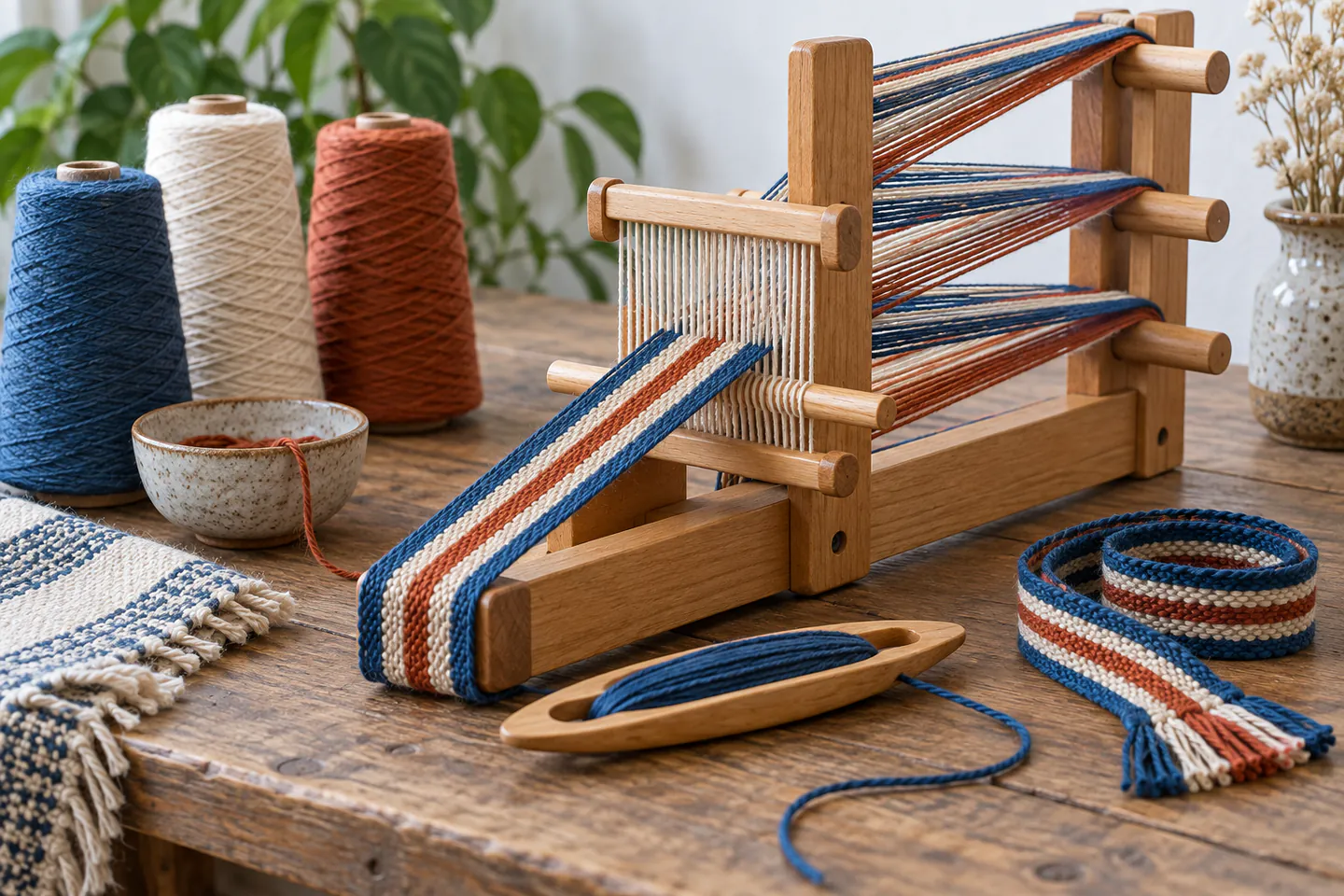
Warp the loom as one continuous path,
then keep the narrow band the same width.
An inkle loom makes strong warp-faced bands using simple string heddles. Begin with a striped band and learn clean selvedges.
Quick answer
Complete one a narrow striped bookmark band before expanding the setup
Use smooth non-stretch yarn, make identical string heddles and plan a narrow stripe sequence. Follow the loom’s continuous warping path, alternating heddled and open ends, count every warp and secure even tension. Open each shed fully, pass the weft with a belt shuttle, beat firmly and pull only enough to close the edge. Measure width every few centimetres.
- 01
Inkle cloth is normally warp-faced, so the coloured warp plan creates the visible stripes. For a first inkle weaving attempt, keep the materials, measurements and sequence written beside the work. Photograph or measure the result before correcting it, because a visible record separates a technique problem from a material or setup problem.
- 02
Heddled and open warp ends alternate to form the two sheds. For a first inkle weaving attempt, keep the materials, measurements and sequence written beside the work. Photograph or measure the result before correcting it, because a visible record separates a technique problem from a material or setup problem.
- 03
The weft packs the warp together but should not pull the band progressively narrower. For a first inkle weaving attempt, keep the materials, measurements and sequence written beside the work. Photograph or measure the result before correcting it, because a visible record separates a technique problem from a material or setup problem.
- 04
Loom capacity includes take-up and waste, not only the finished band length. For a first inkle weaving attempt, keep the materials, measurements and sequence written beside the work. Photograph or measure the result before correcting it, because a visible record separates a technique problem from a material or setup problem.
What to expect
What inkle weaving is really like at the start
The useful beginner controls are setup, repeatable movement and a finished sample. Maintaining band width while alternating two sheds is the main skill to observe before adding scale or decoration.
Warping
One missed peg or wrong heddle changes the shed and effective length. For a first inkle weaving attempt, keep the materials, measurements and sequence written beside the work. Photograph or measure the result before correcting it, because a visible record separates a technique problem from a material or setup problem.
Heddles
Unequal loops create a stepped or sticky opening. For a first inkle weaving attempt, keep the materials, measurements and sequence written beside the work. Photograph or measure the result before correcting it, because a visible record separates a technique problem from a material or setup problem.
Edges
Pulling the shuttle hard produces an hourglass band. For a first inkle weaving attempt, keep the materials, measurements and sequence written beside the work. Photograph or measure the result before correcting it, because a visible record separates a technique problem from a material or setup problem.
Packing
Changes in beat make stripes appear more or less elongated. For a first inkle weaving attempt, keep the materials, measurements and sequence written beside the work. Photograph or measure the result before correcting it, because a visible record separates a technique problem from a material or setup problem.
Core method
The core inkle weaving method
Plan the stripe and length
Write the colour order and include loom waste before measuring yarn. For a first inkle weaving attempt, keep the materials, measurements and sequence written beside the work. Photograph or measure the result before correcting it, because a visible record separates a technique problem from a material or setup problem.
Make equal heddles
Tie them around a simple gauge and inspect every knot. For a first inkle weaving attempt, keep the materials, measurements and sequence written beside the work. Photograph or measure the result before correcting it, because a visible record separates a technique problem from a material or setup problem.
Warp in sequence
Alternate heddled and open ends, count twice and keep tension consistent. For a first inkle weaving attempt, keep the materials, measurements and sequence written beside the work. Photograph or measure the result before correcting it, because a visible record separates a technique problem from a material or setup problem.
Weave to a measured width
Open each shed, beat squarely, close the weft gently and record the final take-up. For a first inkle weaving attempt, keep the materials, measurements and sequence written beside the work. Photograph or measure the result before correcting it, because a visible record separates a technique problem from a material or setup problem.
Useful products
Products with a clear job in the route
These two products cover distinct jobs in the beginner route; they are not a requirement to buy a bundle. Use materials already owned when they meet the same specification, and confirm every live listing before ordering.
Homewit 24 × 28 cm Wooden Weaving Loom Kit
The modest size makes tension errors visible and keeps a sample finishable.
Stylecraft Special DK Acrylic Yarn, 100 g
It is easier to undo and inspect than dark, fluffy or highly variable yarn.
First project
Make a narrow striped bookmark band
Keep the project small enough to finish, inspect and repeat. The first result is evidence about material compatibility, sequence and control rather than a performance test.
- 01
Prepare the workspace and materials
Write the colour order and include loom waste before measuring yarn. For a first inkle weaving attempt, keep the materials, measurements and sequence written beside the work. Photograph or measure the result before correcting it, because a visible record separates a technique problem from a material or setup problem.
- 02
Make the first controlled pass
Tie them around a simple gauge and inspect every knot. For a first inkle weaving attempt, keep the materials, measurements and sequence written beside the work. Photograph or measure the result before correcting it, because a visible record separates a technique problem from a material or setup problem.
- 03
Check the central technique
Alternate heddled and open ends, count twice and keep tension consistent. For a first inkle weaving attempt, keep the materials, measurements and sequence written beside the work. Photograph or measure the result before correcting it, because a visible record separates a technique problem from a material or setup problem.
- 04
Complete the structure
Open each shed, beat squarely, close the weft gently and record the final take-up. For a first inkle weaving attempt, keep the materials, measurements and sequence written beside the work. Photograph or measure the result before correcting it, because a visible record separates a technique problem from a material or setup problem.
- 05
Finish, measure and record
Let the work settle or dry by the relevant material instructions, then measure, photograph and label the result. Record the one change that would make the next inkle weaving attempt more controlled. For a first inkle weaving attempt, keep the materials, measurements and sequence written beside the work. Photograph or measure the result before correcting it, because a visible record separates a technique problem from a material or setup problem.
What can wait
What can wait until the first result
Delay anything that adds cost, risk or another variable before the basic workflow has produced something you can review.
- 01
Pickup lettering
Individual warp manipulation can follow reliable plain weaving. For a first inkle weaving attempt, keep the materials, measurements and sequence written beside the work. Photograph or measure the result before correcting it, because a visible record separates a technique problem from a material or setup problem.
- 02
Very long belt
Small width drift becomes substantial over distance. For a first inkle weaving attempt, keep the materials, measurements and sequence written beside the work. Photograph or measure the result before correcting it, because a visible record separates a technique problem from a material or setup problem.
- 03
Stretchy novelty yarn
It hides warp tension and sheds poorly. For a first inkle weaving attempt, keep the materials, measurements and sequence written beside the work. Photograph or measure the result before correcting it, because a visible record separates a technique problem from a material or setup problem.
- 04
Wide rigid-heddle projects
They use a different loom geometry and cloth balance. For a first inkle weaving attempt, keep the materials, measurements and sequence written beside the work. Photograph or measure the result before correcting it, because a visible record separates a technique problem from a material or setup problem.
Upgrade path
Add the capability you can now name
Each stage should remove a demonstrated limitation rather than make the setup look more advanced.
Striped bookmark
Use owned tools where possibleOne small sample and written notes
Learn the central movement and material behaviour.Belt or strap
About £20–£80A repeatable complete starter setup
Repeat the result with cleaner finish and fewer corrections.Pickup pattern band
About £50–£180A selected tool or structured class
Add one technique, size or design capability.Original repeat series
Cost varies widelyA documented specialist workflow
Develop original work with provenance, testing and appropriate safety.Safety & care
Safety, care and respectful practice in inkle weaving
The practical risks are manageable when tools, materials and cultural claims remain specific and proportionate.
- Stabilise the loom before tensioning and keep it clear of table edges. For a first inkle weaving attempt, keep the materials, measurements and sequence written beside the work. Photograph or measure the result before correcting it, because a visible record separates a technique problem from a material or setup problem.
- Keep long warp loops and cords away from children and pets. For a first inkle weaving attempt, keep the materials, measurements and sequence written beside the work. Photograph or measure the result before correcting it, because a visible record separates a technique problem from a material or setup problem.
- Store shuttles and scissors securely and cut taut warp away from the face. For a first inkle weaving attempt, keep the materials, measurements and sequence written beside the work. Photograph or measure the result before correcting it, because a visible record separates a technique problem from a material or setup problem.
- Take hand, shoulder and back breaks during firm beating. For a first inkle weaving attempt, keep the materials, measurements and sequence written beside the work. Photograph or measure the result before correcting it, because a visible record separates a technique problem from a material or setup problem.
- Test strength and attachment before using a handmade band to carry weight. For a first inkle weaving attempt, keep the materials, measurements and sequence written beside the work. Photograph or measure the result before correcting it, because a visible record separates a technique problem from a material or setup problem.
Outside help
When outside help earns its place
A guided session is useful when equipment setup, live hand correction, heat, sharp tools or a specialist press blocks safe progress. A clear source is enough for the smallest inkle weaving sample.
Choose one coherent lesson that covers preparation, the central inkle weaving technique, finishing and common mistakes.
Ask which tools and materials are included, whether the project can be finished in the session and what safety induction is provided.
Representative UK learning and access routes checked 20 September 2026; local prices, equipment and tutor support vary.
Sources
Where the guidance came from
Authoritative and specialist guidance supports the method, terminology and safety boundaries; community discussion contributes recurring beginner problems rather than unsupported claims.
-
01
Victoria and Albert Museum · Textiles
Museum material and historical context for textile construction.
Open source -
02
Heritage Crafts · Craft inventory
Current UK craft-status and practitioner context.
Open source -
03
Guild of Weavers, Spinners and Dyers
UK guild learning, terminology and local-group routes.
Open source -
04
Textile Research Centre · Encyclopaedia
Specialist textile structures and historical terminology.
Open source -
05
The Textile Society
Textile research, conservation and maker context.
Open source -
06
Reddit · r/weaving
Recurring practitioner evidence on tension, tools and finishing.
Open source -
07
Amazon UK · 24 × 28 cm Wooden Weaving Loom Kit
Exact Amazon UK catalogue page or ISBN used for the recommendation; confirm current price, seller, specification and availability.
Open source -
08
Amazon UK · Special DK Acrylic Yarn, 100 g
Exact Amazon UK catalogue page or ISBN used for the recommendation; confirm current price, seller, specification and availability.
Open source
Guide information and links checked 20 September 2026.