Beginner’s guide · Cook & bake
Let cabbage and salt
create their own brine.
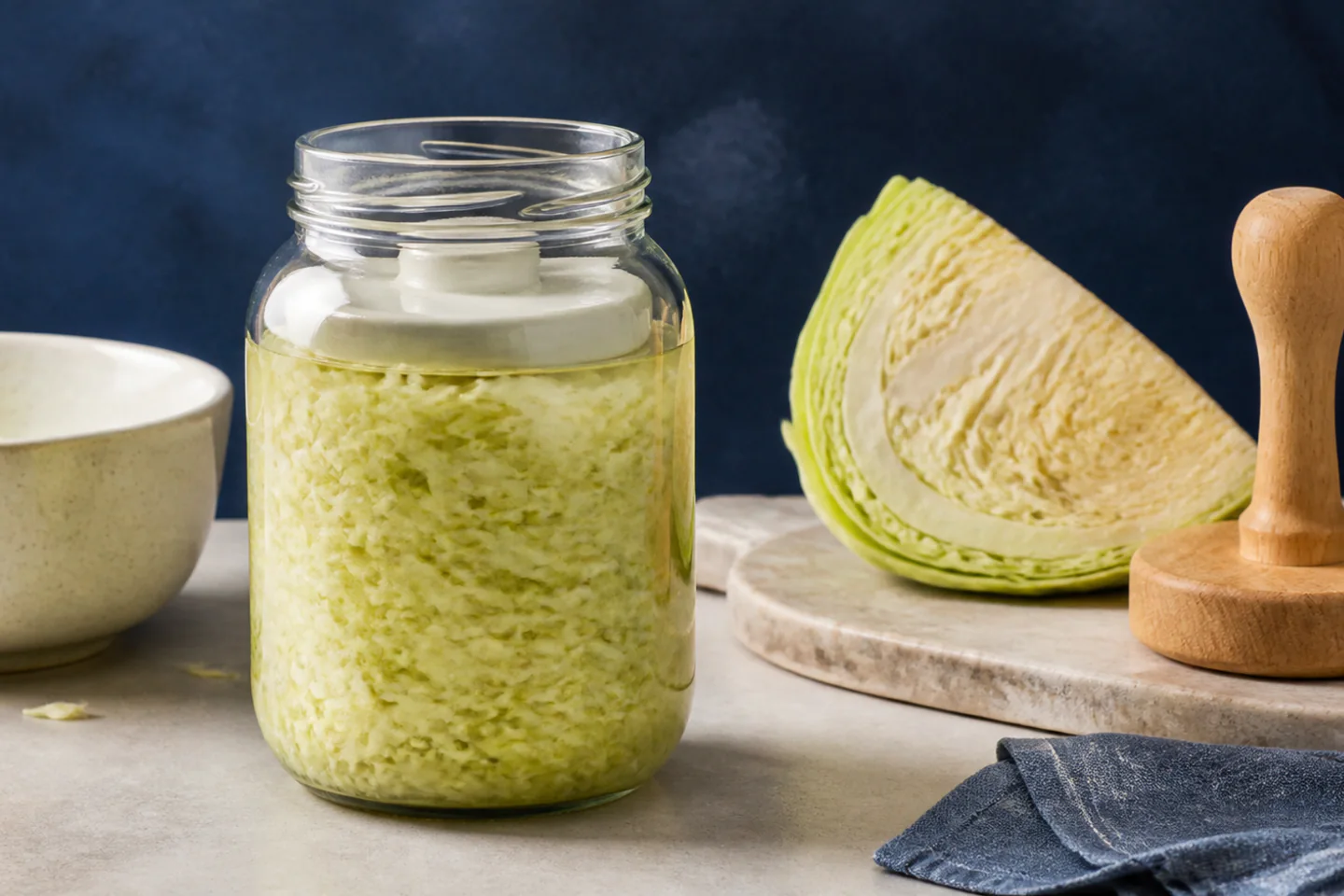
Sauerkraut can begin with cabbage and accurately measured salt, but the process still needs a tested formula, firm packing, full submersion and a suitable fermentation temperature.
Quick answer
Weigh cabbage and salt after trimming
Use a current tested sauerkraut recipe, weigh prepared cabbage and the specified salt, massage until liquid forms and pack firmly into a suitable vessel. Add a weight, leave required headspace, ferment at the published temperature and refrigerate when the tested method says it is ready.
- 01
Start from sound fresh cabbage and remove damaged outer material before weighing the usable portion. Record the setting, measurement or observation that mattered so the next attempt can be changed for a reason rather than by guesswork.
- 02
Use the exact salt type and weight from a tested formula instead of estimating by taste. Record the setting, measurement or observation that mattered so the next attempt can be changed for a reason rather than by guesswork.
- 03
Massage and pack until cabbage is covered by its own brine; use only a recipe-approved added brine if necessary. Record the setting, measurement or observation that mattered so the next attempt can be changed for a reason rather than by guesswork.
- 04
Keep every shred and floating fragment below brine throughout fermentation. Record the setting, measurement or observation that mattered so the next attempt can be changed for a reason rather than by guesswork.
- 05
Control temperature and time, then refrigerate and handle with clean utensils. Record the setting, measurement or observation that mattered so the next attempt can be changed for a reason rather than by guesswork.
What to expect
Two ingredients still make a biological process
Salt draws water from cabbage and selects for lactic-acid bacteria, but air exposure, weak brine, heat and contamination can divert the batch.
Brine
Fresh cabbage normally releases enough liquid after salting and massage. Old dry cabbage may struggle, but an improvised weak top-up is not the answer. In sauerkraut making, this is worth checking before the next stage because a small adjustment now is easier than undoing a finished result.
Submersion
Floating shreds meet oxygen and are the first place surface growth appears. A correctly sized weight and packed shoulders reduce exposure. In sauerkraut making, this is worth checking before the next stage because a small adjustment now is easier than undoing a finished result.
Temperature
Warm rooms speed fermentation and softening; cool rooms slow it. Use the tested range rather than moving the jar randomly. In sauerkraut making, this is worth checking before the next stage because a small adjustment now is easier than undoing a finished result.
Acidity and texture
Sourness increases over time while texture gradually softens. Refrigeration slows the process but does not reverse it. In sauerkraut making, this is worth checking before the next stage because a small adjustment now is easier than undoing a finished result.
Core method
Let the measured salt extract the brine
Prepare and weigh
Remove damaged leaves, reserve a clean whole leaf only if the recipe uses one, shred evenly and weigh the usable cabbage in a tared bowl. In sauerkraut making, this is worth checking before the next stage because a small adjustment now is easier than undoing a finished result.
Salt and massage
Add the exact salt weight, mix thoroughly and rest or massage as directed until the cabbage glistens and a squeezed handful releases liquid. In sauerkraut making, this is worth checking before the next stage because a small adjustment now is easier than undoing a finished result.
Pack below brine
Compress small handfuls firmly into the vessel, pour in all expressed liquid, add the specified follower and weight and preserve headspace. In sauerkraut making, this is worth checking before the next stage because a small adjustment now is easier than undoing a finished result.
Ferment predictably
Keep the jar in a tray at the tested temperature, manage gas according to the closure and check that the weight remains covered. In sauerkraut making, this is worth checking before the next stage because a small adjustment now is easier than undoing a finished result.
Useful products
Products with a clear job in the setup
The scale and fermentation set perform the critical measuring and submersion jobs. The clip-top jar is a general vessel for refrigerated storage or a method that explicitly covers venting.
Hario V60 Drip Scale and Timer
Weight-based salt and batch records are more repeatable than spoon estimates.
Kilner One-Litre Fermentation Jar Set
The included weight helps keep solids beneath brine and the modest size limits first-batch waste.
Kilner One-Litre Clip-Top Glass Jar
A known jar is easier to clean and inspect than reused unknown glass.
First project
Ferment one measured litre of cabbage
A small jar makes it realistic to keep all solids submerged and move the finished batch directly to the refrigerator.
- 01
Read a tested method
Note cabbage weight, salt specification, vessel capacity, target temperature, headspace and refrigeration guidance. In sauerkraut making, this is worth checking before the next stage because a small adjustment now is easier than undoing a finished result.
- 02
Shred consistently
Clean the work area, remove poor leaves and slice the weighed cabbage to the recipe’s approximate thickness. In sauerkraut making, this is worth checking before the next stage because a small adjustment now is easier than undoing a finished result.
- 03
Salt to the formula
Weigh salt accurately, mix through all cabbage and continue until enough liquid is released. In sauerkraut making, this is worth checking before the next stage because a small adjustment now is easier than undoing a finished result.
- 04
Pack and weight
Compress firmly, exclude air pockets, keep the surface clean and place all cabbage below its brine. In sauerkraut making, this is worth checking before the next stage because a small adjustment now is easier than undoing a finished result.
- 05
Monitor and refrigerate
Check submersion and normal activity daily, avoid unnecessary opening and refrigerate at the method’s finished stage. In sauerkraut making, this is worth checking before the next stage because a small adjustment now is easier than undoing a finished result.
What can wait
What can wait until the first result
A safe first ferment depends on a tested formula, accurate salt, submersion, cleanliness and temperature—not a cupboard of flavourings.
- 01
Very large crock
A one-litre batch is easier to keep submerged, observe and refrigerate. Scale only after the process is repeatable. In sauerkraut making, this is worth checking before the next stage because a small adjustment now is easier than undoing a finished result.
- 02
Improvised pressure sealing
Gas production can create dangerous pressure. Use the closure and venting method specified by a tested recipe and suitable vessel. In sauerkraut making, this is worth checking before the next stage because a small adjustment now is easier than undoing a finished result.
- 03
Unverified low-salt variation
Changing salt, vegetable ratio, temperature or time changes the safety and ecology of the process. Follow a current tested method first. In sauerkraut making, this is worth checking before the next stage because a small adjustment now is easier than undoing a finished result.
Upgrade path
Upgrade the repeated limitation
Upgrade control and batch records before increasing volume.
Try it
£25–£60Scale, one-litre vessel, weight and tested recipe
Salt, submersion and daily observation are manageable.Improve consistency
£10–£45 extraThermometer, duplicate jar and written batch sheet
Temperature and side-by-side variation become visible.Make regular batches
£30–£100Several identical vessels, replacement seals and dedicated storage tray
One batch can refrigerate while another begins.Develop recipes
VariableFood-safety literature, measured trials and validated methods
Flavour changes remain documented rather than casual.Safety & care
Know the normal signs and the discard signs
When spoilage signs, vessel damage or process uncertainty appear, disposal is safer than improvising a rescue.
- Discard sauerkraut with putrid odour, unexpected coloured or fuzzy mould, severe sliminess, a broken seal or any unresolved safety doubt. Follow current manufacturer, food-safety, electrical or local guidance wherever it applies.
- Do not reduce the tested salt level, use an unknown salt substitute or add oil before fermentation. Follow current manufacturer, food-safety, electrical or local guidance wherever it applies.
- Use glass and closures intended for the process, leave specified headspace and prevent dangerous gas pressure. Follow current manufacturer, food-safety, electrical or local guidance wherever it applies.
- Keep the finished jar refrigerated, use clean utensils and seek current qualified advice for vulnerable consumers. Follow current manufacturer, food-safety, electrical or local guidance wherever it applies.
Outside help
When outside help earns its place
A reputable food-fermentation workshop is useful when you want live examples of submersion, normal aromas and spoilage. It does not replace current tested food-safety guidance.
Use one complete lesson that covers preparation, the main technique, troubleshooting and finishing. For a first sauerkraut making project, following one coherent method is more useful than combining partial instructions from several creators.
Outside help earns its place when safe setup, equipment access or live correction would remove a real obstacle. Ask what materials, supervision and take-home result are included before booking.
Representative UK learning options checked 30 August 2026; local prices, access, materials and tutor support vary.
Sources
Where the guidance came from
The method is grounded in specialist, manufacturer and public guidance, then checked against recurring beginner problems and the exact products linked here.
-
01
National Center for Home Food Preservation · Sauerkraut
Tested home sauerkraut formula and process.
Open source -
02
University of Minnesota Extension · Sauerkraut
Evidence-led small-batch guidance.
Open source -
03
Penn State Extension · Fermenting sauerkraut
Fermentation, temperature and spoilage reference.
Open source -
04
Food Standards Agency · Food hygiene
UK household food-hygiene guidance.
Open source -
05
National Center for Home Food Preservation · General fermentation
Broader tested fermentation safety context.
Open source -
06
Amazon UK · 1036 Digital Kitchen Scale
Exact Amazon UK product page or ISBN used for the recommendation; current price, seller, specification and availability should be confirmed.
Open source -
07
Amazon UK · One-Litre Fermentation Jar Set
Exact Amazon UK product page or ISBN used for the recommendation; current price, seller, specification and availability should be confirmed.
Open source -
08
Amazon UK · One-Litre Clip-Top Glass Jar
Exact Amazon UK product page or ISBN used for the recommendation; current price, seller, specification and availability should be confirmed.
Open source
Guide information and links checked 30 August 2026.