Beginner’s guide · Write & create
Prove the premise in scenes,
then sustain the draft.
A novel grows from a character with a pressure, a change and a sequence of scenes. The first milestone is not a perfect chapter but a finished small arc and a workable drafting habit.
Quick answer
Complete one opening arc before expanding the setup
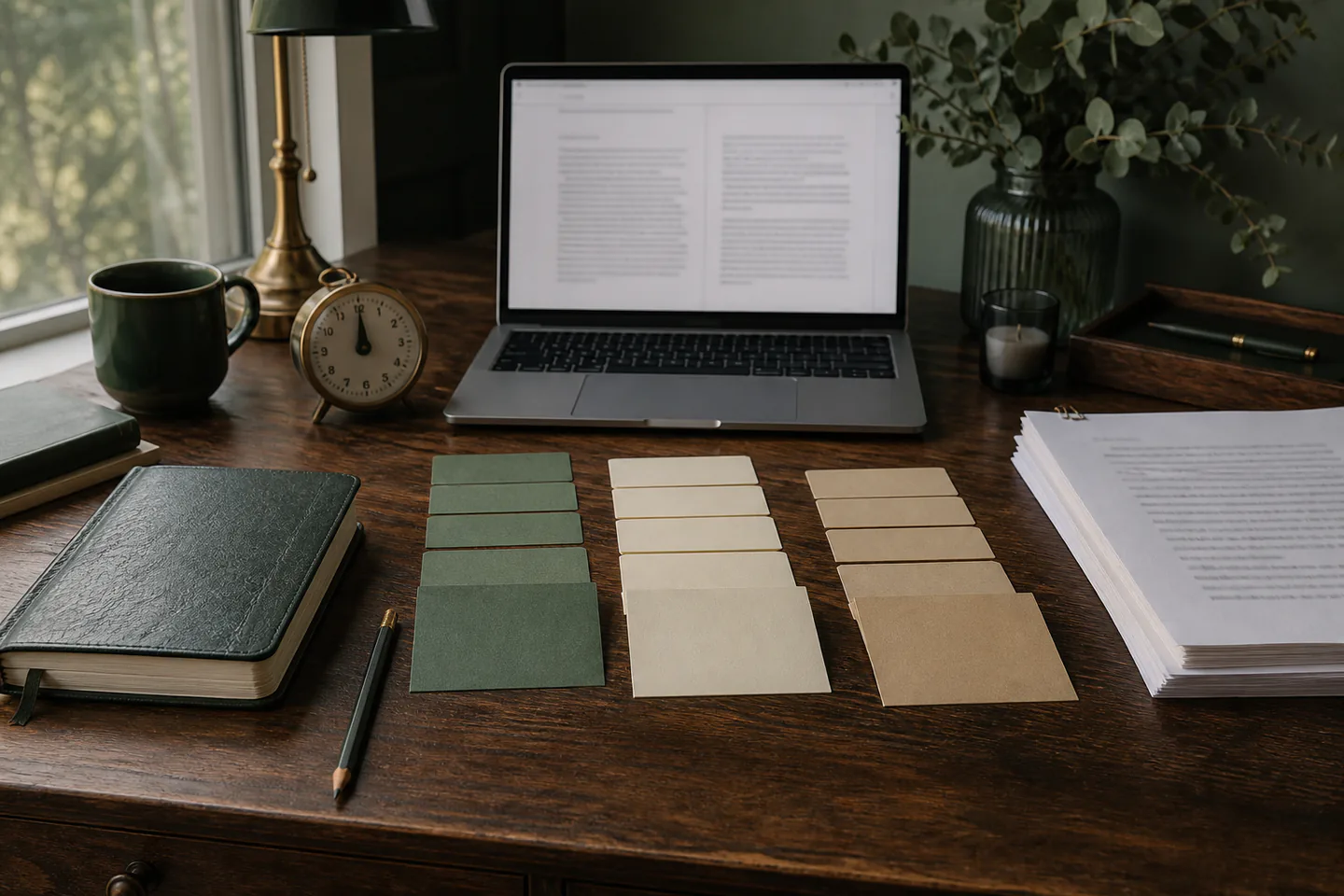
Write a one-sentence premise naming the protagonist, pressure, goal and consequence. Draft three connected scenes that force a decision, then map ten likely scenes on movable cards. Set a modest weekly word target, draft forward without polishing every page and keep a separate note for continuity questions to resolve after the first 5,000-word arc is complete.
- 01
A premise becomes a story when a character makes choices under increasing pressure. Record what happened during novel writing so the next attempt changes one known variable instead of several guesses.
- 02
A scene changes the situation; description and backstory earn space by affecting that change. Record what happened during novel writing so the next attempt changes one known variable instead of several guesses.
- 03
Drafting and structural revision are different cognitive jobs and move faster when separated. Record what happened during novel writing so the next attempt changes one known variable instead of several guesses.
- 04
A sustainable schedule is measured by returning to the work, not by copying another writer’s daily word count. Record what happened during novel writing so the next attempt changes one known variable instead of several guesses.
What to expect
What novel writing is really like at the start
The useful beginner controls are preparation, one bounded task and a record of the result; specialist equipment matters only when it solves a repeated limitation.
Premise
A broad world or theme does not yet specify who acts and what can be lost. Record what happened during novel writing so the next attempt changes one known variable instead of several guesses.
Character
A detailed biography matters only where it shapes desire, choice and contradiction on the page. Record what happened during novel writing so the next attempt changes one known variable instead of several guesses.
Middle
Momentum weakens when scenes repeat the same problem without changing options or stakes. Record what happened during novel writing so the next attempt changes one known variable instead of several guesses.
Draft
First-draft inconsistency is normal and can be repaired only after enough material exists to compare. Record what happened during novel writing so the next attempt changes one known variable instead of several guesses.
Core method
The core novel writing method
State the engine
Define protagonist, present disruption, immediate goal, opposition and the change the story tests. Record what happened during novel writing so the next attempt changes one known variable instead of several guesses.
Draft connected scenes
Enter late, give each scene a live objective and leave with a changed fact, choice or relationship. Record what happened during novel writing so the next attempt changes one known variable instead of several guesses.
Map forward lightly
Use ten cards for likely cause-and-effect steps while allowing the draft to revise the plan. Record what happened during novel writing so the next attempt changes one known variable instead of several guesses.
Protect drafting mode
Set bounded sessions, mark research gaps and continue forward until the planned arc is complete. Record what happened during novel writing so the next attempt changes one known variable instead of several guesses.
Useful products
Products with a clear job in the route
Ruled cards make scene order movable, the notebook holds continuity and research questions and the mixed-media sketchbook supports maps or visual planning only when the story needs them.
Oxford A6 Ruled Flash Cards, Pack of 80
A small deck supports sorting without turning the plan into a wall of prose.
Silvine A5 Executive Dotted Hardback Notebook
A durable small notebook is quicker to annotate than rebuilding events from memory.
Artgecko Artgecko A4 Mixed Media Sketchbook 150 gsm
The page size suits observational drawing and process notes without specialist paper.
First project
Draft a three-scene opening arc
Introduce pressure, force a decision and show the first consequence before planning an entire series.
- 01
Write the premise
Name the character, disruption, goal, opposition and meaningful consequence. Record what happened during novel writing so the next attempt changes one known variable instead of several guesses.
- 02
Plan three changes
Give each scene a different immediate objective and outcome. Record what happened during novel writing so the next attempt changes one known variable instead of several guesses.
- 03
Draft forward
Use temporary markers for research and do not restart after every sentence. Record what happened during novel writing so the next attempt changes one known variable instead of several guesses.
- 04
Read the arc once
Mark confusion, repetition and missing cause without line-editing yet. Record what happened during novel writing so the next attempt changes one known variable instead of several guesses.
- 05
Map the next ten scenes
Use cards to extend consequences and place only essential research. Record what happened during novel writing so the next attempt changes one known variable instead of several guesses.
What can wait
What can wait until the first result
Delay anything that adds cost, risk or another variable before the basic workflow has produced something you can review.
- 01
A complete world bible
Only story-relevant details need definition before drafting. Record what happened during novel writing so the next attempt changes one known variable instead of several guesses.
- 02
Line editing chapter one
Repeated polishing can postpone discovering what the novel is. Record what happened during novel writing so the next attempt changes one known variable instead of several guesses.
- 03
Submission research
Genre, length and market matter later than a coherent draft. Record what happened during novel writing so the next attempt changes one known variable instead of several guesses.
- 04
Expensive writing software
Plain documents and reliable backups are enough to prove the process. Record what happened during novel writing so the next attempt changes one known variable instead of several guesses.
Upgrade path
Add the capability you can now name
Each stage should remove a demonstrated constraint rather than make the setup look more advanced.
Use what you own
£0–£20Existing equipment and one written plan
Use a document, cards and a weekly session plan.Repeat the first route
Free to about £30A complete repeatable starter setup
Complete a bounded opening arc and then a full rough draft.Add one capability
Often £50–£250One selected tool, service or learning resource
Add critique, craft study or specialist software for a named structural problem.Build specialist depth
Club, course or specialist dependentA documented specialist workflow
Revise in passes for structure, scene, prose, continuity and submission.Safety & care
Protect the work without turning routine into punishment
Long projects need backups, realistic workload and careful handling of research about real people.
- Keep versioned backups in at least two independent locations.
- Take movement and vision breaks and choose a schedule that can survive ordinary interruptions.
- Handle identifiable real people, private correspondence and traumatic material with proportionate consent and care.
- Track quotation, image and research sources before they become embedded in the manuscript.
- Use critique agreements that permit the writer to reject advice and protect unpublished work.
Outside help
When outside help earns its place
A course or critique group earns its place when it produces regular pages, specific craft discussion and respectful feedback.
Ask how submissions are shared, stored and discussed and whether the course supports the intended genre and length.
Use outside help after the first novel writing attempt can reveal the exact technique, access or safety problem that needs live correction.
Representative UK learning and access routes checked 1 September 2026; local prices, permissions, equipment and tutor support vary.
Sources
Where the guidance came from
Authoritative and specialist guidance supports the method and safety boundaries; community discussion contributes recurring beginner problems rather than unsupported claims.
-
01
OpenLearn · Start writing fiction
Free course covering character, setting, point of view and practical fiction exercises.
Open source -
02
OpenLearn · Characters and stories
Character, plot, notebook, drafting and editing exercises.
Open source -
03
National Centre for Writing · Writing Hub
UK craft articles, exercises, events and professional guidance.
Open source -
04
Reedsy · Writing resources
Practical drafting, structure and revision articles from publishing professionals.
Open source -
05
Writers & Artists · Advice
UK publishing, craft and professional-practice context.
Open source -
06
Reddit · r/writing
Long-running community guidance on practice, revision, feedback and publishing questions.
Open source -
07
Amazon UK · A6 Ruled Flash Cards, Pack of 80
Exact Amazon UK product page or ISBN used for this recommendation; current price, seller, specification and availability should be confirmed.
Open source -
08
Amazon UK · A5 Executive Dotted Hardback Notebook
Exact Amazon UK product page or ISBN used for this recommendation; current price, seller, specification and availability should be confirmed.
Open source -
09
Amazon UK · Artgecko A4 Mixed Media Sketchbook 150 gsm
Exact Amazon UK product page or ISBN used for this recommendation; current price, seller, specification and availability should be confirmed.
Open source
Guide information and links checked 1 September 2026.