Beginner’s guide · Make & create
Decorate ceramics
with the finish in mind.
Begin with a smooth pre-made tile or mug and a paint system made for porcelain or ceramic. Plan whether the piece is decorative, washable or professionally fired before choosing materials.
Quick answer
Paint a decorative tile before drinkware
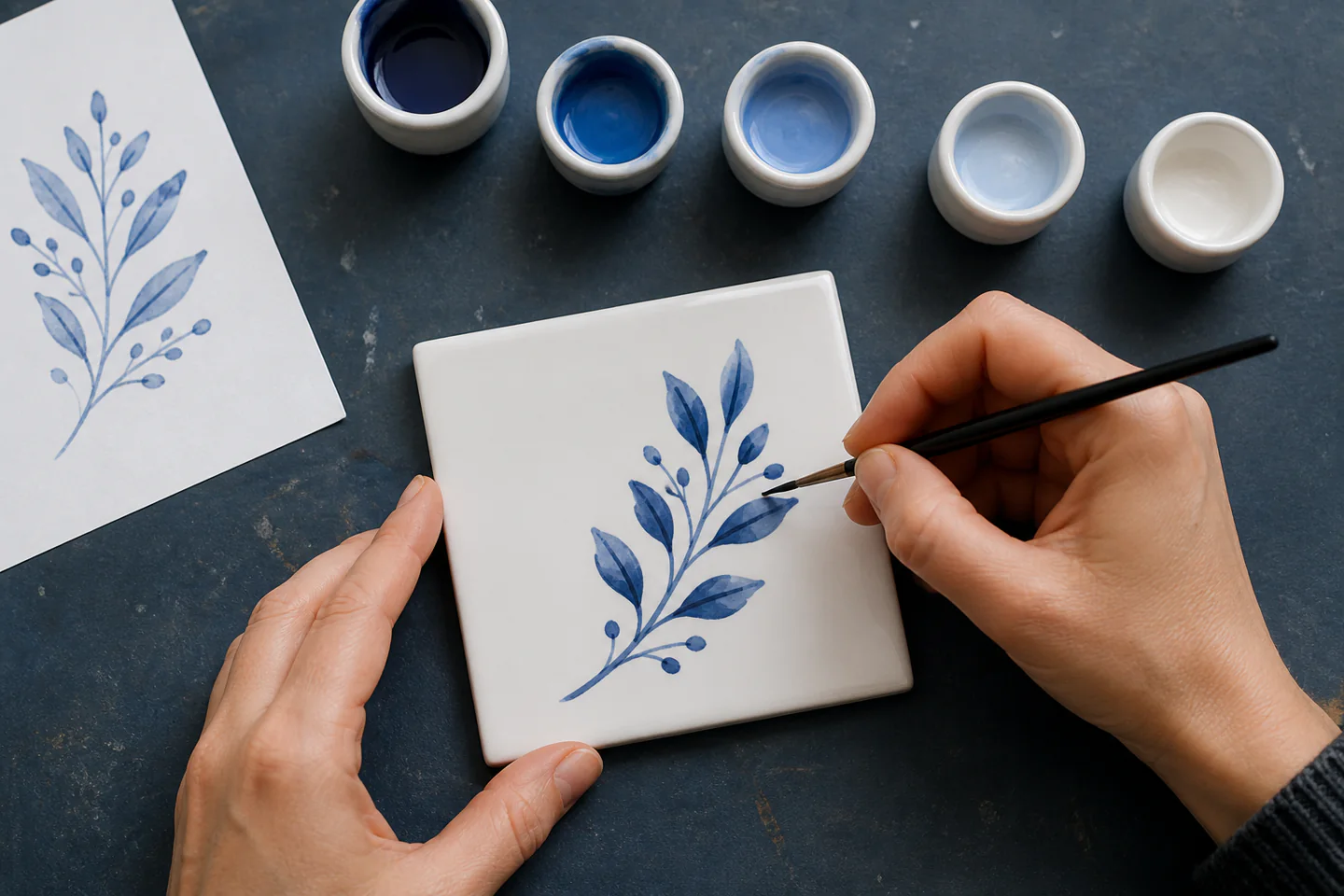
Clean a plain glazed tile, sketch a simple border on paper and use a named porcelain-paint system exactly as directed. A tile avoids making assumptions about food contact while technique and curing are learned.
- 01
Choose paint or pens specifically labelled for glass, porcelain or glazed ceramic rather than ordinary acrylic. Note the material, setting or measurement used so the result can be repeated or changed for a reason.
- 02
Remove grease completely and handle the cleaned surface only by its edges. Note the material, setting or measurement used so the result can be repeated or changed for a reason.
- 03
Keep the first design bold because pale thin strokes and repeated corrections can look muddy after curing. Note the material, setting or measurement used so the result can be repeated or changed for a reason.
- 04
Use one manufacturer’s paint and curing instructions instead of mixing systems. Note the material, setting or measurement used so the result can be repeated or changed for a reason.
- 05
Treat a handmade finish as decorative unless the exact product explicitly supports the intended food, dishwasher or heat contact. Note the material, setting or measurement used so the result can be repeated or changed for a reason.
What to expect
Decoration claims depend on the exact paint system
Painting is immediate, but adhesion, curing and safe end use are technical questions that cannot be inferred from a pretty finished mug.
Surface preparation
Finger oils, dust and soap residue interfere with adhesion. Cleaning is a functional stage, not busywork. For ceramic painting, check this deliberately while the work is still easy to alter; correcting it after the next stage usually costs more time or materials.
Opacity
Porcelain paint can appear streaky while wet and change after curing. Test marks on an inexpensive tile show the real finish. For ceramic painting, check this deliberately while the work is still easy to alter; correcting it after the next stage usually costs more time or materials.
Curing
Air-dry, oven-cure and kiln-fire products are not interchangeable. Temperature, time and cooling must match the named material. For ceramic painting, check this deliberately while the work is still easy to alter; correcting it after the next stage usually costs more time or materials.
Use limits
Dishwasher resistance does not automatically mean food-contact approval, microwave suitability or permanence on a mug rim. For ceramic painting, check this deliberately while the work is still easy to alter; correcting it after the next stage usually costs more time or materials.
Core method
Choose the use before the image
Read the label
Confirm compatible surface, curing method, ventilation, washing claims and restricted contact areas before buying a blank object. For ceramic painting, check this deliberately while the work is still easy to alter; correcting it after the next stage usually costs more time or materials.
Clean and plan
Wash, dry and degrease the ceramic as directed, then design at actual size on paper and mark only with a compatible removable method. For ceramic painting, check this deliberately while the work is still easy to alter; correcting it after the next stage usually costs more time or materials.
Paint in layers
Use thin controlled marks, allow stated drying between coats and avoid repeatedly brushing semi-dry paint. For ceramic painting, check this deliberately while the work is still easy to alter; correcting it after the next stage usually costs more time or materials.
Cure completely
Follow the exact air or domestic-oven schedule, including cold-oven starts or cooling if specified, and respect the final cure time. For ceramic painting, check this deliberately while the work is still easy to alter; correcting it after the next stage usually costs more time or materials.
Useful products
Products with a clear job in the setup
A matched starter paint set, a useful outline pen and fine brushes cover controlled decorative work without claiming kiln-glaze performance.
Pébéo Porcelaine 150 Initiation Set, Six 20 ml Colours
Using one established range keeps compatibility and curing instructions clear.
Marabu Porcelain and Glass Painter Basic, Five Pens
Pens suit simple line designs and can complement brush-filled areas.
Generic Eleven-Piece Fine Detail Paint Brush Set
Several fine sizes allow testing without a large professional brush investment.
First project
Paint a bordered tile test
A tile creates a finished object while leaving space to compare stroke, opacity and cure behaviour.
- 01
Define the use
Choose a decorative tile or coaster and accept that it will not be used for direct food preparation. For ceramic painting, check this deliberately while the work is still easy to alter; correcting it after the next stage usually costs more time or materials.
- 02
Clean and test
Prepare the surface exactly as the paint maker directs, then make small hidden tests for line, fill and colour mixing. For ceramic painting, check this deliberately while the work is still easy to alter; correcting it after the next stage usually costs more time or materials.
- 03
Transfer a simple motif
Use a paper plan and compatible guide marks to place a border and one central botanical or geometric form. For ceramic painting, check this deliberately while the work is still easy to alter; correcting it after the next stage usually costs more time or materials.
- 04
Layer patiently
Apply thin coats, respecting drying time and keeping fingers away from cleaned unpainted areas. For ceramic painting, check this deliberately while the work is still easy to alter; correcting it after the next stage usually costs more time or materials.
- 05
Cure and label
Follow one product’s schedule, ventilate as directed and record the paint range so later care instructions remain known. For ceramic painting, check this deliberately while the work is still easy to alter; correcting it after the next stage usually costs more time or materials.
What can wait
What can wait until the first result
Functional dinnerware, mixed paint systems and kiln glazes require evidence and facilities beyond a first decorative tile.
- 01
Food-contact surfaces
Keep early work decorative. Safety depends on certified materials, complete coverage and correct firing or curing. For ceramic painting, check this deliberately while the work is still easy to alter; correcting it after the next stage usually costs more time or materials.
- 02
Kiln-fired glaze
Glaze chemistry and firing belong with a compatible studio or kiln service, not a domestic-oven paint workflow. For ceramic painting, check this deliberately while the work is still easy to alter; correcting it after the next stage usually costs more time or materials.
- 03
Large dinner set
Repetition exposes colour and cure variation. Complete and wash-test one non-food decorative piece first. For ceramic painting, check this deliberately while the work is still easy to alter; correcting it after the next stage usually costs more time or materials.
Upgrade path
Upgrade the repeated limitation
Upgrade after deciding whether the goal is finer decorative painting or genuinely functional fired ware.
Try it
£18–£45Tile, named paint system and small brushes
Surface preparation, opacity and curing become clear.Refine drawing
£10–£40 extraCompatible pens, liner brushes and transfer paper
Repeated motifs and fine outlines gain control.Build a series
£25–£90Matched blanks, expanded colour range and templates
Decorative sets become repeatable within one material system.Move to fired work
VariableStudio-approved underglaze or glaze and kiln service
Durable functional possibilities open under expert firing controls.Safety & care
Do not guess about heat or food safety
The exact product instructions decide curing, ventilation and end use.
- Use only ceramics confirmed suitable for the chosen curing temperature and never put unknown repaired ware in an oven. Follow the current instructions supplied with the exact material or tool.
- Ventilate during painting and curing as directed and keep materials away from children and pets. Follow the current instructions supplied with the exact material or tool.
- Keep decoration away from food-contact areas and mug rims unless the exact system explicitly approves that use. Follow the current instructions supplied with the exact material or tool.
- Never exceed the product temperature or use a domestic oven for materials that require a ceramic kiln. Follow the current instructions supplied with the exact material or tool.
Outside help
When outside help earns its place
A manufacturer tutorial is enough for a decorative tile. A pottery-painting studio becomes useful when glazing, food-safe functional ware or kiln firing is the aim.
Use one complete lesson that includes preparation, the working method, troubleshooting and finishing. Avoid combining measurements from several creators on the first attempt.
Ask whether materials, safe tool use, individual correction and a finished take-home result are included before booking.
Representative UK learning options checked 29 August 2026; local prices, access, materials and tutor support vary.
Sources
Where the guidance came from
The method is grounded in specialist and manufacturer guidance, then checked against recurring beginner problems and the exact products linked here.
-
01
Pébéo · Porcelaine 150
Manufacturer instructions and use limits for the selected paint range.
Open source -
02
Marabu · Porcelain and glass
Manufacturer context for ceramic and glass marker systems.
Open source -
03
Food Standards Agency · Food contact materials
UK regulatory context for materials that contact food.
Open source -
04
Craft Potters Association
UK ceramic practice and studio context.
Open source -
05
Victoria and Albert Museum · Ceramics
Museum reference for ceramic decoration and design.
Open source -
06
Amazon UK · Porcelaine 150 Initiation Set, Six 20 ml Colours
Exact product catalogue page or ISBN used for the recommendation; current price, seller, specification and availability should be confirmed.
Open source -
07
Amazon UK · Porcelain and Glass Painter Basic, Five Pens
Exact product catalogue page or ISBN used for the recommendation; current price, seller, specification and availability should be confirmed.
Open source -
08
Amazon UK · Eleven-Piece Fine Detail Paint Brush Set
Exact product catalogue page or ISBN used for the recommendation; current price, seller, specification and availability should be confirmed.
Open source
Guide information and links checked 29 August 2026.