Beginner’s guide · Make & create
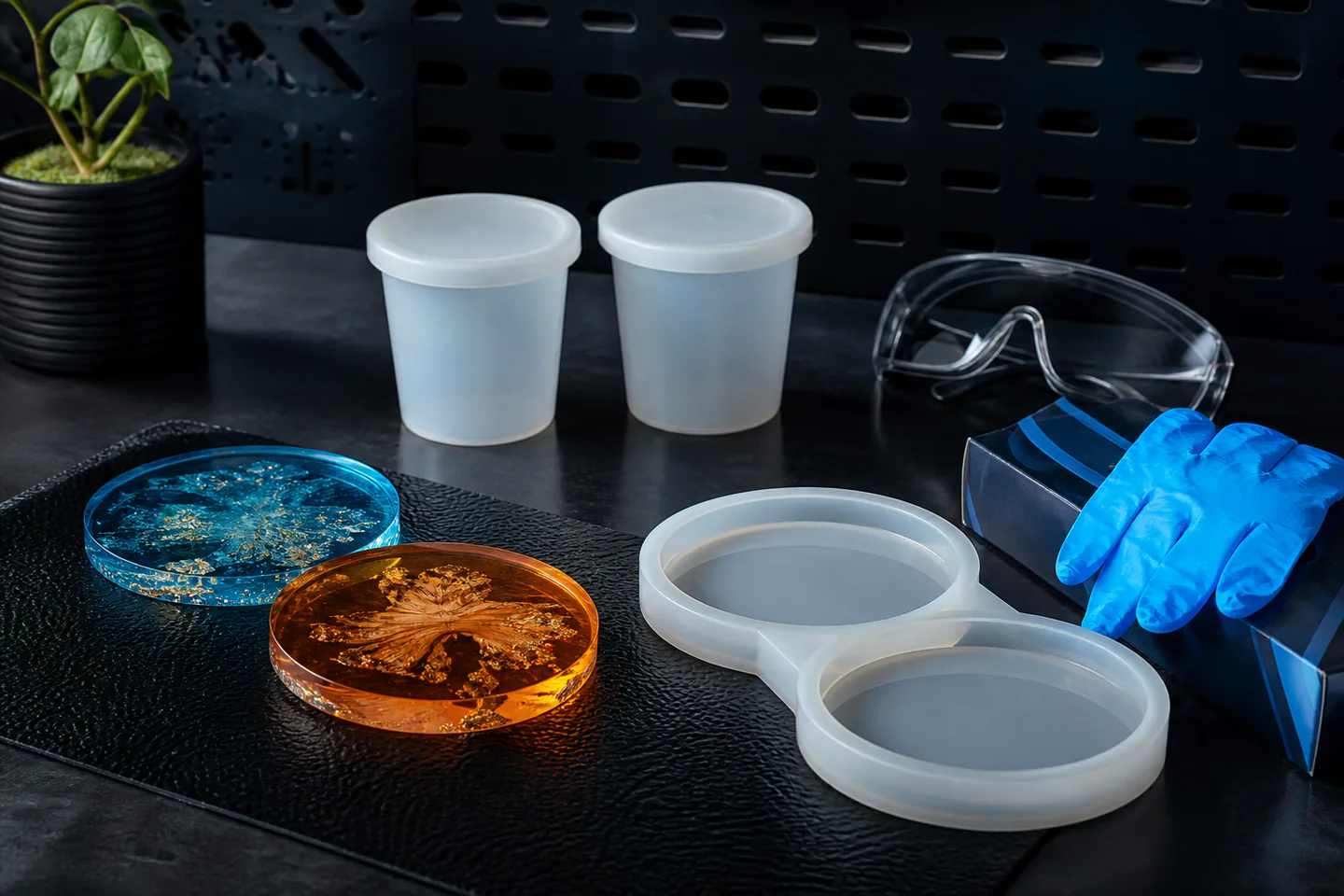
Two fully cured plain-colour epoxy coasters
Control exposure before chasing a glassy finish.
Start only if you can create a dedicated ventilated, level and inaccessible work area. A small measured epoxy coaster tests mixing, bubbles and cure; resin remains a chemical process before it becomes decoration.
Quick answer
Make two plain coasters only after the safety data supports the workspace
Read the resin and hardener labels and safety data sheets before opening either bottle. Confirm that the room, ventilation, gloves, eye protection, temperature and exclusion of children or pets meet those instructions; otherwise use a supervised studio. Protect a level surface, weigh or measure the exact stated ratio using dedicated tools, mix the minimum test quantity while scraping the container as directed, then pour into two clean dry silicone cavities. Cover against dust and leave untouched for the full demould and cure times.
- 01
“Low odour” or “non-toxic when cured” does not mean the uncured components are safe to touch or use in an unventilated room.
- 02
Mixing ratios may be by volume or by mass and are not interchangeable. Follow the exact product instructions and its batch limits.
- 03
Nitrile glove performance depends on chemical, thickness and exposure time. Replace contaminated or damaged gloves immediately and follow the SDS.
- 04
Fully cured craft resin is not automatically food-contact, skin-contact, heat-safe or suitable for candles. Use only documented applications.
What to expect
The invisible workflow determines the visible finish
Level, ratio, temperature, mixing, clean tools and cure protection matter more than glitter or pigment. A sticky casting is chemical waste, not a craft surface to rescue casually.
Ratio
Measure the resin and hardener exactly in the units stated by the manufacturer and never estimate by eye.
Mix
Scrape sides and bottom as directed without whipping; some systems require transferring to a second cup before pouring.
Temperature
Cold increases viscosity and bubbles; excess heat can accelerate reaction. Stay within the documented working range.
Moisture
Wet moulds, porous inclusions and some colourants can cause clouding, bubbles or failed cure.
Cure
Demould time is not always full cure. Keep pieces isolated until the stated handling and service times have passed.
Waste
Uncured resin, contaminated wipes and solvent require handling according to the SDS and local waste rules, never household drains.
Core method
Treat the first pour as a controlled chemical batch
Read and prepare before opening
Download both component safety data sheets and instructions. Confirm ventilation, gloves, eye protection, temperature, maximum pour depth, working time, mix ratio and waste route. Cover the bench with compatible disposable protection and prepare a lidded curing cover, dedicated cups, stirrers and a contamination plan.
Run a tiny compatibility test
Ensure the silicone mould is clean and completely dry. Mix the smallest allowed batch with no pigment, using the documented volume or mass ratio. Scrape and time the mix exactly. Pour one shallow cavity and watch for heat, clouding, surface reaction and cure before committing to inclusions or a full mould.
Make a restrained coloured batch
Use only resin-compatible pigment within the manufacturer’s loading guidance. Pre-stage two coaster cavities, mix within the stated batch size and working time and pour in a thin stream. Do not use a naked flame to chase bubbles; use the maker’s documented approach and avoid aerosolising or overheating material.
Cure, demould and document
Cover the mould on the level surface and restrict access for the full time. Demould with gloves if any uncured residue is possible. Record batch, ratio, room conditions, mixing time and cure outcome. Keep the pieces away from heat, food and prolonged skin contact unless the cured-use documentation explicitly supports them.
Useful products
Products with a clear job in the setup
The Let’s Resin 500 ml kit provides a manageable first chemical system, the coaster mould set is a later shape option and Unigloves nitrile gloves address one protection task. The SDS may require additional PPE and ventilation; products do not make an unsuitable room safe.
Let’s Resin Epoxy Resin Kit, 500 ml
A smaller kit reduces stored chemical and waste while ratio and cure procedure are being tested.
Let’s Resin Silicone Coaster Mould Set, 18 Pieces
Coaster-scale cavities keep pours relatively shallow and allow repeated form practice.
Unigloves Unigloves Pearl Nitrile Examination Gloves
A box makes immediate replacement possible after contamination, tears or glove removal.
First project
Pour two plain shallow coasters
A simple batch exposes ratio, mixing, level and cure quality without inclusions hiding the result.
- 01
Read both safety data sheets
Confirm the workspace, PPE, waste and emergency measures before opening.
- 02
Prepare two dry cavities
Level the bench and cover the mould against later dust.
- 03
Measure exactly
Use the stated ratio and minimum supported batch, never an approximate half cup.
- 04
Mix by the clock
Scrape as instructed and stay within working time and batch depth.
- 05
Pour and isolate
Fill shallowly, cover and exclude people and pets.
- 06
Cure and record
Wait for full stated cure and document conditions before judging.
What can wait
What can wait until the first result
Pigment collections, deep pours and heat tools multiply variables and risk before a plain shallow batch has cured correctly.
- 01
A large-volume kit
Smaller quantities limit waste and exotherm while the workflow is unproven.
- 02
Deep river pours
Depth changes heat generation, cure schedule and product choice and belongs to a documented specialist system.
- 03
A torch or naked flame
Fire, fumes and surface damage are avoidable; follow only the manufacturer’s documented bubble method.
- 04
Fresh flowers and found objects
Moisture, air and incompatibility can ruin cure. Dry and test inclusions later.
- 05
Food-contact claims
A hard shiny surface is not evidence of certification for plates, chopping boards or hot mugs.
Upgrade path
Upgrade the repeated limitation
Upgrade measurement, casting depth or finishing only after the documented base system cures consistently.
Safety-led test
About £35–£80Small resin kit + PPE + existing suitable workspace
Learn ratio, mixing and cure.Repeatable mould work
About £40–£120Dedicated moulds, scale/cups and lidded cure box
Make consistent shapes with less contamination.Finishing route
About £60–£250Wet-finishing system + controlled dust capture
Correct edges without dry airborne resin dust.Deep or production casting
About £250–£1,500+Documented deep-pour resin + engineered ventilation and workspace
Scale only under product and risk controls.Safety & care
Uncured epoxy is a sensitising chemical system
Repeated skin exposure can cause allergy and dermatitis. Ventilation, correct gloves, eye protection, controlled waste and strict exclusion are core equipment, not optional extras.
- Read the current labels and safety data sheets for both components and every pigment; follow their ventilation, PPE, first-aid and disposal requirements.
- Prevent all skin and eye contact, use chemically suitable gloves for the stated task, change contaminated gloves promptly and never clean skin with solvent.
- Keep children, pets, food, drink, flames and unrelated household items out of the work and curing area until full documented cure.
- Never pour resin, hardener, solvent or contaminated wash into drains; contain spills and use local hazardous-waste guidance.
- Avoid dry sanding cured resin. Use the manufacturer’s permitted wet-finishing and dust controls, eye protection and respiratory assessment, or outsource the task.
Outside help
When outside help earns its place
If the home cannot meet the safety data, a supervised studio is the correct beginning. Even with a suitable space, a reputable class can demonstrate contamination control, ratios and waste before decorative techniques.
Read the exact resin documents, not a generic social-media recipe.
Ask about ventilation, PPE, resin system, waste handling and cured-use claims.
Representative UK product, workshop, lesson and club costs checked 13 August 2026; local prices, access, materials and tutor support vary.
Sources
Where the guidance came from
Regulatory and manufacturer sources define chemical control; experienced resin communities help identify recurring mix, mould and cure failures without replacing the SDS.
-
01
HSE · Epoxy resins
UK occupational health guidance on epoxy dermatitis and control.
Open source -
02
Let’s Resin · Safety data and support
Manufacturer safety documentation for current resin systems.
Open source -
03
Resin Obsession · Beginner resin guide
Specialist explanations of mixing, moulds and cure problems.
Open source -
04
Smooth-On · Epoxy safety
Manufacturer-led handling and workshop precautions.
Open source -
05
Reddit · r/ResinCasting
Community evidence on failed cure, bubbles, PPE and workspace mistakes.
Open source -
06
Amazon UK · Let’s Resin 500 ml epoxy kit
Exact product page, model or ISBN, observed price and availability checked for this guide.
Open source -
07
Amazon UK · Let’s Resin coaster mould set
Exact product page, model or ISBN, observed price and availability checked for this guide.
Open source -
08
Amazon UK · Unigloves nitrile gloves
Exact product page, model or ISBN, observed price and availability checked for this guide.
Open source
Guide information and links checked 13 August 2026.