Beginner’s guide · Make & create
Build one raised petal,
then attach it without crushing the edge.
Stumpwork creates dimensional embroidery with padding, slips, wire and raised stitches. Start with one wired leaf on firm fabric.
Quick answer
Complete one a wired leaf and flat-stitch flower before expanding the setup
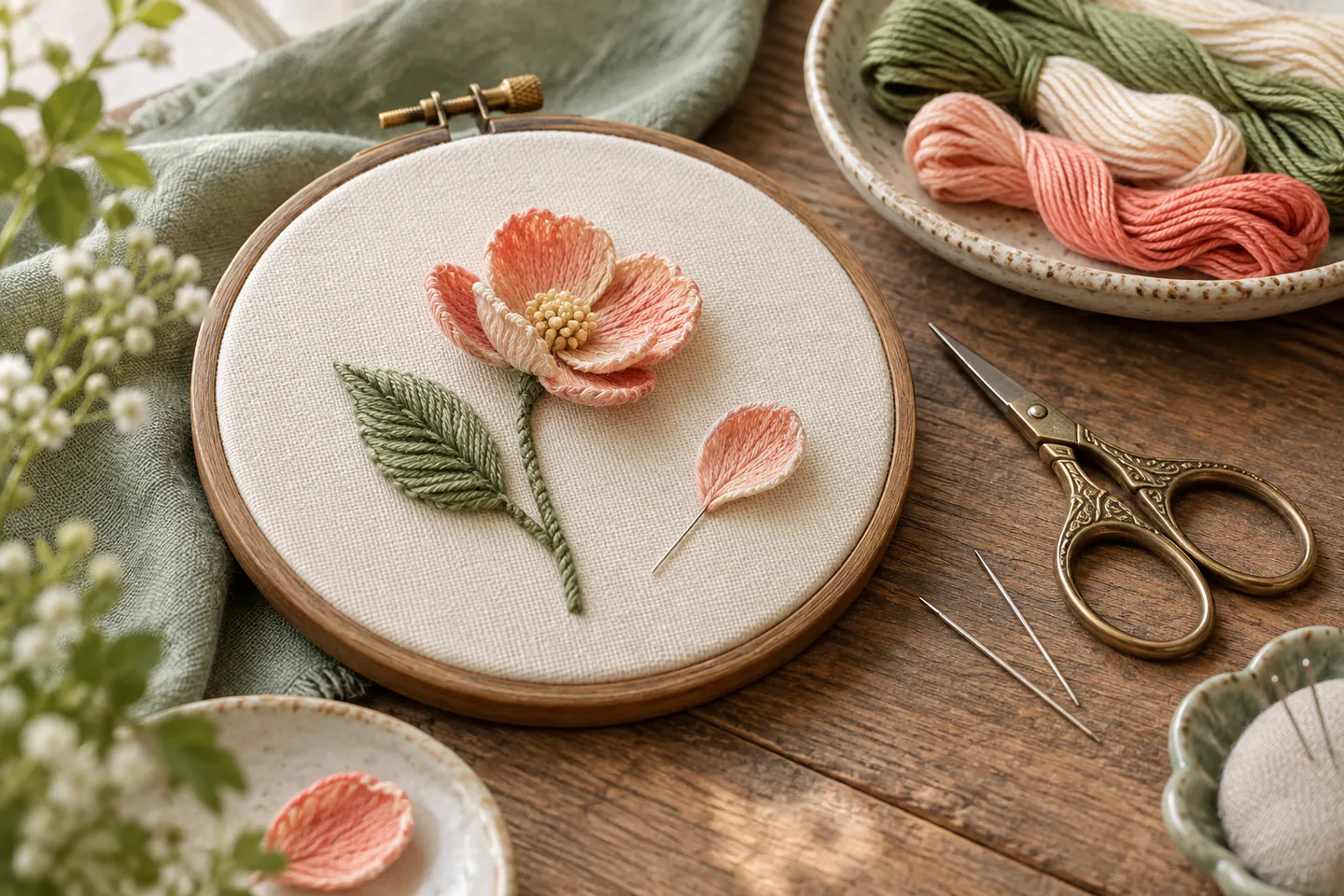
Use a project that teaches one detached wire shape. Mount firm fabric, couch suitable covered wire around a generous leaf outline, fill the shape with simple stitches, work the edge closely and only then cut the slip from the ground. Attach it to a separate small motif and shape it gently after every thread end is secure.
- 01
Stumpwork describes several raised methods; padding, needlelace and wired slips are related but distinct. For a first stumpwork embroidery attempt, keep the materials, measurements and sequence written beside the work. Photograph or measure the result before correcting it, because a visible record separates a technique problem from a material or setup problem.
- 02
A wired slip needs a continuous protected edge before the surrounding fabric is cut away. For a first stumpwork embroidery attempt, keep the materials, measurements and sequence written beside the work. Photograph or measure the result before correcting it, because a visible record separates a technique problem from a material or setup problem.
- 03
Small shapes expose the method without turning cutting and attachment into a week-long operation. For a first stumpwork embroidery attempt, keep the materials, measurements and sequence written beside the work. Photograph or measure the result before correcting it, because a visible record separates a technique problem from a material or setup problem.
- 04
Dimensional embroidery needs storage space that does not flatten or catch the finished elements. For a first stumpwork embroidery attempt, keep the materials, measurements and sequence written beside the work. Photograph or measure the result before correcting it, because a visible record separates a technique problem from a material or setup problem.
What to expect
What stumpwork embroidery is really like at the start
The useful beginner controls are setup, repeatable movement and a finished sample. Covering wire evenly and cutting the slip without severing stitches is the main skill to observe before adding scale or decoration.
Wire
The gauge must hold a shape without becoming too hard to couch or cut safely. For a first stumpwork embroidery attempt, keep the materials, measurements and sequence written beside the work. Photograph or measure the result before correcting it, because a visible record separates a technique problem from a material or setup problem.
Edge
Gaps in the covering stitch expose ground fabric and weaken the cut outline. For a first stumpwork embroidery attempt, keep the materials, measurements and sequence written beside the work. Photograph or measure the result before correcting it, because a visible record separates a technique problem from a material or setup problem.
Cutting
Scissors work close to thread and wire, so haste can destroy the completed slip. For a first stumpwork embroidery attempt, keep the materials, measurements and sequence written beside the work. Photograph or measure the result before correcting it, because a visible record separates a technique problem from a material or setup problem.
Assembly
A beautiful detached piece can sit awkwardly if the attachment angle is not planned. For a first stumpwork embroidery attempt, keep the materials, measurements and sequence written beside the work. Photograph or measure the result before correcting it, because a visible record separates a technique problem from a material or setup problem.
Core method
The core stumpwork embroidery method
Choose one dimensional method
Use a wired leaf rather than combining padding, beads and needlelace immediately. For a first stumpwork embroidery attempt, keep the materials, measurements and sequence written beside the work. Photograph or measure the result before correcting it, because a visible record separates a technique problem from a material or setup problem.
Couch and cover the outline
Keep the wire on the drawn edge and pack the covering stitches without distorting the ground. For a first stumpwork embroidery attempt, keep the materials, measurements and sequence written beside the work. Photograph or measure the result before correcting it, because a visible record separates a technique problem from a material or setup problem.
Fill before release
Complete the interior, secure every tail and inspect both sides under good light. For a first stumpwork embroidery attempt, keep the materials, measurements and sequence written beside the work. Photograph or measure the result before correcting it, because a visible record separates a technique problem from a material or setup problem.
Cut and mount cautiously
Use fine scissors parallel to the edge and attach through planned anchor points. For a first stumpwork embroidery attempt, keep the materials, measurements and sequence written beside the work. Photograph or measure the result before correcting it, because a visible record separates a technique problem from a material or setup problem.
Useful products
Products with a clear job in the route
These two products cover distinct jobs in the beginner route; they are not a requirement to buy a bundle. Use materials already owned when they meet the same specification, and confirm every live listing before ordering.
Fox Chapel Publishing Stumpwork Embroidery and Thread Painting
A structured book is safer than combining incompatible fragments from several projects.
Swpeet Linen Embroidery Kit with Hoops and 50 Floss Colours
Plain fabric makes stitch placement and tension easier to inspect.
First project
Make a wired leaf and flat-stitch flower
Keep the project small enough to finish, inspect and repeat. The first result is evidence about material compatibility, sequence and control rather than a performance test.
- 01
Prepare the workspace and materials
Use a wired leaf rather than combining padding, beads and needlelace immediately. For a first stumpwork embroidery attempt, keep the materials, measurements and sequence written beside the work. Photograph or measure the result before correcting it, because a visible record separates a technique problem from a material or setup problem.
- 02
Make the first controlled pass
Keep the wire on the drawn edge and pack the covering stitches without distorting the ground. For a first stumpwork embroidery attempt, keep the materials, measurements and sequence written beside the work. Photograph or measure the result before correcting it, because a visible record separates a technique problem from a material or setup problem.
- 03
Check the central technique
Complete the interior, secure every tail and inspect both sides under good light. For a first stumpwork embroidery attempt, keep the materials, measurements and sequence written beside the work. Photograph or measure the result before correcting it, because a visible record separates a technique problem from a material or setup problem.
- 04
Complete the structure
Use fine scissors parallel to the edge and attach through planned anchor points. For a first stumpwork embroidery attempt, keep the materials, measurements and sequence written beside the work. Photograph or measure the result before correcting it, because a visible record separates a technique problem from a material or setup problem.
- 05
Finish, measure and record
Let the work settle or dry by the relevant material instructions, then measure, photograph and label the result. Record the one change that would make the next stumpwork embroidery attempt more controlled. For a first stumpwork embroidery attempt, keep the materials, measurements and sequence written beside the work. Photograph or measure the result before correcting it, because a visible record separates a technique problem from a material or setup problem.
What can wait
What can wait until the first result
Delay anything that adds cost, risk or another variable before the basic workflow has produced something you can review.
- 01
A full insect sculpture
Legs, wings and balance add several assembly problems. For a first stumpwork embroidery attempt, keep the materials, measurements and sequence written beside the work. Photograph or measure the result before correcting it, because a visible record separates a technique problem from a material or setup problem.
- 02
Very fine silk
Delicate thread increases abrasion and tension demands. For a first stumpwork embroidery attempt, keep the materials, measurements and sequence written beside the work. Photograph or measure the result before correcting it, because a visible record separates a technique problem from a material or setup problem.
- 03
Antique stumpwork repair
Conservation requires specialist assessment. For a first stumpwork embroidery attempt, keep the materials, measurements and sequence written beside the work. Photograph or measure the result before correcting it, because a visible record separates a technique problem from a material or setup problem.
- 04
Wearable placement
Raised wire catches and crushes during use and laundering. For a first stumpwork embroidery attempt, keep the materials, measurements and sequence written beside the work. Photograph or measure the result before correcting it, because a visible record separates a technique problem from a material or setup problem.
Upgrade path
Add the capability you can now name
Each stage should remove a demonstrated limitation rather than make the setup look more advanced.
Flat padded sample
Use owned tools where possibleOne small sample and written notes
Learn the central movement and material behaviour.Single wired leaf
About £20–£80A repeatable complete starter setup
Repeat the result with cleaner finish and fewer corrections.Multi-element botanical piece
About £50–£180A selected tool or structured class
Add one technique, size or design capability.Framed dimensional scene
Cost varies widelyA documented specialist workflow
Develop original work with provenance, testing and appropriate safety.Safety & care
Safety, care and respectful practice in stumpwork embroidery
The practical risks are manageable when tools, materials and cultural claims remain specific and proportionate.
- Cut wire with eye protection and collect clipped ends immediately. For a first stumpwork embroidery attempt, keep the materials, measurements and sequence written beside the work. Photograph or measure the result before correcting it, because a visible record separates a technique problem from a material or setup problem.
- Keep supporting fingers away from fine scissors and needle points. For a first stumpwork embroidery attempt, keep the materials, measurements and sequence written beside the work. Photograph or measure the result before correcting it, because a visible record separates a technique problem from a material or setup problem.
- Cap or turn in every structural wire end so it cannot scratch. For a first stumpwork embroidery attempt, keep the materials, measurements and sequence written beside the work. Photograph or measure the result before correcting it, because a visible record separates a technique problem from a material or setup problem.
- Store finished pieces in a box deep enough to avoid pressure. For a first stumpwork embroidery attempt, keep the materials, measurements and sequence written beside the work. Photograph or measure the result before correcting it, because a visible record separates a technique problem from a material or setup problem.
- Do not attempt to clean or reshape historic stumpwork without conservation guidance. For a first stumpwork embroidery attempt, keep the materials, measurements and sequence written beside the work. Photograph or measure the result before correcting it, because a visible record separates a technique problem from a material or setup problem.
Outside help
When outside help earns its place
A guided session is useful when equipment setup, live hand correction, heat, sharp tools or a specialist press blocks safe progress. A clear source is enough for the smallest stumpwork embroidery sample.
Choose one coherent lesson that covers preparation, the central stumpwork embroidery technique, finishing and common mistakes.
Ask which tools and materials are included, whether the project can be finished in the session and what safety induction is provided.
Representative UK learning and access routes checked 20 September 2026; local prices, equipment and tutor support vary.
Sources
Where the guidance came from
Authoritative and specialist guidance supports the method, terminology and safety boundaries; community discussion contributes recurring beginner problems rather than unsupported claims.
-
01
Royal School of Needlework · Stitch Bank
Specialist stitch structure, terminology and diagrams.
Open source -
02
Royal School of Needlework
UK specialist teaching and technique context.
Open source -
03
DMC · Stitch guide
Manufacturer diagrams for common hand-embroidery stitches.
Open source -
04
Victoria and Albert Museum · Embroidery
Historical, material and object context for embroidery.
Open source -
05
Embroiderers’ Guild
UK community, education and regional-group routes.
Open source -
06
Reddit · r/Embroidery
Recurring beginner evidence on tension, fabric and finishing.
Open source -
07
Amazon UK · Stumpwork Embroidery and Thread Painting
Exact Amazon UK catalogue page or ISBN used for the recommendation; confirm current price, seller, specification and availability.
Open source -
08
Amazon UK · Linen Embroidery Kit with Hoops and 50 Floss Colours
Exact Amazon UK catalogue page or ISBN used for the recommendation; confirm current price, seller, specification and availability.
Open source
Guide information and links checked 20 September 2026.