Beginner’s guide · Make & create
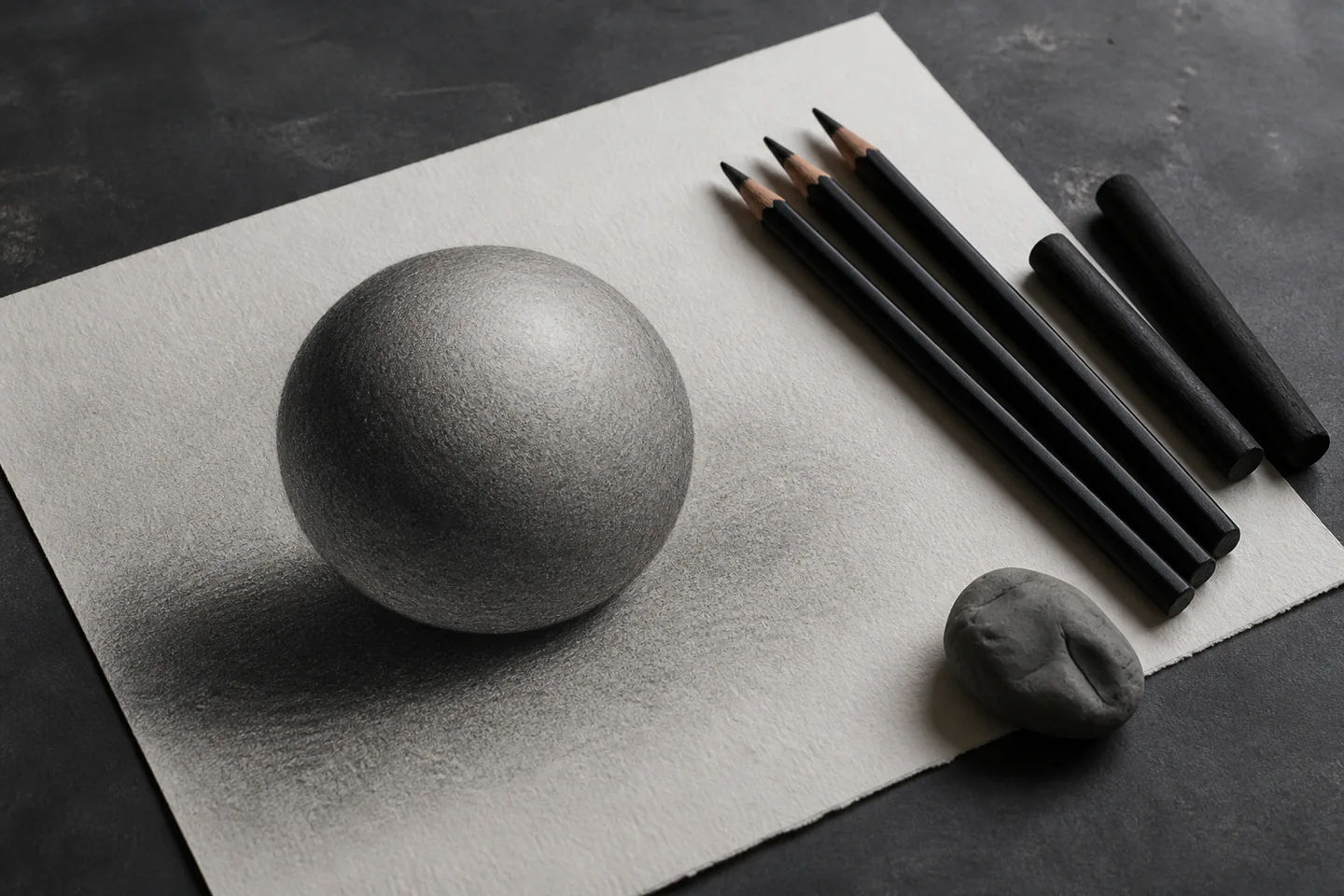
A three-value object study with a convincing cast shadow
Measure the shadow before polishing the line.
Start with vine or pencil charcoal, a kneadable eraser and toothy paper. A three-value study teaches the medium faster than a detailed outline because charcoal is built by massing, lifting and reasserting edges.
Quick answer
Draw a white object using only light, middle and dark masses
Prop a sheet on a board, place a white mug or ball beside one lamp and squint until the shadow pattern simplifies. Mark the outer proportions lightly, cover the middle-value background with side strokes and mass the core and cast shadows before adding details. Lift the light side with a kneadable eraser, deepen only the darkest contact points and soften selected edges with a clean stump or cloth. Keep the first result to three values so every correction remains visible.
- 01
Vine charcoal is light and easy to erase; compressed charcoal is darker and more permanent; charcoal pencils offer controlled points.
- 02
A kneadable eraser is a drawing tool for lifting light, not just a way to remove mistakes.
- 03
Blending cannot replace value design. Establish the large shadow shape before smoothing transitions.
- 04
Charcoal dust should be allowed to settle and removed with damp cleaning, not blown or dry-swept.
What to expect
Charcoal rewards decisive masses and exposes hesitant values
The marks move easily at first, but every blend and erasure changes the paper tooth. Clear observation and selective edges matter more than photographic detail.
Proportion
Place height, width and tilt with faint straight marks before dark material makes corrections messier.
Mass
Join neighbouring shadow shapes into one readable family instead of drawing separate dark outlines around objects.
Lift
Press and turn a kneadable eraser to lift gradually; rubbing hard can polish or damage the sheet.
Edge
A cast-shadow edge may sharpen near contact and soften away from it; copy the observed change rather than one formula.
Black
Reserve the darkest compressed charcoal for the few accents that need it, or the drawing loses depth.
Surface
More tooth holds richer darks but also grips charcoal. Test pencils and erasers on a margin before committing.
Core method
Move from proportion to mass, then edge
Set a simple value problem
Arrange one pale object against a plain backdrop with a single directional light. Make a two-inch thumbnail using white paper, middle grey and black only. Check height-to-width relationships and the angle of the cast shadow before moving to the large sheet.
Place without carving outlines
Use a hard charcoal pencil or light vine stick to mark top, bottom, sides and main axis. Connect these measurements with straight searching lines. Avoid pressing a finished contour into the page; the boundary will emerge from the values on each side.
Mass shadow and background
Use the side of charcoal to state the background and the object’s shadow family broadly. Work from general to specific, keeping the light family mostly clean. Blend only enough to unify obvious gaps, then redraw the structural darks lost in blending.
Lift light and resolve edges
Shape a kneadable eraser and press it into the lit plane, turning to a clean area often. Add the contact shadow, reflected-light boundary and a few crisp accents. Step back, squint and reduce any detail that breaks the three-value design.
Useful products
Products with a clear job in the setup
Derwent’s six-piece set is a compact pencil-led route; Staedtler’s kit includes a broader mix of charcoal, white material and basic accessories; the Canson pad supplies a consistent tooth. Choose one charcoal set, then add paper.
Derwent Derwent Charcoal Pencils, Set of 6
The limited grades cover the first study and the pencil format contains the material better than loose blocks.
Staedtler Mars Lumograph Charcoal Drawing Set, 7 Pieces
It covers the materials needed to compare controlled lines, white accents and selective blending.
Canson Canson XL Mix Media Pad, 11 × 14 in
Repeatable large sheets make side-by-side exercises and whole-arm marks more useful.
First project
Draw a lit mug in three values
The cylinder, handle and cast shadow expose proportion, edge and value without requiring a complex subject.
- 01
Light one object
Use a plain backdrop and one lamp placed safely to the side.
- 02
Make a thumbnail
Reduce the view to white, middle and dark shapes.
- 03
Measure the mug
Mark height, width, ellipses and handle placement lightly.
- 04
Mass the shadow family
Join form and cast shadows before adding small changes.
- 05
Lift the light
Use the eraser gradually and preserve paper texture.
- 06
Reassert key edges
Darken contact and focus areas, then stop at a readable distance.
What can wait
What can wait until the first result
Detail tools and finishing sprays can wait until large values read without them.
- 01
A vast pencil grade set
A light, medium and dark tool already reveal whether observation and pressure are working.
- 02
Photorealistic texture
Texture cannot rescue incorrect proportion, light direction or value grouping.
- 03
Fixing every study
Loose exercises can be stored under glassine; spray only when the preservation need justifies its hazards and colour change.
- 04
Electric erasers
A kneadable eraser teaches broad lifting and edge control without aggressive abrasion.
- 05
Pure black everywhere
Holding the darkest note in reserve makes the final accents useful.
Upgrade path
Upgrade the repeated limitation
Upgrade the drawing surface, charcoal type or storage only after a recurring technique demands it.
Core kit
About £20–£45One charcoal set + toothy pad
Learn measurement, mass and lifting.Expanded marks
About £10–£35Vine, compressed blocks and white chalk
Compare erasability, darkness and toned grounds.Larger work
About £30–£120Large board, paper and easel
Use whole-arm marks and view at distance.Archival presentation
About £40–£200+Glassine, mount, glazing and spacer
Protect loose surfaces without contact.Safety & care
Control dust and work with relaxed posture
Charcoal is simple but dusty. Keep particles out of the air and food areas, and avoid long cramped sessions at a flat table.
- Do not blow charcoal dust or use compressed air; work upright where practical and damp-wipe settled particles.
- Keep food and drink away, wash hands after drawing and follow any warning on tinted, white or mixed-media materials.
- Use fixative only according to its safety data, usually outdoors or with specified ventilation, away from flame and ignition.
- Secure the board and lamp, route leads away from feet and take regular distance, wrist and shoulder breaks.
- Store drawings under clean glassine and frame with a spacer so glazing never rubs the charcoal surface.
Outside help
When outside help earns its place
Online demonstrations can teach the first study. A life-drawing or observational class is valuable for timed measurement and feedback, provided the tutor teaches structure rather than requiring a branded kit.
Use exercises focused on value mass and observation.
Check materials, pose format, ventilation and level of tuition.
Representative UK product, workshop, lesson and club costs checked 13 August 2026; local prices, access, materials and tutor support vary.
Sources
Where the guidance came from
Manufacturer references establish material behaviour; drawing schools and artist communities supply observation, value and preservation practice.
-
01
Derwent · Charcoal range
Manufacturer charcoal grades, formats and technique context.
Open source -
02
Staedtler · Mars Lumograph charcoal
Manufacturer formats and handling information.
Open source -
03
Canson · Drawing paper guidance
Paper and dry-media surface guidance.
Open source -
04
Royal Drawing School · Resources
Observational drawing exercises and artist teaching.
Open source -
05
WetCanvas · Drawing and sketching forum
Long-running material and technique discussion.
Open source -
06
Amazon UK · Derwent six-piece charcoal pencil set
Exact product page, model or ISBN, observed price and availability checked for this guide.
Open source -
07
Amazon UK · Staedtler Mars Lumograph charcoal set
Exact product page, model or ISBN, observed price and availability checked for this guide.
Open source -
08
Amazon UK · Canson XL mixed-media pad
Exact product page, model or ISBN, observed price and availability checked for this guide.
Open source
Guide information and links checked 13 August 2026.