Beginner’s guide · Make & create
A pressed envelope cushion cover with straight seams
Control one straight seam before adding features.
Start with stable cotton, contrasting thread and a basic mechanical machine. Learn threading, seam allowance, backstitching and pressing on a simple envelope cushion.
Quick answer
Sew scraps before starting the cushion
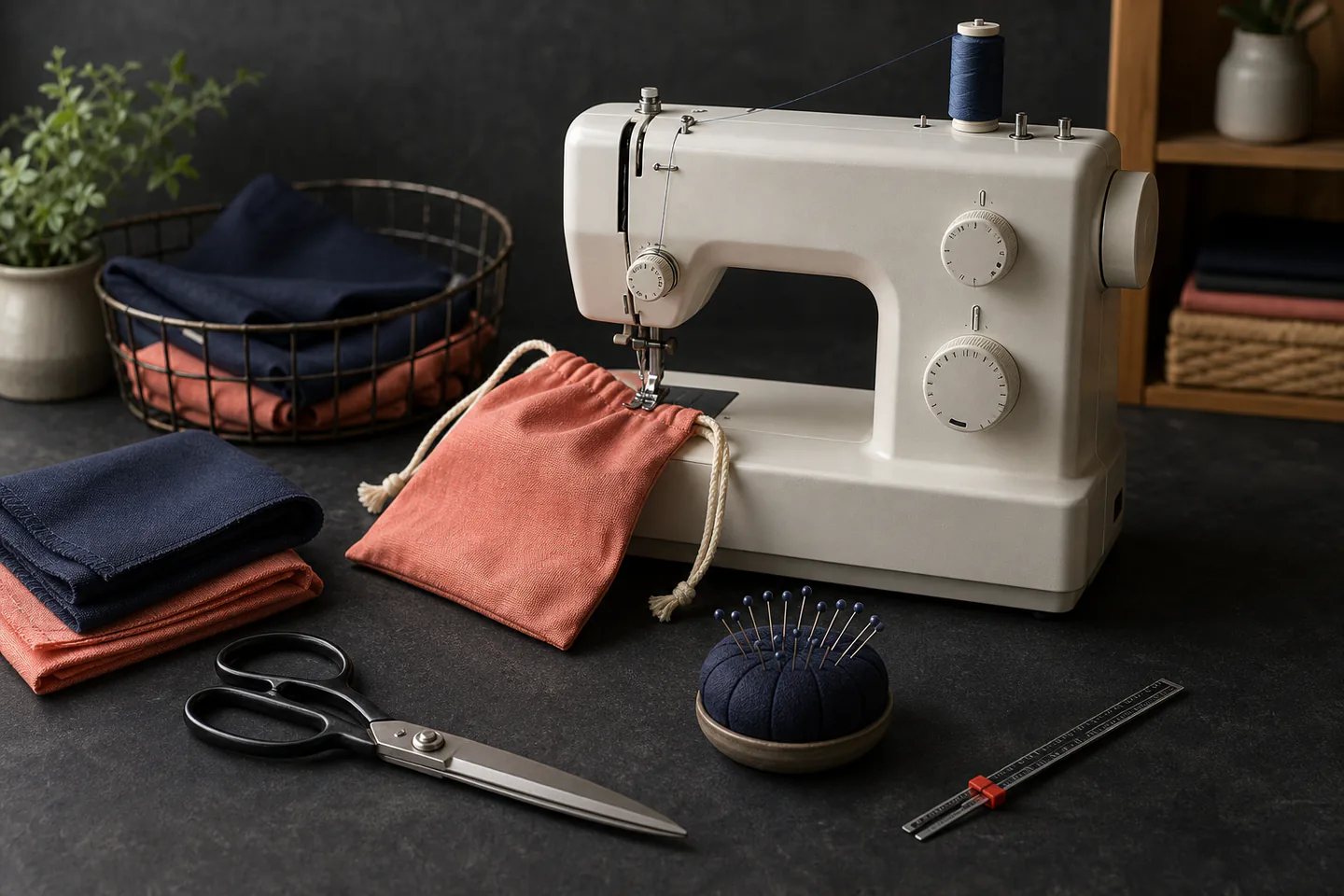
Use a basic mechanical machine, woven cotton, a fresh universal needle and good all-purpose polyester thread. Read the machine’s threading path, wind and insert the bobbin, then sew parallel lines on two layers of scrap. Practise starting, stopping, backstitching and guiding a consistent seam allowance without pulling the fabric. Once the stitches look balanced on both sides, cut three rectangles for an envelope cushion cover.
- 01
The feed dogs move fabric at the selected pace; hands guide direction and should not pull from behind the needle.
- 02
Most sudden loops, jams and thread nests come from incorrect upper threading, an incorrectly seated bobbin or threading with the presser foot down.
- 03
Pressing is part of sewing. A seam changes shape and accuracy when it is opened or turned under with heat appropriate to the fabric.
- 04
A machine does not replace hand sewing: a needle, pins or clips and a seam ripper remain useful basic tools.
What to expect
Accuracy comes from setup as much as hand control
A modest machine can make strong clean seams when it is threaded correctly, fitted with the right needle and given stable fabric.
Threading
Missing one guide or threading while tension discs are closed can create loose loops under the fabric.
Needles
Machine needles are consumables; a bent or blunt needle causes skipped stitches, fabric damage and noise.
Seam allowance
Watch a guide on the machine bed rather than staring directly at the moving needle.
Speed
Use the foot control gently and practise stopping with the needle down before turning.
Pressing
Test heat and steam on a scrap because synthetics can scorch or distort.
Unpicking
A seam ripper is a normal editing tool. Remove short sections carefully rather than pulling and stretching the cloth.
Core method
Set up the machine so the seam can be judged
Identify the exact threading route
Unplug while changing needles or cleaning. Raise the presser foot and needle, follow the numbered upper-thread path and seat the bobbin in the orientation shown in the Brother manual. Draw both thread tails under the presser foot and behind it. Use a fresh universal needle appropriate to medium woven cotton.
Test stitch on doubled scrap
Select a straight stitch of about 2.5 mm and sew through two layers. Check that the upper and bobbin threads meet inside the fabric rather than forming obvious loops on either face. Rethread from the beginning before changing tension settings. Make samples with a start-and-end backstitch and label the one that behaves correctly.
Guide rather than pull
Place the cut edge against a seam guide, lower the presser foot and begin slowly. Keep fingertips to the side of the needle path and let the feed dogs advance the work. Stop with the needle down before lifting the presser foot to pivot at a corner. Trim thread tails only after the seam is secure.
Press and inspect each stage
Press flat first, then press the seam in the required direction using a cloth and temperature suitable for the fibre. Measure the piece again after pressing. A cushion cover tolerates small visual variation, but puckering, skipped stitches or an opening too small for the pad should be corrected before final assembly.
Useful products
Products with a clear job in the setup
The Brother LS14S is a deliberately basic full-size machine rather than a toy or handheld stapler. Fiskars shears and Gütermann thread address cutting and stitch reliability; household pins, an iron and scrap cotton can complete the setup.
Brother LS14S Metal Chassis Sewing Machine
Its published manual, full-size bed and core utility stitches support genuine construction sewing rather than novelty repairs.
Fiskars Classic Dressmaking Scissors, 25 cm
Accurate cutting makes seam matching and pressing easier and the shears remain useful beyond the first project.
Gütermann Sew-All Polyester Thread Set
It suits many woven beginner projects and can be matched to several common fabric colours.
First project
Sew an envelope cushion cover
Three rectangles and overlapping back panels teach measuring, hems, straight seams, corners and turning without a zip.
- 01
Measure the cushion pad
Add a modest seam allowance and plan two overlapping back panels.
- 02
Cut on grain
Square stable woven cotton and cut with long clean scissor strokes.
- 03
Hem the overlaps
Fold, press and stitch each exposed back edge before assembly.
- 04
Layer right sides together
Pin or clip the back panels over the front with the finished edges overlapping.
- 05
Sew the perimeter
Use a consistent seam allowance, backstitch at the overlap and pivot at corners.
- 06
Trim, turn and press
Reduce corner bulk carefully, turn through the envelope opening and press the finished cover.
What can wait
What can wait until the first result
Decorative capability is not useful until threading and a straight seam are dependable.
- 01
A machine with hundreds of stitches
Straight stitch, zigzag and a basic buttonhole cover a large amount of early sewing.
- 02
A mini or handheld machine
Limited feed, tension and support can make ordinary fabric harder rather than easier.
- 03
A large fabric stash
Buy stable woven cotton for a named project and learn how its grain and heat behave.
- 04
An overlocker
It speeds seam finishing later but adds another threaded machine and does not replace construction sewing.
- 05
A complicated zip project
An envelope closure teaches accurate construction before zipper feet and insertion order.
Upgrade path
Upgrade the repeated limitation
Upgrade the limitation that repeats across real projects rather than counting decorative stitches.
Envelope cover
About £120+Basic machine + cotton + pressing
Learn threading and straight construction.Bags and repairs
About £15–£45 extraSelected needles, clips and interfacing
Handle layers and structural fabrics.Garments
About £25–£100 per projectPattern + fitting tools + suitable fabric
Control curves, finish and fit.Frequent sewing
About £300–£900+Stronger machine or overlocker chosen for need
Gain feed, convenience or finishing speed.Safety & care
Keep fingers, electricity and hot pressing tools controlled
The moving needle, rotary parts, trailing cable, iron and sharp cutting tools are the practical hazards.
- Switch off and unplug before changing the needle, removing covers or clearing a jam near moving parts.
- Keep fingers to the side of the presser foot, use the handwheel as the manual directs and never pull fabric through the needle.
- Close and store shears and seam rippers safely; count pins and broken needle pieces after every session.
- Use the iron on a stable heatproof surface, test temperature on a scrap and never leave it face-down or unattended.
- Arrange cables to avoid trips, keep vents clear and stop if the machine smells hot, sparks or makes a new severe mechanical noise.
Outside help
When outside help earns its place
The manual and scrap practice can start the first project. A short machine-introduction session is valuable if threading, bobbin insertion or safe hand position remains unclear.
Use the exact model instructions rather than a generic threading video.
Check whether learners use their own machine and leave having threaded, tested and sewn a small object.
Representative UK product, club, lesson and venue costs checked 9 August 2026; local prices, access, weather, materials and tutor support vary.
Sources
Where the guidance came from
Manufacturer instructions govern the exact machine; sewing educators and community reviews add practical material, pressing and troubleshooting advice.
-
01
Brother · LS14S support
Manuals, threading and maintenance information for the selected machine.
Open source -
02
Brother · Beginner machines
Manufacturer features and intended use of the L14S family.
Open source -
03
The Sewing Directory · Beginner sewing
UK specialist guidance on tools, fabric and first projects.
Open source -
04
PatternReview · Sewing machines
Long-running community reports on machine ownership and practical sewing.
Open source -
05
HSE · Craft and workshop safety
General UK guidance for controlling tools, dust, chemicals and work areas.
Open source -
06
Amazon UK · Brother LS14S sewing machine
Exact product page, model or ISBN, observed price and availability checked for this guide.
Open source -
07
Amazon UK · Fiskars Classic dressmaking scissors
Exact product page, model or ISBN, observed price and availability checked for this guide.
Open source -
08
Amazon UK · Gütermann Sew-All thread set
Exact product page, model or ISBN, observed price and availability checked for this guide.
Open source
Guide information and links checked 9 August 2026.