Beginner’s guide · Grow & care
Give citrus real light,
then keep the roots airy.
A compact lemon, lime or calamondin can live indoors, but it needs much brighter light and steadier root care than most decorative houseplants. Begin with one healthy named plant.
Quick answer
Keep one compact citrus stable through a full season
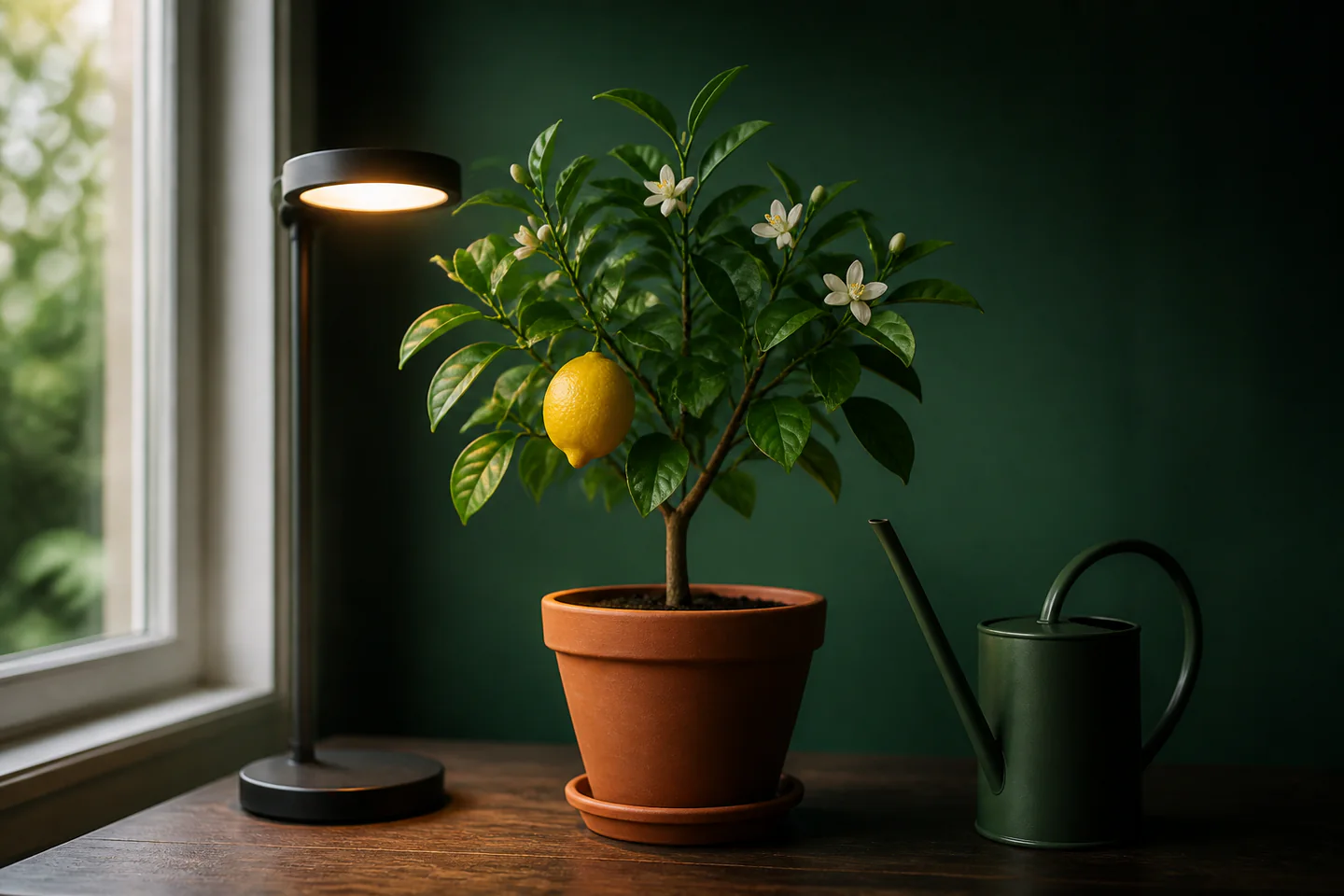
Buy a healthy named compact citrus from a reputable nursery, checking rootstock, mature size and whether fruit is edible. Quarantine it from other plants and place it at the brightest suitable window, away from radiators and cold draughts. Keep it in a draining pot, water thoroughly only when the upper mix is approaching dry, then empty the saucer or cachepot. Rotate gradually, inspect leaf undersides weekly and feed only during active growth with a citrus product used exactly as labelled.
- 01
Citrus is a high-light woody plant, not a low-light desk plant. A bright-looking room can still be too dim away from glass.
- 02
Roots need oxygen. Constantly wet compost, cold roots and an oversized pot are a common damaging combination.
- 03
Indoor air can be dry, but routine leaf misting is not a substitute for root watering or pest control.
- 04
Flowers may need gentle pollination indoors, while fruit takes months and can be shed when the plant is stressed.
- 05
Scale insect, red spider mite, aphids and nutrient symptoms can look similar at first. Inspect and identify before treating.
What to expect
The plant’s calendar changes at the window
Light, temperature and water use shift sharply between summer and winter. A routine that works in July can leave roots saturated in December.
Light
South or west exposure often supports better growth, but sudden strong sun after shop conditions can scorch. Acclimatise.
Water
Soak the root ball, drain fully and wait for a real drying change. Tiny frequent sips leave uneven wet and dry zones.
Temperature
Many citrus prefer a bright cooler winter to hot dry central heating, but minimums differ by species and rootstock.
Feed
Use a citrus formulation and seasonal label. Yellowing can reflect root damage, cold or pH as well as nutrient shortage.
Pollination
Self-fertility varies, and indoor flowers may benefit from gentle brush transfer; avoid promising a crop.
Fruit
A young plant may drop excess fruit. Removing a few can protect growth when the canopy is small.
Core method
Stabilise light, roots and season before chasing fruit
Choose a named plant and inspect it
Select a compact cultivar from a nursery that states species, rootstock or final size, winter minimum and edible use. Avoid plants with sticky leaves, scale bumps, webbing, distorted tips or waterlogged sour compost. Keep the newcomer isolated and record its pot, light orientation and current fruit load.
Give the brightest controlled position
Measure direct sun and sky exposure across the day. Place close to the brightest appropriate window without leaves touching cold glass. Acclimatise to stronger sun over days, rotate only a little at a time and add a documented grow light in winter only when distance and duration can be controlled.
Water the whole root ball and drain
Check several centimetres into the mix and learn the pot’s light dry weight. When watering is due, soak evenly until water escapes, wait for drainage and empty every outer pot. Never leave a standard root ball standing in water. Reduce frequency as growth and light fall rather than reducing each watering to a splash.
Feed and repot by evidence
Use citrus feed at the labelled seasonal dilution only on actively growing, hydrated roots. Flush salts if the product and water conditions require it. Repot in spring or active growth when roots or degraded mix justify it, moving only one modest pot size and using a free-draining citrus-suitable medium.
Useful products
Products with a clear job in the setup
The SANSI clip light is a compact winter supplement where the window test shows a real deficit. The Haws can makes thorough controlled watering easier, and Vensovo’s terracotta pots are an optional breathable container route when their size matches the root ball. A live plant and citrus compost/feed are better chosen from a nursery with current labels and condition checks.
SANSI 10 W Clip-On LED Grow Light
It can extend day length and keep new growth more compact without building a whole shelf system.
Haws Bartley Burbler 2-Pint Watering Can with Fine Rose
The narrow body and removable rose suit small indoor pots and measured drainage checks.
Vensovo 12.7 cm Terracotta Pots with Saucers, Six Pack
Unglazed clay makes wetness visible and dries faster in cool indoor conditions.
First project
Keep an eight-week citrus condition log
Leaf posture, new growth and drying interval give a more honest first result than waiting for fruit.
- 01
Identify and quarantine
Record the label, inspect pests and keep tools separate.
- 02
Map the window
Note hours of direct sun, glass temperature and nearby heating.
- 03
Learn pot weight
Check below the surface and lift before every watering decision.
- 04
Water fully and drain
Soak the root ball evenly and empty standing water.
- 05
Inspect weekly
Check leaf undersides, sticky residue, webbing and distorted tips.
- 06
Adjust one variable
After eight weeks, change light, pot or feeding only when evidence supports it.
What can wait
What can wait until the first result
A fruiting photo can tempt the buyer into feed, mist and a large decorative pot before the roots have stabilised.
- 01
A very large pot
Extra wet mix dries slowly around a stressed compact root ball.
- 02
Daily misting
It changes humidity briefly and can spread some problems; manage environment and pests directly.
- 03
Immediate heavy feeding
Shop plants and fresh compost may already contain nutrients; stressed roots cannot use extra salts well.
- 04
Leaving every fruit
A small canopy may benefit from carrying fewer fruit while it establishes.
- 05
A citrus collection
One plant reveals whether the household can supply the winter light and pest checks.
Upgrade path
Upgrade the repeated limitation
Upgrade winter light, root environment or outdoor transition only after a full-season log identifies the limit.
One named plant
About £35–£100Healthy citrus + draining pot + bright window
Learn seasonal water use.Winter light support
About £35–£120Measured lamp + timer
Reduce weak stretched growth.Seasonal outdoor routine
About £40–£180Stable wheeled pot and sheltered acclimatisation site
Use stronger summer light safely.Small citrus collection
About £150–£800+Quarantine, lights and winter temperature plan
Grow several types without losing control.Safety & care
Bright leaves do not rule out pests or wet roots
Inspect before treating, follow edible-crop labels and keep electrical light equipment separate from water.
- Quarantine new plants, identify pests with authoritative guidance and use only treatments labelled for the plant, indoor setting and edible crop where relevant.
- Store fertilisers and pesticides securely, measure exactly, ventilate and observe harvest intervals for any fruit intended to eat.
- Keep grow lights, timers and extension connections dry and securely mounted and provide a normal dark period.
- Wear gloves for compost, wash hands and fruit and do not consume fruit unless the plant identity and treatment history are known.
- Move heavy pots safely, protect floors from runoff and prevent unstable plants, sharp thorns or branches obstructing routes.
Outside help
When outside help earns its place
No class is needed. A specialist nursery visit can clarify cultivar, rootstock and winter temperature far better than a generic houseplant label.
Use species-specific light, temperature, water and feed guidance.
Ask about rootstocks, UK wintering and edible crop treatments.
Representative UK learning options checked 17 August 2026; local prices, access, materials and tutor support vary.
Sources
Where the guidance came from
Horticultural authorities and specialist nurseries define UK seasonal care; experienced citrus growers add window, pot and pest evidence.
-
01
RHS · Citrus
UK indoor/outdoor citrus care, feeding and winter guidance.
Open source -
02
Royal Botanic Gardens, Kew · Citrus
Botanical and cultivation context for the genus.
Open source -
03
The Citrus Centre
UK specialist cultivar and care context.
Open source -
04
Gardeners’ World · Citrus care
Practical UK container and overwintering guidance.
Open source -
05
Reddit · r/Citrus
Community evidence on pots, indoor light, feeding and recurring symptoms.
Open source -
06
Amazon UK · 10 W Clip-On LED Grow Light
Exact product catalogue page or ISBN used for the recommendation; current price, seller and availability should be confirmed.
Open source -
07
Amazon UK · Bartley Burbler 2-Pint Watering Can with Fine Rose
Exact product catalogue page or ISBN used for the recommendation; current price, seller and availability should be confirmed.
Open source -
08
Amazon UK · 12.7 cm Terracotta Pots with Saucers, Six Pack
Exact product catalogue page or ISBN used for the recommendation; current price, seller and availability should be confirmed.
Open source
Guide information and links checked 17 August 2026.