Beginner’s guide · Grow & care
A stable planted hardscape before livestock
Cycle the ecosystem before styling it with livestock.
Start with a planted freshwater tank, a stable filter and light, simple hardscape and easy plants. Design from maintenance access outward, cycle the aquarium fully and add animals only after testing proves it is ready.
Quick answer
Design a low-tech planted tank and cycle it without animals
Choose the tank and load-bearing level stand first, then select a filter, heater if required, plant-capable light and substrate as one system. Sketch a hardscape with open maintenance space, test stones and wood for stability, slope rinsed or manufacturer-prepared substrate as directed and plant heavily with genuinely aquatic low-demand species. Fill slowly, start equipment, dechlorinate tap water and complete a fishless nitrogen cycle verified by liquid tests before choosing compatible livestock.
- 01
An aquarium weighs roughly its water volume in kilograms before glass, stand, substrate and hardscape. Furniture must be rated and level.
- 02
Active aquasoil can change pH and release nutrients or ammonia initially; follow its water-change instructions and test rather than assuming.
- 03
Many attractive “aquarium seeds” are not true aquatic plants and collapse underwater. Buy identified plants from an aquatic specialist.
- 04
Carbon dioxide injection improves some plants but adds cost and failure modes. A low-tech plant list can start without it.
What to expect
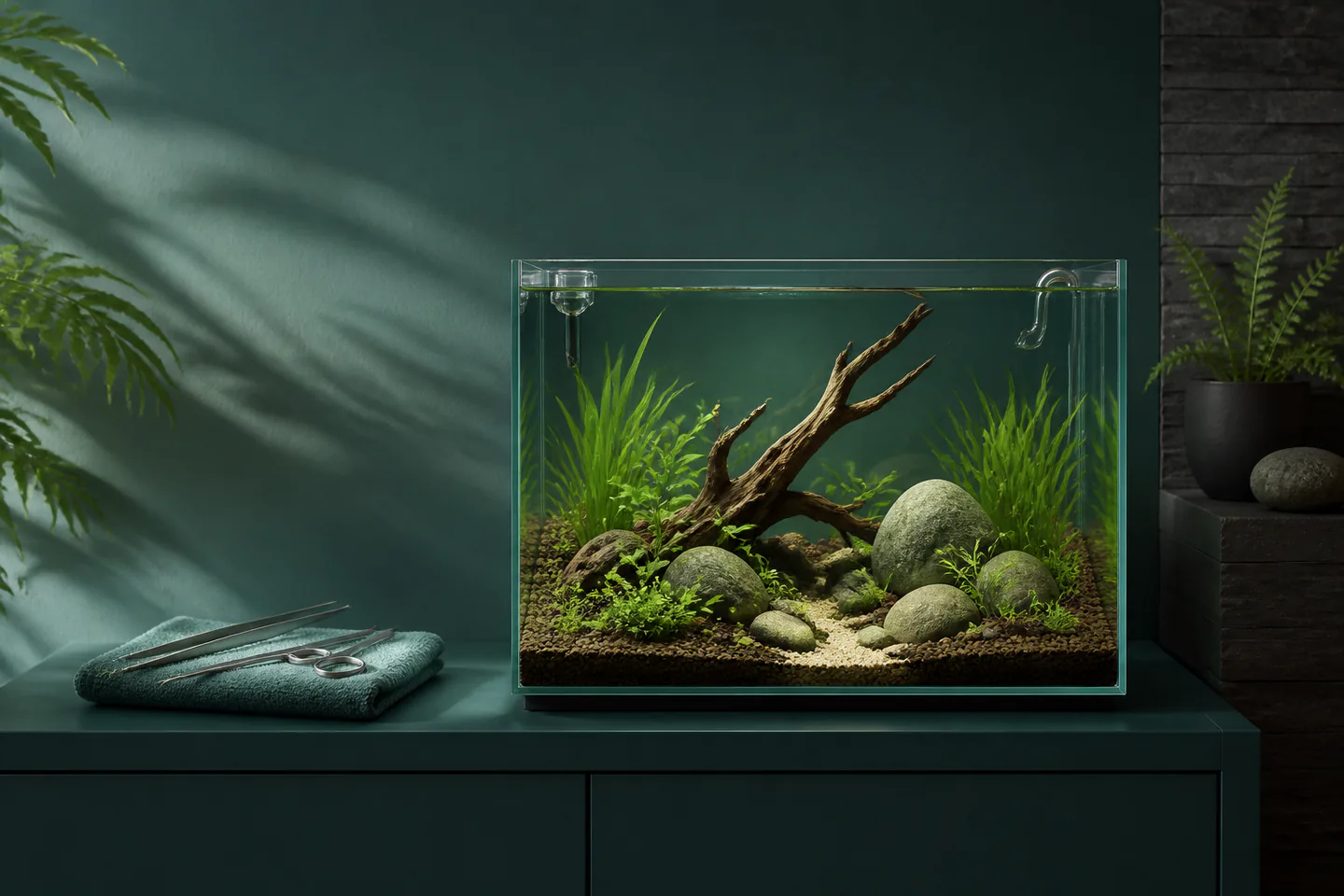
The photograph is one moment in a living maintenance cycle
Plants grow, algae responds to imbalance and hardscape traps debris. A layout must still allow pruning, glass cleaning, filter access and water changes.
Tank
Longer shallow tanks offer useful planting area and gas exchange, but every shape needs an appropriate stand and accessible rim.
Substrate
Active soil supports roots and changes chemistry; inert sand or gravel behaves differently and may need root fertilisation.
Light
Intensity and duration must match plant mass and nutrients. More light can accelerate algae faster than skill.
Plants
Choose true aquatic species by light, growth rate and mature size and plant enough fast growers to establish the system.
Cycle
Beneficial bacteria process waste over time; use ammonia, nitrite and nitrate tests and never use fish as disposable test organisms.
Maintenance
Weekly water changes, pruning, glass cleaning and filter care are part of the finished design.
Core method
Build the ecosystem in a dry, testable order
Select tank, stand and maintenance route
Calculate approximate filled mass, level the stand and leave room for plugs, hoses and filter removal. Use drip loops and RCD protection. Decide where changed water will go and how buckets or a hose will travel without damaging floors.
Plan hardscape and substrate
Sketch focal point, negative space and plant groups. Clean only with aquarium-safe methods, soak or prepare wood and use inert or known stone. Place load-spreading supports where required, make rocks stable before filling and use the substrate exactly as its maker directs.
Plant, fill and start equipment
Mist plants while working, place roots with tweezers and keep rhizomes such as Anubias above substrate. Fill onto a plate or bag to preserve slopes, dechlorinate, run filter continuously and set a conservative light period. Follow active-soil water changes and record temperature and chemistry.
Cycle and stabilise
Add a controlled ammonia source appropriate to a fishless cycle and test ammonia, nitrite and nitrate until the system repeatedly processes the intended dose. Remove melting leaves, adjust light slowly and complete large water changes as required before adding a small compatible stocking plan gradually.
Useful products
Planting control, a known substrate and a design reference
The JBL tweezers make precise planting possible, Tropica’s soil is a documented active substrate and George Farmer’s book covers layout through maintenance. Tank, stand, filter, light and water tests still have to be matched locally to the chosen volume.
JBL ProScape Tool P Straight Tweezers
Their reach and narrow tips make dense planting and later maintenance more controlled than fingers alone.
Tropica Aquarium Soil, 9 Litres
The manufacturer provides volume and startup guidance and the product is widely used in planted tanks.
George Farmer Aquascaping
It treats the layout as a living aquarium rather than a one-day decoration.
First project
Plant and cycle a livestock-free first aquascape
A stable planted tank is a complete first project; animals are a later responsibility.
- 01
Calculate filled load
Choose a rated stand, level it and plan water and electrical access.
- 02
Dry-build the layout
Stabilise hardscape and keep glass, filter and planting access clear.
- 03
Add substrate and plants
Follow soil instructions and plant identified low-demand aquatic species heavily.
- 04
Fill and start equipment
Dechlorinate, use drip loops and run filter and appropriate heater continuously.
- 05
Complete a fishless cycle
Dose and test with a documented method until ammonia and nitrite processing is proven.
- 06
Stabilise before stocking
Perform required water changes, trim melt and confirm compatible animal needs separately.
What can wait
What can wait until the first result
Livestock, injected CO₂ and rare carpeting plants can wait while the tank proves stable and maintainable.
- 01
Fish or shrimp on setup day
Clear water does not mean a mature biological filter.
- 02
Pressurised CO₂
Gas rate, diffusion and livestock safety add a control system beyond a first low-tech tank.
- 03
High-intensity lighting
Excess light can drive algae before plant mass and nutrient control are ready.
- 04
Untested wild rock or wood
Unknown materials can alter chemistry, rot, carry contaminants or collapse.
- 05
Aquarium seed carpets
Mislabelled terrestrial seeds commonly fail after submersion and foul the tank.
Upgrade path
Upgrade the repeated limitation
Upgrade lighting, carbon or livestock only to meet the requirements of a deliberate plant or layout goal.
Low-tech planted tank
About £180–£450Tank + stand + filter + light + tests
Learn cycling and maintenance.Better plant lighting
About £100–£300 extraControllable plant LED
Improve colour and growth with measured duration.Pressurised CO₂
About £180–£450 extraCylinder + regulator + diffuser + drop checker
Grow demanding plants with more monitoring.Display aquascape
About £700–£2,000+Optical tank + premium equipment/hardscape
Refine presentation after care skill exists.Safety & care
Water, electricity, glass and living animals share one space
Load, leaks, electrical safety, unstable hardscape and immature filtration can cause property damage or animal harm.
- Use a level aquarium-rated stand, calculate filled load and never move a tank containing water, substrate or hardscape.
- Create drip loops, keep plugs and power strips above possible leaks, use suitable RCD protection and unplug equipment before putting hands in water.
- Stabilise rock and wood before filling and keep heavy points off unsupported glass as tank instructions require.
- Dechlorinate tap water, cycle without fish, test chemistry and research every species’ adult size, social needs and compatibility before purchase.
- Never release aquarium plants or animals outdoors; follow current UK invasive-species and animal-welfare rules.
Outside help
When outside help earns its place
A low-tech tank can be planned at home. A reputable aquatic shop or aquascaping workshop is useful for checking tank volume, plant identification and livestock compatibility—not for bypassing cycling.
Use difficulty ratings, layout examples and soil instructions.
Check that planting, equipment, cycling and maintenance are covered, not styling alone.
Representative UK product, club, lesson and venue costs checked 9 August 2026; local prices, access, weather, materials and tutor support vary.
Sources
Where the guidance came from
Animal-welfare and aquarium-plant sources guide the living system; manufacturer documentation and planted-tank communities add material and maintenance evidence.
-
01
RSPCA · Fish care
UK welfare, tank and cycling context.
Open source -
02
Tropica · Aquarium Soil
Manufacturer soil use and initial water-change guidance.
Open source -
03
Tropica · Plants
Identified aquatic-plant needs and difficulty ratings.
Open source -
04
George Farmer · Aquascaping
Specialist design and planted-tank education.
Open source -
05
UK Aquatic Plant Society forum
Experienced planted-tank troubleshooting and equipment discussion.
Open source -
06
Amazon UK · JBL ProScape straight tweezers
Exact product page, model or ISBN, observed price and availability checked for this guide.
Open source -
07
Amazon UK · Tropica Aquarium Soil 9 L
Exact product page, model or ISBN, observed price and availability checked for this guide.
Open source -
08
Amazon UK · George Farmer Aquascaping
Exact product page, model or ISBN, observed price and availability checked for this guide.
Open source
Guide information and links checked 9 August 2026.