Beginner’s guide · Make & create
Use only two colours in a round,
and spread the stitches before the floats tighten.
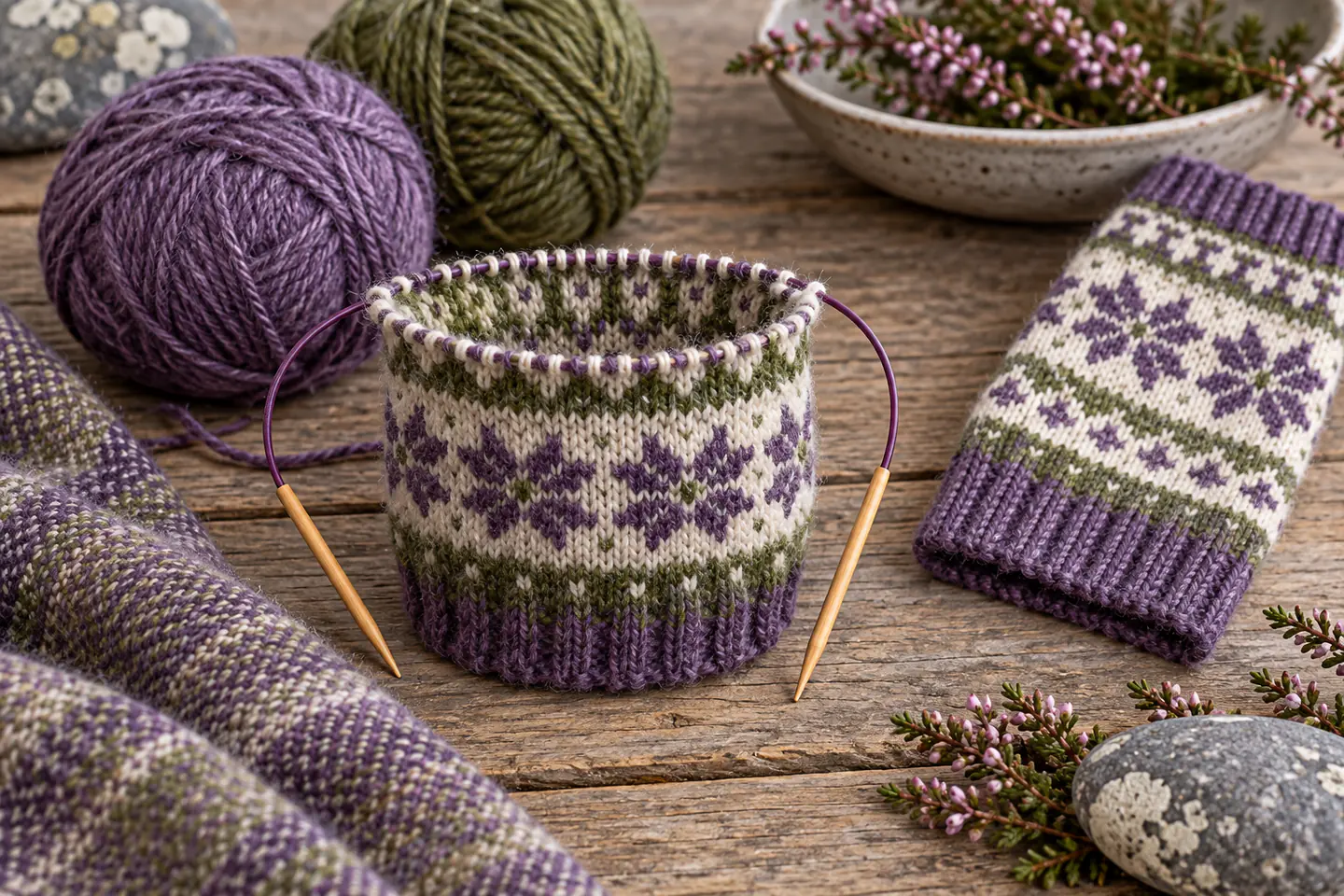
Fair Isle knitting is a Shetland stranded-colour tradition. Start with a small circular swatch using two colours per round.
Quick answer
Complete one a two-colour circular wrist-warmer swatch before expanding the setup
Choose a small chart inspired by a credited Shetland source, two contrasting wool colours and needles for a circular gauge sample. Knit a plain round, add the motif with no more than two colours in each round, spread the worked stitches along the right needle before carrying the next float and keep colour positions consistent. Wash and block the sample by the yarn label.
- 01
Fair Isle properly refers to a Shetland tradition and is more specific than all stranded colourwork. For a first fair isle knitting attempt, keep the materials, measurements and sequence written beside the work. Photograph or measure the result before correcting it, because a visible record separates a technique problem from a material or setup problem.
- 02
Traditional patterns normally use only two colours in any one round even when the full palette is larger. For a first fair isle knitting attempt, keep the materials, measurements and sequence written beside the work. Photograph or measure the result before correcting it, because a visible record separates a technique problem from a material or setup problem.
- 03
Floats must span the relaxed fabric; tight carries pucker and cannot be fixed by aggressive blocking. For a first fair isle knitting attempt, keep the materials, measurements and sequence written beside the work. Photograph or measure the result before correcting it, because a visible record separates a technique problem from a material or setup problem.
- 04
Colour dominance and contrast affect motif clarity even when every stitch follows the chart. For a first fair isle knitting attempt, keep the materials, measurements and sequence written beside the work. Photograph or measure the result before correcting it, because a visible record separates a technique problem from a material or setup problem.
What to expect
What fair isle knitting is really like at the start
The useful beginner controls are setup, repeatable movement and a finished sample. Keeping floats loose enough while maintaining an even motif is the main skill to observe before adding scale or decoration.
Gauge
Stranded fabric often tightens compared with plain stockinette. For a first fair isle knitting attempt, keep the materials, measurements and sequence written beside the work. Photograph or measure the result before correcting it, because a visible record separates a technique problem from a material or setup problem.
Floats
Long carries snag, but catching every short float can create show-through. For a first fair isle knitting attempt, keep the materials, measurements and sequence written beside the work. Photograph or measure the result before correcting it, because a visible record separates a technique problem from a material or setup problem.
Colour
Two yarns can contrast in hue yet merge in value from a distance. For a first fair isle knitting attempt, keep the materials, measurements and sequence written beside the work. Photograph or measure the result before correcting it, because a visible record separates a technique problem from a material or setup problem.
Terminology
Generic stranded motifs should not be marketed as Fair Isle without appropriate connection and context. For a first fair isle knitting attempt, keep the materials, measurements and sequence written beside the work. Photograph or measure the result before correcting it, because a visible record separates a technique problem from a material or setup problem.
Core method
The core fair isle knitting method
Swatch in the round
Use a small tube or speed-swatch method because flat gauge may not match circular work. For a first fair isle knitting attempt, keep the materials, measurements and sequence written beside the work. Photograph or measure the result before correcting it, because a visible record separates a technique problem from a material or setup problem.
Read one short repeat
Mark the chart start, count every repeat and correct errors before the next round hides them. For a first fair isle knitting attempt, keep the materials, measurements and sequence written beside the work. Photograph or measure the result before correcting it, because a visible record separates a technique problem from a material or setup problem.
Manage floats deliberately
Spread stitches, carry yarn without twisting excessively and catch only where the pattern needs it. For a first fair isle knitting attempt, keep the materials, measurements and sequence written beside the work. Photograph or measure the result before correcting it, because a visible record separates a technique problem from a material or setup problem.
Wash and evaluate
Measure before and after a gentle labelled wash and inspect puckering, abrasion and colour contrast. For a first fair isle knitting attempt, keep the materials, measurements and sequence written beside the work. Photograph or measure the result before correcting it, because a visible record separates a technique problem from a material or setup problem.
Useful products
Products with a clear job in the route
These two products cover distinct jobs in the beginner route; they are not a requirement to buy a bundle. Use materials already owned when they meet the same specification, and confirm every live listing before ordering.
KnitPro Zing Single Pointed Needles, 25 cm, 4 mm
Clear stitch movement helps isolate tension and colour handling.
Stylecraft Special DK Acrylic Yarn, 100 g
It is easier to undo and inspect than dark, fluffy or highly variable yarn.
First project
Make a two-colour circular wrist-warmer swatch
Keep the project small enough to finish, inspect and repeat. The first result is evidence about material compatibility, sequence and control rather than a performance test.
- 01
Prepare the workspace and materials
Use a small tube or speed-swatch method because flat gauge may not match circular work. For a first fair isle knitting attempt, keep the materials, measurements and sequence written beside the work. Photograph or measure the result before correcting it, because a visible record separates a technique problem from a material or setup problem.
- 02
Make the first controlled pass
Mark the chart start, count every repeat and correct errors before the next round hides them. For a first fair isle knitting attempt, keep the materials, measurements and sequence written beside the work. Photograph or measure the result before correcting it, because a visible record separates a technique problem from a material or setup problem.
- 03
Check the central technique
Spread stitches, carry yarn without twisting excessively and catch only where the pattern needs it. For a first fair isle knitting attempt, keep the materials, measurements and sequence written beside the work. Photograph or measure the result before correcting it, because a visible record separates a technique problem from a material or setup problem.
- 04
Complete the structure
Measure before and after a gentle labelled wash and inspect puckering, abrasion and colour contrast. For a first fair isle knitting attempt, keep the materials, measurements and sequence written beside the work. Photograph or measure the result before correcting it, because a visible record separates a technique problem from a material or setup problem.
- 05
Finish, measure and record
Let the work settle or dry by the relevant material instructions, then measure, photograph and label the result. Record the one change that would make the next fair isle knitting attempt more controlled. For a first fair isle knitting attempt, keep the materials, measurements and sequence written beside the work. Photograph or measure the result before correcting it, because a visible record separates a technique problem from a material or setup problem.
What can wait
What can wait until the first result
Delay anything that adds cost, risk or another variable before the basic workflow has produced something you can review.
- 01
Full yoked jumper
Fit, gauge and hundreds of repeated motifs magnify tension drift. For a first fair isle knitting attempt, keep the materials, measurements and sequence written beside the work. Photograph or measure the result before correcting it, because a visible record separates a technique problem from a material or setup problem.
- 02
Three colours per round
Extra strands add bulk and tangling. For a first fair isle knitting attempt, keep the materials, measurements and sequence written beside the work. Photograph or measure the result before correcting it, because a visible record separates a technique problem from a material or setup problem.
- 03
Very long floats
Choose a beginner chart with compact colour blocks. For a first fair isle knitting attempt, keep the materials, measurements and sequence written beside the work. Photograph or measure the result before correcting it, because a visible record separates a technique problem from a material or setup problem.
- 04
Uncredited copied chart
Use licensed or traditional documented sources. For a first fair isle knitting attempt, keep the materials, measurements and sequence written beside the work. Photograph or measure the result before correcting it, because a visible record separates a technique problem from a material or setup problem.
Upgrade path
Add the capability you can now name
Each stage should remove a demonstrated limitation rather than make the setup look more advanced.
Circular swatch
Use owned tools where possibleOne small sample and written notes
Learn the central movement and material behaviour.Wrist warmers
About £20–£80A repeatable complete starter setup
Repeat the result with cleaner finish and fewer corrections.Hat with several motifs
About £50–£180A selected tool or structured class
Add one technique, size or design capability.Fitted garment
Cost varies widelyA documented specialist workflow
Develop original work with provenance, testing and appropriate safety.Safety & care
Safety, care and respectful practice in fair isle knitting
The practical risks are manageable when tools, materials and cultural claims remain specific and proportionate.
- Support the forearms and take breaks before colour management tightens the hands. For a first fair isle knitting attempt, keep the materials, measurements and sequence written beside the work. Photograph or measure the result before correcting it, because a visible record separates a technique problem from a material or setup problem.
- Keep yarn and circular-needle cables away from children and pets. For a first fair isle knitting attempt, keep the materials, measurements and sequence written beside the work. Photograph or measure the result before correcting it, because a visible record separates a technique problem from a material or setup problem.
- Check fibre sensitivities and follow wool care instructions. For a first fair isle knitting attempt, keep the materials, measurements and sequence written beside the work. Photograph or measure the result before correcting it, because a visible record separates a technique problem from a material or setup problem.
- Measure gauge honestly before making fitted garments. For a first fair isle knitting attempt, keep the materials, measurements and sequence written beside the work. Photograph or measure the result before correcting it, because a visible record separates a technique problem from a material or setup problem.
- Credit Shetland sources and distinguish Fair Isle from broader stranded knitting. For a first fair isle knitting attempt, keep the materials, measurements and sequence written beside the work. Photograph or measure the result before correcting it, because a visible record separates a technique problem from a material or setup problem.
Outside help
When outside help earns its place
A guided session is useful when equipment setup, live hand correction, heat, sharp tools or a specialist press blocks safe progress. A clear source is enough for the smallest fair isle knitting sample.
Choose one coherent lesson that covers preparation, the central fair isle knitting technique, finishing and common mistakes.
Ask which tools and materials are included, whether the project can be finished in the session and what safety induction is provided.
Representative UK learning and access routes checked 20 September 2026; local prices, equipment and tutor support vary.
Sources
Where the guidance came from
Authoritative and specialist guidance supports the method, terminology and safety boundaries; community discussion contributes recurring beginner problems rather than unsupported claims.
-
01
Craft Yarn Council · Standards
Yarn weights, hooks, needles and pattern terminology.
Open source -
02
UK Hand Knitting · Learning resources
UK beginner technique and fibre-craft guidance.
Open source -
03
The Woolmark Company · Wool care
Wool handling, washing and fibre-care context.
Open source -
04
Ravelry
Pattern, yarn and project experience from a large maker community.
Open source -
05
Wool Warehouse · Tutorials
UK yarn retailer technique and material context.
Open source -
06
Reddit · r/knitting
Recurring practitioner evidence on gauge, tension and repairs.
Open source -
07
Amazon UK · Zing Single Pointed Needles, 25 cm, 4 mm
Exact Amazon UK catalogue page or ISBN used for the recommendation; confirm current price, seller, specification and availability.
Open source -
08
Amazon UK · Special DK Acrylic Yarn, 100 g
Exact Amazon UK catalogue page or ISBN used for the recommendation; confirm current price, seller, specification and availability.
Open source
Guide information and links checked 20 September 2026.