Beginner’s guide · Grow & care
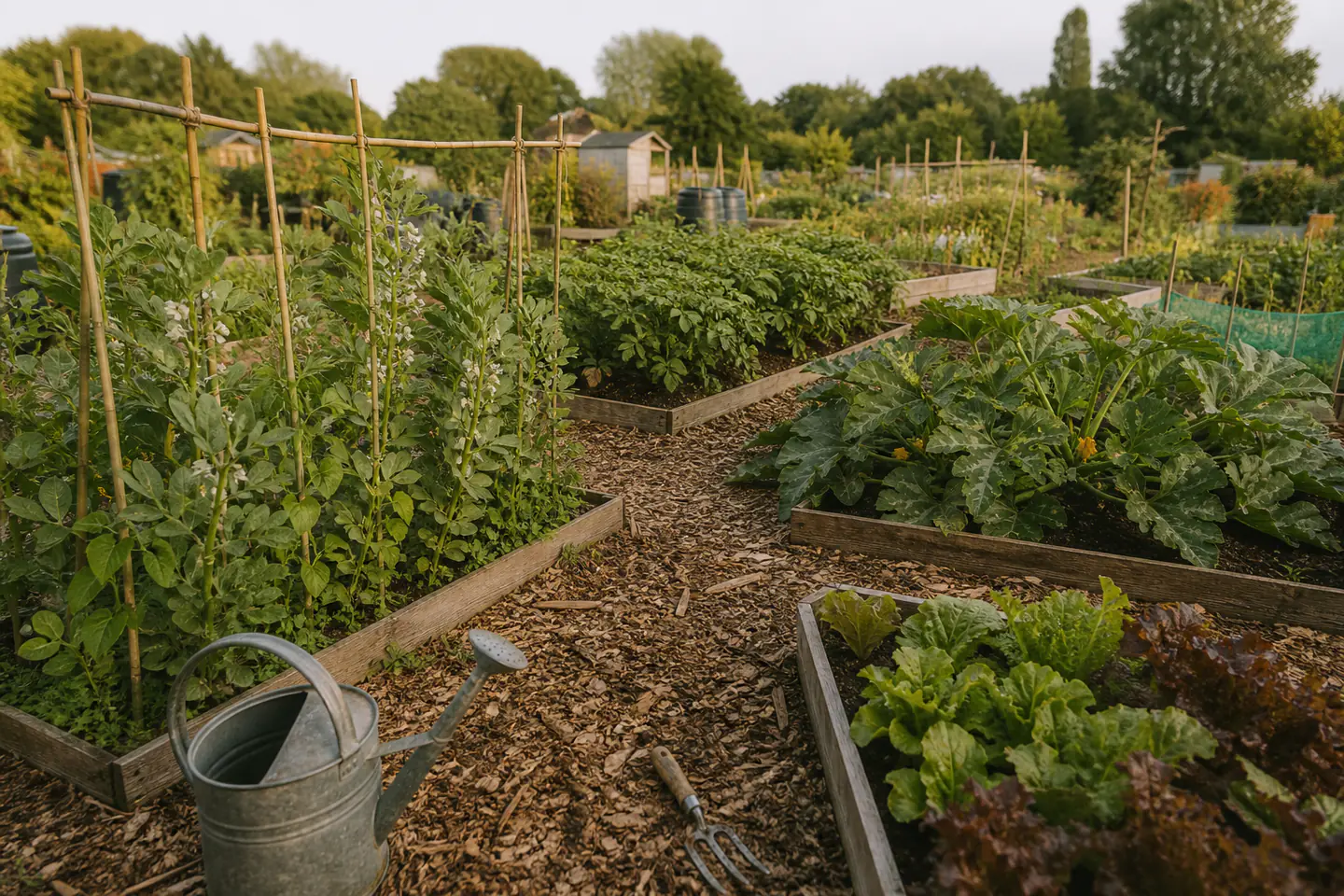
One maintained bed with three useful crops
Start one productive bed, not the whole plot.
An allotment is a long-term agreement with land, weather and site rules. Clear a small area, learn the water and weed pressures, grow a few crops you will use and keep access safe before expanding.
Quick answer
Secure the plot, read the rules and cultivate one reachable bed
Before spending, confirm rent, deposit, water, sheds, bonfires, structures, trees, pesticides, livestock and inspection rules with the provider. Photograph and measure the plot, find the water point and identify hazardous waste or unstable structures. Make one safe path and one bed you can reach without stepping on it, suppress or remove weeds appropriately and plant three season-suitable crops in modest quantities.
- 01
Waiting lists and rules vary by council and private association. Do not buy a greenhouse or shed before permission.
- 02
An overgrown full plot is not a weekend clearance job. Covering and working in sections preserves soil and energy.
- 03
Water access can involve a long carry and may be switched off seasonally; ask before choosing thirsty crops.
- 04
Perennial weeds, contaminated materials, glass and old chemicals need identification and safe handling, not rotavating into smaller pieces.
What to expect
The recurring journey is harder than the first clearance
Allotments reward regular short visits. Travel time, water carrying, weeds and harvesting deadlines often determine success more than seed choice.
Tenancy
Read cultivation percentages, inspection process, permitted structures and notice rules before making permanent changes.
Access
Plan a safe route from gate to bed and keep paths visible; wet boards, hidden wire and broken glass are common hazards.
Weeds
Identify perennial roots and seed-producing weeds. Covering can pause growth, but edges and uncovered paths still need attention.
Water
Mulch, choose realistic crops and water deeply where roots are; daily-dependent containers can become a burden off-site.
Crops
Grow food or flowers you actually value and stagger sowings rather than creating one overwhelming harvest.
Community
Neighbours often know site frost, theft, pests and water quirks. Advice is useful even if participation remains optional.
Core method
Turn an unknown plot into one maintainable system
Read and map
Obtain the agreement and site rules, mark water, sun, shade, slope, existing crops, weeds, paths and hazards and ask what must be retained. Photograph boundaries and agree any disputed responsibility before clearing.
Make access safe
Wear sturdy gloves and footwear, remove loose glass and trip hazards in small sections and avoid disturbing suspicious materials. Do not burn, spray or demolish structures without rules and waste guidance. Create a firm main path and a bed narrow enough to reach from the sides.
Prepare one bed
Cut growth, identify valuable or invasive plants and use hand clearing, approved covering or a no-dig layer suited to the weeds and rules. Avoid powered cultivation until perennial roots and buried hazards are understood. Add verified compost to the surface if appropriate.
Plant a realistic first season
Choose three robust crops with different harvest windows, such as potatoes, courgettes and climbing beans where conditions fit. Label sowing dates, mulch after watering and set one fixed weekly visit plus weather-driven checks. Leave the rest safely covered rather than half-cultivated.
Useful products
Planning and cutting tools for a plot that grows gradually
Alan Buckingham’s calendar helps sequence jobs, the RHS veg guide supports crop technique and Felco secateurs handle recurring live-stem cutting. Heavy clearing, digging and watering equipment should be chosen after inspecting the actual plot.
Alan Buckingham Allotment Month by Month
It reduces reliance on memory and gives a season structure without requiring an app.
Lucy Chamberlain RHS Step-by-Step Veg Patch
It supports choosing and sequencing crops rather than buying seed packets with no care plan.
FELCO FELCO 2 Classic Secateurs
They can be maintained and repaired through years of plot use.
First project
Open, plant and maintain a single allotment bed
A weed-controlled bed and safe path are a stronger first-season result than an exhausted attempt to cultivate every metre.
- 01
Read the tenancy
List structures, cultivation, water, chemical and waste rules.
- 02
Map hazards and access
Photograph the plot and mark glass, wire, unstable items and useful plants.
- 03
Create one safe path
Clear only what is needed to reach the first bed and water.
- 04
Prepare one reachable bed
Identify weeds, cover or clear them and add suitable surface compost.
- 05
Plant three crops
Use modest quantities, labels and a simple succession or harvest plan.
- 06
Review weekly
Water, weed and harvest the small active area before expanding.
What can wait
What can wait until the first result
Large structures and mechanised clearance can create cost, rule breaches and more maintenance before the plot is understood.
- 01
A greenhouse or shed
Permission, base requirements, wind exposure and plot security must be known first.
- 02
A rotavator
It can spread perennial roots and strike buried debris; inspect and identify weeds first.
- 03
Dozens of seed packets
Every sowing creates thinning, watering, protection and harvest jobs.
- 04
A full irrigation system
Confirm water rules, pressure and actual crop layout before installing pipe.
- 05
Fruit trees
Rootstock, spacing, tenancy rules and long-term pruning make them a later commitment.
Upgrade path
Upgrade the repeated limitation
Add beds in completed units and spend on water, storage or protection only where the site demonstrates a recurring need.
First bed
About £80–£250Cover/mulch + seeds + core tools
Prove visits and weed control.Three-bed rotation
About £50–£200 extraPaths + compost + crop protection
Add manageable seasonal range.Water efficiency
About £50–£300Butts if permitted + cans/hoses + mulch
Reduce carrying and drought losses.Approved structures
About £200–£1,500+Shed, greenhouse or polytunnel
Extend storage and seasons with more upkeep.Safety & care
Old plots can hide sharp, heavy and regulated hazards
Site rules, tools, lifting, bonfires, chemicals and contaminated waste need conservative decisions.
- Wear gloves, sturdy footwear and eye protection during clearance and stop around suspected asbestos, chemicals, needles or unstable structures.
- Check the tenancy and local rules before fires, pesticides, structures, tree work, water collection or keeping animals.
- Use sharp tools within their capacity, maintain them, store them securely and keep others beyond the swing or cutting area.
- Lift wet compost and water in smaller loads, protect from sun and ticks and plan communication when working alone.
- Wash produce and hands, keep manure and chemicals separate from harvests and follow current food and pesticide guidance.
Outside help
When outside help earns its place
The first bed can be self-directed. An allotment association or local growing course is most valuable for site rules, weed identification, pruning and locally timed planting.
Ask about water, inspections, waste, security and permitted structures.
Choose a session tied to the current season or the plot’s specific problem.
Representative UK product, club, lesson and venue costs checked 9 August 2026; local prices, access, weather, materials and tutor support vary.
Sources
Where the guidance came from
Council and RHS guidance establish the UK framework; allotment organisations and plot-holder communities provide realistic tenancy and workload experience.
-
01
UK Government · Apply for an allotment
Council allotment access and local-authority route.
Open source -
02
National Allotment Society · Information
Allotment law, tenancy and practical resources.
Open source -
03
RHS · Grow your own
UK crop selection and seasonal cultivation advice.
Open source -
04
Garden Organic · Allotments
Organic soil, weed and plot-management context.
Open source -
05
Reddit · r/Allotment
Plot-holder reports on clearance, rules and realistic first seasons.
Open source -
06
Amazon UK · Allotment Month by Month
Exact product page, model or ISBN, observed price and availability checked for this guide.
Open source -
07
Amazon UK · RHS Step-by-Step Veg Patch
Exact product page, model or ISBN, observed price and availability checked for this guide.
Open source -
08
Amazon UK · FELCO 2 secateurs
Exact product page, model or ISBN, observed price and availability checked for this guide.
Open source
Guide information and links checked 9 August 2026.