Beginner's guide · Grow & care
Fruit one ready-to-grow block.
Learn its signals before building a chamber.
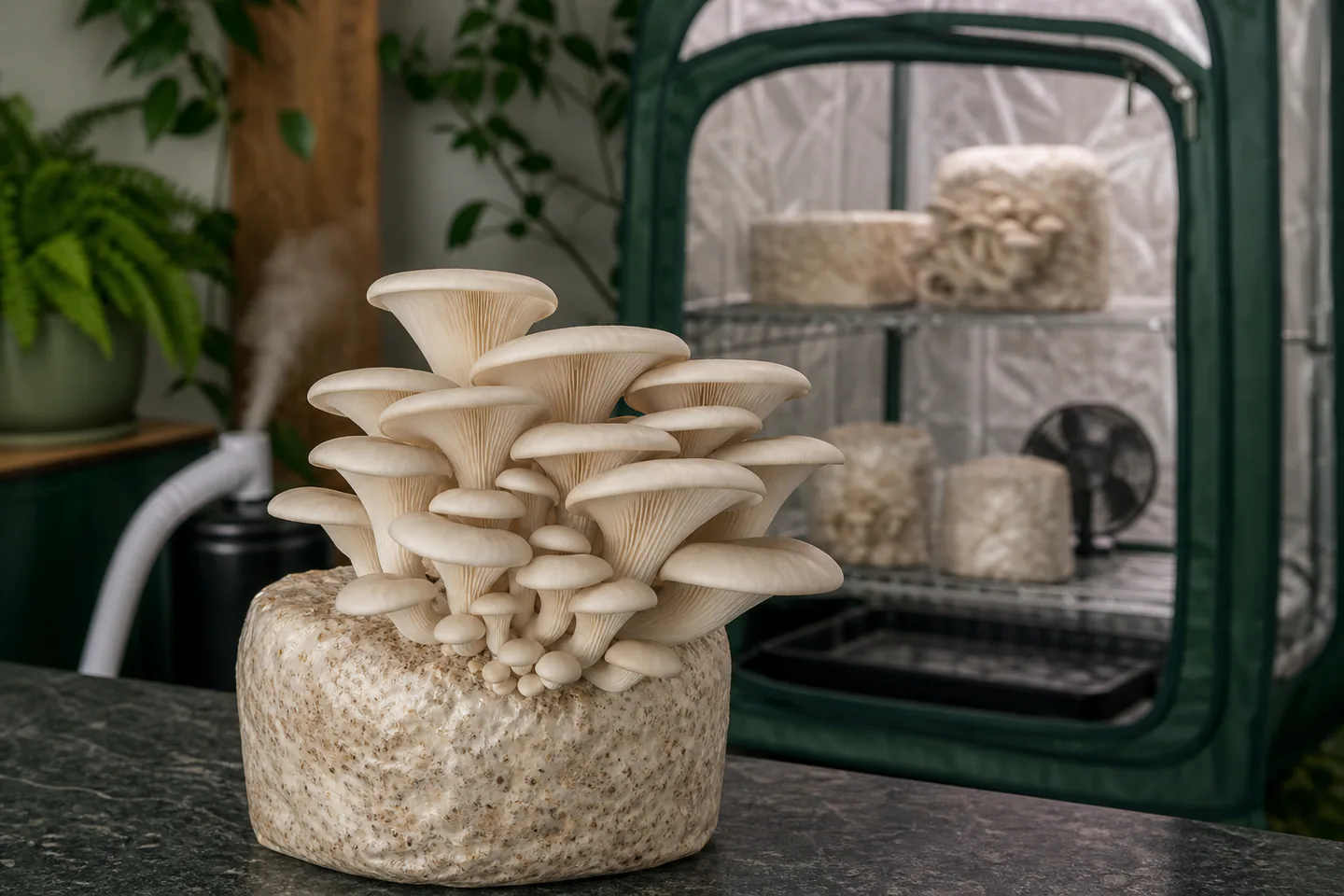
Start with one ready-to-fruit gourmet mushroom kit, a washable tray and the care instructions supplied with that species. Oyster mushrooms are the easiest first route; Lion’s Mane is a rewarding alternative with different misting, shape and harvest cues. A Martha tent belongs later, when several blocks make manual care awkward.
Quick answer
Begin with one living block, not a laboratory.
Choose one clearly labelled, ready-to-fruit gourmet mushroom block from a reputable supplier. Keep the packaging and species instructions, check the block as soon as it arrives, and use a washable tray in a shaded place away from radiators and direct sun. Follow the supplied opening and misting method rather than applying one routine to every mushroom.
- 01
Choose oyster mushrooms for the most forgiving first attempt. The kit removes sterile inoculation and substrate preparation, leaving you to learn fruiting conditions and harvest timing.
- 02
Choose Lion’s Mane if that species interests you more, but follow its own slit position, light misting and tooth-like harvest cues; oyster cap-shape rules do not apply.
- 03
Humidity is not the same as wetness. A drying block needs its prescribed misting routine, while pooled water, saturated mushrooms and stale air create different problems.
- 04
A Martha tent is a capacity upgrade for several blocks or repeated grows. It adds humidity control and fresh-air exchange, but also drainage, cleaning and electrical safety work.
What to expect
What the first attempts really involve
A kit makes the first crop approachable, but it is still a living product rather than a guaranteed appliance.
The block is already alive
The substrate has been inoculated and colonised before delivery. Shipping time, storage and the condition on arrival can change how quickly it responds.
Species need different care
Oyster mushrooms form caps and stems; Lion’s Mane forms a dense white mass that develops hanging teeth. Use the instructions for the named species, not a generic social-media schedule.
Humidity and air pull in opposite directions
Fresh air helps remove accumulated carbon dioxide but also dries the growing area. Good fruiting balances both instead of maximising humidity or ventilation.
The timetable can move
Pins may appear quickly or take an extra week or two. Temperature, moisture and the living block itself matter more than an exact day printed in a headline.
Not every colour is the same problem
Lion’s Mane can show pale pink when cool and yellow-brown when dry or mature, while wet dark patches can indicate deterioration. Green, black, strongly coloured or foul-smelling contamination needs isolation and supplier advice.
Later flushes are usually smaller
The first harvest uses the block at its strongest. A rest and species-specific rehydration method may produce another crop, but yield and timing are never guaranteed.
Fundamentals
Build the first attempt on reliable fundamentals
Buy a fruiting kit, not loose spawn
A ready-to-fruit kit has already completed the sterile inoculation and colonisation stages. For a first attempt, that is far more useful than grain spawn, liquid culture or a bag of uncolonised substrate. Check the species, care leaflet, storage advice and supplier support before buying. When it arrives, photograph damage or suspicious growth before opening and contact the supplier if the condition looks wrong.
Let the species instructions lead
Kit makers use different window cuts, slit positions, soak steps and mist schedules. Oyster mushrooms are often grown from an opening in the front of the box and tolerate a broad room-temperature range. Lion’s Mane is commonly given a horizontal slit near the top of the growing window so the fruit can form and hang down. Do not remove the whole bag or improvise extra openings unless the current instructions say to.
Create a simple fruiting place
Use indirect light, ordinary room ventilation and a washable tray. Avoid direct sun, radiators, cooking splashes and a sealed cupboard. Mist from the recommended distance and frequency: the aim is a suitable humid microclimate, not droplets sitting on the mushrooms. Keep the product label until the final crop so troubleshooting advice can be matched to the exact species.
Harvest by appearance, then reset cleanly
Oyster clusters are generally taken before their caps flatten fully and release heavy spores. Lion’s Mane is assessed by several clues together, including lengthening downward teeth, a loosening attachment and signs of maturity; colour alone can also reflect moisture. Refrigerate promptly, cook cultivated mushrooms thoroughly and follow the supplied rest or soak method before attempting a second flush.
Starter products
Choose one fruiting kit; keep the tent parts for later
The Oyster and Lion’s Mane cards are alternative first projects, not a shopping list. Oyster is the simpler recommendation for a first flush. Lion’s Mane offers a different texture and growth pattern, but its Amazon listing currently needs extra care: confirm that Lion’s Mane—not Oyster—is selected before ordering. The greenhouse, controller and fogger belong only to the optional multi-block upgrade.
GroCycle Oyster Mushroom Growing Kit
A colonised Oyster block keeps the first project on fruiting, observation and harvest timing instead of sterile inoculation.
GroCycle Lion’s Mane Mushroom Growing Kit
It offers a visibly different crop and teaches species-specific care without requiring sterile equipment.
First flush
Fruit one ready-to-fruit mushroom kit
This sequence adds inspection, observation and hygiene checks around the current instructions in the box. Where the two disagree, stop and use the supplier’s species-specific method.
- 01
Check the delivery
Read the species name and storage advice before opening. Inspect the sealed block for damage, drying, unwanted colours or a foul smell and photograph anything doubtful.
- 02
Choose the place
Set the kit on a washable tray in indirect light with normal room ventilation, away from direct heat, strong sun and food preparation splashes.
- 03
Open only the instructed area
Use clean scissors to make the specified panel opening or slit. Do not strip the plastic from the colonised block or copy a cut intended for another species.
- 04
Start the correct misting routine
Mist the window or surrounding area from the stated distance and frequency. Avoid pouring water into the bag or leaving droplets sitting on developing Lion’s Mane.
- 05
Observe without handling
Record the date, pin formation, shape, dryness and any changing colour once or twice daily. Keep the packaging so a supplier can identify the batch and species.
- 06
Adjust one condition at a time
Use species-specific troubleshooting before changing the setup. Oyster stems and caps, Lion’s Mane teeth and surface colour communicate different things.
- 07
Harvest at the right cue
Take Oyster clusters before caps become over-flat and spore heavily. For Lion’s Mane, look for at least two maturity cues from the supplied guide rather than harvesting by colour alone.
- 08
Cook and store safely
Refrigerate the harvest promptly and cook it thoroughly. Do not taste mushrooms from an unlabelled, damaged, foul-smelling or suspect block.
- 09
Try a second flush
Rest and rehydrate the block only by the maker’s method. Expect a longer wait and a smaller crop, then compost or dispose of the spent block as advised.
Troubleshooting
Read the species before changing the setup
Oyster stems and caps reveal the air balance
Long stems with small caps commonly point to too much carbon dioxide around an Oyster crop. Increase safe room air exchange while maintaining the prescribed misting routine. Do not solve dryness by sealing the block into a stagnant decorative container.
Lion’s Mane needs different visual rules
Developing Lion’s Mane should form a white mass and then downward teeth. Pale pink can occur in cooler conditions. Yellow or light brown can signal dryness or maturity, while dark wet patches can follow excessive mist and deterioration. Compare the whole mushroom with the supplier’s current care images rather than diagnosing it from one colour.
Drying needs humidity, not flooding
Check radiator proximity, sun, airflow and misting distance first. Restore the intended moisture gradually. Water pooled inside the box or sitting on the fruit is not a substitute for suitable air humidity.
Suspected contamination needs isolation
Move a doubtful block away from food and other grows. Do not open it widely or sniff it closely. Photograph the sealed block and ask the supplier how to dispose of it; do not eat a harvest from material that is foul-smelling or visibly contaminated.
Skip for now
What can wait
One ready-to-fruit block teaches observation, moisture, fresh air and harvest timing. The following purchases solve later problems, not the first one.
- 01
A second starter kit at the same time
Fruit one species first so missed misting, room conditions and harvest timing are easy to interpret. Choose a different species for the next crop if its distinct growth interests you.
- 02
Grain spawn and inoculation
They add sterile technique, substrate preparation and contamination control. A colonised block reaches fruiting without turning the first attempt into laboratory work.
- 03
A sealed storage box
It traps moisture but can also trap carbon dioxide. Use the kit’s open-room method or a proven fruiting-chamber design rather than inventing a stagnant enclosure.
- 04
A Martha tent for one block
A tent adds electrics, condensation, drainage, exhaust and cleaning. It becomes useful when several blocks need repeatable control, not because one kit needs a bigger home.
- 05
Wild mushroom identification gear
Growing a labelled edible species does not teach safe foraging. Never use a cultivation guide to decide whether a wild mushroom is edible.
Upgrade path
What a better setup changes
A Martha tent is a low-cost capacity upgrade, not a shortcut. It can create steadier humidity and fresh-air exchange for several known gourmet blocks, but it also creates condensation, spore, cleaning and electrical work.
One countertop block
About £18–£25One ready-to-fruit kit + clean mister + washable tray
Teaches species cues, moisture, fresh air, harvest timing and a possible second flush.Try a second species
Another kitOyster after Lion’s Mane, or Lion’s Mane after Oyster
Shows why slit position, misting, fruit shape and harvest cues cannot be copied blindly between species.Manual mini greenhouse
About £25–£60 plus blocksFour-tier covered shelf + waterproof bottom tray + hygrometer + planned manual airing
Holds several blocks but needs frequent observation and cannot remain zipped without a fresh-air plan.Controlled Martha tent
About £110–£180 plus exhaust partsCovered shelf + external fogger + humidistat + drip tray + directed or filtered exhaust
Automates humidity and scales capacity while demanding tuned air exchange, safe electrics, drainage and regular disinfection.How to assemble the upgrade
Plan before cutting the coverPut the tent in a washable, ventilated room; add a waterproof tray; route fog from outside or low in the tent; hang the probe away from direct mist; exhaust moist spore-laden air safely; and test empty for leaks and pooling before adding blocks.
The goal is stable species-appropriate conditions, not a permanently saturated sealed cabinet.Safety
Work safely from the first attempt
Known cultivated gourmet species, contamination awareness, spores, water and mains electricity define the safe boundary.
- Grow only a clearly labelled edible cultivated species from a reputable supplier; this guide is not wild-mushroom identification advice.
- Do not eat from a foul-smelling, unusually coloured or visibly contaminated block; isolate it and follow supplier disposal guidance.
- Cook cultivated mushrooms thoroughly and consider individual allergy or intolerance before serving.
- People sensitive to spores or mould should avoid overmature indoor flushes and seek appropriate medical advice about exposure.
- Keep plugs, controllers, fans and extension connections outside splash and condensation paths; use RCD protection and follow every electrical rating.
- A Martha exhaust must not dump persistent damp or heavy spores into an occupied room; plan safe ventilation, cleaning and condensation drainage.
Classes
When outside help is useful
A class is unnecessary for a ready block but useful before cloning cultures, making substrate, identifying contamination or operating a larger fruiting room.
A short gourmet-growing session should cover block care, contamination recognition, harvest and a take-home known culture.
A longer cultivation course is useful for sterile inoculation, substrate preparation and environmental measurement after several successful fruiting kits.
Representative UK gourmet-mushroom workshop formats checked 30 July 2026; culture and equipment included vary.
Sources
Sources and checking notes
The first-grow advice uses species-specific supplier care pages, while specialist and community sources inform the later humidity, fresh-air, drainage and spore trade-offs. Retailer records are listed separately so availability claims can be rechecked.
-
01
GroCycle · Choosing a mushroom grow kit
Ready-to-fruit kits, beginner species, supplier checks and what a kit removes from the first attempt.
Open source -
02
GroCycle · Oyster mushroom kit care
Oyster placement, temperature, daily misting, variable timing and later-flush care.
Open source -
03
GroCycle · Lion’s Mane kit care
Lion’s Mane slit position, misting distance, colour troubleshooting, harvest cues and second-crop method.
Open source -
04
GroCycle · Build a Martha grow tent
Temperature, humidity, light and fresh-air exchange as four separate controlled conditions.
Open source -
05
Fungi Academy · Martha fruiting chamber
Humidity, air exchange, lighting and fruiting-chamber layout.
Open source -
06
North Spore · Martha setup video
Practical walkthrough covering the tent, tray, humidifier, controller, fan and troubleshooting.
Open source -
07
r/MushroomGrowers · Martha humidity and airflow
Practitioner discussion of the real humidity and exhaust trade-off.
Open source -
08
Amazon UK · GroCycle Oyster kit
Exact ready-to-fruit Oyster product checked for current UK price, stock and listing identity.
Open source -
09
Amazon UK · GroCycle Lion’s Mane kit
The exact historical Lion’s Mane ASIN was checked; Amazon currently redirects it to the Oyster variation, so variety must be confirmed before ordering.
Open source -
10
Amazon UK · Christow four-tier greenhouse
Exact covered shelving shell checked as a possible later fruiting-chamber component.
Open source -
11
Amazon UK · Inkbird IHC-200
Exact plug-in humidity controller checked as a possible later chamber component.
Open source -
12
Amazon UK · Coospider fogger
Exact external three-litre fogger with hose checked as a possible later chamber component.
Open source
Guide information and links checked 30 July 2026.