Beginner’s guide · Make & create
Cast small
and learn the material.
Small concrete planters and trays begin with a measured ready mix, simple mould and careful cure. Use genuine cement-based material, control dust and make a test tile before a decorative object.
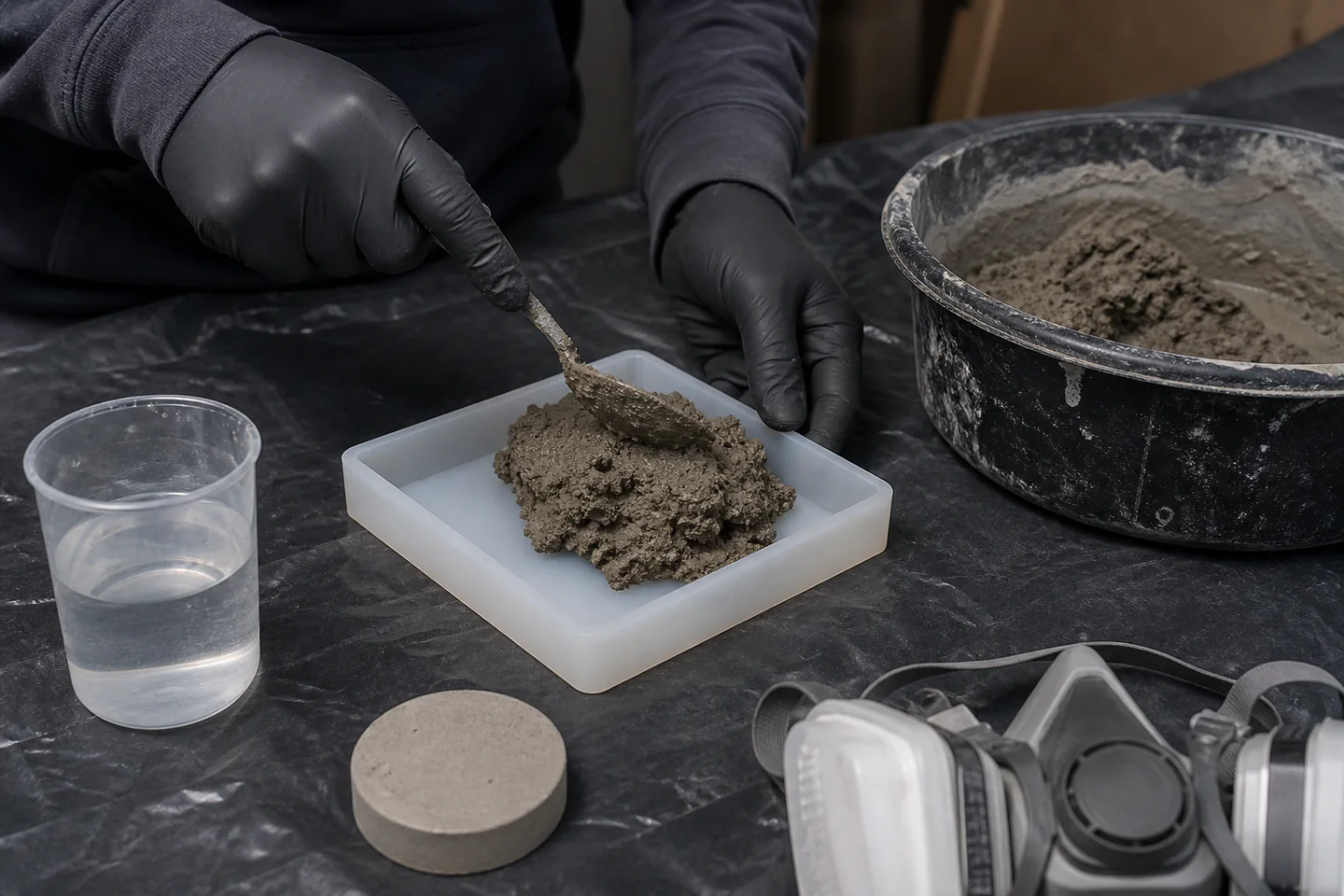
Quick answer
Make a plain test puck before a planter
Choose a small bag of cement-based ready mix, wear proper protection and measure water exactly. Fill a simple flexible mould, compact gently and leave it covered for an unhurried cure.
- 01
Confirm the product is genuine cement or concrete mix rather than plaster or acrylic casting powder. Note the material, setting or measurement used so the result can be repeated or changed for a reason.
- 02
Avoid breathing cement dust and prevent wet cement remaining against skin. Note the material, setting or measurement used so the result can be repeated or changed for a reason.
- 03
Add only the water required for workable placement because excess water weakens the cured cast. Note the material, setting or measurement used so the result can be repeated or changed for a reason.
- 04
Prepare and level the mould before mixing so fast-setting material is not left waiting. Note the material, setting or measurement used so the result can be repeated or changed for a reason.
- 05
Cure for the full stated period before judging colour, sanding edges or loading the object. Note the material, setting or measurement used so the result can be repeated or changed for a reason.
What to expect
Concrete is cheap, heavy and chemically active
The method is simple, but mix consistency, alkaline wet cement and curing time matter even at coaster scale.
Water ratio
A soupy mix pours easily but can cure weak, pale and porous. Follow the named product rather than copying a different recipe. For concrete crafts, check this deliberately while the work is still easy to alter; correcting it after the next stage usually costs more time or materials.
Air pockets
Thick material traps voids against corners. Small tapping or vibration helps, but overworking can separate the mix. For concrete crafts, check this deliberately while the work is still easy to alter; correcting it after the next stage usually costs more time or materials.
Cure
A piece may feel hard enough to demould while still gaining strength and losing moisture for days. For concrete crafts, check this deliberately while the work is still easy to alter; correcting it after the next stage usually costs more time or materials.
Use
Concrete can scratch surfaces, absorb stains and hold moisture. Pads and an appropriate sealer depend on the object’s purpose. For concrete crafts, check this deliberately while the work is still easy to alter; correcting it after the next stage usually costs more time or materials.
Core method
Control water, placement and cure
Prepare a safe station
Work outdoors or with effective ventilation, cover the surface, level the mould and organise dedicated mixing and waste containers. For concrete crafts, check this deliberately while the work is still easy to alter; correcting it after the next stage usually costs more time or materials.
Measure one small batch
Weigh or measure dry mix and water exactly as its instructions state, adding no improvised pigment on the control batch. For concrete crafts, check this deliberately while the work is still easy to alter; correcting it after the next stage usually costs more time or materials.
Combine without dust
Add material in the directed order, mix close to the container and scrape dry pockets without raising powder. For concrete crafts, check this deliberately while the work is still easy to alter; correcting it after the next stage usually costs more time or materials.
Fill and protect
Place the mix into corners, tap gently, cover or cure as directed and keep the mould undisturbed. For concrete crafts, check this deliberately while the work is still easy to alter; correcting it after the next stage usually costs more time or materials.
Useful products
Products with a clear job in the setup
The first setup needs a named small cement bag, a straightforward mould and an optional cement-compatible colour—not resin masquerading as concrete.
Everbuild Jetcem Rapid Set Cement, Grey, 3 kg
The pack size suits experiments better than a 20 kg builder’s bag.
Generic Five-Piece Round Coaster Silicone Mould Set with Holder Mould
A broad shallow shape demoulds more safely than a thin detailed ornament.
Bond It Brick Red Powdered Cement Dye, 1 kg
A product intended for cement is preferable to assuming craft mica or epoxy dye will disperse correctly.
First project
Cast two plain test tiles
Two small controls show whether consistency and cure are repeatable before making a vessel or decorative tray.
- 01
Read the product sheet
Confirm intended applications, water quantity, working time, cure and whether aggregate is required for the chosen size. For concrete crafts, check this deliberately while the work is still easy to alter; correcting it after the next stage usually costs more time or materials.
- 02
Set up and protect
Level two moulds, put on protection and prepare tools, water, timer and labelled waste container. For concrete crafts, check this deliberately while the work is still easy to alter; correcting it after the next stage usually costs more time or materials.
- 03
Mix minimally
Measure one small batch, combine without dust and stop adding water once the required workable consistency is reached. For concrete crafts, check this deliberately while the work is still easy to alter; correcting it after the next stage usually costs more time or materials.
- 04
Place and compact
Press material into edges, tap the mould modestly and smooth the back without repeatedly disturbing the mix. For concrete crafts, check this deliberately while the work is still easy to alter; correcting it after the next stage usually costs more time or materials.
- 05
Cure and compare
Follow demould and cure times, mark the batch and compare weight, voids and edge strength before any sealer test. For concrete crafts, check this deliberately while the work is still easy to alter; correcting it after the next stage usually costs more time or materials.
What can wait
What can wait until the first result
Large planters and decorative additives can wait until a small plain batch cures without weakness or major voids.
- 01
Large thin tray
Wide thin concrete is prone to cracking and may require aggregate or reinforcement. Learn the mix on compact forms. For concrete crafts, check this deliberately while the work is still easy to alter; correcting it after the next stage usually costs more time or materials.
- 02
Embedded objects
Metal, glass and organic inclusions can create corrosion, sharp edges or moisture problems. For concrete crafts, check this deliberately while the work is still easy to alter; correcting it after the next stage usually costs more time or materials.
- 03
Indoor sink cleanup
Cement slurry hardens in plumbing. Use dedicated settling and disposal methods from the beginning. For concrete crafts, check this deliberately while the work is still easy to alter; correcting it after the next stage usually costs more time or materials.
Upgrade path
Upgrade the repeated limitation
Upgrade to solve surface, strength or scale after a documented control mix succeeds.
Try it
£20–£55Small cement pack, PPE, cups and simple mould
Water control, placement and cure become observable.Refine finish
£15–£50 extraCement pigment, sanding method and tested sealer
Colour and stain resistance can be compared safely.Increase size
£30–£120+Suitable concrete mix, aggregate and reinforcement plan
Planters and trays gain strength without relying on extra water.Design moulds
VariablePurpose-built formwork or silicone mould-making setup
Original repeatable shapes replace improvised containers.Safety & care
Wet cement can burn skin
Cement dust and alkaline wet mix are the serious part of this small craft and deserve proper PPE and disposal.
- Wear suitable gloves, eye protection and respiratory protection for cement dust as the safety data specifies. Follow the current instructions supplied with the exact material or tool.
- Prevent wet cement contacting skin or entering gloves and wash contamination immediately according to first-aid guidance. Follow the current instructions supplied with the exact material or tool.
- Never wash cement slurry into sinks or drains; let waste harden or settle and dispose of it under local rules. Follow the current instructions supplied with the exact material or tool.
- Keep curing pieces, powders and tools away from children, pets and food areas. Follow the current instructions supplied with the exact material or tool.
Outside help
When outside help earns its place
A manufacturer-led small casting demonstration is enough for test tiles. Practical tuition is valuable before thin large forms, reinforcement or custom mould construction.
Use one complete lesson that includes preparation, the working method, troubleshooting and finishing. Avoid combining measurements from several creators on the first attempt.
Ask whether materials, safe tool use, individual correction and a finished take-home result are included before booking.
Representative UK learning options checked 29 August 2026; local prices, access, materials and tutor support vary.
Sources
Where the guidance came from
The method is grounded in specialist and manufacturer guidance, then checked against recurring beginner problems and the exact products linked here.
-
01
HSE · Cement
UK safety guidance on cement burns, dermatitis and dust.
Open source -
02
Everbuild · Jetcem
Manufacturer application and handling context for the selected cement.
Open source -
03
Concrete Society
Technical context for concrete materials and curing.
Open source -
04
HSE · Dust at work
UK dust-control guidance relevant to dry cement and finishing.
Open source -
05
Crafts Council
UK material-making and workshop practice context.
Open source -
06
Amazon UK · Jetcem Rapid Set Cement, Grey, 3 kg
Exact product catalogue page or ISBN used for the recommendation; current price, seller, specification and availability should be confirmed.
Open source -
07
Amazon UK · Five-Pack Round Coaster Silicone Mould Set with Storage Box Mould
Exact product catalogue page or ISBN used for the recommendation; current price, seller, specification and availability should be confirmed.
Open source -
08
Amazon UK · Brick Red Powdered Cement Dye, 1 kg
Exact product catalogue page or ISBN used for the recommendation; current price, seller, specification and availability should be confirmed.
Open source
Guide information and links checked 29 August 2026.