Beginner’s guide · Make & build
Listen, learn
then earn the right to transmit.
Begin with UK Foundation licence study and receive-only practice. Amateur radio becomes rewarding when operating procedure, band plans and safe equipment use come before buying a powerful transceiver.
Quick answer
Study first and keep the radio receive-only
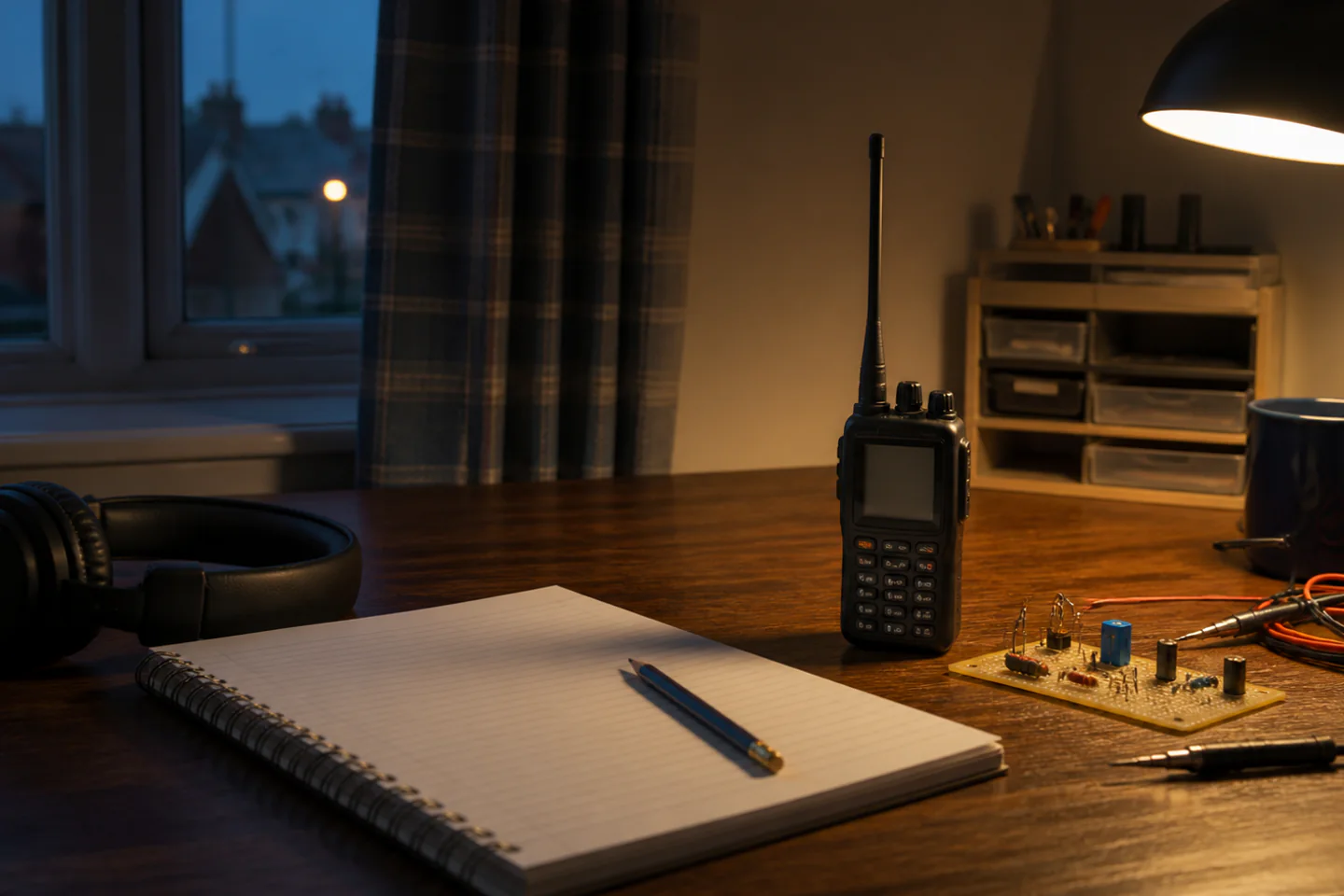
Follow the current RSGB Foundation syllabus, practise with official mock material and listen to local amateur activity. Transmit only after the licence is issued, the equipment is legal for the intended band and you understand its power, antenna and programming.
- 01
Treat a programmable handheld as receive-only until the required UK licence and call sign are in place. Record the setting, measurement or observation that mattered so the next attempt can be changed for a reason rather than by guesswork.
- 02
Use the current band plan and licence conditions rather than copying frequencies from an old video. Record the setting, measurement or observation that mattered so the next attempt can be changed for a reason rather than by guesswork.
- 03
Give the call sign and operating information at the required times and keep exchanges clear and courteous. Record the setting, measurement or observation that mattered so the next attempt can be changed for a reason rather than by guesswork.
- 04
Check antenna, power and exposure limits before transmitting. Record the setting, measurement or observation that mattered so the next attempt can be changed for a reason rather than by guesswork.
- 05
Join a local club or contact an experienced operator when programming or installation is unclear. Record the setting, measurement or observation that mattered so the next attempt can be changed for a reason rather than by guesswork.
What to expect
The licence is the beginning of the practical learning
Foundation training makes a first contact accessible, but good operating grows through listening, preparation and gradually understanding antennas and propagation.
Licensing
The UK route starts with Foundation, followed by Intermediate and Full. Examination and licence conditions can change, so use current RSGB and Ofcom material. In amateur radio, this is worth checking before the next stage because a small adjustment now is easier than undoing a finished result.
Programming
A wide-receive handheld may display many frequencies it must not transmit on. Correct band, offset, tone and power settings are essential. In amateur radio, this is worth checking before the next stage because a small adjustment now is easier than undoing a finished result.
Range
A handheld’s rubber antenna is convenient, not magical. Terrain, height, repeater coverage and building structure dominate local results. In amateur radio, this is worth checking before the next stage because a small adjustment now is easier than undoing a finished result.
Conduct
Amateur bands are shared. Listening before calling, leaving pauses and following repeater etiquette matter as much as audio strength. In amateur radio, this is worth checking before the next stage because a small adjustment now is easier than undoing a finished result.
Core method
Build knowledge, licence and station in sequence
Learn the framework
Study licence conditions, bands, identification, interference, electrical safety and basic radio theory from the current Foundation syllabus. In amateur radio, this is worth checking before the next stage because a small adjustment now is easier than undoing a finished result.
Listen locally
Use a receiver or safely programmed handheld to hear repeater and simplex procedure without pressing transmit. Keep notes on call structure and activity times. In amateur radio, this is worth checking before the next stage because a small adjustment now is easier than undoing a finished result.
Pass and license
Take the recognised examination route, apply through the official process and wait for the issued call sign before any amateur-band transmission. In amateur radio, this is worth checking before the next stage because a small adjustment now is easier than undoing a finished result.
Make a controlled contact
Program one known local channel from an authoritative source, select low power, listen first and make a brief clearly identified call. In amateur radio, this is worth checking before the next stage because a small adjustment now is easier than undoing a finished result.
Useful products
Products with a clear job in the setup
The books support the licence and programming stages. The handheld is a possible first VHF/UHF radio, not permission to transmit and not a substitute for current UK compliance checks.
Radio Society of Great Britain Getting Started in Amateur Radio
A current UK organisation is a better starting point than frequency advice copied from another country.
BAOFENG GT-5R Dual-Band Amateur Handheld Radio
A handheld can access local simplex and repeaters without a fixed station.
Brian Schell Programming Amateur Radios with CHIRP
A repeatable channel file can reduce keypad mistakes and preserve notes.
First project
Prepare one lawful first contact
The milestone is a short correct exchange, not maximum range or a crowded channel list.
- 01
Study the current syllabus
Complete each Foundation topic and use official mock questions to find gaps rather than memorising only answers. In amateur radio, this is worth checking before the next stage because a small adjustment now is easier than undoing a finished result.
- 02
Listen without transmitting
Identify a local repeater or club net from an authoritative source and note how operators call, identify and close. In amateur radio, this is worth checking before the next stage because a small adjustment now is easier than undoing a finished result.
- 03
Pass and receive a call sign
Complete the recognised exam and official licence process before enabling amateur-band transmission. In amateur radio, this is worth checking before the next stage because a small adjustment now is easier than undoing a finished result.
- 04
Program one channel
Enter the exact receive frequency, transmit offset, tone and power from current local information, then verify the display and lockout behaviour. In amateur radio, this is worth checking before the next stage because a small adjustment now is easier than undoing a finished result.
- 05
Make a brief call
Listen for a clear channel, use the call sign as required, exchange signal and location information, then close courteously. In amateur radio, this is worth checking before the next stage because a small adjustment now is easier than undoing a finished result.
What can wait
What can wait until the first result
A powerful station is an unnecessary burden before one band and one operating routine are understood.
- 01
HF transceiver and large aerial
Long-distance bands add antenna, grounding, interference and cost questions better tackled after Foundation experience. In amateur radio, this is worth checking before the next stage because a small adjustment now is easier than undoing a finished result.
- 02
High-gain vehicle installation
Mobile antennas, cable routing and driver distraction require competent planning and lawful use. In amateur radio, this is worth checking before the next stage because a small adjustment now is easier than undoing a finished result.
- 03
Unverified frequency files
A large imported channel list can include services you may not transmit on and outdated repeater information. In amateur radio, this is worth checking before the next stage because a small adjustment now is easier than undoing a finished result.
Upgrade path
Upgrade the repeated limitation
Let operating interests determine the next station.
Learn
£25–£60Current UK study material and receive-only listening
Licence conditions and operating language become familiar.First local station
£70–£180Licensed handheld, charging routine and one verified channel set
Local contacts and club nets become accessible.Improve the signal
£40–£200 extraApproved external antenna, feed line and measurement
Coverage improves more meaningfully than by chasing headline handheld power.Choose a direction
VariableIntermediate study, HF, digital modes, satellites or construction
Equipment follows a real interest rather than accumulating without purpose.Safety & care
Licence, RF exposure and electrical safety come first
Radio transmission affects other spectrum users and can create electrical, mast and radio-frequency hazards.
- Transmit only under a valid licence and within its current bands, modes, power limits and identification requirements. Follow current manufacturer, food-safety, electrical or local guidance wherever it applies.
- Complete the required electromagnetic-field exposure assessment and keep people outside unsafe antenna zones. Follow current manufacturer, food-safety, electrical or local guidance wherever it applies.
- Use suitable batteries, chargers, fuses, feed lines and weatherproofing; inspect damaged packs or cables before use. Follow current manufacturer, food-safety, electrical or local guidance wherever it applies.
- Never install antennas near power lines or on structures without competent mechanical, lightning and planning advice. Follow current manufacturer, food-safety, electrical or local guidance wherever it applies.
Outside help
When outside help earns its place
A recognised club course or supported online Foundation route is the best outside help because it connects the syllabus with local operating and examination arrangements.
Use one complete lesson that covers preparation, the main technique, troubleshooting and finishing. For a first amateur radio project, following one coherent method is more useful than combining partial instructions from several creators.
Outside help earns its place when safe setup, equipment access or live correction would remove a real obstacle. Ask what materials, supervision and take-home result are included before booking.
Representative UK learning options checked 30 August 2026; local prices, access, materials and tutor support vary.
Sources
Where the guidance came from
The method is grounded in specialist, manufacturer and public guidance, then checked against recurring beginner problems and the exact products linked here.
-
01
RSGB · Getting started
Authoritative UK route into amateur radio.
Open source -
02
RSGB · Foundation licence
Current Foundation training and examination context.
Open source -
03
Ofcom · Amateur radio
UK licensing and regulatory information.
Open source -
04
RSGB · Band plans
Current UK amateur-band plans.
Open source -
05
ARRL · Operating
Additional operating practice and technical reference.
Open source -
06
Amazon UK · Getting Started in Amateur Radio
Exact Amazon UK product page or ISBN used for the recommendation; current price, seller, specification and availability should be confirmed.
Open source -
07
Amazon UK · GT-5R Dual-Band Amateur Handheld Radio
Exact Amazon UK product page or ISBN used for the recommendation; current price, seller, specification and availability should be confirmed.
Open source -
08
Amazon UK · Programming Amateur Radios with CHIRP
Exact Amazon UK product page or ISBN used for the recommendation; current price, seller, specification and availability should be confirmed.
Open source
Guide information and links checked 30 August 2026.