Beginner’s guide · Cook & bake
Chill the dough,
then measure the spread.
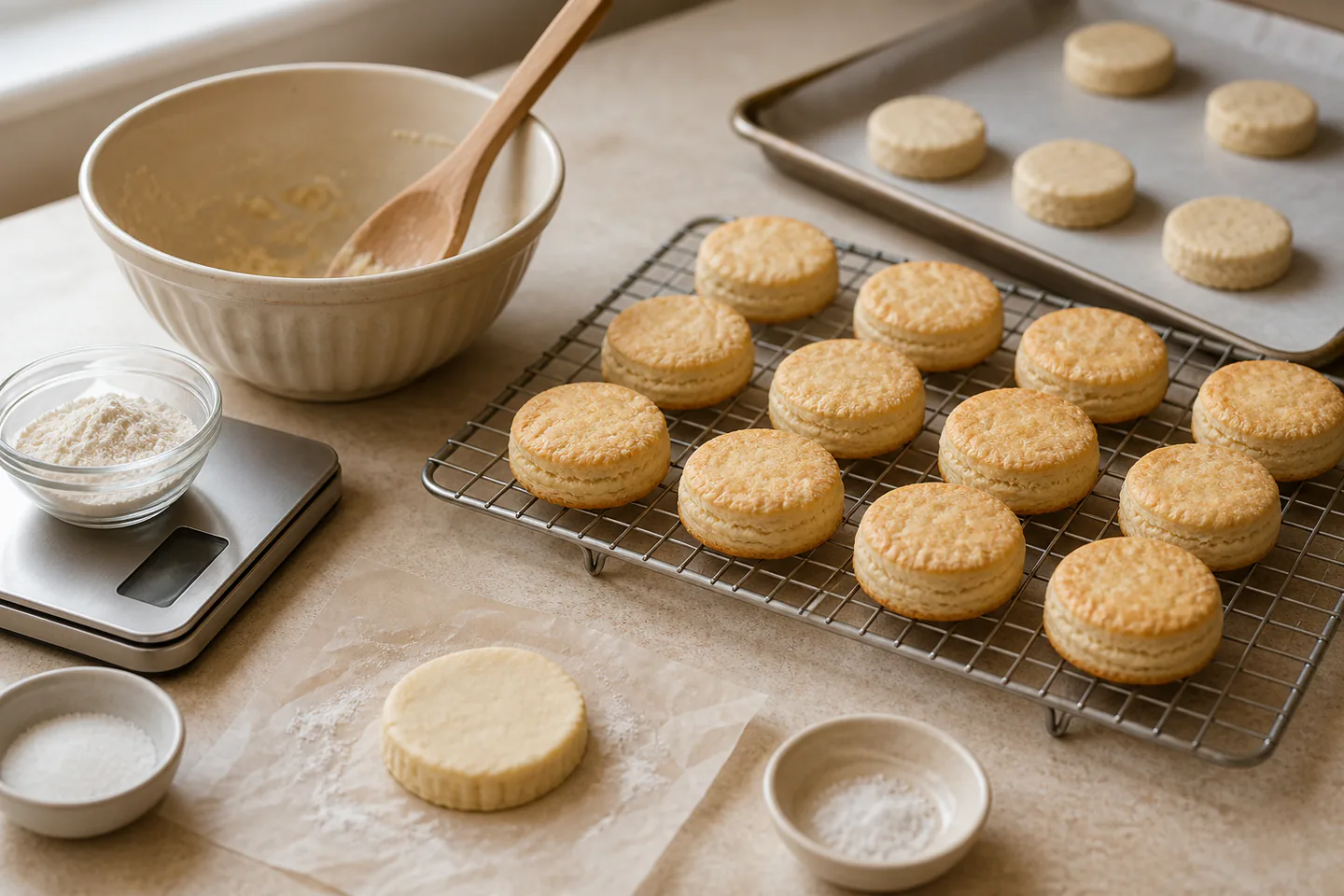
A plain buttery biscuit teaches creaming, flour development, portion size and tray temperature without decoration hiding the bake.
Quick answer
Complete one tray before expanding the setup
Choose a tested plain biscuit recipe, weigh every ingredient, mix only until the flour disappears, portion equally and chill the shaped dough. Bake a small test pair on a cool lined tray, adjust spacing or chill time only if needed, then bake the remaining tray and cool fully before judging texture.
- 01
Ingredient temperature changes how fat traps air and melts in the oven. Record what happened during biscuit baking so the next attempt changes one known variable instead of several guesses.
- 02
Equal mass and thickness matter more than perfect decoration in a diagnostic first batch. Record what happened during biscuit baking so the next attempt changes one known variable instead of several guesses.
- 03
Warm trays start melting fat before the oven can set the biscuit structure. Record what happened during biscuit baking so the next attempt changes one known variable instead of several guesses.
- 04
A fully cooled biscuit reveals crispness and crumb more accurately than a hot one. Record what happened during biscuit baking so the next attempt changes one known variable instead of several guesses.
What to expect
What biscuit baking is really like at the start
The useful beginner controls are preparation, one bounded task and a record of the result; specialist equipment matters only when it solves a repeated limitation.
Creaming
Over-aerating can make shapes rise and collapse, while under-mixing leaves dense greasy patches. Record what happened during biscuit baking so the next attempt changes one known variable instead of several guesses.
Flour
Excess working develops gluten and produces a tougher biscuit. Record what happened during biscuit baking so the next attempt changes one known variable instead of several guesses.
Chilling
Time firms the fat but does not rescue an unbalanced recipe. Record what happened during biscuit baking so the next attempt changes one known variable instead of several guesses.
Oven
Real temperature, rack position and tray colour all affect browning and spread. Record what happened during biscuit baking so the next attempt changes one known variable instead of several guesses.
Core method
The core biscuit baking method
Weigh and organise
Line a cool tray, preheat fully and weigh ingredients before the fat softens too far. Record what happened during biscuit baking so the next attempt changes one known variable instead of several guesses.
Mix to the recipe
Cream or rub in as directed, then add flour gently and stop when no dry pockets remain. Record what happened during biscuit baking so the next attempt changes one known variable instead of several guesses.
Portion and chill
Weigh pieces, shape to equal thickness, cover and chill for the tested time. Record what happened during biscuit baking so the next attempt changes one known variable instead of several guesses.
Test, bake and cool
Bake two pieces first, then space the main batch according to observed spread and cool on a rack. Record what happened during biscuit baking so the next attempt changes one known variable instead of several guesses.
Useful products
Products with a clear job in the route
A fine-resolution scale controls portion and ingredient mass, the silicone mat contains rolling and the flat tray makes spread easy to inspect.
Etekcity Digital Kitchen Scale, 0.1 g to 5 kg
The 0.1 g display helps with yeast, salt and small test batches.
Generic Thick Silicone Pastry Mat with Measurements, 40 × 50 cm
The size supports a first pie or folded pastry without occupying the whole kitchen.
Prochef Non-Stick Pizza Tray, 32.5 cm
A broad shallow tray makes spreading, browning and release easy to inspect.
First project
Bake one plain butter-biscuit tray
Use one shape and one thickness so flavour, spread, colour and texture remain easy to compare.
- 01
Check the recipe
Confirm yield, oven mode, ingredient temperatures and whether the dough is rolled or scooped. Record what happened during biscuit baking so the next attempt changes one known variable instead of several guesses.
- 02
Mix briefly
Stop as soon as the flour is evenly incorporated. Record what happened during biscuit baking so the next attempt changes one known variable instead of several guesses.
- 03
Portion by mass
Make equal pieces and press or roll them to a consistent thickness. Record what happened during biscuit baking so the next attempt changes one known variable instead of several guesses.
- 04
Run a two-biscuit test
Check spread and browning before committing the full tray. Record what happened during biscuit baking so the next attempt changes one known variable instead of several guesses.
- 05
Cool and review
Compare edge colour, centre set, snap and greasy feel only after cooling. Record what happened during biscuit baking so the next attempt changes one known variable instead of several guesses.
What can wait
What can wait until the first result
Delay anything that adds cost, risk or another variable before the basic workflow has produced something you can review.
- 01
Icing and filled sandwiches
Decoration and fillings conceal whether the base biscuit is balanced. Record what happened during biscuit baking so the next attempt changes one known variable instead of several guesses.
- 02
Several tray levels
Different oven zones make a first result hard to compare. Record what happened during biscuit baking so the next attempt changes one known variable instead of several guesses.
- 03
Novel sugar substitutes
They change moisture, browning and spread as well as sweetness. Record what happened during biscuit baking so the next attempt changes one known variable instead of several guesses.
- 04
Buying many cutters
One round cutter or weighed scoop teaches the process. Record what happened during biscuit baking so the next attempt changes one known variable instead of several guesses.
Upgrade path
Add the capability you can now name
Each stage should remove a demonstrated constraint rather than make the setup look more advanced.
Use what you own
£0–£20Existing equipment and one written plan
Use bowls, a wooden spoon and one tested recipe.Repeat the first route
About £10–£35 plus ingredientsA complete repeatable starter setup
Repeat the same dough until spread and colour are predictable.Add one capability
Often £50–£250One selected tool, service or learning resource
Add an oven thermometer, scoop or matched trays only for a demonstrated inconsistency.Build specialist depth
Club, course or specialist dependentA documented specialist workflow
Develop laminated, piped or filled biscuits after the base dough is reliable.Safety & care
Treat hot trays and allergens as part of the recipe
Ovens, hot fat, raw flour and common allergens need ordinary kitchen controls.
- Wash hands, clean surfaces and keep raw flour and dough away from ready-to-eat foods.
- Use dry oven gloves and a stable landing space for every hot tray.
- State common allergens clearly when sharing biscuits and avoid casual claims about cross-contamination.
- Do not eat dough containing raw egg or uncooked flour.
- Cool trays before reloading so early melting does not change the next batch.
Outside help
When outside help earns its place
A baking class earns its place when live comparison of dough feel, creaming and oven cues would shorten repeated failed batches.
Choose a class that weighs ingredients and explains spread rather than focusing only on decoration.
Use outside help after the first biscuit baking attempt can reveal the exact technique, access or safety problem that needs live correction.
Representative UK learning and access routes checked 1 September 2026; local prices, permissions, equipment and tutor support vary.
Sources
Where the guidance came from
Authoritative and specialist guidance supports the method and safety boundaries; community discussion contributes recurring beginner problems rather than unsupported claims.
-
01
Food Standards Agency · Food hygiene at home
Clean handling, cooking, chilling and cross-contamination guidance for domestic kitchens.
Open source -
02
King Arthur Baking · Cookie chemistry
Ingredient and process effects on cookie spread, texture and browning.
Open source -
03
King Arthur Baking · Chilling cookie dough
How rest and chilling affect spread and flavour.
Open source -
04
BBC Good Food · Biscuit recipes and techniques
UK recipe context, temperatures and expected results.
Open source -
05
King Arthur Baking · Baking guides
Specialist explanations of ingredient function, dough handling, fermentation and baking.
Open source -
06
Reddit · r/AskBaking
Recurring beginner problems involving weighing, chilling, spreading, hydration and pastry temperature.
Open source -
07
Amazon UK · Digital Kitchen Scale, 0.1 g to 5 kg
Exact Amazon UK product page or ISBN used for this recommendation; current price, seller, specification and availability should be confirmed.
Open source -
08
Amazon UK · Thick Silicone Pastry Mat with Measurements, 40 × 50 cm
Exact Amazon UK product page or ISBN used for this recommendation; current price, seller, specification and availability should be confirmed.
Open source -
09
Amazon UK · Non-Stick Pizza Tray, 32.5 cm
Exact Amazon UK product page or ISBN used for this recommendation; current price, seller, specification and availability should be confirmed.
Open source
Guide information and links checked 1 September 2026.