Beginner’s guide · Cook & bake
Hot smoking meat
Start with one useful result.
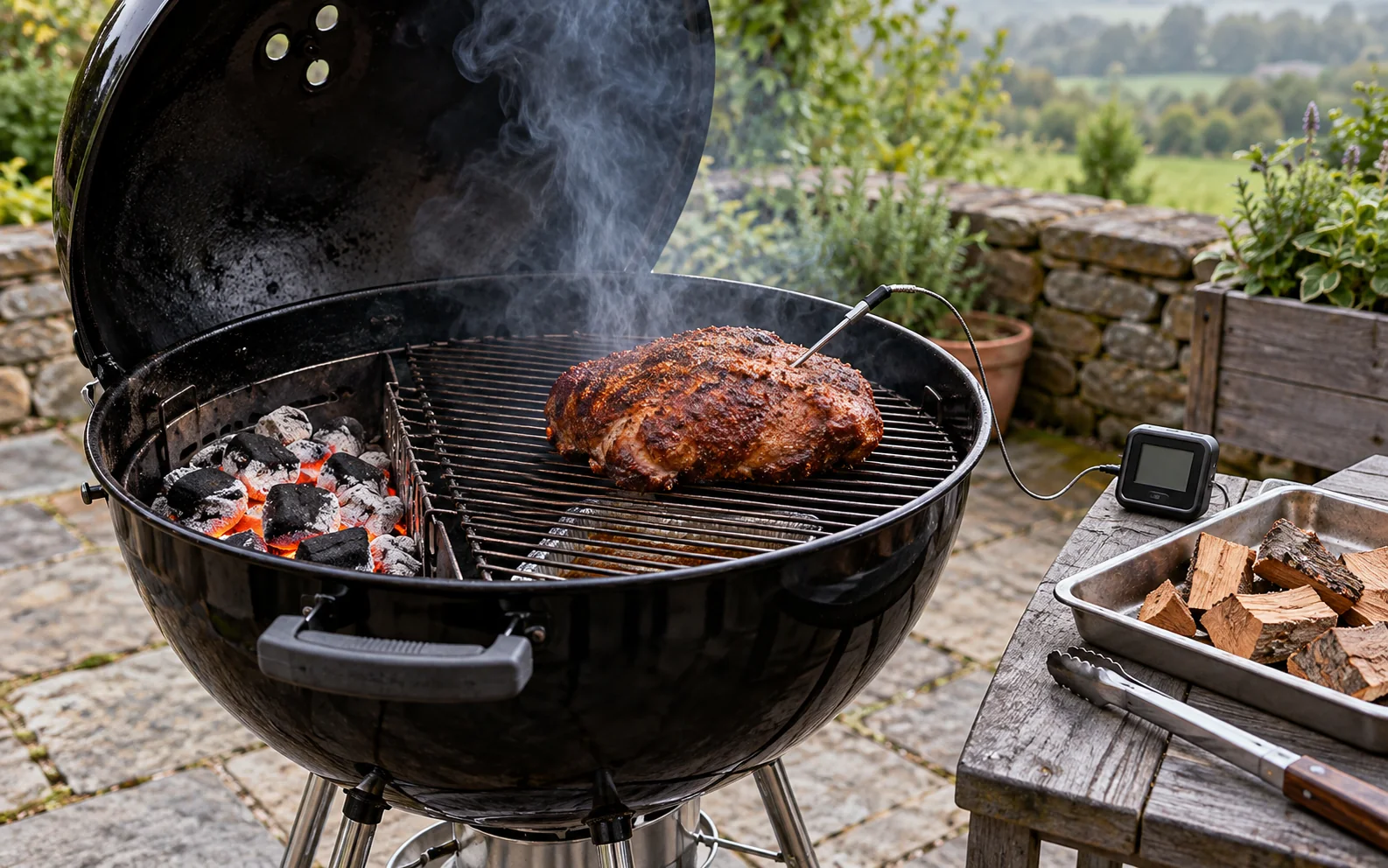
Hot smoking cooks meat slowly with indirect heat and a measured amount of wood smoke. Begin with a modest pork shoulder, a working lidded barbecue, a chamber thermometer and a food probe. The smoke changes flavour; safe cooking still depends on temperature and hygiene.
Quick answer
Start with a small pork shoulder on a lidded outdoor barbecue
Hot smoking cooks meat slowly with indirect heat and a measured amount of wood smoke. Begin with a modest pork shoulder, a working lidded barbecue, a chamber thermometer and a food probe. The smoke changes flavour; safe cooking still depends on temperature and hygiene.
- 01
A lidded outdoor charcoal grill or smoker, charcoal and a small amount of untreated cooking wood
- 02
A chamber thermometer and a clean food thermometer
- 03
A small chilled pork shoulder, clean tray, tongs and a tested recipe
What to expect
What the first attempt is really like
The useful skill here is holding steady indirect heat while measuring the food. These details matter more than a polished first result.
Heat
Charcoal and outdoor weather change the chamber temperature; learn vent adjustments before adding a large joint.
Smoke
A little clean smoke is useful; heavy bitter smoke does not make food more safely cooked.
Time
Allow several hours and stay available to monitor fuel, fire and food temperature.
The method
The method worth learning
Choose the cooker before choosing the joint
Use a lidded barbecue that can hold food away from the coals, or a purpose-built hot smoker already owned. A small open brazier gives little control for a long cook. Check that the grill is sound, the lid closes, vents move and the cooking grate supports the joint. Clear a place for raw preparation, a separate serving tray and a heatproof resting area before lighting.
Manage two temperatures
The chamber reading tells you how the fire is behaving; a probe in the thickest meat tells you how the food is cooking. A lid dial is a rough trend because it sits away from the grate. Keep a chamber probe near the food without touching metal. Put the food probe clear of bone and large fat pockets. The DOT supplied penetration probe measures the meat; it needs a different probe and clip for chamber measurement.
Build a repeatable fire
Arrange charcoal to one side and the joint on the other, with a drip tray below it. Follow the grill maker’s lighting method and start with a small quantity of dry wood sold for food smoking. Leave the exhaust open as instructed and make modest intake adjustments, giving the fire time to respond. A commonly used pork-shoulder chamber range is around 110–135°C; the recipe and thermometer must agree on a steady cooking setup before the meat goes on.
Separate safe cooking from pulling texture
The FSA benchmark is 70°C at the centre for two minutes, or an equivalent combination such as 75°C for 30 seconds. A shoulder usually needs further cooking for collagen to soften enough to pull. A high centre reading alone does not promise tenderness: test whether a clean probe enters easily. Record fuel, weather, joint weight and timings so the next cook starts from evidence rather than a new gadget.
Useful products
Equipment with a clear job
Start with suitable equipment you already own. These exact UK listings are useful examples when a missing tool limits the first project; prices and availability were checked on 2 October 2026 and delivery may add to the cost.
Thermapen DOT Digital Thermometer
Monitor the centre of a long-cooking shoulder without repeatedly lifting the lid.
Thermapen ONE Thermometer
Spot-check several points before serving and check a leave-in reading that looks implausible.
What can wait
What can wait
Keep the first project small and learn what the equipment is doing before adding more.
- 01
Overnight cooks
A first fire needs observation. Practise during daylight and allow an oven finish if the grill becomes unreliable.
- 02
Cold smoking raw meat
This has separate curing and preservation controls; the hot-cooked shoulder route does not teach them.
- 03
A pellet smoker immediately
Buy when repeated cooks show a real need for fuel management or capacity. A sound owned kettle can teach the fundamentals.
First project
First project: A small pork shoulder on a lidded outdoor barbecue
Start with a small pork shoulder on a lidded outdoor barbecue. Use the listed equipment, take notes on the result and repeat the small project before expanding it.
- 01
Choose a tested recipe
Use a pork-shoulder recipe with a cooking and storage plan. Thaw in the fridge and keep raw meat separate.
- 02
Set indirect heat
Bank lit coals away from the food position, add a small quantity of cooking wood and verify chamber heat with a thermometer.
- 03
Cook and measure
Place the meat away from the coals. Monitor chamber and centre temperatures; use the safe target for the cut and chosen recipe.
- 04
Rest and chill
Rest as the recipe directs, serve with clean utensils and refrigerate leftovers promptly in shallow containers.
Troubleshooting
When the first attempt goes wrong
The outside tastes bitter
Reduce the wood charge next time and check for dirty grates, dripping fat or a choked fire. Thick lingering smoke is not a sign to add more wood. Avoid painted, treated or unidentified timber.
Temperature keeps swinging
Stop making several vent changes at once. Note the reading, change one control and wait for a response. Check airflow and fuel before opening the lid repeatedly. If the cooker cannot maintain the recipe’s heat, finish the partly cooked joint promptly in a preheated oven rather than letting it sit warm.
The joint stalls or will not pull
An extended plateau can occur during a shoulder cook. Keep the cooker steady and allow time; do not reduce the safety target to meet dinner. A wrapping or oven-finishing step belongs to the recipe. Serve sliced if fully safely cooked but not pullable, and revise the schedule next time.
The result is dry
Check probe placement, cut size and whether the recipe suited a lean joint. Repeating the same small shoulder teaches more than changing the rub, fuel and cooker together.
Upgrade path
Where to go after the first result
Repeat the simple route first, then choose the next step that solves a problem you have actually met.
Repeat
Fuel and meat onlyRepeat the same shoulder
Keep the wood and rub unchanged and compare heat stability, tenderness and leftover quantity.Control
£37.80 listed for DOTA leave-in food probe
An alarm reduces lid opening. Add a suitable chamber probe separately if the cooker lacks useful grate-level measurement.Capacity
Get a current equipment quoteA dedicated smoker
Useful for regular long cooks or several joints, with more storage, cleaning and fuel commitment.Safety & care
Safety and practical limits
Use the current instructions for the exact food, material or equipment in front of you.
- Operate outdoors only, on a stable non-combustible surface, away from buildings and children; never use a barbecue indoors because of carbon monoxide.
- Keep raw and cooked utensils separate, thaw in the fridge and check the centre with a clean food thermometer.
- Cold smoke is not a cooking or preservation substitute. Follow current Food Standards Agency guidance for the exact meat and cool leftovers promptly.
Learning & help
Learning at home and optional help
A class is optional for this first route. Use the free guidance before paying for help.
Weber’s free kettle-smoking instructions show layout and airflow. Use them alongside the exact cooker manual and FSA handling guidance.
A butcher can identify a modest shoulder suitable for the recipe. An optional barbecue lesson is useful for live fire feedback after home trials; ask about the cooker type, hands-on time and current fee.
Learning sources checked 2 October 2026. No unverified class fee or booking availability is quoted.
Sources
Where the guidance came from
Food and wildlife authorities, exact maker instructions, specialist guidance, practitioner observations and UK product listings support the route above. Community accounts inform practical expectations; they do not establish food safety, wildlife rules or current prices.
-
01
USDA FSIS · Smoking meat and poultry
Outdoor smoking, chamber and food thermometers
Open source -
02
Food Standards Agency · Cooking your food
UK cooking and thermometer advice
Open source -
03
Food Standards Agency · Chilling
Chilled food and leftover storage
Open source -
04
Food Standards Agency · BBQ food safety
Barbecue hygiene and thorough cooking
Open source -
05
Weber · How to smoke on a charcoal grill
Two-zone kettle arrangement and smoke wood
Open source -
06
Thermapen UK · Thermapen ONE
Exact instant-read thermometer and specifications
Open source -
07
Thermapen UK · DOT leave-in thermometer
Exact leave-in food probe and specifications
Open source -
08
r/smoking · First smoke choices
Multiple cooks discuss shorter chicken cooks, forgiving pork shoulder and rehearsing before feeding guests. Food-safety targets come from authorities, not the comments.
Open source -
09
r/charcoal · Getting started
Several cooks recommend two heat zones and discuss chimney capacity and thermometers; authority guidance supplies safety targets.
Open source
Guide information and links checked 2 October 2026.