Beginner’s guide · Grow & care
Feed a small wormery slowly.
Let the bedding stay breathable.
Start with a shaded ventilated worm bin, damp carbon-rich bedding and composting worms. Add small amounts of suitable kitchen scraps only as the worms process the previous feed.
Quick answer
Build the bedding before feeding the worms
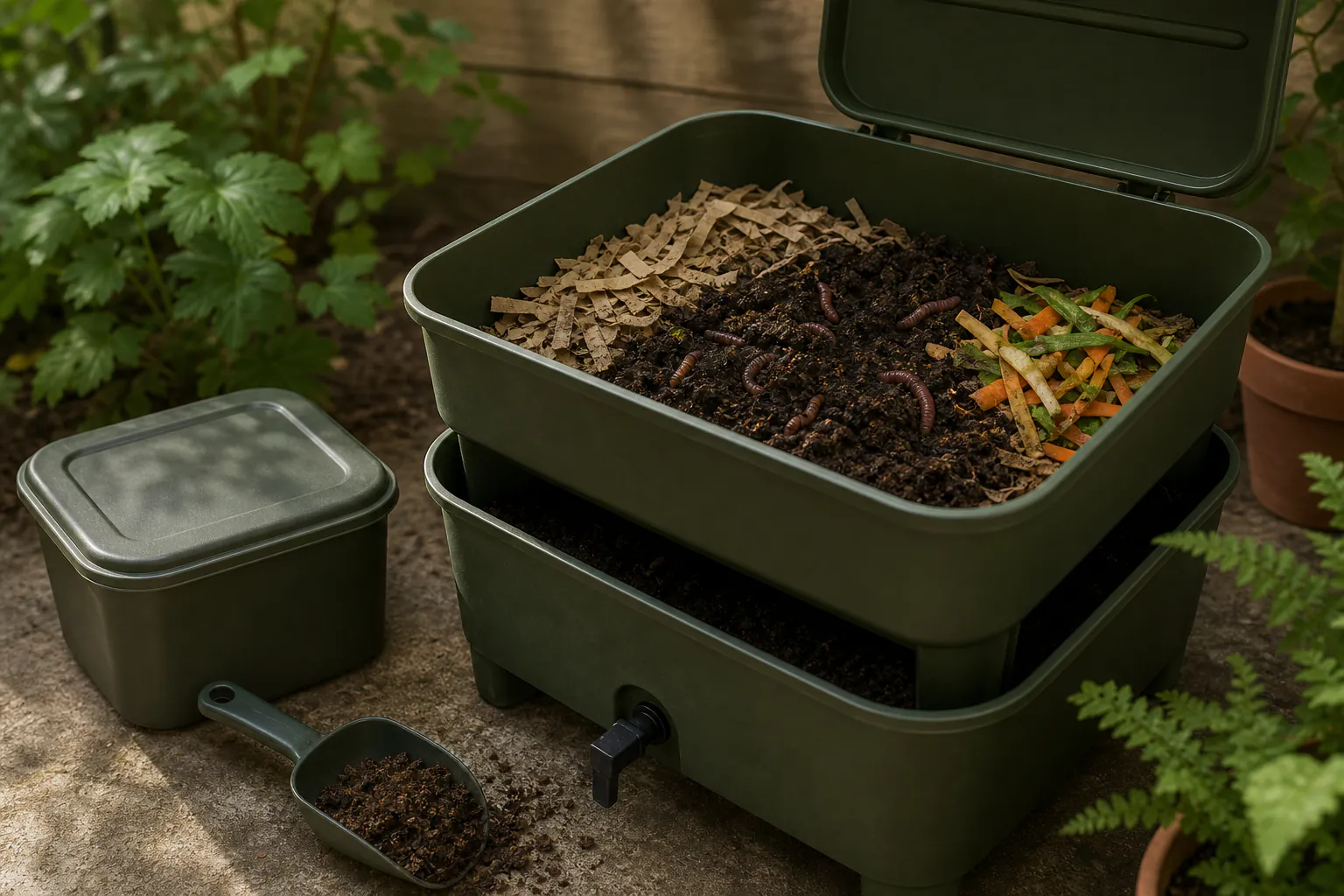
Choose either a complete wormery or a suitable ventilated bin with composting worms and bedding. Put it in shade away from temperature extremes, prepare damp shredded cardboard and coir to the feel of a wrung sponge, add worms and let them settle. Begin with a handful of chopped fruit and vegetable scraps and add more only when most has disappeared.
- 01
The wormery, separate worms and combined refill kit are alternative or complementary routes depending on what the chosen bin includes.
- 02
Composting worms live in rich surface material; ordinary deep-burrowing garden earthworms are not substitutes.
- 03
A bad smell usually signals excess feed, compaction or waterlogging, not a need for perfume or more worms.
- 04
Worm liquid is not automatically a balanced safe fertiliser. Manage drainage and use finished vermicompost cautiously.
What to expect
A wormery is a small managed habitat
The system breathes, changes temperature and receives variable food. Feeding less while it stabilises is usually safer than trying to maximise output.
Temperature
Worms slow in cold and can die in extreme heat. A black bin in direct summer sun is dangerous.
Moisture
Bedding should be damp and airy, not dripping. Food contributes substantial water.
Feed
Large acidic, oily, salty or cooked additions can overwhelm the small system.
Pests
Fruit flies and mites often indicate exposed or excess food. Bury small additions under bedding.
Smell
Healthy material smells earthy. Sour or rotten odour requires less food, more dry bedding and airflow.
Harvest
Separate worms gradually and leave some mature material as habitat; the first harvest takes months.
Core method
Balance carbon, moisture, air and appetite
Choose the bin by location
Use a purpose-built wormery or opaque ventilated container whose drainage and escape control are understood. Put it on a stable level surface in shade, protected from frost and heavy rain. Make access easy enough that scraps and bedding can be added without moving a full heavy system.
Create a deep breathable bed
Soak and squeeze shredded plain cardboard, paper and supplied coir until damp like a wrung sponge. Fluff rather than compress it and mix in a small amount of mature compost if the supplier recommends it. Add composting worms, leave a light on briefly if needed to encourage them down and keep the lid ventilated.
Feed below the observed rate
Add a small handful of chopped vegetable and fruit scraps in one corner and cover it with bedding. Mark the spot and check after several days. Feed another corner only when most has become unrecognisable. Add dry shredded card with wet foods and avoid meat, dairy, oil, large citrus quantities and salty cooked meals.
Diagnose from conditions
If the bin is wet, stop watery feed, open drainage and mix in dry card gently. If it is dry, add small amounts of water or wetter food. If it smells, remove obvious rotting excess and restore air. Move the bin away from heat or insulate against cold rather than attempting to heat the worms directly.
Useful products
Choose a bin route, then buy only the missing worms or bedding
The Complete Wormery is the ready-container route. Yorkshire Worms supplies composting worms for a suitable empty bin. The Wiggly Wigglers bundle combines worms and bedding materials. Check exact contents: buying all three would duplicate the living stock and materials.
Wormcity Complete Two-Tray Wormery
It packages the main housing and harvesting format for someone starting without a bin.
Yorkshire Worms Tiger Composting Worms 100 g
It avoids substituting garden earthworms and allows an existing container system to be populated.
Wiggly Wigglers Worm Composting Starter Bundle
It supplies the living stock and several habitat materials without requiring a second complete bin.
First project
Establish a two-corner feeding test
Feed one small corner, wait until most is processed, then use the opposite corner. This makes appetite and moisture changes visible.
- 01
Site the bin
Choose stable shade with frost and rain protection and clear drainage.
- 02
Prepare bedding
Moisten and fluff plain carbon material to a wrung-sponge feel.
- 03
Add correct worms
Use named composting species from a responsible supplier and let them settle.
- 04
Feed one handful
Chop suitable scraps, bury them in one corner and cover with bedding.
- 05
Inspect before feeding again
Check smell, moisture and remaining food without repeatedly disturbing the whole bed.
- 06
Balance and record
Add dry card with wet food and note the amount and processing time.
What can wait
What can wait until the first result
A stable small ecosystem is more useful than maximum capacity or rapid feeding.
- 01
A second wormery
Learn one bin through hot, cold, wet and dry weeks before expanding.
- 02
Every kitchen scrap
Use another compost or food-waste route for meat, dairy, oils and large unsuitable loads.
- 03
Grinding equipment
A knife and smaller portions are enough; overprocessing can create dense wet feed.
- 04
Collecting “worm tea”
Leachate can be anaerobic and variable. Focus on balanced bedding and finished castings.
- 05
Garden earthworms
Do not dig up soil species; buy or obtain genuine composting worms.
Upgrade path
Upgrade the repeated limitation
Improve weather buffering and harvesting before increasing feed volume.
Settling bin
About £44–£85One wormery route + bedding + worms
Learn moisture and appetite.Seasonal protection
About £5–£30Shade, insulation and rain cover with ventilation
Reduce dangerous temperature and water swings.Tray or migration harvest
Included or about £20+Fresh bedding and food in a new zone
Separate castings with less handling.Larger system
About £80+More surface area and established worm stock
Process more only after the first bin demonstrates capacity.Safety & care
Protect worms from temperature, flooding and unsuitable feed
Worms are living animals and the bin can attract pests or produce unsafe leachate when neglected.
- Keep the bin shaded and within the supplier’s safe temperature range; provide frost protection without sealing ventilation.
- Do not add pet waste, human waste, chemicals, treated paper, meat, dairy or oily and salty meals.
- Wear gloves, wash hands and keep wormery tools separate from food preparation.
- Control flies by burying small feeds and covering with bedding; do not use pesticides inside the wormery.
- Use finished vermicompost on plants according to reliable guidance and keep raw leachate away from edible leaves.
Outside help
When outside help earns its place
A community compost group can help diagnose a live bin, but the supplier setup instructions and slow feeding are enough to begin.
Use current advice on bedding, feed, moisture, temperature and harvesting.
Take photographs and feeding notes and ask about one specific condition.
Representative UK prices and free learning routes checked 3 August 2026; local availability, materials and tutor support vary.
Sources
Where the guidance came from
RHS guidance establishes the managed wormery environment; specialist suppliers clarify species, bedding and bin setup.
-
01
RHS · Worm composting
UK setup, feeding, troubleshooting and harvesting guidance.
Open source -
02
RHS · Composting through winter
Seasonal temperature and compost-management context.
Open source -
03
Wiggly Wigglers · Worm composting advice
Specialist UK wormery products and setup information.
Open source -
04
Yorkshire Worms · Composting worms
UK specialist supplier context for composting species and care.
Open source -
05
Amazon UK · Complete two-tray wormery
Exact product page, model or ISBN, observed price and availability checked for this guide.
Open source -
06
Amazon UK · Yorkshire Worms tiger worms
Exact product page, model or ISBN, observed price and availability checked for this guide.
Open source -
07
Amazon UK · Wiggly Wigglers worm composting kit
Exact product page, model or ISBN, observed price and availability checked for this guide.
Open source
Guide information and links checked 3 August 2026.