Beginner’s guide · Make & create
A wearable elastic-waist skirt or loose pyjama bottoms
Fit the paper before risking the fabric.
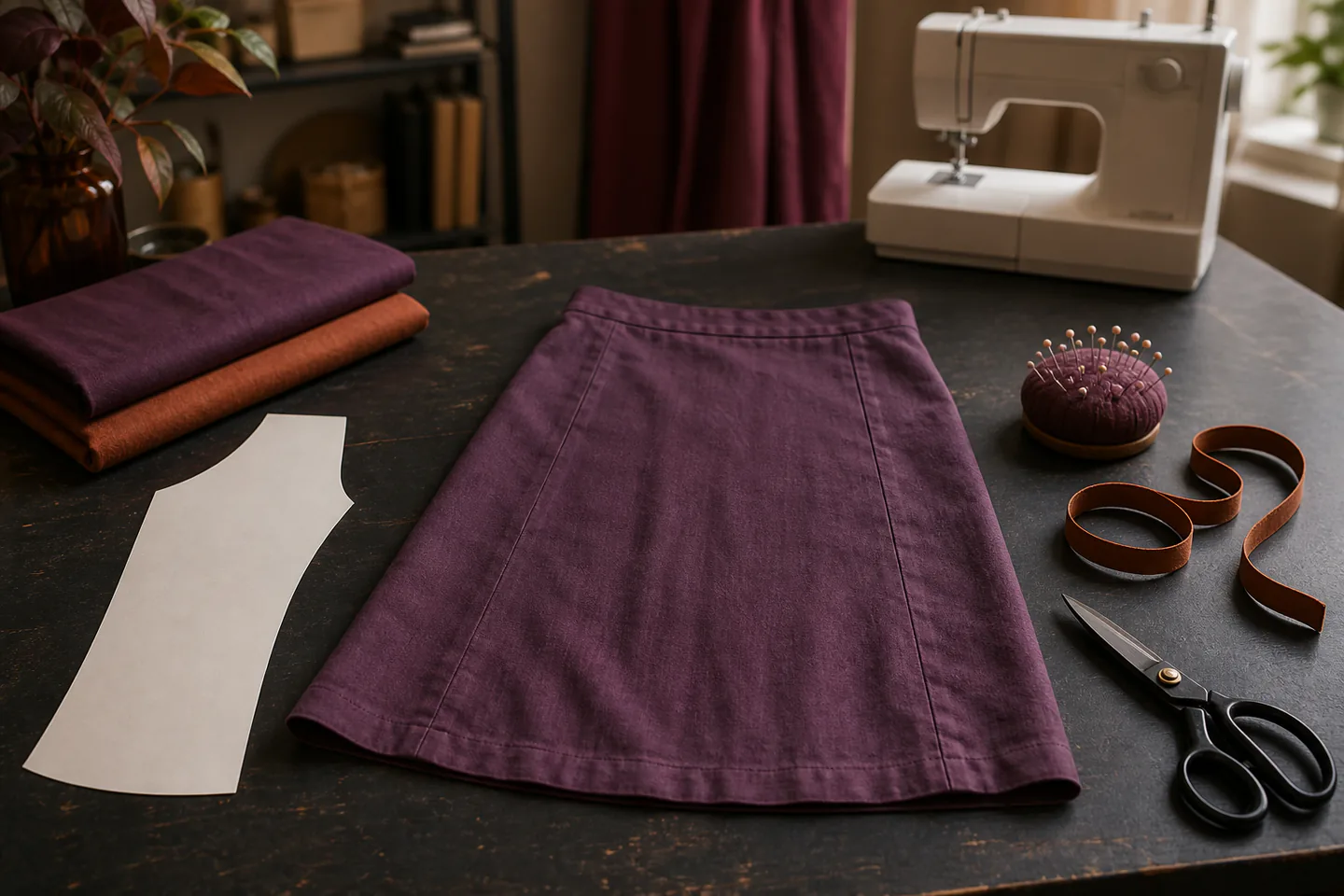
Start with a simple elastic-waist skirt or loose pyjama bottoms in stable woven cotton. Measure, trace the pattern, make a test version and press each stage.
Quick answer
Choose a forgiving woven garment with no zip
Take current body measurements over normal underwear, choose a beginner pattern by its body-measurement chart and make an elastic-waist skirt or loose pyjama bottoms in stable cotton. Read the whole pattern, trace or cut the correct size, mark notches and make a quick test version in inexpensive fabric if fit is uncertain. Sew one construction stage at a time and press before moving on.
- 01
Ready-to-wear size is not pattern size; choose from the exact pattern company’s body and finished-garment measurements.
- 02
Seam allowance may be included or excluded depending on the pattern. Confirm it before cutting any fabric.
- 03
Grainline controls how a garment hangs. Keep the printed grain arrow parallel to the fabric selvedge.
- 04
A test garment is not wasted work when it reveals length, rise, ease or construction problems before expensive cloth is cut.
What to expect
A straight seam is only one part of a wearable garment
Dressmaking combines sewing with measurement, fabric behaviour, pattern language, fitting and finishing. A simple loose garment keeps those decisions visible.
Sizing
Use current measurements and finished-garment ease, not the number printed on shop-bought clothes.
Fabric
Drape, stretch, shrinkage and opacity change both fit and sewing behaviour; use the pattern’s suggested fabric types.
Cutting
Small errors at several seams accumulate. Align grain, keep pieces flat and transfer every useful mark.
Order
Construction sequence matters because later seams can block access to an earlier edge, pocket or casing.
Fitting
Pin or baste and try on before finalising a difficult seam; bodies rarely match one standard size exactly.
Finish
Raw edges, closures and pressing determine whether a garment survives wear and washing, even when the outside looks neat.
Core method
Treat measurement and preparation as part of making
Measure and choose the pattern size
Use a flexible tape held level without pulling tight. Record waist, hip, relevant length and any pattern-specific measurement. Compare these to the chart and inspect finished-garment measurements for intended ease. Grade between nearby sizes only where the pattern shape and guidance support it.
Prepare pattern and fabric
Read the instructions and layout before cutting. Prewash and press washable fabric as it will be cared for later. Fold on grain, align selvedges without twisting and secure pattern pieces with pins or weights. Transfer notches, dots, fold lines and the grainline using a removable method tested on a scrap.
Make and assess a test version
Use inexpensive fabric with similar weight and stability. Sew long seams with a basting stitch, add the waistband or elastic sufficiently to judge position and try the garment while movement is possible. Mark changes symmetrically and transfer them to the paper pattern before cutting the final cloth.
Construct, press and finish
Stitch in the instructed order with tested thread and needle. Finish raw edges using zigzag, pinking or another method appropriate to the fabric. Press seams flat and then in the required direction. At the final fitting, check sitting, walking and range of movement as well as the mirror view.
Useful products
Products with a clear job in the setup
The same Brother machine and Fiskars shears recommended for general sewing are honest dressmaking basics. Fashion with Fabric is included as a project-and-technique reference, not a requirement to copy television challenges.
Brother LS14S Metal Chassis Sewing Machine
It handles the essential seams without making decorative stitch count the selling point.
Fiskars Classic Dressmaking Scissors, 25 cm
They remain relevant through every garment and make matching notches and seam lines easier.
Quadrille The Great British Sewing Bee: Fashion with Fabric
It offers garment context without requiring a large tool purchase and can support future planning.
First project
Make loose elastic-waist pyjama bottoms
A woven pull-on pattern teaches paired pieces, crotch curves, leg seams, casing and hem without buttons or a zip.
- 01
Measure and select size
Use body and finished-garment charts and confirm the intended ease.
- 02
Prewash and press
Prepare stable woven cotton exactly as the finished garment will be cared for.
- 03
Cut and mark accurately
Keep grainlines parallel to the selvedge and transfer notches and casing marks.
- 04
Baste and test fit
Assemble enough of the garment to check rise, waist, hip and length.
- 05
Sew and finish seams
Use the pattern order, press every stage and control raw edges.
- 06
Insert elastic and hem
Join elastic securely, distribute fullness and test movement before closing the casing.
What can wait
What can wait until the first result
Complex style details can wait until measurement, grain and construction order make sense.
- 01
A fitted bodice
Bust shaping, shoulder slope, closures and sleeves create several interacting fit decisions.
- 02
Slippery satin or stretchy jersey
Stable woven cotton is easier to cut, mark, feed and press accurately.
- 03
An adjustable dress form
A form is not automatically your shape and cannot test sitting or movement.
- 04
An overlocker
A basic machine can finish early seams with zigzag while you learn what fabrics you actually use.
- 05
Expensive final fabric first
A low-cost test garment protects both money and confidence when pattern fit is unknown.
Upgrade path
Upgrade the repeated limitation
Add tools and machine capability only when repeated garments expose a real limit.
Loose first garment
About £25–£55 plus machineSimple pattern + stable woven fabric
Learn size, grain, seams and casing.Fitted woven garment
About £35–£100Test garment + zip/button tools
Learn shaping and closure placement.Stretch garment
About £25–£90Ballpoint needle + stretch stitch
Control recovery and differential feeding.Frequent wardrobe sewing
About £300–£1,000+Chosen machine upgrades + pressing tools
Improve consistency, finishing and speed.Safety & care
Protect the body while making clothes for it
Machine, cutting and pressing hazards remain, while poor fit and unsuitable fabric can also make a finished garment unsafe or unusable.
- Unplug before needle changes or jam clearing and keep fingers away from the moving presser-foot area.
- Store shears, pins and seam rippers securely and account for broken needle fragments.
- Test iron temperature and steam on a scrap, ventilate fusible interfacing use and keep hot tools stable.
- Check a finished garment for comfortable breathing, sitting and movement and avoid dangerously trailing hems or insecure fastenings.
- Use fibre and care labels honestly when making for others and take extra care with drawstrings, small parts and children’s nightwear requirements.
Outside help
When outside help earns its place
A first loose garment can be made from a clear pattern and machine manual. A fitting lesson becomes worthwhile when changes at bust, shoulder, crotch or sleeve affect several pattern pieces.
Use the exact instructions and any official sew-along for the chosen garment.
Check that learners make a complete garment and receive individual fitting and machine help.
Representative UK product, club, lesson and venue costs checked 9 August 2026; local prices, access, weather, materials and tutor support vary.
Sources
Where the guidance came from
Pattern makers and established sewing organisations provide the technical baseline; maker communities reveal recurring fit and fabric mistakes.
-
01
Sew Over It · Sewing patterns and help
UK pattern-company guidance, beginner projects and fitting context.
Open source -
02
Tilly and the Buttons · Learn to sew
UK beginner dressmaking techniques and pattern language.
Open source -
03
The Fold Line · Sewing resources
UK pattern discovery and independent dressmaking information.
Open source -
04
Brother · LS14S support
Exact machine manual, threading and maintenance guidance.
Open source -
05
PatternReview · Sewing community
Long-running user reports on patterns, fabric, machines and fit.
Open source -
06
Amazon UK · Brother LS14S sewing machine
Exact product page, model or ISBN, observed price and availability checked for this guide.
Open source -
07
Amazon UK · Fiskars Classic dressmaking scissors
Exact product page, model or ISBN, observed price and availability checked for this guide.
Open source -
08
Amazon UK · Fashion with Fabric book
Exact product page, model or ISBN, observed price and availability checked for this guide.
Open source
Guide information and links checked 9 August 2026.