Beginner’s guide · Make & create
Repair one clean break,
keep the claim honest.
Traditional kintsugi is a skilled urushi-lacquer practice. Beginners can test the visual idea on a decorative non-food object with a clearly labelled repair kit.
Quick answer
Use a decorative practice object, not a favourite food bowl
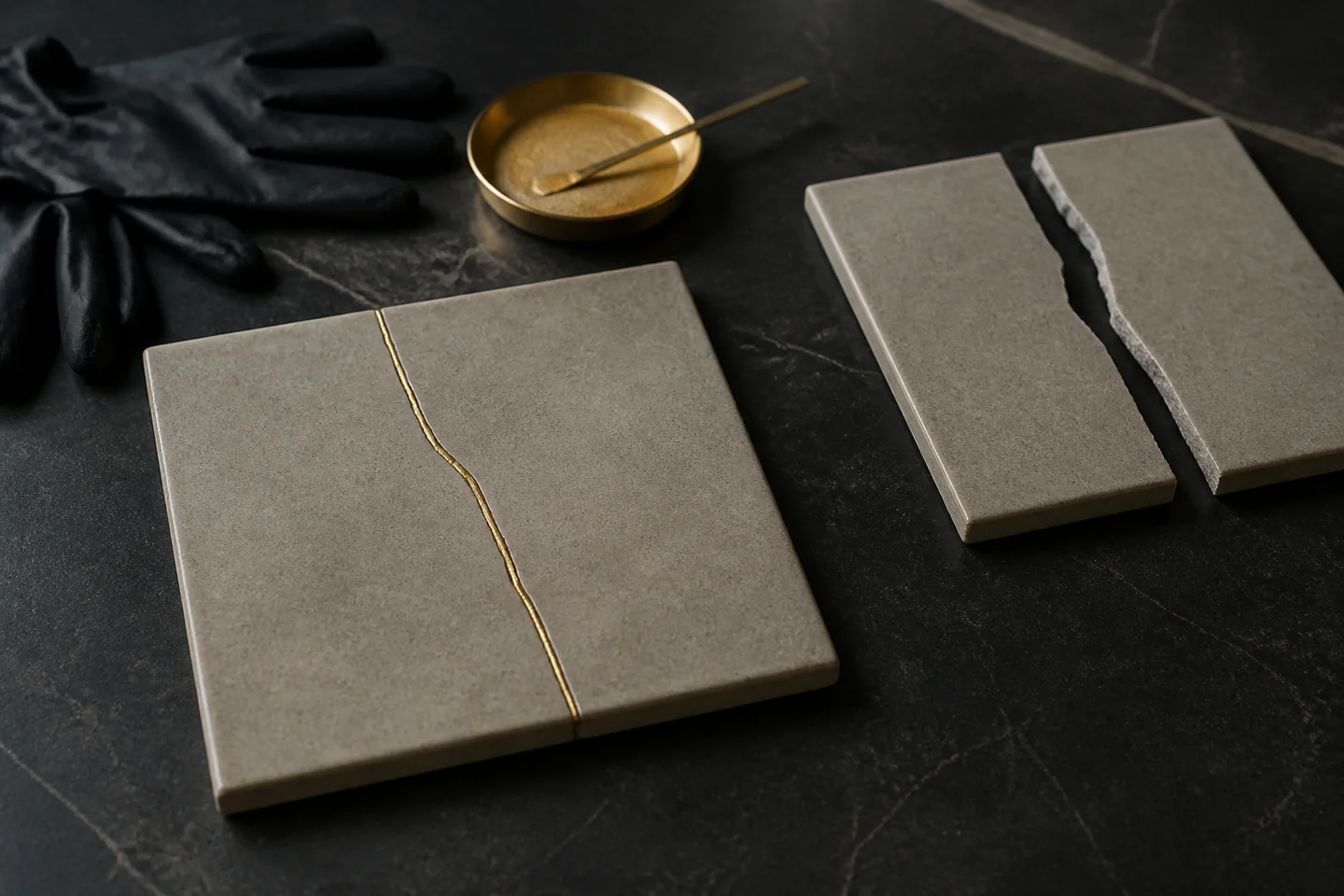
Choose a clean low-value ceramic tile or decorative object with one simple break and decide whether the project is a modern gold-coloured repair or a traditional urushi process. For the modern route, read the exact adhesive and pigment instructions, protect skin and eyes, dry-fit the pieces, mix only the stated quantity and apply a thin controlled seam. Support alignment for the full cure and keep the object out of food, heat and washing use unless the complete exact system explicitly supports it.
- 01
Choose a simple clean decorative ceramic break and one labelled repair system for the first result and resist substituting several unfamiliar materials at once. Record what you used on the first attempt so the result can be repeated or changed for a reason.
- 02
Make dry alignment and a thin fully cured seam visible with a small test before committing the full project. Record what you used on the first attempt so the result can be repeated or changed for a reason.
- 03
Change one variable between attempts and keep the preparation otherwise consistent. Record what you used on the first attempt so the result can be repeated or changed for a reason.
- 04
Inspect the work at each reversible stage instead of waiting until honest decorative display. Record what you used on the first attempt so the result can be repeated or changed for a reason.
- 05
Finish one modest result and note the actual time, material use and recurring difficulty. Record what you used on the first attempt so the result can be repeated or changed for a reason.
What to expect
Kintsugi names a tradition, not every gold repair kit
Traditional Japanese urushi work requires specialised materials, staged curing and allergy controls; common hobby kits usually create a modern decorative imitation with epoxy or glue.
Method
Identify whether a source describes urushi lacquer or a modern adhesive before combining instructions. In kintsugi, this is worth checking deliberately rather than trying to correct it after the next stage.
Fit
Missing chips, complex fractures and curved tension make alignment much harder than a two-piece practice break. In kintsugi, this is worth checking deliberately rather than trying to correct it after the next stage.
Cure
Handling strength and full chemical cure are different. Respect the longest stated time. In kintsugi, this is worth checking deliberately rather than trying to correct it after the next stage.
Food use
A seller’s casual wording is not enough to establish food-contact, dishwasher, microwave or heat safety for the whole repaired object. In kintsugi, this is worth checking deliberately rather than trying to correct it after the next stage.
Value
Historic, sentimental or valuable ceramics belong with a conservator, not a first hobby repair. In kintsugi, this is worth checking deliberately rather than trying to correct it after the next stage.
Core method
Separate traditional practice from a modern decorative repair
Identify the system
Read every component label and safety data, and reject kits whose adhesive or pigment cannot be identified. In kintsugi, this is worth checking deliberately rather than trying to correct it after the next stage.
Dry-fit and support
Practise alignment, prepare tape or a soft jig and protect the glazed faces from squeeze-out. In kintsugi, this is worth checking deliberately rather than trying to correct it after the next stage.
Mix and join minimally
Measure as directed, apply a thin seam, align once and remove only safe excess using the specified method. In kintsugi, this is worth checking deliberately rather than trying to correct it after the next stage.
Cure and label the result
Leave untouched for full cure, inspect stability and keep the object permanently designated as decorative unless proven otherwise. In kintsugi, this is worth checking deliberately rather than trying to correct it after the next stage.
Useful products
Products with a clear job in the setup
The gold repair glue is a simple decorative route; Meyspring mica is pigment only for a compatible chosen binder, and the complete repair kit packages a modern method. They are alternatives, not a traditional urushi set.
Generic Decorative Kintsugi Gold Repair Glue 80 ml
One identified application reduces mixing variables on a practice tile.
Meyspring Royal Gold Mica Powder
A named pigment allows colour control without assuming metallic powder is an adhesive.
Generic Modern Kintsugi Ceramic Repair Kit
A complete kit is easier to evaluate than unrelated glue and pigment.
First project
Repair one broken decorative tile
A flat two-piece object makes alignment, squeeze-out and cure inspection clearer than a curved vessel.
- 01
Read every label
Identify adhesive, pigment, mixing ratio, working time, cure and required PPE. In kintsugi, this is worth checking deliberately rather than trying to correct it after the next stage.
- 02
Prepare the break
Use clean dry pieces, remove only loose dirt by an approved method and dry-fit the seam. In kintsugi, this is worth checking deliberately rather than trying to correct it after the next stage.
- 03
Build a support
Arrange tape or a padded jig so the pieces cannot slide once joined. In kintsugi, this is worth checking deliberately rather than trying to correct it after the next stage.
- 04
Mix a small batch
Measure accurately, avoid aeration and prepare less material than a multi-break bowl would need. In kintsugi, this is worth checking deliberately rather than trying to correct it after the next stage.
- 05
Join and leave untouched
Apply a thin line, align, remove safe excess and respect the full cure. In kintsugi, this is worth checking deliberately rather than trying to correct it after the next stage.
- 06
Inspect and mark decorative
Check stability without shock and keep the object out of functional kitchen use. In kintsugi, this is worth checking deliberately rather than trying to correct it after the next stage.
What can wait
What can wait until the first result
Traditional lacquer and valuable repairs deserve training and material controls beyond a modern decorative first attempt.
- 01
Food bowl return to service
The complete repaired system needs applicable food-contact and use evidence. In kintsugi, this is worth checking deliberately rather than trying to correct it after the next stage.
- 02
Many-fragment object
Working time, alignment and cumulative gaps make it unsuitable for a first repair. In kintsugi, this is worth checking deliberately rather than trying to correct it after the next stage.
- 03
Valuable antique
Cleaning and adhesive choices can irreversibly reduce historical and financial value. In kintsugi, this is worth checking deliberately rather than trying to correct it after the next stage.
- 04
Traditional urushi lacquer
Urushiol can cause severe dermatitis and requires specialist handling and curing. In kintsugi, this is worth checking deliberately rather than trying to correct it after the next stage.
- 05
Large missing-chip fill
Colour matching, structural fill and shaping are separate conservation skills. In kintsugi, this is worth checking deliberately rather than trying to correct it after the next stage.
Upgrade path
Upgrade the repeated limitation
Progress by learning the actual material system, not merely adding more gold.
Practice tile
About £15–£35Modern decorative kit
Learn alignment and cure.Simple display bowl
About £25–£60Known adhesive, pigment and support jig
Control a curved seam.Traditional taster
Often £60–£180Supervised urushi materials
Understand authentic stages.Conservation route
£200+ and formal trainingSpecialist ethics, materials and documentation
Work on significant objects.Safety & care
Adhesives, powders and urushi need exact safety controls
Modern epoxies and traditional lacquer have different hazards. No generic “kintsugi-safe” instruction can replace their labels and safety data.
- Wear the gloves, eye protection and ventilation specified for the exact adhesive and pigment. Follow the current instructions supplied with the exact material, tool or living specimen.
- Avoid skin contact with uncured resin and never handle traditional urushi without specialist training because urushiol can cause severe reactions. Follow the current instructions supplied with the exact material, tool or living specimen.
- Do not sand cured resin or mica mixtures without appropriate dust controls. Follow the current instructions supplied with the exact material, tool or living specimen.
- Keep repaired objects away from food, drink, heat, microwaves and dishwashers unless the complete exact system is verified for them. Follow the current instructions supplied with the exact material, tool or living specimen.
- Take valuable, archaeological or sentimental ceramics to a qualified conservator. Follow the current instructions supplied with the exact material, tool or living specimen.
Outside help
When outside help earns its place
A complete beginner tutorial is enough for the first controlled attempt. A class becomes useful when traditional urushi, complex joins or conservation ethics becomes the goal.
Follow one method using a simple clean decorative ceramic break and one labelled repair system, including preparation and finishing rather than only the photogenic middle stage.
Check whether materials, troubleshooting, honest decorative display and a finished take-home result are included.
Representative UK learning options checked 28 August 2026; local prices, access, materials and tutor support vary.
Sources
Where the guidance came from
The method is grounded in specialist and public guidance, then checked against recurring beginner questions and the exact products linked here.
-
01
Victoria and Albert Museum · Japanese lacquer
Museum context for traditional Japanese lacquer.
Open source -
02
British Museum · conservation
Conservation context for significant objects.
Open source -
03
Health and Safety Executive · epoxy resins
UK guidance on epoxy skin exposure.
Open source -
04
Met Museum · kintsugi
Cultural and historical context for kintsugi.
Open source -
05
Reddit · r/kintsugi
Community distinctions between modern kits and traditional urushi.
Open source -
06
Amazon UK · Decorative Kintsugi Gold Repair Glue 80 ml
Exact product catalogue page or ISBN used for the recommendation; current price, seller, specification and availability should be confirmed.
Open source -
07
Amazon UK · Royal Gold Mica Powder
Exact product catalogue page or ISBN used for the recommendation; current price, seller, specification and availability should be confirmed.
Open source -
08
Amazon UK · Modern Kintsugi Ceramic Repair Kit
Exact product catalogue page or ISBN used for the recommendation; current price, seller, specification and availability should be confirmed.
Open source
Guide information and links checked 28 August 2026.