Beginner’s guide · Make & create
Colour cloth
with a recorded recipe.
Natural dyeing is controlled extraction and fibre chemistry, not simply boiling plants with fabric. Begin with a known dyestuff, a small wool or silk sample and a measured mordant process.
Quick answer
Dye test samples before a finished object
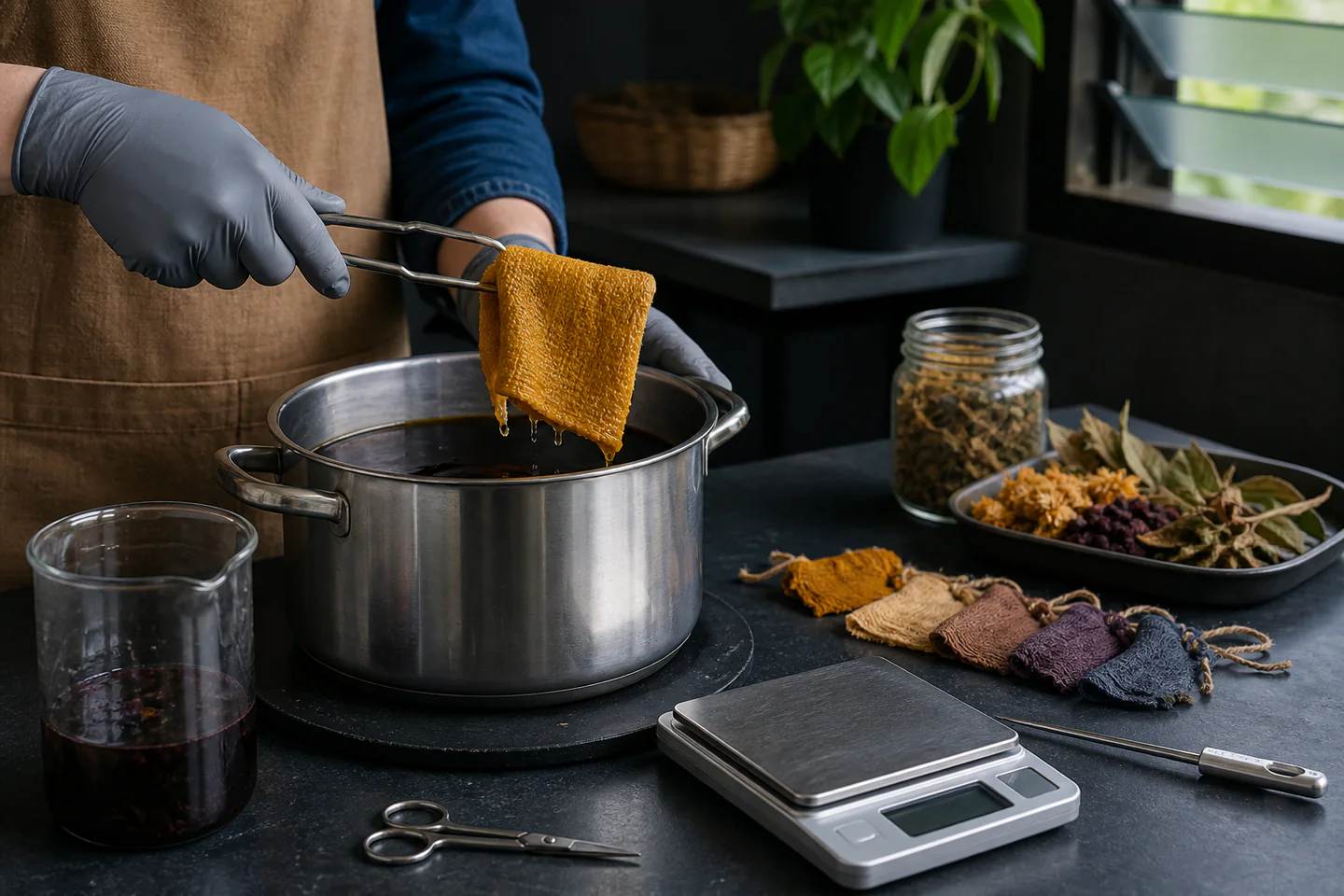
Use weighed natural fibre, a published recipe and equipment that will never return to food use. Mordant as directed, extract one known dyestuff and dye several small labelled samples.
- 01
Identify the exact fibre because protein and cellulose fibres often need different preparation and mordant systems. Note the material, setting or measurement used so the result can be repeated or changed for a reason.
- 02
Calculate mordant and dyestuff as a percentage of dry fibre weight instead of using spoonfuls by guesswork. Note the material, setting or measurement used so the result can be repeated or changed for a reason.
- 03
Use only properly identified non-toxic dye material and avoid unknown foraged plants. Note the material, setting or measurement used so the result can be repeated or changed for a reason.
- 04
Control heat gradually; boiling can felt wool, damage silk or alter some colours. Note the material, setting or measurement used so the result can be repeated or changed for a reason.
- 05
Label every sample with fibre, preparation, recipe, time and date before comparing results. Note the material, setting or measurement used so the result can be repeated or changed for a reason.
What to expect
Plant colour is variable; the process can still be disciplined
Season, water, fibre and extraction change natural colour, so records and tests matter more than a promise of an exact shade.
Fibre chemistry
Wool and silk usually bond differently from cotton and linen. A recipe must name its fibre rather than saying only “fabric”. For natural dyeing, check this deliberately while the work is still easy to alter; correcting it after the next stage usually costs more time or materials.
Mordants
Alum and other mordants affect bonding and shade. They are measured chemicals and should not be treated as harmless because the dye source is natural. For natural dyeing, check this deliberately while the work is still easy to alter; correcting it after the next stage usually costs more time or materials.
Fastness
A beautiful wet colour may fade in rinsing, light or washing. Small wash and window tests show what the recipe actually produced. For natural dyeing, check this deliberately while the work is still easy to alter; correcting it after the next stage usually costs more time or materials.
Foraging
Wild collection requires confident identification, permission and restraint. Purchased known material is the safer beginner route. For natural dyeing, check this deliberately while the work is still easy to alter; correcting it after the next stage usually costs more time or materials.
Core method
Weigh, label and keep equipment dedicated
Scour the fibre
Clean the sample with a fibre-appropriate method so oils and finishes do not block unevenly. Weigh it dry before later calculations. For natural dyeing, check this deliberately while the work is still easy to alter; correcting it after the next stage usually costs more time or materials.
Mordant accurately
Follow an established recipe, weigh the chemical and fibre, ventilate the area and keep the vessel labelled for dye use only. For natural dyeing, check this deliberately while the work is still easy to alter; correcting it after the next stage usually costs more time or materials.
Extract the colour
Prepare the known dyestuff at the stated ratio and temperature, straining plant matter if the method requires a clear bath. For natural dyeing, check this deliberately while the work is still easy to alter; correcting it after the next stage usually costs more time or materials.
Dye and document
Wet the fibre evenly, raise temperature gradually, move it gently and record every variable before rinsing. For natural dyeing, check this deliberately while the work is still easy to alter; correcting it after the next stage usually costs more time or materials.
Useful products
Products with a clear job in the setup
The products support a measured first experiment: a documented natural-dye system, a common mordant and a reference that explains fibre differences.
Jacquard Indigo Tie Dye Kit
The matched components reduce chemistry guesswork and show why indigo differs from ordinary simmered dyes.
Jacquard Alum, 1 lb Pack
A named chemical is preferable to an unlabelled craft powder when following percentage-based instructions.
Search Press The Natural Dye Handbook
Natural dyeing has too many interacting variables to rely on product instructions alone.
First project
Make a six-sample colour record
Small pieces allow repeatable comparison and keep chemical and water use proportionate.
- 01
Choose one fibre
Cut equal natural-fibre samples from the same cloth or yarn, label them with heat-resistant ties and weigh the dry total. For natural dyeing, check this deliberately while the work is still easy to alter; correcting it after the next stage usually costs more time or materials.
- 02
Scour and mordant
Follow one published fibre-specific preparation and mordant recipe using dedicated measured equipment. For natural dyeing, check this deliberately while the work is still easy to alter; correcting it after the next stage usually costs more time or materials.
- 03
Prepare one dye bath
Use a known purchased dyestuff or kit, record water volume, material weight, pH if relevant, time and temperature. For natural dyeing, check this deliberately while the work is still easy to alter; correcting it after the next stage usually costs more time or materials.
- 04
Vary one condition
Remove samples at planned intervals or alter only one documented variable rather than mixing several experiments. For natural dyeing, check this deliberately while the work is still easy to alter; correcting it after the next stage usually costs more time or materials.
- 05
Rinse and test
Rinse as instructed, dry away from direct sun, label fully and reserve pieces for wash and light comparisons. For natural dyeing, check this deliberately while the work is still easy to alter; correcting it after the next stage usually costs more time or materials.
What can wait
What can wait until the first result
A first notebook of honest samples is more useful than a wardrobe quantity of cloth or a cupboard of unidentified powders.
- 01
Unknown foraged plants
Identification, toxicity, land access and ecological impact create risks that known purchased material avoids. For natural dyeing, check this deliberately while the work is still easy to alter; correcting it after the next stage usually costs more time or materials.
- 02
Copper or iron modifier collection
Modifiers can shift shades but add chemistry and disposal questions. Learn one alum-based or complete kit process first. For natural dyeing, check this deliberately while the work is still easy to alter; correcting it after the next stage usually costs more time or materials.
- 03
Large garment
Uneven wetting and vessel crowding are magnified at scale; test the fibre and recipe before risking finished clothing. For natural dyeing, check this deliberately while the work is still easy to alter; correcting it after the next stage usually costs more time or materials.
Upgrade path
Upgrade the repeated limitation
Add equipment only to improve measurement, repeatability or the scale of a proven recipe.
Try it
£25–£60Small known dyestuff, natural-fibre samples and dedicated pot
Preparation, extraction and record-keeping become concrete.Improve measurement
£20–£70 extraAccurate scale, thermometer, pH strips and labelled vessels
Recipes become easier to compare and repeat.Build a palette
£30–£120Several documented dyestuffs and fibre sample book
Colour relationships and fastness can be tested systematically.Scale carefully
VariableLarger dedicated vessel and proven fibre-specific recipe
Yardage or garments can be dyed with less crowding and guesswork.Safety & care
Natural does not mean harmless
Heat, powders, unknown plants and mordant chemistry make dedicated equipment and conservative handling essential.
- Never return dye pots, spoons, scales or strainers to food preparation, even when using familiar plants. Follow the current instructions supplied with the exact material or tool.
- Wear appropriate gloves and eye protection, avoid inhaling powders and work with good ventilation. Follow the current instructions supplied with the exact material or tool.
- Identify plants confidently, check toxicity and obtain permission before collecting any material. Follow the current instructions supplied with the exact material or tool.
- Cool and dispose of baths according to the exact chemical instructions and local rules; keep everything labelled away from children and pets. Follow the current instructions supplied with the exact material or tool.
Outside help
When outside help earns its place
A complete kit or published recipe is enough for small samples. A workshop is valuable for mordant calculation, indigo-vat maintenance and safe disposal before scaling up.
Use one complete lesson that includes preparation, the working method, troubleshooting and finishing. Avoid combining measurements from several creators on the first attempt.
Ask whether materials, safe tool use, individual correction and a finished take-home result are included before booking.
Representative UK learning options checked 29 August 2026; local prices, access, materials and tutor support vary.
Sources
Where the guidance came from
The method is grounded in specialist and manufacturer guidance, then checked against recurring beginner problems and the exact products linked here.
-
01
Maiwa · Natural dyes
Specialist natural-dye instructions and material context.
Open source -
02
Botanical Colors · How to mordant
Fibre-specific mordant guidance and recipe structure.
Open source -
03
Wild Colours · Natural dyes
UK specialist supplier guidance on natural dye materials.
Open source -
04
Royal Horticultural Society · Plant safety
Plant-hazard context for responsible material identification.
Open source -
05
Jacquard · Indigo kit instructions
Manufacturer instructions and safety context for the selected indigo system.
Open source -
06
Amazon UK · Indigo Tie Dye Kit
Exact product catalogue page or ISBN used for the recommendation; current price, seller, specification and availability should be confirmed.
Open source -
07
Amazon UK · Alum, 1 lb Pack
Exact product catalogue page or ISBN used for the recommendation; current price, seller, specification and availability should be confirmed.
Open source -
08
Amazon UK · The Natural Dye Handbook
Exact product catalogue page or ISBN used for the recommendation; current price, seller, specification and availability should be confirmed.
Open source
Guide information and links checked 29 August 2026.