Beginner’s guide · Make & create
Cast a clean form
from a measured mix.
Jesmonite AC100 combines a water-based acrylic liquid with mineral powder to make fast-curing decorative casts. Start with one small coaster mould, weigh accurately and mix only what you can place promptly.
Quick answer
Cast one unpigmented coaster first
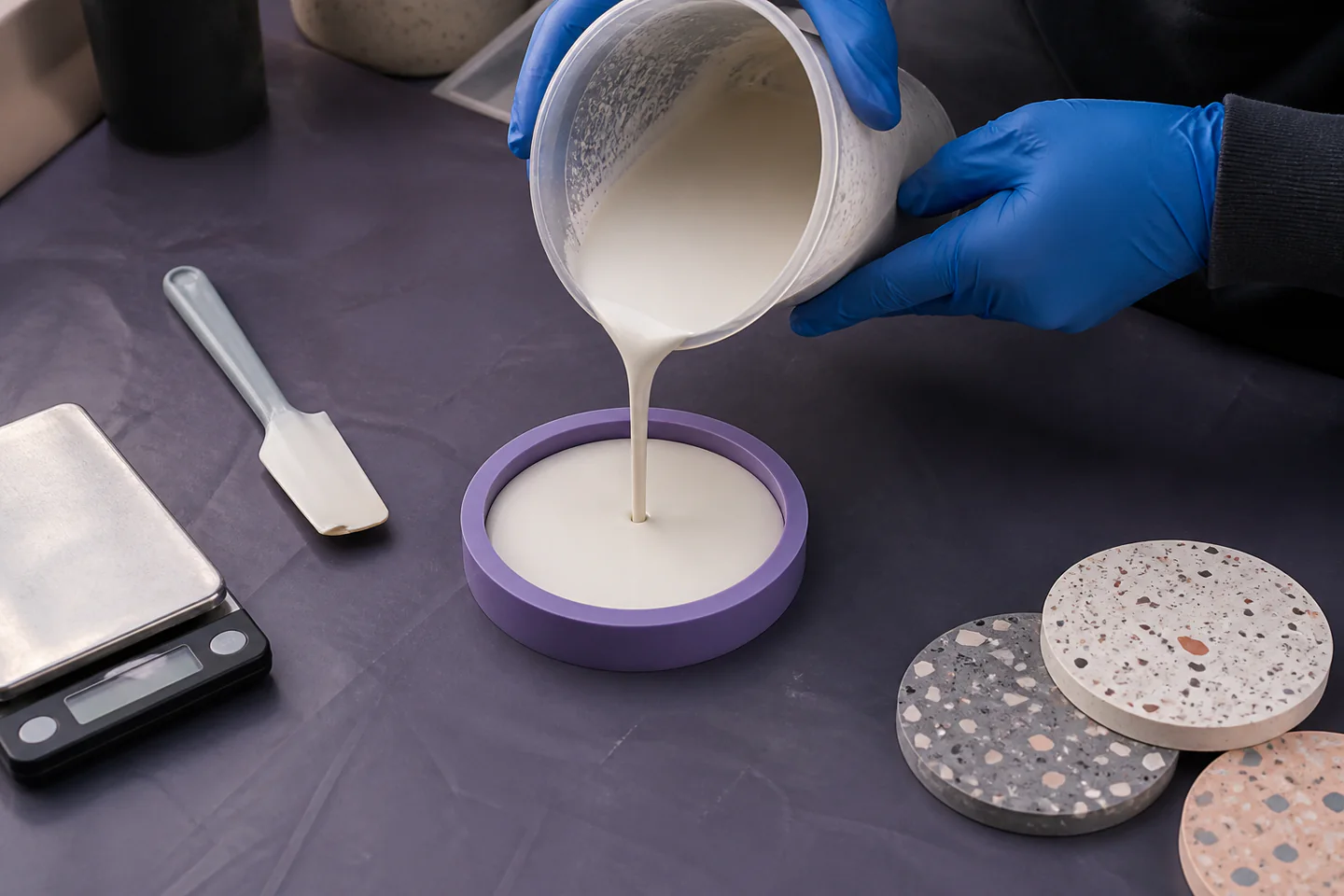
Use genuine AC100, the manufacturer’s liquid-to-base ratio, a digital scale and a simple flexible mould. Mix a small plain batch, fill steadily, release bubbles and leave it untouched for the stated cure.
- 01
Weigh both components rather than estimating volume or copying an epoxy ratio. Note the material, setting or measurement used so the result can be repeated or changed for a reason.
- 02
Prepare the mould, tools and timer before combining liquid and powder because working time is short. Note the material, setting or measurement used so the result can be repeated or changed for a reason.
- 03
Add pigment within the manufacturer’s permitted percentage and account for it consistently. Note the material, setting or measurement used so the result can be repeated or changed for a reason.
- 04
Mix to wet all powder without whipping unnecessary air into the batch. Note the material, setting or measurement used so the result can be repeated or changed for a reason.
- 05
Treat demoulding time and full cure as different stages before sanding, sealing or use. Note the material, setting or measurement used so the result can be repeated or changed for a reason.
What to expect
Fast cure rewards preparation and accurate ratios
Jesmonite feels approachable because it is water based, but powder handling, short working time and finishing still need controlled practice.
Ratio
Too much liquid or casual pigment changes can weaken a cast and alter cure. The specified weight ratio is the foundation. For jesmonite casting, check this deliberately while the work is still easy to alter; correcting it after the next stage usually costs more time or materials.
Bubbles
Air enters during mixing and catches at detailed surfaces. Brushing a face coat or tapping the mould can help when used deliberately. For jesmonite casting, check this deliberately while the work is still easy to alter; correcting it after the next stage usually costs more time or materials.
Timing
A small batch may thicken quickly. Pausing to find a tool after mixing often creates seams or incomplete fills. For jesmonite casting, check this deliberately while the work is still easy to alter; correcting it after the next stage usually costs more time or materials.
Sealing
AC100 is porous and finish choice affects colour, staining and water resistance. “Eco resin” does not mean every object is food safe. For jesmonite casting, check this deliberately while the work is still easy to alter; correcting it after the next stage usually costs more time or materials.
Core method
Stage the entire pour before starting the clock
Prepare and protect
Level the mould, cover the table, wear protection and place measured tools, water and waste containers within reach. For jesmonite casting, check this deliberately while the work is still easy to alter; correcting it after the next stage usually costs more time or materials.
Calculate the batch
Estimate mould volume from a prior water test, dry it completely and weigh liquid and base to the current AC100 instructions. For jesmonite casting, check this deliberately while the work is still easy to alter; correcting it after the next stage usually costs more time or materials.
Mix deliberately
Add powder to liquid in portions, scrape the sides and reach a smooth pourable mix without extended vigorous beating. For jesmonite casting, check this deliberately while the work is still easy to alter; correcting it after the next stage usually costs more time or materials.
Pour and cure
Coat detailed surfaces if needed, fill in a steady stream, tap gently and demould only at the specified stage. For jesmonite casting, check this deliberately while the work is still easy to alter; correcting it after the next stage usually costs more time or materials.
Useful products
Products with a clear job in the setup
The core purchase is genuine AC100. A simple reusable mould and compatible water-based pigment make useful later experiments without confusing the first plain cast.
Jesmonite AC100 Water-Based Casting Resin, 1.75 kg Kit
Using the named system avoids confusing Jesmonite with plaster, epoxy or unrelated “eco resin” powders.
Generic Five-Piece Round Coaster Silicone Mould Set with Holder Mould
Broad simple surfaces expose bubbles and terrazzo effects without fragile details.
Generic Concentrated Water-Based Pigment for Eco Resin and Plaster
A compatible water-based format is more appropriate than assuming any epoxy dye will work.
First project
Cast a plain coaster and break-test a spare
A control cast shows the normal colour, working time and strength before decorative variables are introduced.
- 01
Measure the mould
Fill the clean mould with water to estimate volume, record it and dry the silicone completely. For jesmonite casting, check this deliberately while the work is still easy to alter; correcting it after the next stage usually costs more time or materials.
- 02
Prepare the batch
Calculate a modest amount at the official ratio, weigh the liquid and base separately and start a timer when combined. For jesmonite casting, check this deliberately while the work is still easy to alter; correcting it after the next stage usually costs more time or materials.
- 03
Mix and pour
Scrape the cup thoroughly, pour in a narrow stream and tap the mould without splashing material. For jesmonite casting, check this deliberately while the work is still easy to alter; correcting it after the next stage usually costs more time or materials.
- 04
Demould on schedule
Release the cast only after the stated time, support thin edges and leave it to continue curing. For jesmonite casting, check this deliberately while the work is still easy to alter; correcting it after the next stage usually costs more time or materials.
- 05
Inspect and finish
Check the face and edges, use a spare test piece for sanding or sealer trials and label the batch ratio. For jesmonite casting, check this deliberately while the work is still easy to alter; correcting it after the next stage usually costs more time or materials.
What can wait
What can wait until the first result
Terrazzo, marbling and large trays are easier after the normal working time and plain-cast strength are known.
- 01
Complex mould
Fine points trap air and break during early demoulding. A shallow round mould teaches the material first. For jesmonite casting, check this deliberately while the work is still easy to alter; correcting it after the next stage usually costs more time or materials.
- 02
Many pigments
One control and one measured tint show more than a palette of unrepeatable colour guesses. For jesmonite casting, check this deliberately while the work is still easy to alter; correcting it after the next stage usually costs more time or materials.
- 03
Food-use claims
A decorative sealer or coaster listing does not automatically make cast tableware suitable for direct food contact. For jesmonite casting, check this deliberately while the work is still easy to alter; correcting it after the next stage usually costs more time or materials.
Upgrade path
Upgrade the repeated limitation
Upgrade for repeated bubbles, colour repeatability or a scale the starter batch cannot support.
Try it
£35–£75AC100 kit, scale, cups and simple mould
Ratio, working time and demoulding become known.Add colour
£15–£45 extraCompatible pigment, precise small scale and batch cards
Tints and terrazzo chips can be repeated.Improve surfaces
£20–£80Face-coat brushes, sanding grades and tested sealer
Bubbles, edges and stain resistance become more controlled.Cast larger
VariableLarger mould, calculated batch and reinforcement guidance
Trays and sculptural pieces become feasible without improvising structure.Safety & care
Water based still requires material controls
Mineral powder, wet mix and sanding dust should be handled as workshop materials, not harmless kitchen craft.
- Wear eye protection, gloves and suitable respiratory protection for powder handling or sanding as the safety data directs. Follow the current instructions supplied with the exact material or tool.
- Mix and sand with ventilation and use wet methods or extraction where appropriate to avoid airborne dust. Follow the current instructions supplied with the exact material or tool.
- Keep dedicated tools and containers out of food preparation and never pour slurry into household drains. Follow the current instructions supplied with the exact material or tool.
- Check sealer, heat and contact limitations before choosing the final use of a cast object. Follow the current instructions supplied with the exact material or tool.
Outside help
When outside help earns its place
Official AC100 instructions are enough for a plain coaster. A workshop helps with face coats, reinforcement, marbling and diagnosing large-cast failures.
Use one complete lesson that includes preparation, the working method, troubleshooting and finishing. Avoid combining measurements from several creators on the first attempt.
Ask whether materials, safe tool use, individual correction and a finished take-home result are included before booking.
Representative UK learning options checked 29 August 2026; local prices, access, materials and tutor support vary.
Sources
Where the guidance came from
The method is grounded in specialist and manufacturer guidance, then checked against recurring beginner problems and the exact products linked here.
-
01
Jesmonite · AC100
Manufacturer specification and intended uses for AC100.
Open source -
02
Jesmonite · Knowledge hub
Official mixing, pigment, finishing and troubleshooting resources.
Open source -
03
Jesmonite · Safety data
Current technical and safety documentation access.
Open source -
04
Crafts Council
UK material-craft and maker context.
Open source -
05
HSE · Dust at work
UK workplace guidance relevant to powder and sanding dust control.
Open source -
06
Amazon UK · AC100 Water-Based Casting Resin, 1.75 kg Kit
Exact product catalogue page or ISBN used for the recommendation; current price, seller, specification and availability should be confirmed.
Open source -
07
Amazon UK · Five-Piece Round Coaster Silicone Mould Set with Holder Mould
Exact product catalogue page or ISBN used for the recommendation; current price, seller, specification and availability should be confirmed.
Open source -
08
Amazon UK · Concentrated Water-Based Pigment for Eco Resin and Plaster
Exact product catalogue page or ISBN used for the recommendation; current price, seller, specification and availability should be confirmed.
Open source
Guide information and links checked 29 August 2026.