Beginner's guide · Grow & care
Give a flytrap sun.
Not a terrarium.
A Venus flytrap is straightforward when its unusual rules are respected: very bright light, rainwater or similarly low-mineral water, nutrient-poor carnivorous-plant medium and a cool winter dormancy. Triggering traps and feeding meat are not care.
Quick answer
Give a flytrap sun.
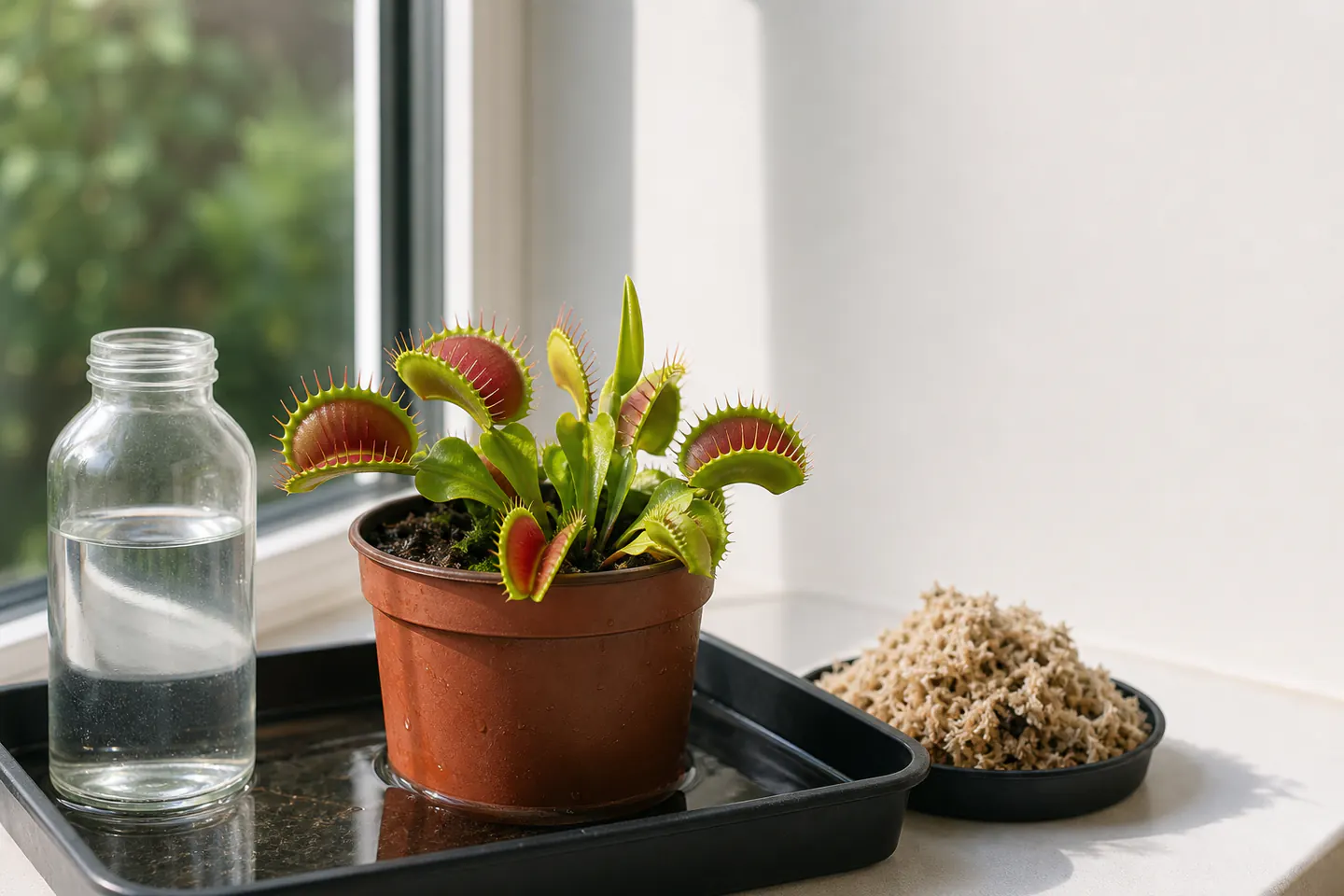
Choose a healthy labelled Venus flytrap, place it in the brightest suitable position available and stand its draining pot in a shallow tray of rainwater, distilled water or reverse-osmosis water whose mineral content is known to be suitably low. Keep ordinary compost and fertiliser away, do not trigger traps for entertainment and plan for winter dormancy rather than treating it as a tropical terrarium plant.
- 01
Tap water varies by place and can accumulate minerals that damage carnivorous plants. A generic filter jug does not reliably produce suitably low-mineral water.
- 02
The plant obtains energy from light; insects provide nutrients. It does not need feeding when it can catch occasional small live prey naturally.
- 03
Each trap opens only a limited number of times. Repeatedly touching trigger hairs wastes energy and can cause the trap to die sooner.
- 04
Venus flytraps are temperate perennials. A cooler, shorter winter rest is part of their annual cycle, although exact protection depends on local conditions.
What to expect
What the first attempts really involve
Carnivorous plants are not difficult because they eat insects. They fail when ordinary houseplant assumptions—moderate light, rich compost, tap water and year-round warmth—are applied to a bog-adapted species.
Light
Strong light produces compact growth and coloured traps. Moving a shade-grown shop plant straight into harsh sun can scorch it, so acclimatise while increasing exposure.
Water minerals
Damage accumulates rather than appearing instantly. Using unsuitable water for months can decline roots before the cause is obvious.
Medium
Fertiliser-enriched compost and ordinary potting mixes can burn roots. Use a product formulated for carnivorous plants without added feed.
Season
Older traps blacken naturally and winter growth becomes smaller or retreats. Dormancy should not be mistaken automatically for death.
Feeding
Oversized prey, raw meat and fertiliser are not shortcuts. A trap must close and seal around a suitable living insect to digest effectively.
Fundamentals
Build the first attempt on reliable fundamentals
Start with one labelled plant
Inspect the centre for firm new growth, avoid plants with widespread mushy crowns or obvious pests and keep the seller's species information. Black individual traps are normal when new healthy traps are also forming. Quarantine the plant from an existing collection until it has been observed for pests and condition.
Create a low-mineral water routine
Collect clean rainwater in a suitable container or use distilled or appropriate reverse-osmosis water. Keep a reserve so a dry week does not force repeated tap-water use. During active growth, maintain a shallow tray as conditions require while still allowing the pot to drain; reduce waterlogging during cool dormancy according to expert regional guidance.
Build light gradually
Move from shop conditions towards several hours of direct sun or a genuinely bright equivalent over one to two weeks, watching new growth rather than judging only older leaves. A sunny outdoor position can be excellent in season when wind, pets, pests and temperature are managed. A dim bathroom remains dim however humid it feels.
Respect the annual cycle
As days shorten, expect slower growth and older traps to die back. Keep the plant cool and bright enough for safe dormancy, protect the small pot from severe prolonged freezing and avoid warm sealed indoor conditions that interrupt the cycle. Resume tray watering and stronger growth care as spring returns.
Useful products
One plant, correct medium and a simple water tray
The live flytrap provides the actual growing subject, Carnivorous Plant Focus mix is reserved for an appropriate repot and the Garland tray makes low-mineral watering straightforward. Water itself should be sourced by specification, not bought from an ambiguous marketplace listing.
GardenersDream Venus Flytrap in 9 cm Pot
A living plant avoids the delay and uncertainty of seeds while keeping the first collection manageable.
Growth Technology Carnivorous Plant Focus Repotting Mix, 2 litres
It avoids ordinary fertilised houseplant compost and supplies enough material for a small pot.
Garland Full-size Garden Tray without Drainage Holes
It makes the water source and level visible instead of hiding the pot inside a decorative cachepot.
First plant
Establish one Venus flytrap for six weeks
The aim is stable new growth, not a feeding demonstration. Keep a simple record of water source, light increase and trap production.
- 01
Inspect on arrival
Photograph the plant and check the crown, new leaves, pests, pot drainage and seller care information before changing anything.
- 02
Secure water first
Prepare a reliable supply of rain, distilled or suitably low-mineral reverse-osmosis water and label the container.
- 03
Set the tray
Use a shallow no-hole tray, add the appropriate low-mineral water depth for active growth and never submerge the crown.
- 04
Increase light gradually
Move towards strong sun or an appropriate grow-light schedule in stages so shop-grown leaves are not abruptly scorched.
- 05
Leave traps alone
Do not trigger or hand-feed them; remove only fully black dead material with clean tools without cutting green tissue.
- 06
Observe new growth
Record trap size, colour, leaf posture, algae, pests and water use once or twice each week.
- 07
Repot only for a reason
Use carnivorous-plant medium in the suitable season if the current substrate is unsuitable, broken down or the plant genuinely needs space.
- 08
Plan dormancy
Before autumn, decide how the species will receive a cool winter rest with suitable water and frost protection.
Troubleshooting
Read the result before changing the setup
Black individual traps may be normal turnover
Look for firm green centre growth and the pattern across the whole plant. Trim only dead tissue. A black mushy crown, foul smell or widespread collapse needs urgent specialist assessment.
Long green leaves usually point to insufficient light
Increase light gradually, checking temperature and water availability. Feeding or fertilising will not replace energy from light.
Crisp decline may involve water quality or drying
Confirm the actual water source, tray routine, heat and root condition. Switching once to suitable water cannot instantly reverse months of mineral accumulation, but prevents more.
A trap that fails to close may be old or depleted
Do not keep testing it. Judge health by the crown and new trap production, and let the plant capture appropriate prey naturally.
Skip for now
What can wait
A flytrap's first needs are bright light, suitable water and lean medium. Decorative systems often hide whether those conditions are present.
- 01
A closed terrarium
It adds heat, stagnant air and weak winter cues while making strong direct sun hazardous. Flytraps do not require tropical humidity chambers.
- 02
Plant food and ordinary compost
Added nutrients can damage roots adapted to poor bog soils. Use a carnivorous-plant medium without fertiliser.
- 03
Hand-feeding meat
Cheese, mince and processed food rot and do not mimic live prey. A well-lit plant can grow without performance feeding.
- 04
Triggering traps
Closure costs energy and each trap has limited cycles. Observe natural capture rather than making the plant repeatedly close.
Upgrade path
What a better setup changes
A better setup improves light reliability, water testing or collection management. It should not turn a temperate plant into a sealed display.
One established flytrap
About £15–£35Healthy plant + suitable water + shallow tray + strong light
Teaches the species' active growth and dormancy without unnecessary equipment.Planned repot
Add about £10–£20Appropriate plastic pot + fertiliser-free carnivorous medium
Refreshes a degraded or unknown substrate at the correct time.Measured water supply
Add about £10–£30Reliable RO/distilled source + TDS meter used as a screening tool
Reduces uncertainty where rain collection is limited, while source specifications still matter.Small mixed collection
VariesSpecies groups matched by light, water, temperature and dormancy
Adds sundews or pitcher plants only after their different requirements are checked.Before upgrading
A useful check before spending more
Diagnose from new growth
Older leaves record previous conditions. After correcting light or water, watch the crown and the next traps over several weeks rather than changing another variable every day.
Match the advice to the species
Venus flytraps, tropical Nepenthes and Mexican Pinguicula are all carnivorous but do not share one temperature, tray or dormancy routine. Keep labels and research the exact plant.
Safety
Protect people, pets and wild plants
Cultivated flytraps are not dangerous to touch, but water hygiene, sharp tools and lawful sourcing still matter.
- Buy cultivated plants from reputable sellers and never collect carnivorous plants from the wild.
- Keep rainwater containers covered and maintained so they do not become hazards or persistent insect-breeding sites.
- Label distilled, reverse-osmosis and treatment liquids clearly and never store plant water in drink containers.
- Use clean scissors away from fingers and disinfect tools appropriately between suspect plants.
- Check any pest treatment is safe for the exact carnivorous plant and follow the label around children and pets.
- Wash hands after handling growing media and keep loose substrate away from food preparation.
Classes
When outside help is useful
A specialist nursery visit is more useful than a general houseplant class when dormancy, water or species identification remains unclear. The first flytrap can still be established at home.
Useful for seeing healthy seasonal growth, suitable media and several species under real light.
Look for regional dormancy, propagation and problem diagnosis rather than feeding demonstrations.
Representative UK carnivorous-plant nursery and society formats checked 30 July 2026; plants and materials vary.
Sources
Sources and checking notes
RHS and botanical-garden care guidance establishes the unusual water, soil, light and dormancy needs; specialist society material and community cases add practical diagnosis.
-
01
RHS · Venus flytrap
UK cultivation guidance for light, water, compost, feeding and winter care.
Open source -
02
United States Botanic Garden · Cultivating carnivorous plants
Botanical guidance on water, media, light and major carnivorous plant groups.
Open source -
03
RHS · Caring for a Venus flytrap
Accessible plant-specific care and common mistakes.
Open source -
04
International Carnivorous Plant Society · Venus flytrap guide
Specialist species biology and cultivation resource.
Open source -
05
r/carnivorousplants · Beginner help
Current community troubleshooting around water, light and normal trap turnover.
Open source -
06
Amazon UK · Venus Flytrap in 9 cm Pot
Exact GardenersDream product and direct Amazon UK listing checked for current availability, price context and model identity.
Open source -
07
Amazon UK · Carnivorous Plant Focus Repotting Mix, 2 litres
Exact Growth Technology product and direct Amazon UK listing checked for current availability, price context and model identity.
Open source -
08
Amazon UK · Full-size Garden Tray without Drainage Holes
Exact Garland product and direct Amazon UK listing checked for current availability, price context and model identity.
Open source
Guide information and links checked 30 July 2026.