Beginner’s guide · Reflect & explore
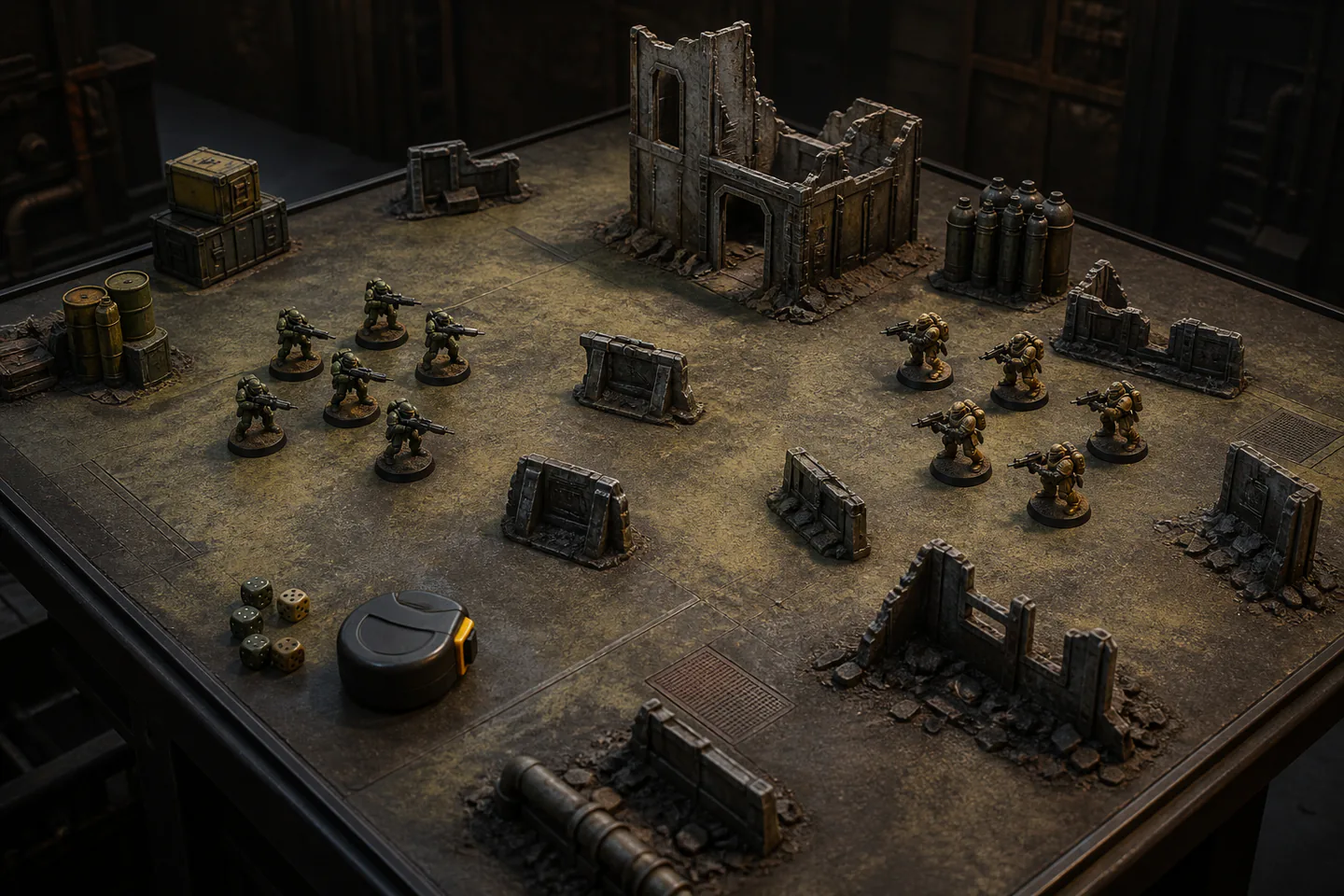
A complete small scenario using two starter forces
Play a small complete battle before growing an army.
Start with one self-contained two-player set, use the included forces and learn movement, attacks and objectives on a small table. Build and paint only what the first scenario needs.
Quick answer
Choose the game and opponent before choosing the army
Pick one self-contained starter whose setting, rules weight and local player availability appeal to you. Assemble only the models required by its first scenario, keep equipment choices exactly as the instructions show and use tokens or household objects for any missing terrain. Play the learning missions in order with the reference sheet open. Do not add units until both sides can complete a normal turn and score an objective.
- 01
Tabletop wargaming includes many incompatible rules and miniature scales; a model from one setting is not automatically usable in another game.
- 02
The objective is usually more important than destroying every opposing model. Learn movement and scoring before optimising army lists.
- 03
Assembly and painting are connected hobbies but not entry requirements to understanding play. Unpainted starter models can teach the rules.
- 04
Points, unit rules and edition documents change; use the current official rules for the selected product rather than an old video alone.
What to expect
A starter set contains several hobbies at once
Building, painting, list construction, terrain and tactical play each consume time. Bounded scenarios keep one unfinished area from blocking all the others.
Rules
Core procedure may be simple while units add exceptions; use a quick reference and learn one force at a time.
Assembly
Push-fit models reduce glue but still need careful clipping and orientation; multi-part kits require tool and adhesive choices.
Painting
A few colours and bases make forces readable, but a detailed display standard is optional.
Table
Full-size games need more area and terrain; starter missions are intentionally smaller and faster.
Opponent
Local groups often concentrate on one or two systems, so community availability can matter more than online rankings.
Cost
A complete army expands through repeated purchases. Set a playable milestone and storage limit before adding units.
Core method
Learn the scenario loop before the shopping loop
Select one contained ruleset
Compare theme, game length, model count and local opponents. The Warhammer 40,000 Introductory Set is a small guided entry; Star Wars Legion is a larger two-player battle box. Treat them as alternatives. Read the current publisher download page in case points, cards or rules have changed since the box was printed.
Assemble only the learning force
Inventory sprues and components, clip with the flat side of the cutter toward the kept part and trim only obvious gates. Dry-fit orientation before pressing or gluing. Keep blades capped, ventilate adhesive and preserve unit labels. Build the exact first scenario rather than every model simultaneously.
Play with visible information
Mark deployment, movement and objectives clearly. Keep unit cards and a turn sequence beside the table. Say intended movement and target before measuring, roll in a contained tray and resolve one attack completely. When a rule is uncertain, make a temporary fair ruling, note it and check after the game.
Review the decision, not only the result
After the scenario, identify one moment where movement, cover, range or objective timing mattered. Replay the same mission with sides swapped before buying a counter-unit. If painting helps readability, give each force a distinct base or main colour and stop at a complete tabletop standard.
Useful products
Products with a clear job in the setup
The Warhammer introductory set is the smallest guided route. Star Wars Legion is a fuller two-player commitment. The Citadel Paints + Tools set supports the Warhammer models but is optional for learning play and does not contain every colour or assembly tool.
Games Workshop Warhammer 40,000 Introductory Set
The limited model count and tutorial material make a complete first battle reachable on an ordinary table.
Atomic Mass Games Star Wars: Legion Core Set
It is a coherent game route with enough components to explore objectives and force expansion.
Games Workshop Warhammer 40,000 Paints + Tools Set
It can bring starter forces to a readable basic standard without a huge paint rack.
First project
Play the first learning mission twice
Use the same forces and terrain, then swap sides so the rules and scenario can be separated from one lucky result.
- 01
Inventory one chosen box
Confirm models, cards, dice, measuring tools and current downloadable rules.
- 02
Build the required figures
Follow numbered orientation, keep blades safe and stop when the first mission is ready.
- 03
Mark the battlefield
Use the scenario dimensions and clear substitutes for terrain and objectives.
- 04
Play slowly with references
Resolve movement, attack, defence and scoring in the printed learning order.
- 05
Swap sides and repeat
Use the same mission to reveal different movement and objective decisions.
- 06
Set one next milestone
Choose painting, another scenario or one unit—not all three at once.
What can wait
What can wait until the first result
A playable painted starter is a better foundation than an unbounded pile of boxes.
- 01
A tournament-sized army
Large lists hide the core turn and create months of assembly before ordinary play.
- 02
Premium terrain
Books, boxes and card templates can represent cover while learning line of sight and movement.
- 03
Every paint colour
A primer, main colour, secondary colour and base treatment can make a force readable.
- 04
Competitive list advice
Points and local formats change; first learn what units do on the table.
- 05
Mixing editions
Use one current rules source and verify errata rather than combining familiar-looking cards.
Upgrade path
Upgrade the repeated limitation
Grow the part of the hobby that is actually being repeated: scenarios, painting, terrain or organised play.
Introductory missions
About £35–£45Small guided box + household terrain
Learn the turn and objectives.Full starter battle
About £90–£120Two larger forces + rule materials
Explore list and activation choices.Readable painted forces
About £25–£80 extraSelected paint + tools + primer
Improve identity and table clarity.Regular army or club play
About £150–£600+Chosen faction + storage + terrain access
Add strategic variety and community events.Safety & care
Control blades, adhesives, paint and social expectations
The sharp and chemical risks occur at the hobby desk; the cost and conduct risks grow around collecting and organised play.
- Keep small pieces, dice, sleeves and batteries away from young children and pets.
- Use a well-lit table, support posture and take movement and visual breaks during long sessions.
- Cut away from the body, cap hobby knives, wear eye protection when clipping brittle parts and account for every blade and fragment.
- Ventilate plastic cement, superglue, primer and paint as their labels require and keep them away from heat, food, children and pets.
- Agree measurements and unclear rules calmly, follow venue conduct policies and stop a game when time or behaviour no longer works for both players.
Outside help
When outside help earns its place
Starter missions can be learned at home. A shop or club demo earns its place by providing an opponent, terrain and current rules, not by pressuring an immediate army purchase.
Use the current official quick-start and errata for the selected box.
Ask which system and edition is played, what to bring, accessibility and whether loan forces are available.
Representative UK product, club, lesson and venue costs checked 9 August 2026; local prices, access, weather, materials and tutor support vary.
Sources
Where the guidance came from
Official rule downloads govern each system; miniature safety guidance and player communities add practical assembly, painting and beginner-game context.
-
01
Warhammer Community · Downloads
Current official rules, updates and reference material.
Open source -
02
Warhammer · Introductory Set
Official contents and intended learning route.
Open source -
03
Atomic Mass Games · Star Wars Legion
Official rules and product support for Legion.
Open source -
04
Tabletop Minions · Beginner resources
Specialist practical discussions of starting, building and painting.
Open source -
05
Reddit · r/wargaming
Cross-system community advice on rules, scales, clubs and costs.
Open source -
06
Amazon UK · Warhammer 40,000 Introductory Set
Exact product page, model or ISBN, observed price and availability checked for this guide.
Open source -
07
Amazon UK · Star Wars Legion Core Set
Exact product page, model or ISBN, observed price and availability checked for this guide.
Open source -
08
Amazon UK · Citadel Paints + Tools Set
Exact product page, model or ISBN, observed price and availability checked for this guide.
Open source
Guide information and links checked 9 August 2026.