Beginner’s guide · Grow & care
Grow one useful crop where you can reach it.
Make watering easy to repeat.
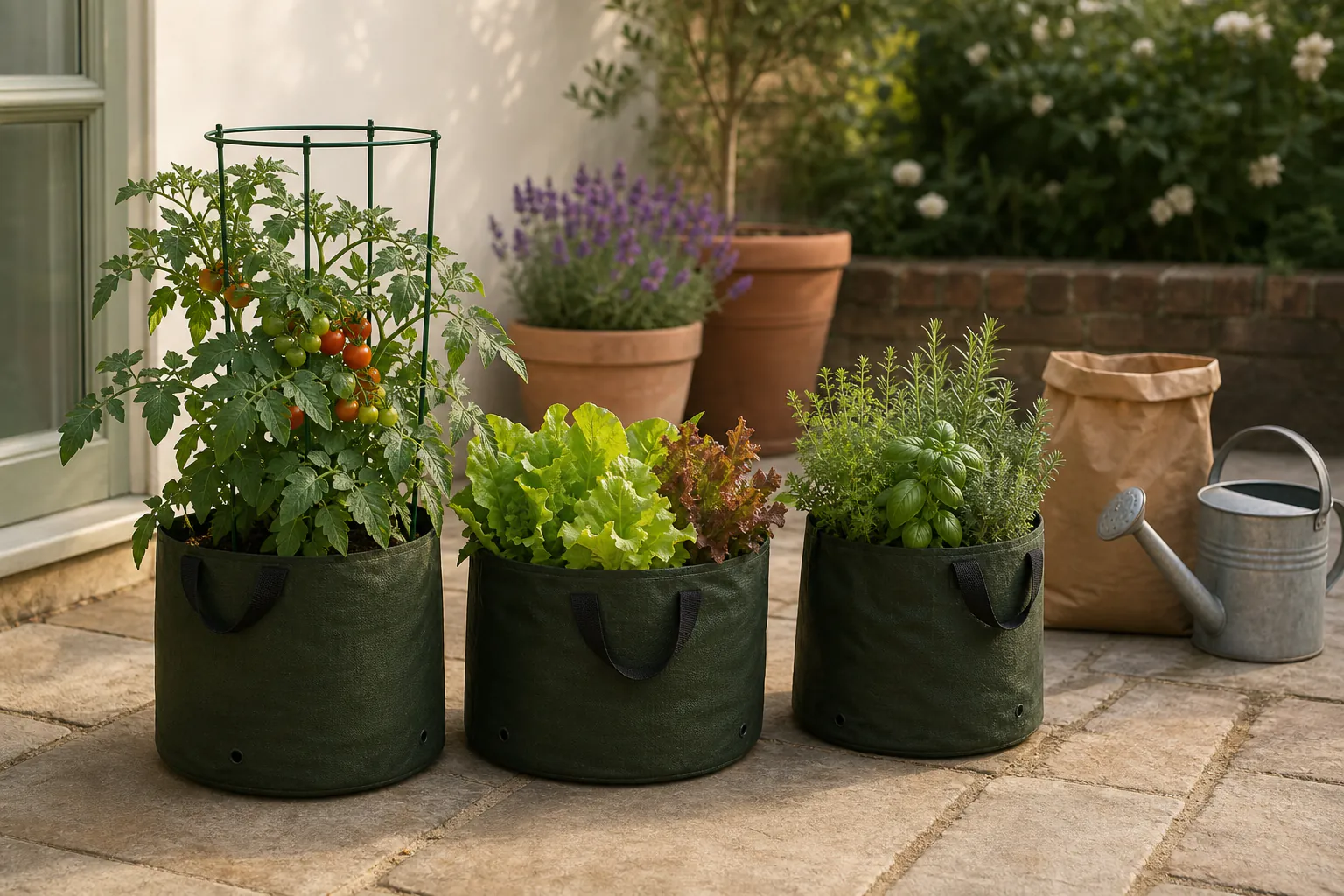
Start with one large pot or grow bag, fresh peat-free compost and a compact crop suited to the available sun. Position and watering access matter more than an ambitious planting plan.
Quick answer
Choose the crop after measuring the place
Observe the growing area for sun, wind, access and drainage, then choose one crop that fits it. Use a large container with holes, fill with fresh peat-free multipurpose or vegetable compost and plant at the recommended spacing. Water the root zone thoroughly whenever it begins to dry, check daily in hot weather and begin suitable feed only when compost nutrients are being depleted.
- 01
Small pots dry fast and restrict roots. A slightly oversized practical container is easier than a decorative tiny one.
- 02
Tomatoes, courgettes and beans need more sun, volume, support and feeding than salad leaves or many herbs.
- 03
A container cannot draw water from deeper soil. Hot wind may require daily attention even when rain has fallen nearby.
- 04
Drainage water and loaded bags are heavy; plan balcony limits, staining and safe lifting.
What to expect
Containers trade ground space for closer management
They reduce digging and can bring crops within reach, but roots depend entirely on the water, volume and nutrients provided.
Sun
Count direct-light hours in the growing season and note shade from buildings, not only compass direction.
Volume
More compost buffers heat and moisture. One vigorous tomato can fill a 7-gallon bag.
Water
Check below the surface and water deeply. A wet surface can hide a dry centre or vice versa.
Feed
Compost carries initial nutrients; fruiting crops later need a suitable feed used to label directions.
Support
Canes and frames must be anchored before a top-heavy crop catches wind.
Yield
A few well-spaced healthy plants usually outcrop a crowded “instant garden.”
Core method
Design around light, roots and an easy watering route
Audit the site before buying seed
Record direct sun across a clear day, wind funnels, water access, drainage destination and the weight the surface can bear. Check tenancy, balcony and communal-space rules. Choose salad leaves and some herbs for partial sun, or compact tomatoes, chillies, beans and courgettes for warmer sunnier positions with enough container volume.
Give roots a complete container
Use a clean food-safe plant container or grow bag with unobstructed holes. Raise it slightly where drainage needs an exit without blocking the hole. Fill with fresh peat-free compost, leaving a watering lip. Do not put crocks or gravel in the bottom as a substitute for good compost and drainage.
Plant less and support early
Follow mature spacing rather than seedling size. One tomato per large bag is a clearer first experiment than several competing plants. Install canes, cages or ties at planting so roots are not damaged later. Label the variety and sowing or planting date.
Make watering observable
Check the pot by finger depth, weight and plant condition, preferably at the same time each morning during warm weather. Water slowly until excess drains, then empty unsafe standing water. Feed only according to crop stage and product label. Remove damaged material and record harvest rather than judging success by perfection.
Useful products
Large reusable containers, fresh compost and later feed
The 7-gallon bags suit one tomato, chilli, compact courgette or several smaller salad plants. The peat-free fruit-and-vegetable compost provides a fresh start. Tomorite is a later fruiting feed, not a reason to feed seedlings or leafy crops indiscriminately.
GardenMate 7-Gallon Fabric Grow Bags, Five Pack
A 7-gallon bag is less prone to rapid drying than a tiny pot and supports one substantial plant.
Miracle-Gro Peat-Free Fruit and Vegetable Compost 40 L
It avoids reusing exhausted compacted compost and provides initial structure and nutrients.
Levington Tomorite Concentrated Tomato Food 1 L
It is widely used for tomatoes and provides a clear labelled dilution rather than improvised feeding.
First project
Grow one patio tomato or cut-and-come-again salad bag
Choose tomato only for a warm sunny site with regular watering; choose salad for quicker harvest and less support.
- 01
Measure light and access
Record sun and confirm the hose or watering can can reach without carrying through living space.
- 02
Choose one crop route
Match mature size and season to the container and expected attention.
- 03
Prepare drainage
Open every hole, protect surfaces and fill with fresh compost to a watering lip.
- 04
Plant at mature spacing
Label the variety and install support before roots fill the bag.
- 05
Check daily in warm weather
Water the whole root zone when needed and observe drainage.
- 06
Feed and harvest by crop
Use labelled feed after initial nutrients decline and pick regularly at the correct stage.
What can wait
What can wait until the first result
Expand only after one container survives a spell of hot, dry or windy weather.
- 01
A dozen crops
Different sowing, support and watering schedules create avoidable overload.
- 02
Automatic irrigation
Learn actual water demand first; a timer can overwater cool periods and fail silently.
- 03
Tiny decorative pots
They heat and dry quickly and produce cramped roots.
- 04
Routine pesticide sprays
Identify the pest, accept minor damage and use targeted current guidance.
- 05
Unlabelled seed collections
Named compact varieties make spacing, harvest and seed provenance easier.
Upgrade path
Upgrade the repeated limitation
Reduce the repeated work or environmental limit you can now describe.
One large container
About £15–£30Bag + compost + one crop
Learn light, water and spacing.Three-crop set
About £30–£70Separate pots for salad, herb and fruiting crop
Compare rhythms without crowding.Reservoir or drip system
About £20–£100Tested irrigation + manual checks
Buffer absences and heat while retaining oversight.Season extension
About £40+Cold frame or protected position
Start earlier and shelter selected crops.Safety & care
Manage weight, water and edible-crop safety
A saturated container is heavy, runoff travels and edible plants need products intended for their use.
- Check balcony, roof and shelf load limits and place heavy containers before filling them.
- Keep exits and access clear, manage runoff and lift with help or divide loads.
- Use clean containers and compost intended for edible plants; avoid timber or vessels with unknown chemical history.
- Follow every fertiliser and pesticide label for crop, dose, interval and harvest restrictions.
- Wash produce, identify allergens and do not eat leaves, flowers or fruits unless the plant is positively identified as edible.
Outside help
When outside help earns its place
A community garden or nursery session can help with local sowing dates, but the one-container route remains independent.
Use current crop, container, watering and feeding advice.
Choose one timed for the current season and your actual outdoor conditions.
Representative UK prices and free learning routes checked 3 August 2026; local availability, materials and tutor support vary.
Sources
Where the guidance came from
RHS vegetable and container guidance establishes volume, watering and feeding; UK product labels govern any input used on edible plants.
-
01
RHS · Vegetables in containers
UK crop choices, container sizes, compost, watering and feeding.
Open source -
02
RHS · Growing plants in containers
General container selection, drainage and maintenance.
Open source -
03
RHS · Vegetable basics
Beginner planning, sowing and vegetable-growing context.
Open source -
04
RHS · Watering vegetables
Crop watering principles and signs of water stress.
Open source -
05
Amazon UK · GardenMate 7-gallon grow bags
Exact product page, model or ISBN, observed price and availability checked for this guide.
Open source -
06
Amazon UK · Miracle-Gro peat-free fruit and vegetable compost
Exact product page, model or ISBN, observed price and availability checked for this guide.
Open source -
07
Amazon UK · Tomorite tomato food
Exact product page, model or ISBN, observed price and availability checked for this guide.
Open source
Guide information and links checked 3 August 2026.