Beginner’s guide · Make & build
Hand-tool restoration
Start with one useful result.
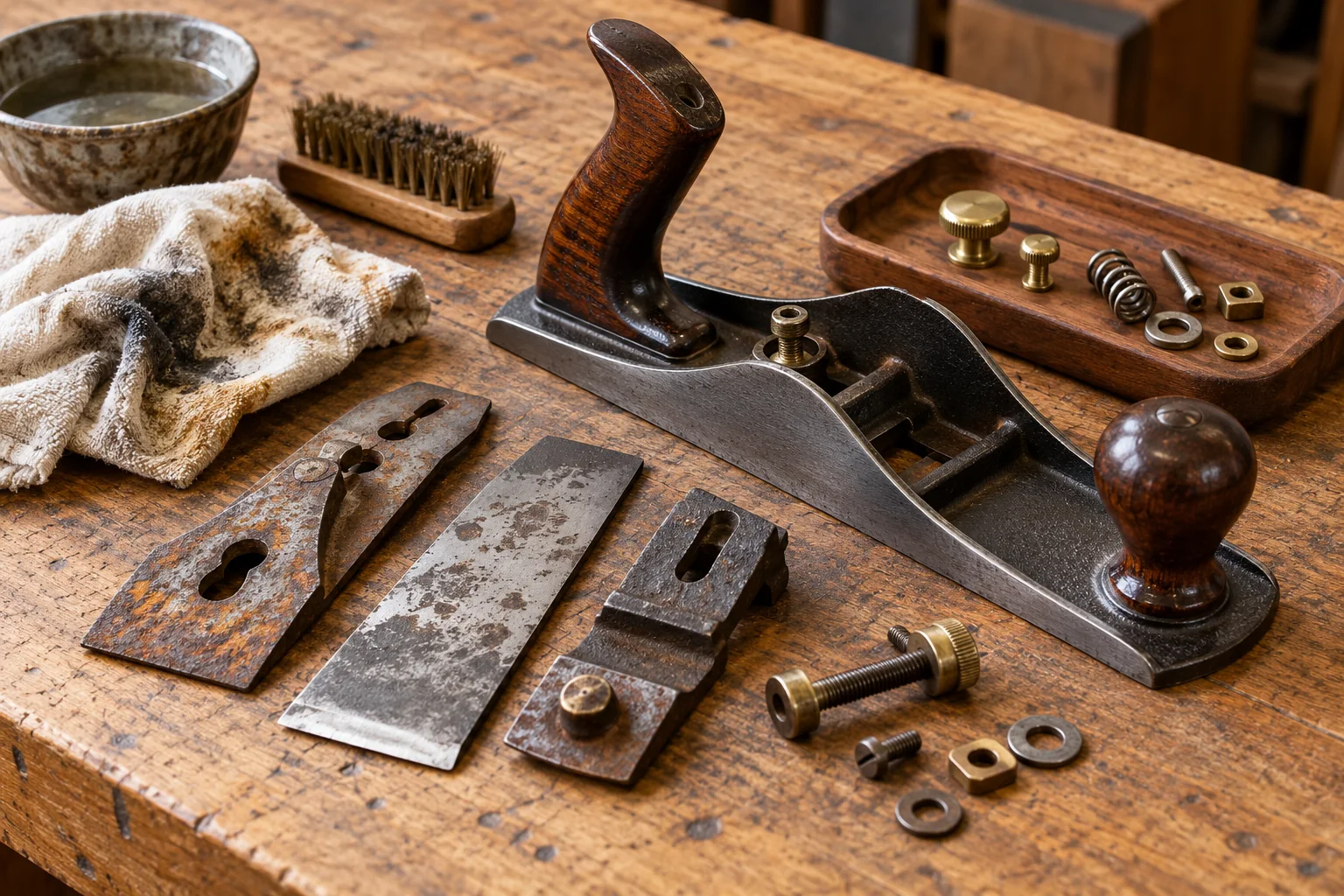
Restoring a complete old hand plane teaches cleaning, inspection and adjustment without needing a powered workshop. Choose a common sound model with all the main parts present. Clean conservatively, sharpen the blade separately and test on scrap timber before cosmetic refinishing.
Quick answer
Start with a complete second-hand metal hand plane
Restoring a complete old hand plane teaches cleaning, inspection and adjustment without needing a powered workshop. Choose a common sound model with all the main parts present. Clean conservatively, sharpen the blade separately and test on scrap timber before cosmetic refinishing.
- 01
Complete second-hand hand plane with sound body and intact adjusters
- 02
Brush, mild cleaner, cloth, rust-removal method and small parts tray
- 03
Sharpening stone, screwdriver that fits the screws, scrap timber
What to expect
What the first attempt is really like
The useful skill here is separating dirt from damage and reassembling the plane correctly. These details matter more than a polished first result.
Condition
Surface rust is manageable; cracked castings and missing proprietary parts can make a cheap plane expensive.
Sequence
Photographs and a parts tray prevent confusion during reassembly.
Function
A shiny body is less important than a sharp iron, stable frog and repeatable adjustment.
The method
The method worth learning
Buy condition, not a romantic rust story
Choose a common complete metal bench plane with working adjusters, a secure handle and no cracked casting. Check the mouth area, blade length, cap iron, lever cap and screw threads before paying. Missing proprietary parts can cost more than a sound complete tool. A collectible plane may need conservation decisions rather than abrasive cleaning, so an ordinary working example is better for practice.
Document before dismantling
Photograph the assembled tool, adjustment mechanism and fastener positions. Remove the blade assembly and put small components in a labelled tray. Use a screwdriver that fits the screw rather than rounding it with an undersized bit. If a screw resists, stop and assess the corrosion; extra leverage can break an irreplaceable casting. Avoid taking every part off merely because it can be removed.
Clean without changing geometry
Start with a dry brush and suitable mild cleaning method, then remove loose surface rust conservatively. Protect timber handles and painted areas from liquids and abrasives that are not intended for them. Keep dust contained and follow product labels. Do not scrub mating surfaces, the mouth or maker marks aggressively. A sole does not have to look like a mirror to take a shaving. Extensive flattening removes metal permanently; inspect function before deciding it is needed.
Sharpen, reassemble and prove it works
Sharpen the iron by the appropriate bench-plane method, keeping its back and bevel suited to the tool. Refit the cap iron cleanly so shavings do not pack beneath its edge, assemble the blade unit and set a shallow cut. Secure straight-grained scrap wood to a stable bench. Adjust projection and lateral alignment in small steps, checking that the blade cuts across the intended width. Change one control at a time and keep a note of the effect. A repeatable clean shaving is a more useful completion test than shiny hardware.
Useful products
Equipment with a clear job
Start with suitable equipment you already own. These exact UK listings are useful examples when a missing tool limits the first project; prices and availability were checked on 2 October 2026 and delivery may add to the cost.
Shapton Kuromaku 1000 Grit Ceramic Whetstone
Hone an intact plane iron using a medium stone you can also use for other sharpening tasks.
What can wait
What can wait
Keep the first project small and learn what the equipment is doing before adding more.
- 01
Acid baths and electrolysis
They bring extra handling, compatibility and disposal decisions. Light rust on a sound first tool can be assessed with milder methods.
- 02
Replacement blades immediately
Test the existing iron once sharpened and set. Compatibility and tool condition matter more than a thicker expensive blade.
- 03
Mirror-polishing the sole
It removes metal and can change geometry. Establish sound cutting function before cosmetic work.
First project
First project: A complete second-hand metal hand plane
Start with a complete second-hand metal hand plane. Use the listed equipment, take notes on the result and repeat the small project before expanding it.
- 01
Inspect before buying
Check body for cracks, sole for gross damage, handles for security and all adjusters for presence and movement.
- 02
Document and strip
Photograph each side, remove the blade assembly and keep screws in order.
- 03
Clean conservatively
Remove grime and loose rust with suitable mild methods; avoid grinding away mating surfaces or maker marks.
- 04
Sharpen and test
Reassemble, hone the iron and take thin shavings from scrap wood, adjusting one control at a time.
Troubleshooting
When the first attempt goes wrong
The plane chatters
Check workholding, blade sharpness, shallow projection and secure seating before buying replacement parts. A loose handle or lever cap can produce symptoms that look like a bad sole.
Shavings clog the mouth
Inspect the cap-iron fit, projection and clearance for the tool’s intended job. Do not enlarge the mouth with a file as the first response; review the model’s setup guidance.
It tears the timber
Try a shallower cut on straight-grained scrap, working with the grain. A dull edge or too deep a cut is more likely than a need to polish the body further.
Rust returns quickly
Dry parts thoroughly after cleaning, protect bare metal with a suitable very light film and store dry. Waterstones also introduce moisture at the bench. Put clean cloths and drying into the routine before buying stronger chemicals.
Upgrade path
Where to go after the first result
Repeat the simple route first, then choose the next step that solves a problem you have actually met.
Function
Cleaning and practice materialsTune the original complete plane
Learn how shallow projection, sharpness and alignment affect a controlled shaving.Repeatability
Check compatibility and current tool costA suitable honing guide
May help reproduce a bench-plane bevel; projection and blade fit still need to match the guide.Parts
Quote for the exact modelReplace a proven worn component
Useful when inspection and testing identify a real defect. A new part cannot repair a cracked body.Safety & care
Safety and practical limits
Use the current instructions for the exact food, material or equipment in front of you.
- Wear suitable eye protection when brushing or scraping rust; contain dust and follow chemical labels if using a remover.
- Handle the plane iron as a sharp blade even when the edge looks damaged.
- Discard or professionally assess cracked bodies and broken handles before use.
Learning & help
Learning at home and optional help
A class is optional for this first route. Use the free guidance before paying for help.
Lee Valley and Woodcraft’s free restoration guides give a sensible inspection and setup sequence. UK Workshop discussions illustrate why condition and a functional test should precede replacement spending.
An optional hand-tool lesson can help with blade setup and reading grain. A tool repair specialist should assess cracked castings or seized proprietary parts. Ask for a model-specific quote; a cheap incomplete plane is not automatically a cheap project.
Learning sources checked 2 October 2026. No unverified class fee or booking availability is quoted.
Sources
Where the guidance came from
Food and wildlife authorities, exact maker instructions, specialist guidance, practitioner observations and UK product listings support the route above. Community accounts inform practical expectations; they do not establish food safety, wildlife rules or current prices.
-
01
Lee Valley · Restoring an old hand plane
Disassembly, cleaning and reassembly
Open source -
02
Woodcraft · Hand plane rehab
Tool assessment, tuning and sharpening
Open source -
03
Shapton · Kuromaku FAQ
Maker guidance on stone choice and use
Open source -
04
UK Workshop · Hand plane restoration
Practitioners weigh testing an existing plane against replacing parts before its condition is known.
Open source -
05
Woodworking Stack Exchange · Planing a cutting board
Workholding, blade setting and grain-direction troubleshooting in use.
Open source -
06
r/sharpening · Stones for a beginner
Several users discuss a medium stone, included case, consistent angles and starting with an ordinary practice knife.
Open source -
07
Lie-Nielsen · Sharpening
Maker method for plane-blade preparation and repeatable honing.
Open source -
08
Lie-Nielsen · Honing guide instructions
Blade projection, jaw compatibility and repeatable angle setup; the guide is an optional later aid.
Open source -
09
Shapton · Kuromaku 1000 Grit Ceramic Whetstone
Exact selected model, price and availability used for the recommendation; recheck delivery and checkout.
Open source
Guide information and links checked 2 October 2026.