Beginner’s guide · Grow & care
Read the roots.
Water the plant you have.
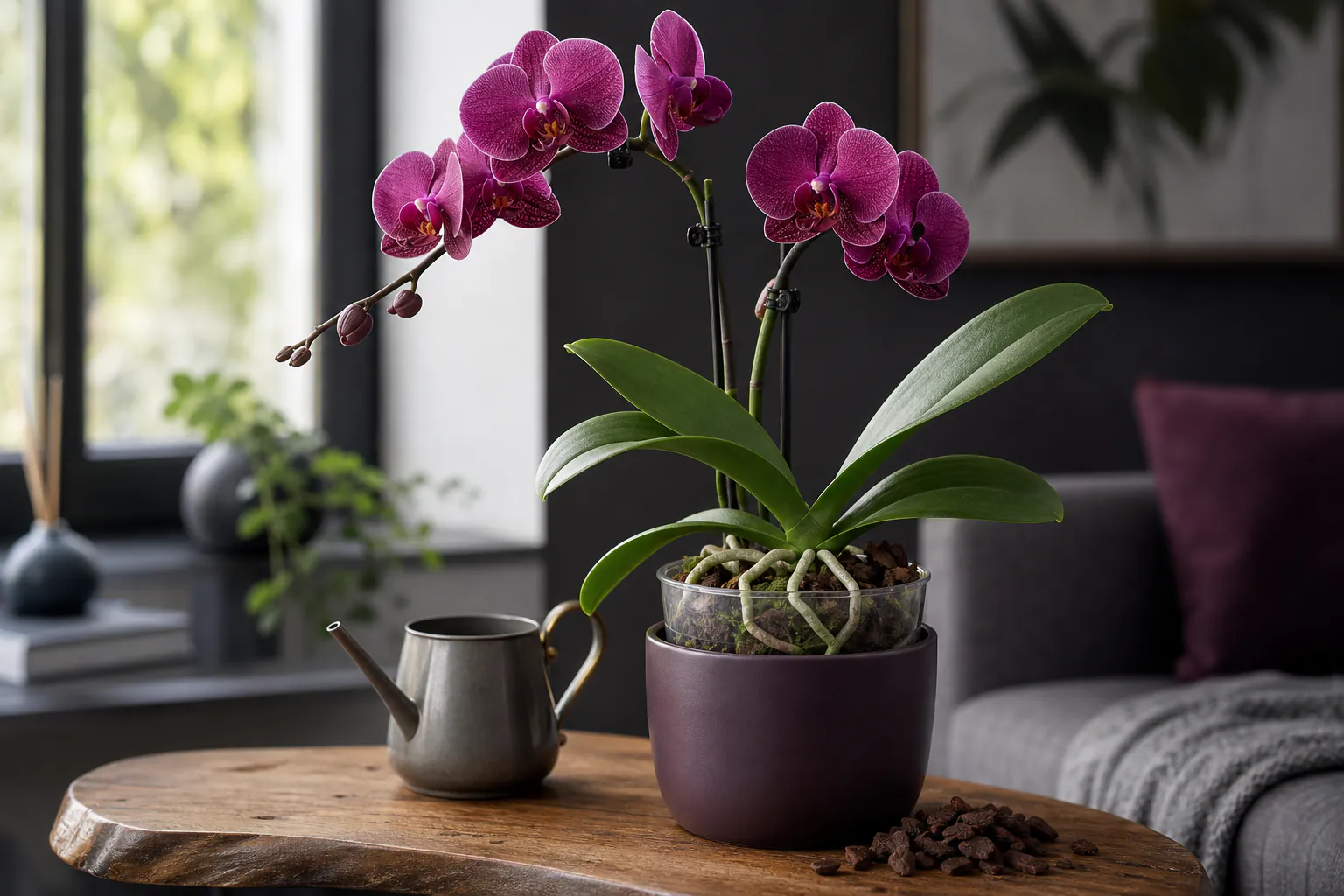
Keep a common Phalaenopsis in its draining clear inner pot, give it bright indirect light and water only after the bark and roots approach dryness. Repotting, feeding and flower-spike decisions can wait until the plant shows a reason.
Quick answer
Keep the clear pot, then observe before changing anything
Place the clear draining nursery pot in bright indirect light with air around the leaves. Lift it from the decorative cover to inspect bark, roots and pot weight. When the inner roots are silvery and the medium is approaching dry, water thoroughly with tepid water and let it drain completely before returning it.
- 01
Phalaenopsis roots often turn green when wet and silvery as they dry, but bark condition, pot weight and household climate also matter.
- 02
Do not leave the inner pot standing in water or let water remain in the crown between the leaves.
- 03
Aerial roots are normal. Do not force healthy roots into compost or cut them because they are outside the pot.
- 04
Flowers eventually finish. Flower loss alone is not plant death and does not automatically require repotting or a stronger feed.
What to expect
Orchid care is slower than the flower display suggests
A supermarket Phalaenopsis may bloom for weeks, then spend months growing roots and leaves. The useful signals are gradual and easier to read through a clear pot.
Roots
Firm green or silver roots are useful; brown hollow or mushy roots indicate damage. Colour alone is not a reason to cut.
Medium
Chunky bark holds some moisture while leaving air. Decomposed fine material stays wet and changes the watering interval.
Light
Insufficient light can prevent reblooming, while hot direct sun can scorch leaves behind glass. Increase exposure gradually.
Water
A fixed weekly amount ignores pot size, bark age, temperature and season. Inspect first and drain fully.
Leaves
One older lower leaf may yellow naturally. Rapid multiple-leaf changes or a soft crown need investigation.
Reblooming
A healthy mature plant needs suitable light and seasonal conditions. No fertiliser can force a stressed root system to flower safely.
Core care
Keep air around the roots and water out of the crown
Identify the plant and pot
This guide is for the common moth orchid, Phalaenopsis. Keep the label if present. Make sure the plant sits in a clear or translucent inner pot with generous drainage rather than being planted directly into a sealed decorative pot. Other orchid groups have different light, rest and watering requirements.
Read several dryness signals
Look through the pot at internal roots, feel whether the bark is still cool or damp and learn the pot’s wet and dry weight. Water when the root zone is approaching dry, not because a weekday has arrived. Run tepid water through or soak only the inner pot using a clean container, then drain completely.
Protect the growing point
Keep water from sitting in the crown and leaf joints. If water splashes there, wick it out and provide air movement. Do not pack moss around the stem or pot the plant so deeply that the crown stays damp.
Repot for a reason
Repot when bark has broken down, roots are failing, the medium remains wet too long or the pot no longer supports healthy new roots. Use a ventilated clear pot close to the root mass and a clean orchid bark mix. Remove only dead hollow or mushy roots with sterilised tools.
Useful products
A repot kit and two care products that are usually not needed on day one
The Orchid Myst kit supplies a 13 cm pot, bark and spray for a plant that genuinely needs repotting. Orchid Focus bark is the larger refill route. Baby Bio concentrate is inexpensive feed for an actively growing established plant, used only at its current label dilution on already moist roots.
Growth Technology 13 cm Orchid Myst Repotting Kit
The kit groups a clear-sized orchid pot and suitable bark when the current root system genuinely needs new media.
Baby Bio Orchid Food Concentrate 175 ml
A small orchid-labelled concentrate is easier to dose deliberately than a generic strong houseplant feed.
Growth Technology Orchid Focus Repotting Mix 3 L
Chunky orchid bark restores root aeration when the existing medium has broken down or remains wet too long.
First care cycle
Complete one observe–water–drain cycle
Do not repot a healthy flowering plant merely to complete the exercise. Begin by learning what its current root zone does over several days.
- 01
Confirm Phalaenopsis
Keep the label and compare the broad leaves and flower form with a reliable care guide.
- 02
Inspect the inner pot
Check drainage, bark condition, root firmness and whether water is trapped in an outer cover.
- 03
Choose bright indirect light
Place the plant where leaves avoid hot midday glass and record the direction.
- 04
Wait for the root zone
Observe root colour, bark moisture and pot weight instead of watering immediately.
- 05
Water thoroughly when ready
Use tepid water on the root zone, keeping the crown dry, until the bark is evenly wetted.
- 06
Drain completely
Let the inner pot finish dripping and empty the decorative cover before replacing it.
- 07
Record the interval
Note wet weight, root colour and the number of days until the medium again approaches dry.
- 08
Leave healthy structures alone
Do not cut firm roots, green spikes or aerial roots simply to make the plant look tidy.
What can wait
What can wait for a clear plant signal
Most orchid mistakes begin when a healthy plant is watered, fed or repotted because a schedule or product suggests action.
- 01
The repot kit
Use it when the plant fits the 13 cm pot and its bark or roots actually require replacement, ideally after researching the full process.
- 02
Extra bark
The Orchid Focus mix is a refill for repotting, not a top dressing to cover aerial roots or fill a permanently wet decorative pot.
- 03
Routine fertiliser
The Baby Bio feed supports active growth at the label rate. It cannot correct rotten roots, poor light or dry bark.
- 04
Ice cubes
Water the root zone thoroughly and drain it. A few melting cubes make volume and root wetting hard to judge.
- 05
Cutting the flower spike
A green or brown spike can be managed in more than one way. Prioritise plant health and use clean tools if cutting becomes appropriate.
Upgrade path
Upgrade care only when the plant’s signals are readable
A better setup makes root moisture and light easier to judge; it does not create a fixed care calendar.
Observe the nursery pot
FreeExisting clear pot, suitable light and drainage
Learn the real wet-to-dry interval and healthy root appearance.Reasoned repot
About £10–£25Ventilated clear pot, fresh bark and clean cutters
Replace decomposed medium and remove genuinely dead roots.Measured feeding
About £3–£12Orchid fertiliser, measuring tool and periodic plain-water flush
Support active root and leaf growth without salt accumulation.Small orchid shelf
£80–£350+Light, fan, trays and species-specific records
Maintain several orchids consistently while accepting different care requirements.Plant safety
Drainage matters more than decorative presentation
Rot, pests and chemical misuse spread when water and tools move carelessly between plants.
- Quarantine and inspect new orchids for scale, mealybug, mites and disease before placing them against other plants.
- Sterilise cutting tools between plants and remove only tissue that reliable guidance identifies as dead or diseased.
- Do not allow water to stand in a decorative cover or remain in the crown.
- Use fertiliser and pest products at the exact label rate with household ventilation and pet safety in mind.
- Check current veterinary guidance if a pet chews any plant or treatment; do not rely on a general “orchid safe” assumption.
Outside help
When an orchid society helps
A class is not needed for a healthy Phalaenopsis. A society repotting demonstration is useful before cutting roots or choosing media for a damaged plant.
Use the Phalaenopsis-specific care sheet rather than generic houseplant advice.
Take plant photographs and ask whether the medium truly needs replacement before booking work.
Free specialist resources and representative UK society pricing checked 31 July 2026; plant clinics and material fees vary.
Sources
Where the guidance came from
RHS and American Orchid Society care sheets anchor the Phalaenopsis advice; grower discussions were used to represent common clear-pot and overwatering mistakes.
-
01
Royal Horticultural Society · Phalaenopsis growing guide
Light, watering, feeding, temperature and repotting guidance for moth orchids.
Open source -
02
American Orchid Society · Phalaenopsis culture sheet
Species-group care guidance on light, water, temperature and media.
Open source -
03
r/orchids · Beginner clear-pot and watering discussion
Recurring grower advice to inspect visible roots, drain thoroughly and avoid calendar-led ice watering.
Open source -
04
Amazon UK · Growth Technology Orchid Myst repotting kit
Exact product page, model or ISBN, observed price and availability checked for this guide.
Open source -
05
Amazon UK · Baby Bio Orchid Food concentrate
Exact product page, model or ISBN, observed price and availability checked for this guide.
Open source -
06
Amazon UK · Orchid Focus Repotting Mix 3 L
Exact product page, model or ISBN, observed price and availability checked for this guide.
Open source
Guide information and links checked 31 July 2026.