Beginner’s guide · Move & explore
A short sheltered-water paddle with controlled turn and self-rescue
Choose sheltered water and dress for immersion.
Start on a stable all-round board with a fitted buoyancy aid, suitable leash, weather and water checks and a shore plan. Kneel, turn and recover before standing far from shore.
Quick answer
Plan for falling in before planning to stand up
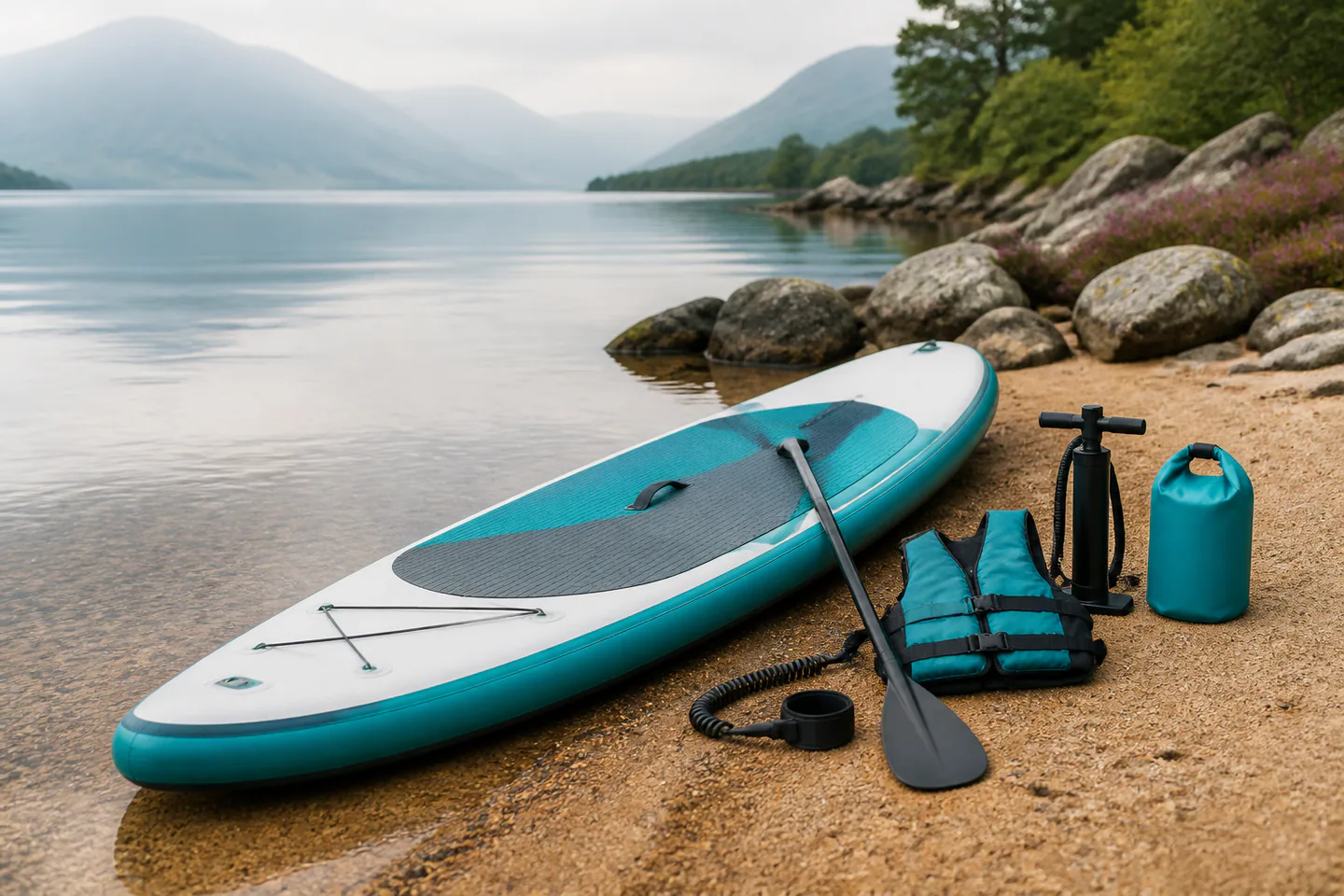
Use a stable all-round inflatable board sized for your body and load, wear a correctly fitted 50 N buoyancy aid and choose the leash type for the specific water. Check forecast, wind direction, tide or flow, water temperature, access permission and local guidance. Tell someone the route and return time, keep a means of calling for help on the body and begin kneeling within easy reach of shore with an experienced companion.
- 01
The supplied ankle leash is not suitable for every environment. In flowing water, entanglement can be fatal; follow Paddle UK guidance and use an appropriate quick-release system or no leash where directed.
- 02
A buoyancy aid must fit weight and chest range and allow movement. It is worn, not stored under deck bungees.
- 03
Offshore wind can make the return impossible even when the launch feels calm; check direction as well as speed.
- 04
Cold-water shock can affect breathing and movement far before hypothermia. Dress for immersion and shorten the route.
What to expect
The weather and water make each session a different problem
An inflatable board can feel stable on a calm lake and difficult in wind, chop, tide or moving water. Conservative location choice is a core skill.
Board
Length, width, thickness, stiffness and load determine stability; marketing capacity is not the same as comfortable performance.
Inflation
Use the maker’s PSI range and fit the fin correctly. Underinflation bends; overinflation can damage seams.
Paddle
Adjust length for the user and conditions, hold the blade the correct way and switch sides before steering drifts.
Leash
Leash choice depends on environment, flow and entanglement risk; one ankle leash is not universal.
Wind
Standing increases windage. Begin by paddling into a light breeze so the return is not the harder leg.
Rescue
Practise falling away from the board, retaining paddle, climbing back on and calling for help close to shore.
Core method
Make the safety system work before leaving the launch
Choose the water and obtain information
Use a supervised venue, recognised operator or very sheltered permitted water for the first session. Check local access, launch rules, navigation, weather, wind direction, tide or river flow, water quality and recent hazards. Do not rely on the appearance of calm water from the car park.
Fit board, buoyancy aid and leash as a system
Confirm the board’s recommended user size and real load, inflate within the stated PSI and inspect valve, seams, fin and deck. Fit the buoyancy aid snugly so it cannot ride over the shoulders. Select and attach the leash according to Paddle UK environment guidance, with a quick-release position that can actually be reached if required.
Stay low and close
Launch in knee-deep clear water without placing the fin on the bottom. Paddle kneeling, practise forward strokes, reverse strokes and wide sweep turns and remain within easy swimming and communication distance of shore. Stand only from all fours with feet either side of the handle and eyes on the horizon.
Practise a controlled recovery
In safe warm-enough conditions with support, fall clear into the water, keep hold of the paddle if possible and use the leash or board handle without wrapping lines around the body. Approach the centre from the side, kick and slide the chest onto the board, then return to kneeling. Stop if cold, wind or fatigue rises.
Useful products
Products with a clear job in the setup
The Bluefin Cruise 10 ft 8 in package is the practical all-round board route. The Helly Hansen Rider is a size-specific 50 N buoyancy aid. Red Paddle Co’s Ride package is a premium future board, not required alongside the Bluefin.
Bluefin Cruise 10 ft 8 in Inflatable SUP Package
The complete package and documented dimensions reduce accessory matching, while the width and volume suit many adult beginners.
Helly Hansen Rider 50 N Buoyancy Aid, Medium
A recognised 50 N watersports aid provides a clearer safety baseline than an unverified vest bundled for appearance.
Red Paddle Co Ride 10 ft 6 in SUP Package
It is a well-established benchmark for a durable all-round inflatable rather than a necessary first purchase.
First project
Complete a shore-parallel kneeling circuit
Forward, reverse, turn, fall and remount within a small supervised area before any journey.
- 01
Check the location
Confirm access, weather, wind direction, flow or tide, water temperature and exit points.
- 02
Fit and inspect
Wear the buoyancy aid, select the correct leash and check PSI, fin, seams and paddle.
- 03
Tell the shore plan
Give route and return time and keep a protected means of calling for help on the body.
- 04
Paddle kneeling
Travel parallel to shore, switch sides and make wide sweep turns in both directions.
- 05
Practise remounting
Fall clear in a safe area, approach the centre and climb back on before standing.
- 06
Return early
Finish with reserve warmth and energy, rinse equipment and dry fully before storage.
What can wait
What can wait until the first result
Distance and accessories can wait until weather judgement and self-rescue are dependable.
- 01
A long open-water trip
Wind, cold and distance magnify small problems and can remove easy exit options.
- 02
A universal ankle-leash rule
Flowing water and entanglement require environment-specific quick-release guidance.
- 03
An electric pump only
A manual pump remains useful backup and makes the final pressure easy to verify.
- 04
Kayak seats and cargo
Extra weight and windage distract from paddle technique, remounting and board trim.
- 05
Going alone
A companion, venue staff or qualified session materially improves first-water response.
Upgrade path
Upgrade the repeated limitation
Upgrade instruction, clothing or board stiffness when the environment—not marketing—shows the need.
Hire or lesson
About £25–£70Venue board + buoyancy aid + instructor
Test balance and rescue before buying.Reliable all-round package
About £330–£450Board + paddle + pump + bag + PFD
Own a coherent sheltered-water setup.Cold-season clothing
About £80–£350Wetsuit or drysuit system + footwear
Extend conditions while dressing for immersion.Premium touring board
About £700–£1,300+Stiffer board + better paddle + training
Improve glide and efficiency for planned journeys.Safety & care
Treat every session as a water-safety decision
Drowning, cold-water shock, offshore wind, flowing-water entrapment, lightning and poor communication are the serious hazards.
- Wear a correctly fitted buoyancy aid and dress for immersion; carry a means of calling for help on the body, not only on the board.
- Use the leash type and quick-release position recommended for the exact environment; avoid ankle leashes in flowing water where official guidance warns against them.
- Check weather, wind direction, tide or flow, water temperature, access and local hazards and cancel when conditions exceed the plan.
- Tell someone the route and return time, paddle with others and stay close enough to a safe exit for current skill and temperature.
- Practise remounting in controlled conditions and call 999 or 112 and ask for Coastguard at sea or on tidal water in an emergency.
Outside help
When outside help earns its place
For this hobby, a qualified first session is strongly recommended because it teaches location choice, leash systems, paddle technique and self-rescue together.
Read the current leash, weather, clothing and trip-planning advice before buying.
Check instructor qualification, venue, equipment, buoyancy aid, rescue practice and cancellation policy.
Representative UK product, club, lesson and venue costs checked 9 August 2026; local prices, access, weather, materials and tutor support vary.
Sources
Where the guidance came from
RNLI and Paddle UK advice governs the safety emphasis; manufacturer specifications and paddler communities inform realistic board and equipment choices.
-
01
RNLI · Stand-up paddleboarding safety
UK water-safety advice on buoyancy, communication, weather and planning.
Open source -
02
Paddle UK · SUP safety
Current environment-specific leash, clothing and paddling guidance.
Open source -
03
Paddle UK · Places to paddle
Access, trails, clubs and venue context.
Open source -
04
Bluefin · Cruise SUP
Manufacturer dimensions, setup and package information.
Open source -
05
Reddit · r/Sup
Community reports on boards, inflation, wind, fit and first purchases.
Open source -
06
Amazon UK · Bluefin Cruise 10 ft 8 in SUP package
Exact product page, model or ISBN, observed price and availability checked for this guide.
Open source -
07
Amazon UK · Helly Hansen Rider buoyancy aid
Exact product page, model or ISBN, observed price and availability checked for this guide.
Open source -
08
Amazon UK · Red Paddle Co Ride 10 ft 6 in
Exact product page, model or ISBN, observed price and availability checked for this guide.
Open source
Guide information and links checked 9 August 2026.